




Description
Collector's Note – Why This Issue Matters
March 1984 places this issue at the mid-point of one of the most visually assertive and culturally self-conscious decades in the history of American fashion. By early 1984 the early-eighties aesthetic had fully consolidated itself — the experimental energy of the decade's opening years had given way to a confident, codified visual language of power dressing, bold color, and dramatic silhouette that would define the era's look in cultural memory. A March issue of Harper's Bazaar carried the particular editorial weight of the spring fashion preview — the seasonal reset, the declaration of where the industry was pointing as winter gave way to the new collections. For a publication with Bazaar's authority and art direction legacy, the spring issue was an opportunity to make a statement about what the coming season meant, and the choice of Nancy DeWeir for the cover reflects the casting decisions that shaped how the magazine presented that statement to its readership. Collectors tracing the model rosters and cover choices of major fashion titles across the decade will find the Harper's Bazaar magazine collection an invaluable resource for following those casting decisions and their relationship to the broader aesthetic shifts of the period.
The broader cultural context of March 1984 rewards attention from anyone researching the period seriously. Ronald Reagan's America was in the midst of an economic recovery whose benefits were flowing most visibly to the affluent urban professional class that Bazaar addressed, and the conspicuous consumption ethos that had been building since the late seventies was by 1984 operating at full intensity. The fashion industry was responding to and amplifying that ethos — luxury brands were expanding aggressively, designer names were becoming consumer status signals in ways they had never previously been, and the magazines that covered this world were simultaneously documenting and driving the cultural appetite for exactly the kind of aspirational visual content that a spring Bazaar delivered. A March 1984 issue is therefore a document not just of fashion but of a specific economic and cultural mood, captured at one of its most characteristic moments. For collectors building a broader archive of the decade, 1984 magazine issues across titles provide the cross-publication context that makes any single issue's editorial choices fully legible.
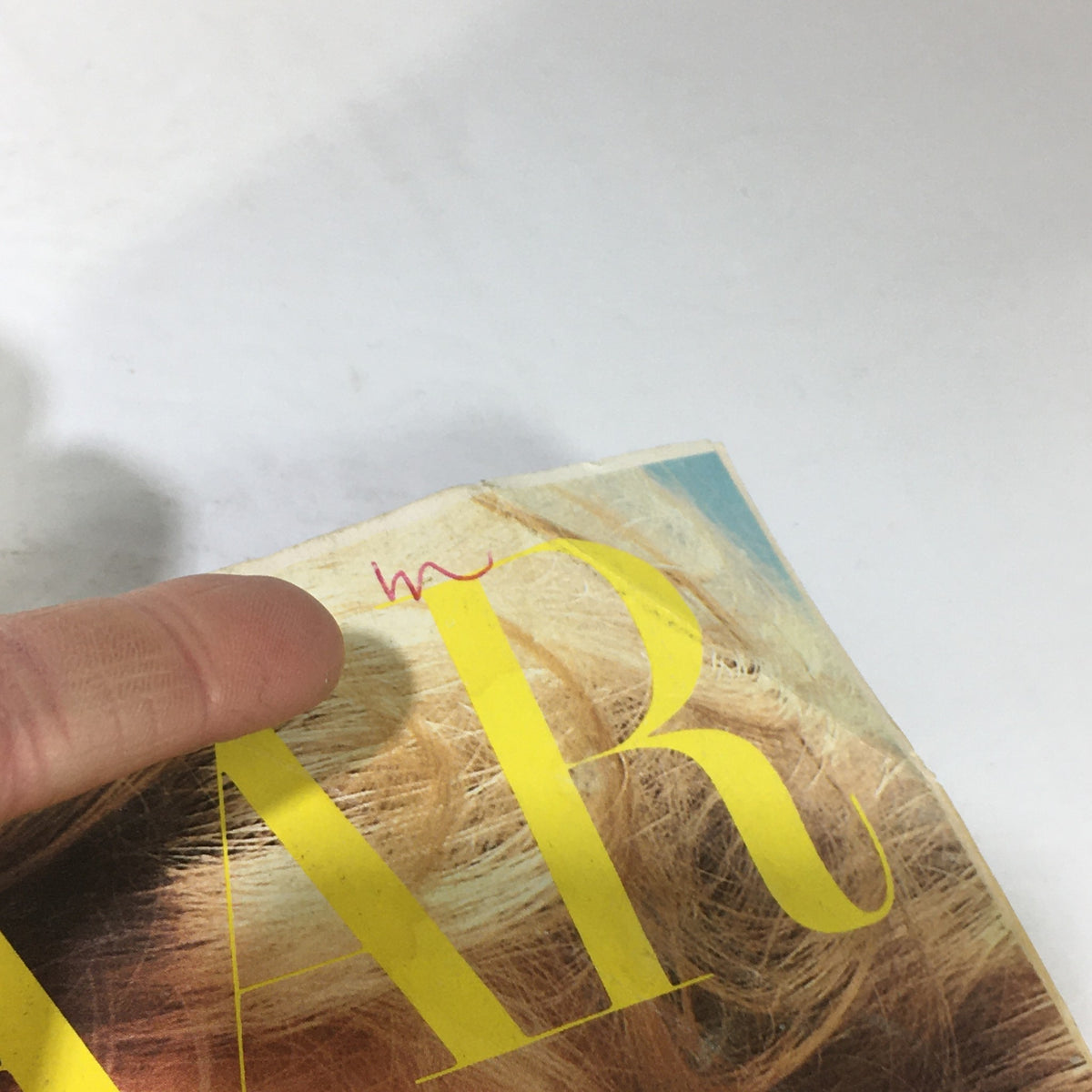
It is worth noting that the condition details for this issue — watermarks and marks on the front cover alongside light edge and binding wear — place it in a category that experienced collectors of mid-eighties fashion magazines will recognize and evaluate carefully. Bazaar's spring issues were heavily handled by their original readers, used as reference material through an entire season, and stored without particular preservation care by the vast majority of recipients. A surviving newsstand copy from March 1984 with an intact page block and displayable cover, even with the surface marks noted, represents an authentic artifact of the period rather than an artificially pristine reproduction, and the no-label origin confirms the cover image survives in its complete, undisturbed form.
About the Publication
Harper's Bazaar, founded in 1867 and one of the oldest continuously published fashion magazines in the United States, has throughout its history built its identity on a tradition of exceptional art direction, transformative photography, and a commitment to treating fashion as a legitimate cultural art form. By March 1984 it was navigating the early eighties fashion landscape with the full weight of that legacy behind it — a heritage that included the revolutionary art direction of Alexey Brodovitch, the photography of Richard Avedon, and the editorial vision of Diana Vreeland, all of which had established Bazaar as the more intellectually and artistically serious of the two major American fashion titles. Its audience in 1984 was affluent, educated, and fashion-forward, drawn to the magazine's combination of high-fashion authority, quality photography, and a cultural ambition that set it apart from more purely commercial competitors. The spring issue was traditionally among its most carefully produced of the year, carrying significant advertising support and editorial investment in the seasonal fashion preview that its readership anticipated.
Key Highlights Inside
- Nancy DeWeir spring cover — a primary document of early-eighties fashion photography and casting, capturing the specific visual language and aesthetic choices that Bazaar deployed for its March spring preview issue in a year when the decade's dominant style was at its most confident and fully realized.
- Spring 1984 fashion editorial content — the silhouettes, color stories, fabric choices, and styling directions that defined the transition from the early to mid-eighties aesthetic, presented through the quality photography and art direction that distinguished Bazaar's seasonal coverage from its competitors.
- Beauty and lifestyle content consistent with Bazaar's March 1984 editorial format — the spring beauty preview and lifestyle features that accompanied the fashion content and addressed the aspirational concerns of the affluent, professionally ambitious women who formed the magazine's core readership in this period.
- Period advertising pages representing the luxury fashion, beauty, and lifestyle brands marketing to Bazaar's demographic in early 1984 — a primary source document of the conspicuous consumption culture and brand landscape of mid-Reagan-era America that complements the editorial content and rewards careful attention from researchers of the period.
- Note: Specific article titles, bylines, and additional named interior features beyond those indicated in the listing have not been confirmed from available sources. The highlights above reflect what is documented in the listing and Harper's Bazaar's well-established editorial format for its spring issues during this period.
Condition & Rarity
Surviving copies of the March 1984 Harper's Bazaar display a condition profile that reflects four decades of existence without institutional preservation. Light edge and binding wear are the expected and honest attributes of an original, unrestored periodical from this vintage — they identify an authentic artifact rather than a reproduction. The watermarks and marks noted on the front cover are specific condition details that experienced collectors will factor into their evaluation: watermarks on paper of this age indicate past moisture exposure, which can affect paper integrity and appearance in ways that vary significantly by degree, and the provided photographs are the appropriate reference for assessing their extent and impact. The absence of a subscriber address label is a meaningful positive that partially offsets those surface marks: the cover image survives fully intact as originally designed, without the adhesive residue or obscured photography that subscription labels permanently introduce. For a spring cover issue where the fashion photography is a primary reason for collecting, label-free status preserves the visual integrity of the cover in ways that matter to display-focused collectors. The protective plastic sleeve on preserved copies is the correct conservation measure for a magazine of this age and paper stock, preventing further handling deterioration without requiring any alteration to the original item.
Looking for More Issues Like This?
A no-label newsstand copy of Harper's Bazaar's March 1984 spring issue is a find that reflects the genuine difficulty of sourcing mid-eighties fashion magazines in collectible condition — these were working publications for their original readers, not archived collectibles, and copies that have survived four decades with their covers intact and page blocks undisturbed are less common than the original print runs would suggest. If this particular issue is no longer available, the full Harper's Bazaar magazine collection at OriginalMagazines.com is the most comprehensive source for exploring other issues across the title's long and distinguished publishing history. For collectors building a broader archive of the mid-eighties cultural and fashion moment, the complete 1984 magazine collection brings together fashion, culture, news, and lifestyle titles from a year that sits at the stylistic and cultural heart of one of the most visually distinctive decades of the twentieth century.