
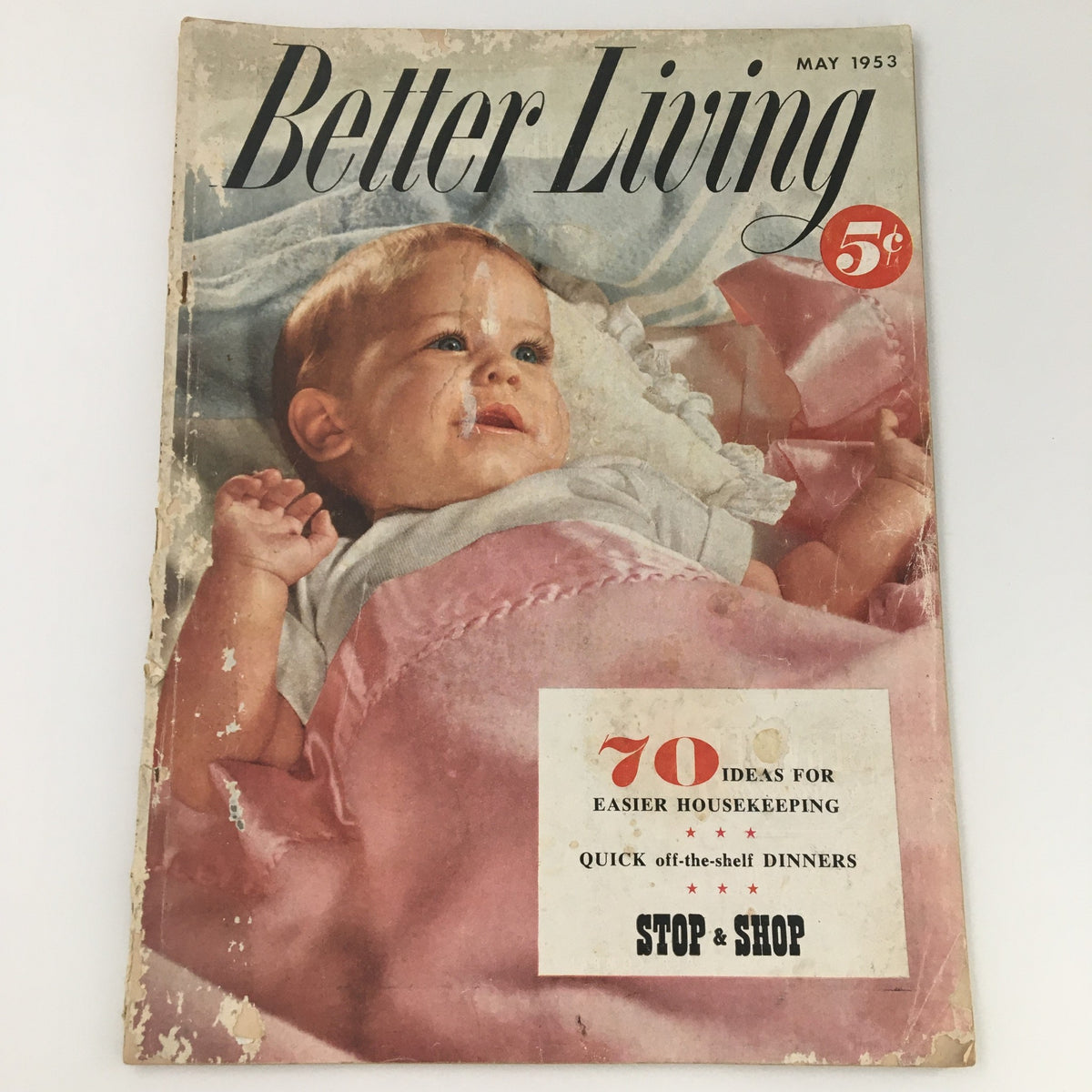


Description
Collector's Note – Why This Issue Matters
Better Living Magazine May 1953 offers a revealing look at mid-century American lifestyle culture, especially through its listed feature on etiquette, “P’s and Q’s.” In the early 1950s, manners, domestic presentation, entertaining, and social conduct were frequent subjects in household and general lifestyle magazines. An issue centered partly on etiquette reflects a period when magazines helped readers navigate everyday social expectations, from hosting and conversation to public behavior and family life. These kinds of features are valuable because they show how ordinary conduct was taught, reinforced, and idealized through popular print.
The “P’s and Q’s” feature gives the issue its clearest reference value. Etiquette writing from this era is especially useful to collectors and researchers because it documents the social codes that shaped ordinary interactions, not just major historical events. The listing also notes lifestyle articles, recipes, and stories, which suggests the magazine belonged to the broader postwar publishing world of practical domestic guidance and aspirational everyday living. Since no publication-specific collection link was provided, the most relevant browse context is the broader archive of 1953 magazine issues. Within that context, this issue helps show how mid-century readers encountered advice about taste, conduct, and home life in the same publication environment.
As a 1953 publication, this issue sits in a postwar moment when American magazines were deeply involved in defining ideas of refinement, home life, family identity, and social polish. Complete or partially complete issues from this period can still be useful because they preserve period language, illustrations, advertising, and assumptions about how people were expected to behave. Even with missing back pages, the surviving content through page 96 gives the issue value as a document of mid-century etiquette and lifestyle publishing. For researchers, that surviving material can still offer a meaningful view of how social grace, domestic routines, and personal presentation were framed for everyday readers.
About the Publication
Better Living was a lifestyle-oriented magazine title associated, by the evidence in the listing, with domestic culture, manners, recipes, stories, and practical guidance for everyday life. Its likely audience included readers interested in household management, social customs, entertaining, family living, and personal refinement. The editorial format described in the listing suggests a blend of advice-based features, lifestyle material, food-related content, and general-interest reading. For collectors, issues like this are useful because they preserve the everyday cultural standards and domestic ideals of the early 1950s, especially in areas such as etiquette, presentation, and social conduct. The magazine’s value lies in the way it records ordinary expectations: how to behave, how to host, how to cook, and how to participate in polite social life according to the standards of its time.
Key Highlights Inside
- May 1953 issue of Better Living Magazine, representing early-1950s lifestyle and domestic publishing.
- Features an etiquette article on “P’s and Q’s,” as stated in the listing title and description.
- Listing notes lifestyle articles, recipes, and stories reflecting social norms of the 1950s.
- Represents mid-century American interest in manners, social grace, household culture, and everyday refinement.
- Offers period context for how etiquette advice was presented to general lifestyle-magazine readers.
- Identified as an original newsstand copy with no label, preserving the cover presentation without label obstruction.
- Protected in a clear plastic covering, according to the listing description.
- Condition notes include minor edge wear, occasional marks, possible rips, and missing back pages.
- Magazine is incomplete, with surviving content noted as going up to page 96.
- Specific interior article titles beyond the “P’s and Q’s” etiquette feature are not confirmed from the provided listing.
Condition & Rarity
Surviving examples of this May 1953 issue should be evaluated by cover presentation, edge wear, binding stability, page completeness, marks, and the presence or absence of labels. The provided listing describes minor wear around the edges, occasional marks, possible rips, and a clear plastic protective covering. The newsstand no-label status is meaningful because it keeps the cover presentation visually clean, which matters for display and archival reference. The most important condition note is that some back pages are missing and the magazine goes up to page 96, making it an incomplete example rather than a fully intact issue. For collectors, missing pages affect completeness and research value, but the surviving portion can still be useful when the central etiquette feature and core content remain present and readable. Because lifestyle magazines were often clipped for recipes, saved for household advice, or discarded after use, surviving examples may show practical handling wear that reflects how they were originally read and used.
Looking for More Issues Like This?
The May 1953 Better Living issue is a tough find for collectors interested in mid-century etiquette, domestic advice, and the everyday social codes of postwar American life. Readers looking for related period material can browse the broader 1953 magazines collection to compare lifestyle, home, fashion, culture, and general-interest publications from the same year. That wider view can help place this issue’s etiquette feature within the broader language of refinement, family life, and social expectation that appeared across early-1950s magazines.
Viewed alongside other 1953 titles, this issue helps show how magazines documented not only major public events, but also the manners, recipes, household routines, and social expectations that shaped everyday life. For collectors of domestic history, it offers a useful entry point into the printed advice culture that helped define what “better living” meant in the postwar era.