



Description
Collector's Note – Why This Issue Matters
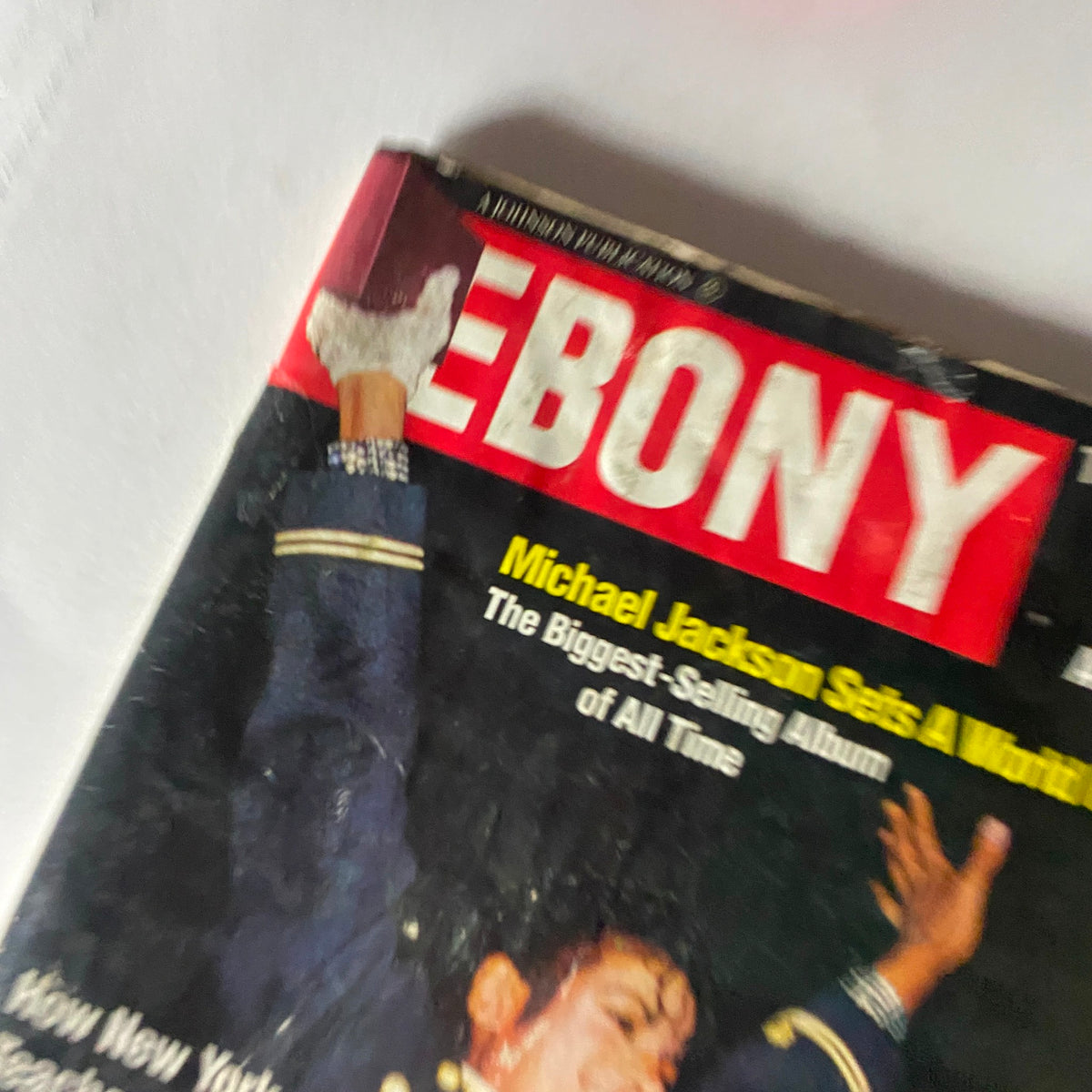
The May 1984 issue of Ebony Magazine featuring Michael Jackson is a primary document of one of the most extraordinary moments in the history of American popular music and Black celebrity — the precise peak of the Thriller phenomenon, when Michael Jackson had become not only the best-selling recording artist in the world but a cultural figure of a scale and significance that American popular culture had rarely produced. Thriller had been released in November 1982 and by May 1984 had become the best-selling album of all time, an achievement that remains unequaled. The album had generated an unprecedented seven top-ten singles, had made the music video an art form through "Thriller," "Billie Jean," and "Beat It," and had broken down the racial barriers of MTV's programming in ways that would permanently alter the landscape of popular music and music television. The 1984 Grammy Awards, held in February 1984, had awarded Jackson a record-setting eight Grammy Awards in a single night, and the Victory Tour — the Jackson family reunion tour that would generate enormous commercial anticipation — was being prepared for its summer 1984 launch. A May 1984 Ebony Magazine feature on Michael Jackson therefore arrives at the precise historical moment when his transformation from a beloved entertainer into one of the most significant cultural figures of the century was being confirmed and celebrated. Collectors building a focused archive of Michael Jackson's documented presence in Ebony Magazine across his career will find the Michael Jackson magazine collection the most focused resource for tracking his coverage across publications throughout his extraordinary career.
Ebony Magazine's specific role in this documentation is historically crucial and cannot be overstated. Founded in 1945 by John H. Johnson, Ebony had been the primary chronicler of Black American achievement, celebrity, and cultural life for four decades, and its coverage of Michael Jackson's career had always carried a specific community significance that mainstream publications could not provide. Jackson had first appeared in Ebony as a child performer with the Jackson 5 in the early 1970s, and the magazine's coverage of his career across two decades represented one of the most sustained documentary relationships between a major American publication and one of its most important subjects. By May 1984, Ebony's coverage of Jackson's Thriller success was a document not only of his individual achievement but of what that achievement meant for Black American cultural authority, economic power, and mainstream visibility — the specific significance of a Black artist dominating American popular culture on a scale that no Black artist had previously achieved, covered by the publication that had been documenting and celebrating Black achievement since 1945. The Ebony magazine archive is the most essential resource for understanding how the Black American press documented this extraordinary moment. Collectors focused on 1984 as one of the most culturally significant years in American music history will find that 1984 magazine issues document the Thriller era at its absolute peak with primary source authority.
The specific differentiated condition profile of this issue — well-preserved interior with minimal aging alongside a cover in acceptable condition showing age and wear — is a common and understandable pattern for Ebony issues from 1984 that were actively read and consulted rather than stored as collectibles from the time of original purchase. The well-preserved interior is the more functionally significant attribute for research purposes — legible, clear print and no missing pages means the full Ebony coverage of Michael Jackson's May 1984 moment is accessible for research and reading. For collectors whose primary interest is in the documentary content of the issue rather than its display condition, the good interior with the understood cover wear is a more complete and accessible artifact than the condition profile might initially suggest.
About the Publication
Ebony Magazine was founded in 1945 by John H. Johnson of Johnson Publishing Company and rapidly established itself as the most widely read and institutionally significant Black publication in the United States, addressing the full range of African American life — achievement, celebrity, politics, culture, family, and community — with the editorial authority of a publication that understood its role as the primary chronicler and celebrant of Black American accomplishment. By 1984, Ebony had been documenting Black American cultural life for nearly four decades and had covered the full arc of the civil rights movement, the emergence of Black political power, and the extraordinary achievements of Black artists and entertainers with the community-embedded perspective that no mainstream publication could provide. Its coverage of Michael Jackson's career from the Jackson 5 years through the Thriller era is among the most sustained and significant documentary relationships in its publishing history.
Key Highlights Inside
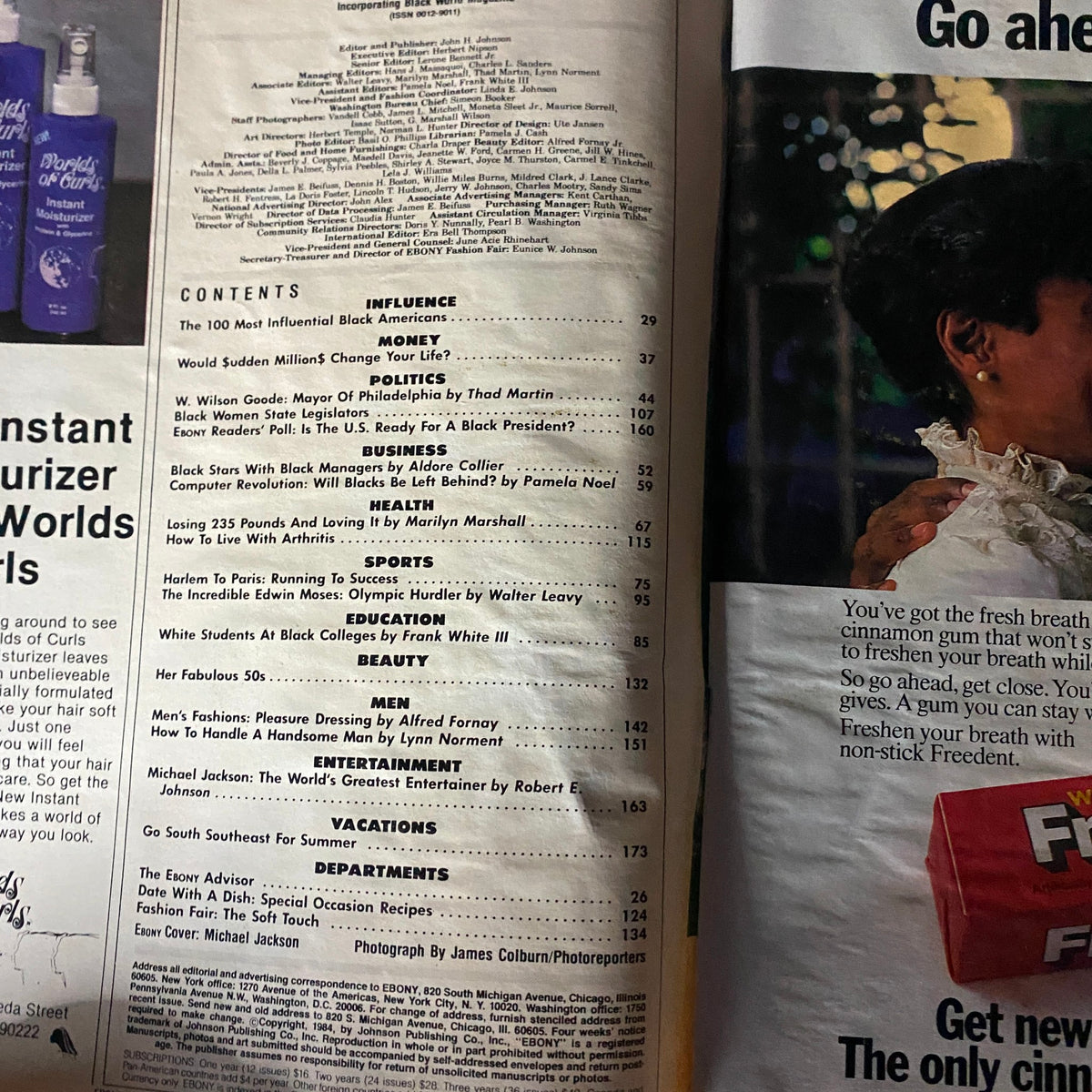
- Michael Jackson May 1984 feature — Ebony's coverage of Jackson at the absolute peak of the Thriller phenomenon, following the record-setting eight Grammy Awards of February 1984 and in the anticipation of the summer 1984 Victory Tour, providing primary documentation from the Black American press of one of the most extraordinary moments in the history of American popular music.
- May 1984 publication date — placing this issue at the specific convergence of Jackson's Grammy record, the ongoing Thriller commercial dominance, and the approaching Victory Tour announcement, documenting him at the precise historical moment when his transformation into the most significant cultural figure in contemporary American entertainment was being confirmed.
- Ebony's specific community documentary perspective — coverage from the publication that had been documenting Black American achievement since 1945, giving the May 1984 Jackson feature the specific significance of the Black American press celebrating the achievement of the most commercially successful Black artist in American entertainment history.
- Well-preserved interior with minimal aging and no missing pages — a positive condition attribute confirming that the full Ebony coverage of this extraordinary moment is accessible for research and reading, with clear and legible print throughout the issue despite the cover's more visible age wear.
- Newsstand origin confirmed by the absence of a mailing label — a meaningful collector attribute preserving the cover without label adhesive damage.
Condition & Rarity
Differentiated condition — well-preserved interior in good condition with minimal aging and clear, legible print alongside a cover in acceptable condition showing visible age and wear — is an honest and transparent assessment for an Ebony Magazine from May 1984 now more than forty years old. The good interior condition is the more functionally significant attribute for the majority of research and collector uses, confirming that the full Ebony coverage of Michael Jackson's May 1984 moment is accessible without the specific cover condition affecting the primary documentary value of the issue's contents. The cover wear reflects the active reading and handling that Ebony issues received from their engaged community readership rather than collector preservation, and it is a common and expected condition pattern for issues from this period that were not stored immediately as collectibles. The newsstand origin confirmed by the absence of a mailing label preserves the cover surface without the additional adhesive damage that subscription labels would have caused. A protective plastic covering indicates deliberate preservation intent appropriate for a publication being maintained as a primary document of Michael Jackson's Thriller era and its significance in Black American cultural history.
Looking for More Issues Like This?
Ebony Magazine issues from May 1984 documenting Michael Jackson at the absolute peak of the Thriller phenomenon — from the perspective of the publication that had been the primary chronicler of Black American achievement since 1945 — are among the most historically significant and specifically sought items in both the Michael Jackson memorabilia market and the Black press collector market. For collectors tracking Jackson's documented presence across publications throughout his career, the Michael Jackson magazine collection is the most focused starting point. The broader Ebony magazine archive offers the most comprehensive resource for the publication's coverage of Black American achievement across its entire history, and collectors building a focused archive of 1984 as one of the most historically significant years in American music will find the complete 1984 magazine collection invaluable for locating other primary documents from this extraordinary year.