

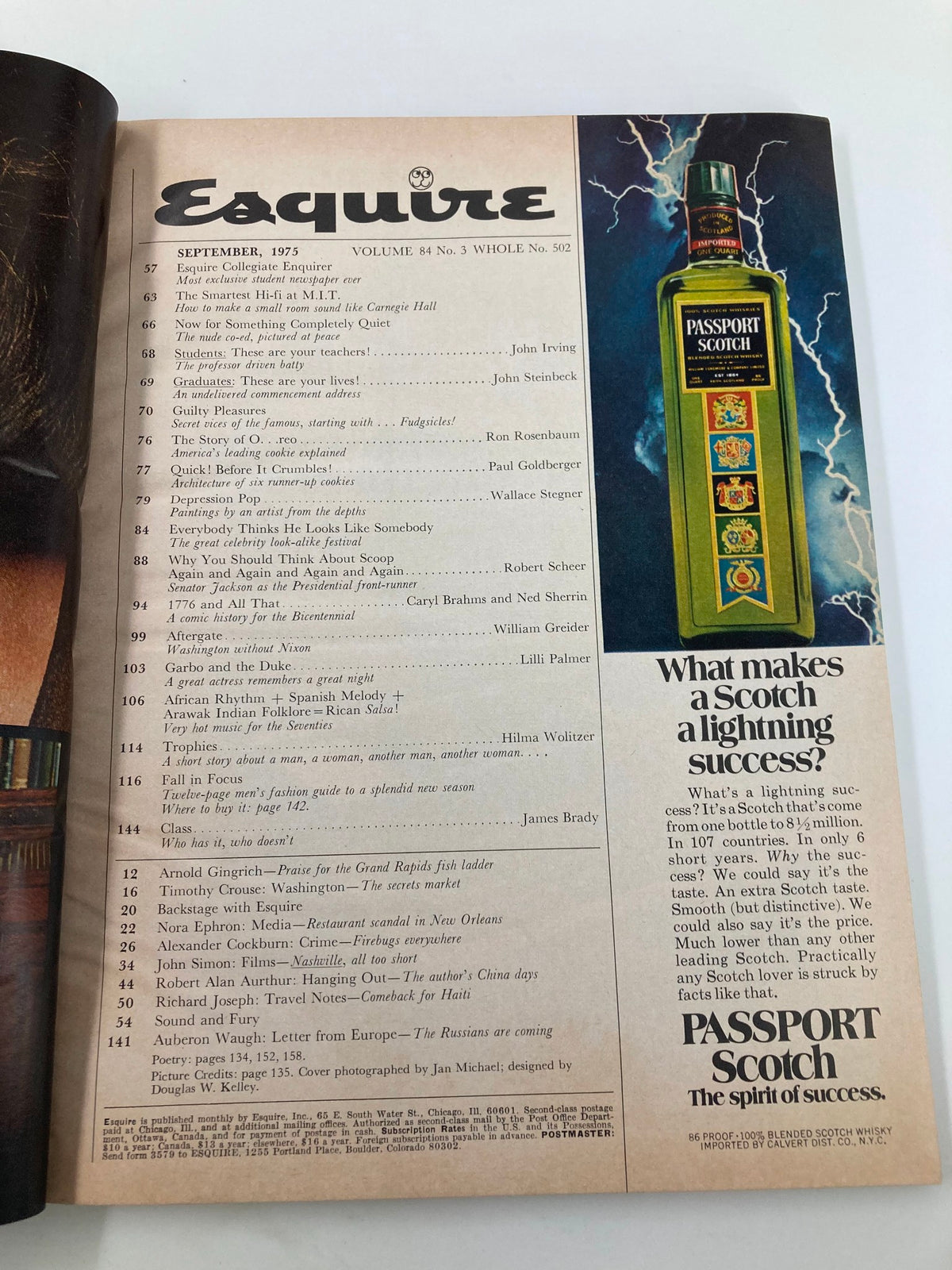


Description
Collector's Note – Why This Issue Matters
The September 1975 issue of Esquire Magazine captures a playful and revealing moment in mid-1970s celebrity culture through its theme, “The Great Celebrity Look-Alike Festival.” The listing identifies this as the issue’s central focus, and that subject fits naturally within Esquire’s tradition of mixing humor, style, social observation, and cultural commentary. For collectors, the look-alike theme is significant because it reflects how celebrity identity had become a major part of American popular culture by the 1970s, visible not only in film and television but also in magazines, advertising, fashion, and everyday humor. The idea of a celebrity look-alike festival also shows how familiar famous faces had become to mass audiences, enough that resemblance itself could become a magazine-worthy cultural joke.
September 1975 sits in an era when magazines were still one of the primary ways readers encountered celebrity culture, satire, style, and social trends. Before online image archives and entertainment websites, print magazines shaped how famous faces were circulated, imitated, joked about, and remembered. For readers studying magazines from 1975, this issue is useful because it shows how celebrity fascination could be treated with wit rather than simple glamour. The “look-alike” concept also reveals something specific about the period: fame had become recognizable enough that impersonation and resemblance could be turned into a full magazine feature. It reflects a culture increasingly shaped by television, film, photography, and magazines working together to make celebrity imagery instantly readable.
As a reference object, this issue belongs to the broader history of Esquire as a magazine that often approached American culture through a mix of sharp writing, visual style, and editorial playfulness. The listing does not confirm individual celebrity names or article titles, so the issue should be understood through its confirmed theme rather than through invented interior details. Its value as a cultural artifact comes from that September 1975 date, the Esquire editorial context, and the way the celebrity look-alike idea reflects the humor, media saturation, and personality-driven pop culture of the decade. For serious magazine collectors, that combination of humor, celebrity commentary, and 1970s design-era context gives the issue a clear place within the broader study of American periodicals.
About the Publication
Esquire Magazine is an American magazine long associated with literary journalism, cultural commentary, men’s style, humor, fiction, profiles, and sophisticated visual presentation. By the 1970s, Esquire had already established a reputation for ambitious magazine writing and a strong editorial personality, appealing to readers interested in culture, politics, entertainment, fashion, and modern American life. Its format often allowed room for serious reporting alongside satire, design-forward features, and playful treatments of celebrity and social trends. That combination makes vintage Esquire issues especially useful for collectors studying how American magazines interpreted the mood and style of their era. In the context of the 1970s, Esquire issues often function as compact cultural records, preserving not only articles and images but also the tone, humor, and visual confidence of the period.
Key Highlights Inside
- September 1975 issue of Esquire Magazine, representing the magazine’s mid-1970s cultural and editorial style.
- Features “The Great Celebrity Look-Alike Festival,” as identified in the listing.
- Reflects 1970s celebrity culture through a humorous and pop-culture-focused theme.
- Shows how recognizable celebrity imagery had become in a media environment shaped by television, film, advertising, and magazines.
- Represents Esquire’s editorial mix of style, commentary, humor, and cultural observation.
- Condition notes describe good condition with a front-cover label and minor age-related wear.
- Plastic protective covering is noted, indicating preservation-minded storage after publication.
- Some marks may be visible on the pages, as described in the listing.
- Specific celebrity names or individual article titles are not confirmed from the listing, so no additional interior details are assumed here.
Condition & Rarity
Collector evaluation of this issue should account for its reported good condition, front-cover label, minor wear, visible page marks, and included plastic protective covering. The presence of a front-cover label is important because it can affect display appeal, especially on magazine issues collected for cover design or visual theme, though labeled copies remain common in periodical collecting because many magazines originally reached readers by subscription. Minor wear and page marks are typical condition factors for mid-1970s magazines that were read, stacked, mailed, or stored without archival materials. For any surviving example of this September 1975 issue, collectors should review the cover surface, spine, staples or binding, page completeness, edge wear, interior marks, and the overall clarity of the cover theme, since the celebrity look-alike concept is central to the issue’s collector identity. The protective covering noted in the listing is also relevant because larger-format lifestyle and culture magazines can be prone to edge wear, cover rub, and corner softness over decades of handling and storage.
Looking for More Issues Like This?
The September 1975 “Great Celebrity Look-Alike Festival” issue is a distinctive example of Esquire’s ability to turn celebrity culture into a sharp, playful magazine concept. Collectors interested in similar editorial style, 1970s cultural commentary, and visually memorable covers can browse the broader Esquire Magazine collection for related issues across different decades. Exploring Esquire by year and theme can help reveal how the magazine balanced humor, style, politics, celebrity, and literary ambition across changing cultural periods.
For wider period context, the 1975 magazine archive helps place this issue alongside other entertainment, fashion, politics, humor, and culture magazines from the same year. Looking across the year can show how mid-1970s magazines captured celebrity, social change, and popular taste in print. That broader view is especially useful for collectors who study magazines not only as individual objects, but as connected records of the media culture that produced them.