
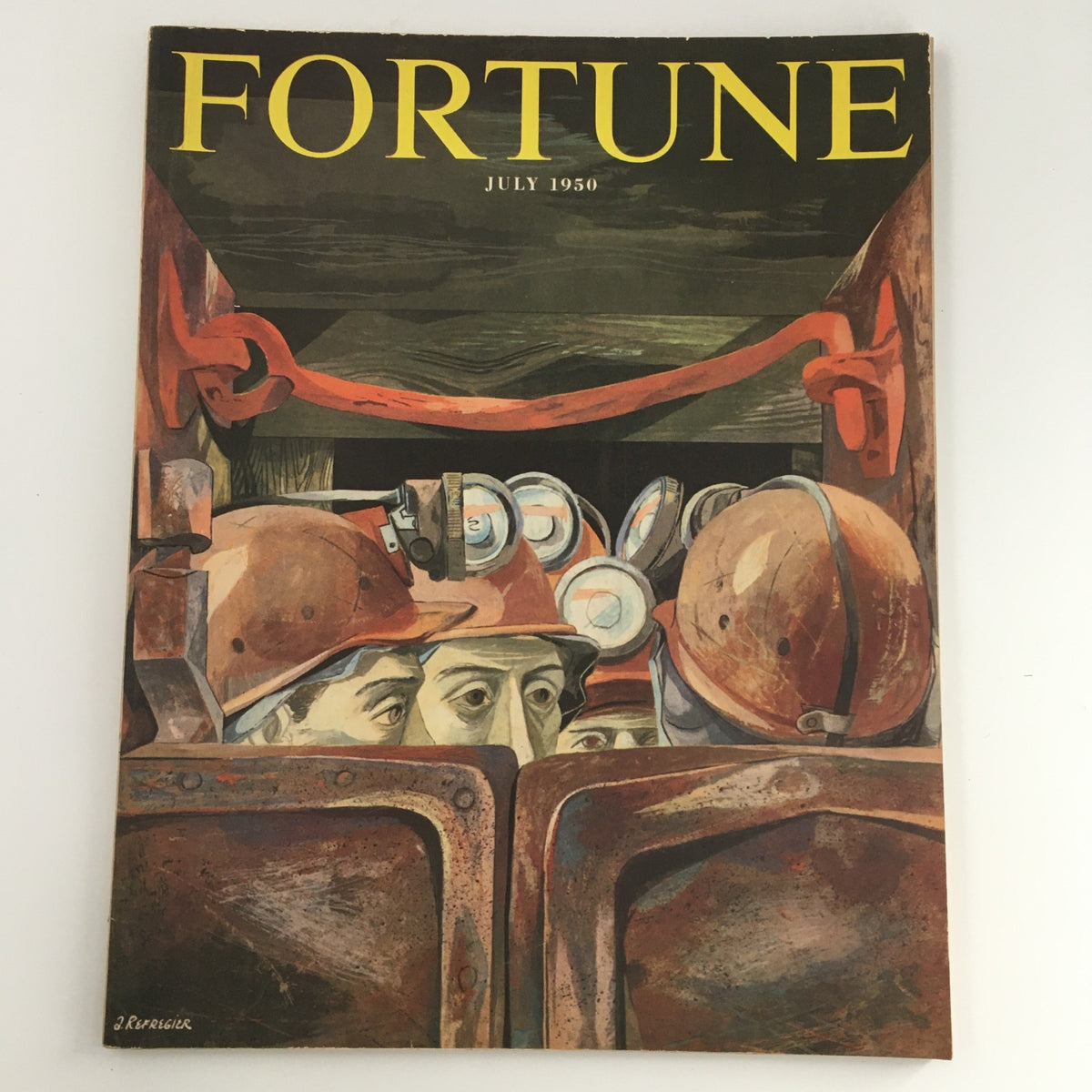

Description
Collector's Note – Why This Issue Matters
This July 1950 issue of Fortune features "Big Time in São Paulo," a piece capturing one of the most significant urban and industrial transformations underway in mid-twentieth-century South America. By 1950, São Paulo had emerged as Brazil's preeminent industrial and commercial center, having grown rapidly from its earlier identity as a coffee-trading hub into a genuinely major metropolitan economy attracting both domestic migration and international business interest. Fortune's choice to devote substantial feature coverage to a South American city, rather than confining its attention to American or European business centers, reflects the magazine's broader editorial ambition during this period to document significant economic developments wherever they were occurring around the globe. This kind of international business journalism distinguished Fortune from many of its competitors, who often maintained a narrower, primarily domestic focus in their coverage of industry and commerce. A feature on São Paulo's rise during this specific postwar period captures the city at a genuinely pivotal moment in its development into the major global metropolis it would eventually become. The piece offers readers and later researchers a documented contemporary snapshot of how American business journalism was characterizing Brazil's industrial growth at this exact point in the mid-twentieth century. That international scope is part of what gives this issue lasting reference value beyond purely domestic American business history.
This issue's companion feature on underwriters addresses a significant sector within the American financial and insurance industries, examining the business practices and evolving role of underwriting professionals during a period of considerable postwar economic expansion. The underwriting profession occupied a genuinely important position within mid-century American finance, serving as the mechanism through which insurance risk was assessed and priced across numerous industries, and a dedicated feature on this subject reflects Fortune's broader pattern of examining the specialized professional and institutional structures underpinning American business beyond simply profiling individual companies or executives. The early 1950s represented a period of substantial growth across American financial services more broadly, as the postwar economy continued expanding and insurance needs grew correspondingly across both consumer and commercial sectors. A feature examining underwriters during this specific window offers a documented contemporary perspective on how this profession was evolving alongside the broader postwar American economic boom. This kind of specialized industry analysis was characteristic of Fortune's broader editorial approach, treating financial infrastructure and professional practice as genuinely newsworthy subjects in their own right. The pairing of this domestic finance feature alongside the issue's international São Paulo coverage reflects the breadth Fortune brought to a single edition.
Fortune's editorial approach throughout this period consistently combined serious business and economic analysis with notably high production values, treating major industry and economic developments as subjects worthy of substantial, well-researched feature treatment rather than brief news items. The magazine's willingness to dedicate significant space to both an international urban economic transformation and a specialized domestic financial sector within a single issue reflects the comprehensive scope Fortune brought to documenting the postwar global economy. This breadth distinguished Fortune from narrower trade publications that might have covered either subject in isolation, situating both pieces within the magazine's broader mission of providing business leaders and professionals with sophisticated analysis spanning the full range of contemporary economic developments. The early 1950s in particular represented a period when American business interests were increasingly attentive to international economic development, as postwar reconstruction and growth created new opportunities and considerations across global markets. Fortune's attention to São Paulo specifically anticipated the city's continued and substantial growth into one of the world's largest metropolitan economies in the decades that followed. That combination of foresight and contemporary documentation is part of what gives this issue genuine historical interest beyond its immediate 1950 publication context. Readers of this issue would have been encountering serious analysis of developments whose full significance would only become more apparent with time.
For collectors of mid-century American business journalism, postwar international economic development, or the history of the American insurance and finance industries, this issue offers a richly documented artifact spanning both domestic and international subject matter. It sits within the broader context of 1950 magazines and the editorial history of Fortune itself, situating this issue within both a precise calendar moment and a significant period of postwar global economic transformation. The combination of São Paulo's industrial rise and a specialized examination of American underwriting practices gives this issue a genuinely wide-ranging scope uncommon even among Fortune's typically substantial feature coverage. That breadth, paired with the magazine's characteristic depth of analysis, is precisely what gives this issue lasting reference value for collectors of mid-twentieth-century business history.
About the Publication
Fortune was an American business magazine that distinguished itself through substantive analysis of industry, finance, and economic trends, aimed at a readership of business professionals and executives rather than a general-interest audience. The magazine's editorial format combined serious journalistic analysis with notably high production values, frequently devoting substantial feature-length treatment to significant economic developments both within the United States and internationally. By 1950, Fortune had established a reputation for this kind of comprehensive business journalism, willing to examine subjects ranging from specialized domestic financial sectors to major international urban and industrial transformations within the same issue. The magazine's coverage of international economic developments, such as this issue's feature on São Paulo's industrial rise, reflected its broader editorial ambition to document significant business and economic stories wherever they were unfolding around the globe. Fortune's readership during this era consisted of business leaders and professionals seeking sophisticated, well-researched analysis of major economic and industrial developments. The magazine's attention to specialized professional sectors, such as insurance underwriting, alongside broader international economic coverage reflected its comprehensive approach to documenting the postwar global business landscape. This July 1950 issue reflects that established editorial approach during a significant period of postwar economic expansion both domestically and internationally.
Key Highlights Inside
- "Big Time in São Paulo," a feature documenting the Brazilian city's significant rise as a major industrial and commercial center during the mid-twentieth century. This piece reflects Fortune's broader editorial ambition to cover significant international business developments alongside its domestic American coverage. The feature captures São Paulo at a genuinely pivotal point in its development into a major global metropolis.
- A feature on underwriters, examining the business practices and evolving role of underwriting professionals within the American insurance and finance industries. This piece reflects Fortune's broader pattern of treating specialized professional and institutional structures as genuinely newsworthy subjects. It offers a documented contemporary perspective on this profession during a period of substantial postwar financial sector growth.
- Coverage spanning both international economic development and specialized domestic financial analysis within a single issue, reflecting the comprehensive scope characteristic of Fortune's editorial approach during this period. This breadth distinguished the magazine from narrower trade publications focused on a single industry or region. Specific additional articles or features beyond these two central pieces are not detailed in available listing information.
Condition & Rarity
Condition for business and trade magazines of this age and type is generally assessed through paper integrity, binding condition, and the overall legibility of printed text and illustration. A copy described as good condition, with minor wear such as small rips, edge wear, creases, or other marks, reflects wear that is genuinely typical for periodicals approaching three-quarters of a century in age, particularly given that paper stock from this period was not designed for indefinite archival stability. The newsstand designation, indicating original commercial distribution without a label, is generally a favorable detail for collectors, since it suggests the absence of label residue or subscriber information that might otherwise obscure the cover presentation. A protective plastic covering plays a meaningful role in halting further deterioration, guarding against additional humidity exposure and handling wear going forward. Given the issue's value resting substantially on its written analysis of both São Paulo's industrial rise and American underwriting practices, interior page legibility carries particular weight when evaluating long-term collectible and reference value. Fortune issues from this period generally hold their value well among collectors specifically because of the magazine's reputation for substantive, well-researched business journalism rather than purely cosmetic or visual appeal. Collectors evaluating any surviving copy of this issue should weigh overall structural completeness and the continued clarity of its printed analytical content as the primary indicators of long-term collectible and reference value. Reviewing accompanying photographs closely remains the best way to assess the specific condition of any individual surviving copy.
Looking for More Issues Like This?
A Fortune issue from July 1950 combining significant international business coverage with specialized domestic financial industry analysis represents a genuinely notable category of mid-century American business journalism collecting. If this exact issue isn't what you're looking for, the broader Fortune collection spans material from across the magazine's publishing history, offering a wider range of issues and editorial eras for collectors interested in the title's overall legacy in American business journalism. For those more focused on this specific year, the full range of 1950 magazines brings together material from across that year, spanning multiple publications beyond Fortune alone, including other periodicals documenting the early postwar economic landscape. Browsing the Fortune collection can be especially useful for collectors building a set around specific international business coverage or specific decades of the magazine's editorial history. Browsing by year, on the other hand, suits collectors more interested in capturing a broader cultural and economic snapshot of 1950 across different types of periodicals. Either approach offers a practical way to continue exploring material connected to this issue's particular combination of international and domestic business content. Both collections represent solid starting points for finding comparable issues from this period in American business and economic journalism. Fortune's substantial feature-length treatment of both subjects in this issue makes it a particularly interesting reference point for researchers tracing either São Paulo's industrial history or the development of American insurance underwriting practices specifically.