






Description
Collector's Note – Why This Issue Matters
The September 1944 issue of Gourmet: The Magazine of Good Living, carrying the cover title "Smoke Gets in Your Meat," is a primary document of American culinary culture at one of the most militarily consequential months of the Second World War — a month in which the Allied liberation of Western Europe was in active and decisive progress, with Paris liberated on August 25 just days before this issue reached newsstands, the Allied advance through France continuing through September, and the full industrial and human mobilization of the American war effort still at its peak. September 1944 is not yet the war's end — that remained eight months away in Europe and nearly a year away in the Pacific — but it is the month in which the war's outcome had become sufficiently clear to the American public that the psychological and material texture of daily life was beginning its slow reorientation toward the anticipation of postwar existence. That Gourmet chose for its September 1944 cover a feature on smoking and meat preservation — one of the oldest and most fundamentally American culinary traditions, rooted in the specific conditions of a pre-refrigeration food culture and carrying associations with the rural, the regional, and the self-sufficient — gives this issue a cultural specificity that resonates well beyond its recipes. For collectors building a comprehensive archive of vintage Gourmet magazine issues across the wartime period, the September 1944 issue represents the publication at the mature center of its wartime editorial identity, navigating the specific challenge of sustaining culinary aspiration and pleasure within a domestic landscape still defined by rationing, absence, and the ongoing demands of a global conflict entering its most decisive phase.
The "Smoke Gets in Your Meat" cover title merits careful attention as a primary document of wartime American food culture. The playful literary allusion embedded in the title — a clear reworking of Jerome Kern and Otto Harbach's 1933 standard "Smoke Gets in Your Eyes," one of the most recognizable popular songs of the preceding decade — signals the editorial sophistication and cultural literacy that Gourmet consistently brought to its content framing, even within the practical constraints of wartime publishing. More substantively, the specific choice of meat smoking as a September 1944 cover subject reflects the genuine culinary and economic landscape of that moment with precision. Meat had been under OPA point rationing since March 1943, and by September 1944 American home cooks had been managing rationed meat supplies for eighteen months — developing the kind of careful, technique-oriented relationship with preservation, preparation, and flavor extraction that makes a feature on smoking particularly resonant. Smoking as a preservation and preparation technique addressed the specific concerns of the wartime kitchen directly: it extended the shelf life of rationed meat supplies, it maximized flavor from smaller or less desirable cuts, and it connected contemporary home cooks to a deep American tradition of self-sufficient food culture that carried its own patriotic and historical resonances in a wartime context. The autumn timing is equally significant — September was the traditional beginning of the slaughtering and preservation season in American agricultural culture, and a feature on smoking in September 1944 situated Gourmet's coverage within the seasonal rhythms of food preservation that remained meaningful for a significant portion of its readership even in an increasingly urban America. Collectors focused on magazines from 1944 as primary documents of the American home front at the war's decisive turning point will find this issue providing unusually specific evidence of how culinary publishing was engaging with both the practical constraints and the deeper cultural traditions of American food life in the conflict's penultimate year.
It is also worth situating this issue within Gourmet's own institutional arc at the specific point of its publication. September 1944 falls in the magazine's fourth year of operation — deep within the wartime period that shaped its founding editorial identity, at a point when the editorial team had developed a mature and confident approach to sustaining the magazine's foundational vision of culinary pleasure and good living under conditions of genuine constraint. The timeless recipes, techniques, and historical content confirmed for this issue reflect the editorial strategy that Gourmet had refined across three and a half years of wartime publishing: the appeal to deep American culinary traditions, to techniques and ingredients that predated and transcended the specific disruptions of wartime, as a way of maintaining the magazine's aspirational register while acknowledging the material realities its readership was navigating. Smoking and preservation as culinary subjects exist precisely at the intersection of the timeless and the timely that Gourmet's wartime editorial approach consistently sought — ancient techniques newly relevant, historical traditions newly practical, pleasures that the war had not eliminated but had simply redirected toward different ingredients and different scales of ambition. That editorial maturity, visible in the specific cover choice of September 1944, is itself a primary document of what four years of wartime publishing had produced in one of American food journalism's most consequential founding voices.
About the Publication
Gourmet: The Magazine of Good Living was founded in January 1941 by Earle MacAusland, whose editorial philosophy established from the outset a distinctive approach to food publishing that set the title apart from every American competitor of its era: the treatment of cuisine as a subject worthy of literary engagement, historical depth, narrative ambition, and genuine cultural seriousness rather than purely practical domestic instruction. Where other food publications of the period presented recipes as functional documents, Gourmet embedded its culinary content in story — regional portraits, travel narratives, personal histories, and cultural essays that gave its content a resonance and intellectual weight that no direct competitor fully matched. Its readership was educated, relatively affluent, and genuinely invested in food, hospitality, and the broader pleasures of a cultivated life. Published continuously from its 1941 founding until Condé Nast — which had acquired the title in 1983 — closed it in 2009 during a round of cost reductions, the magazine's nearly seven-decade run produced an archive of exceptional historical depth. The wartime issues of 1941 through 1945 represent the founding era's most historically charged and editorially revealing body of work — a period in which the magazine's commitments to pleasure, cosmopolitan curiosity, and the primacy of good living were sustained against conditions that made all three genuinely difficult, and in which the editorial responses to those conditions produced some of the most revealing publishing of the title's long history.
Key Highlights Inside
- "Smoke Gets in Your Meat" — confirmed cover title and primary editorial feature — A meat smoking and preservation feature published eighteen months into the OPA's meat rationing program, documenting Gourmet's characteristic editorial strategy of finding culinary depth and historical grounding within the practical constraints of the wartime ingredient landscape — and doing so with the literary playfulness and cultural literacy that distinguished the magazine's content framing throughout its founding era.
- Timeless recipes and culinary techniques — confirmed interior content — Recipe and technique content rooted in deep American food preservation traditions, developed within the specific ingredient and rationing realities of September 1944 and reflecting the editorial maturity that four years of wartime publishing had produced in the magazine's approach to sustaining culinary aspiration within material constraint.
- Smoking and grilling technique content — confirmed thematic content — Substantive coverage of smoking as both a preservation method and a flavor development technique, consistent with the seasonal context of September as the traditional beginning of the American preservation season and with the specific wartime relevance of techniques that maximized flavor and shelf life from rationed meat supplies.
- Period photography and illustration — confirmed visual content — Original artwork and photography representative of mid-1940s American food magazine design, documenting the visual language of culinary publishing at the specific mid-war moment when the aesthetic conventions of the founding era had matured into a confident and distinctive editorial visual identity.
- Note: Specific additional interior article titles and confirmed features beyond the cover story and recipe content noted in the listing have not been independently verified for this issue. The above reflects documented cover content, confirmed listing descriptions, and the publication's known editorial conventions for this period rather than comprehensive table-of-contents information.
Condition & Rarity
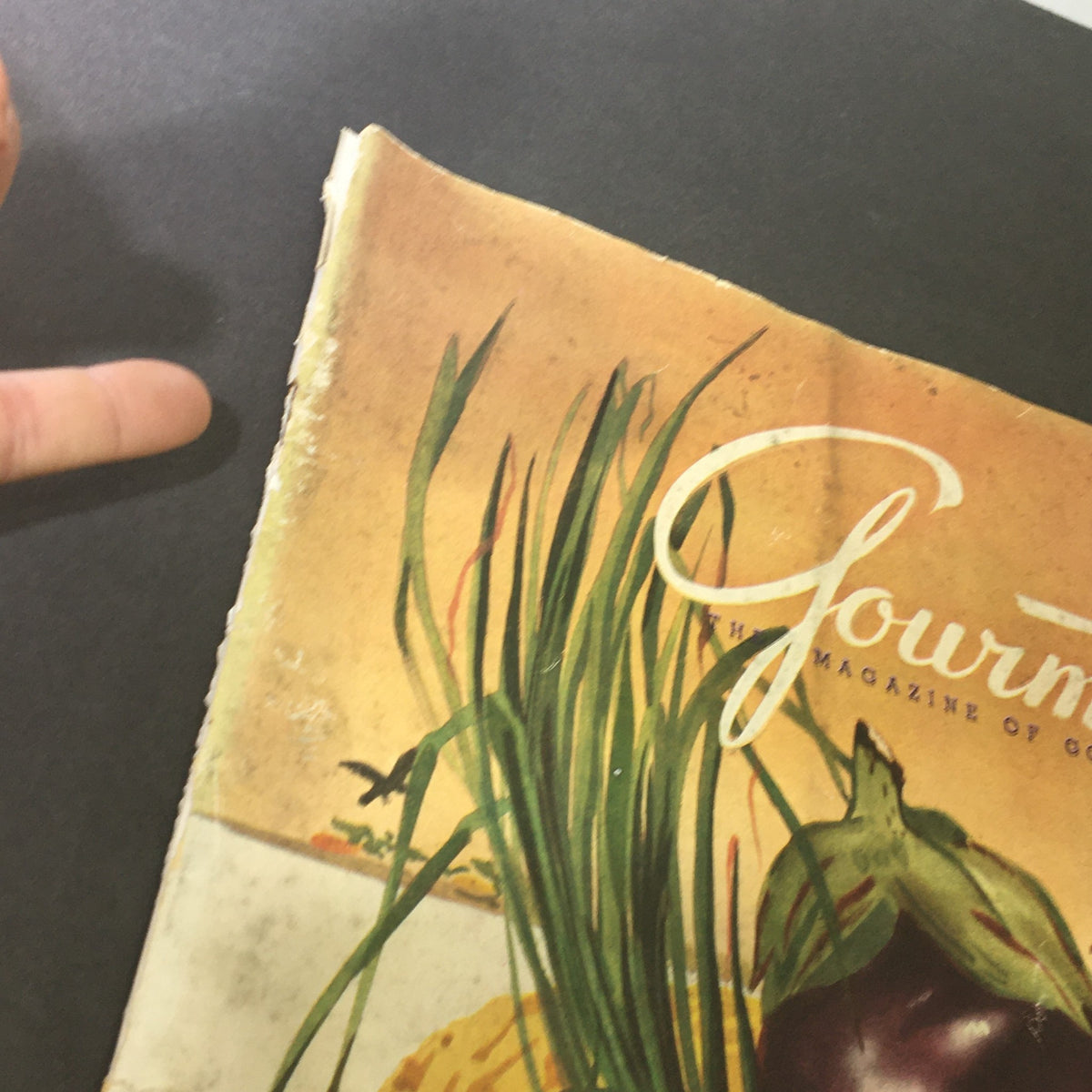
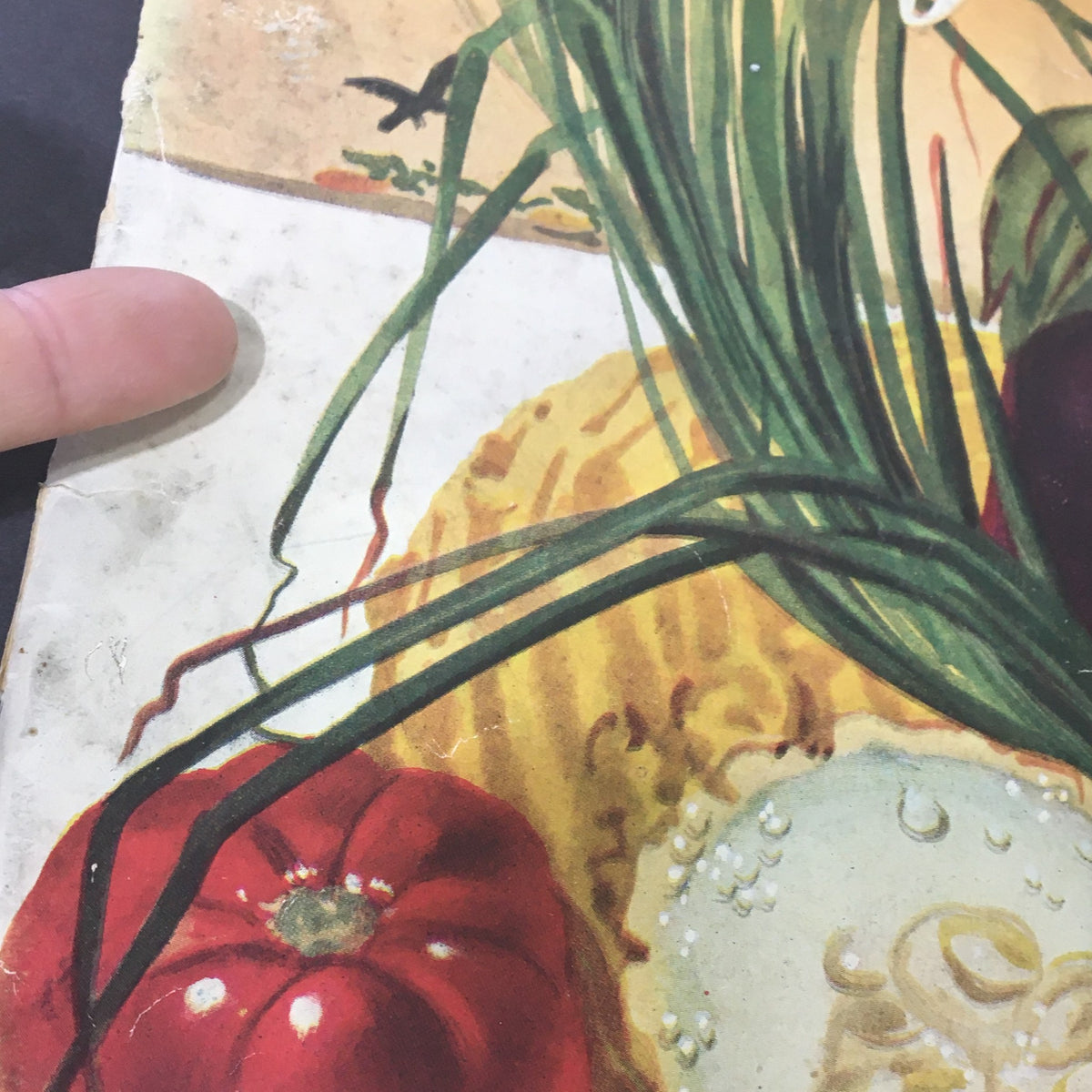
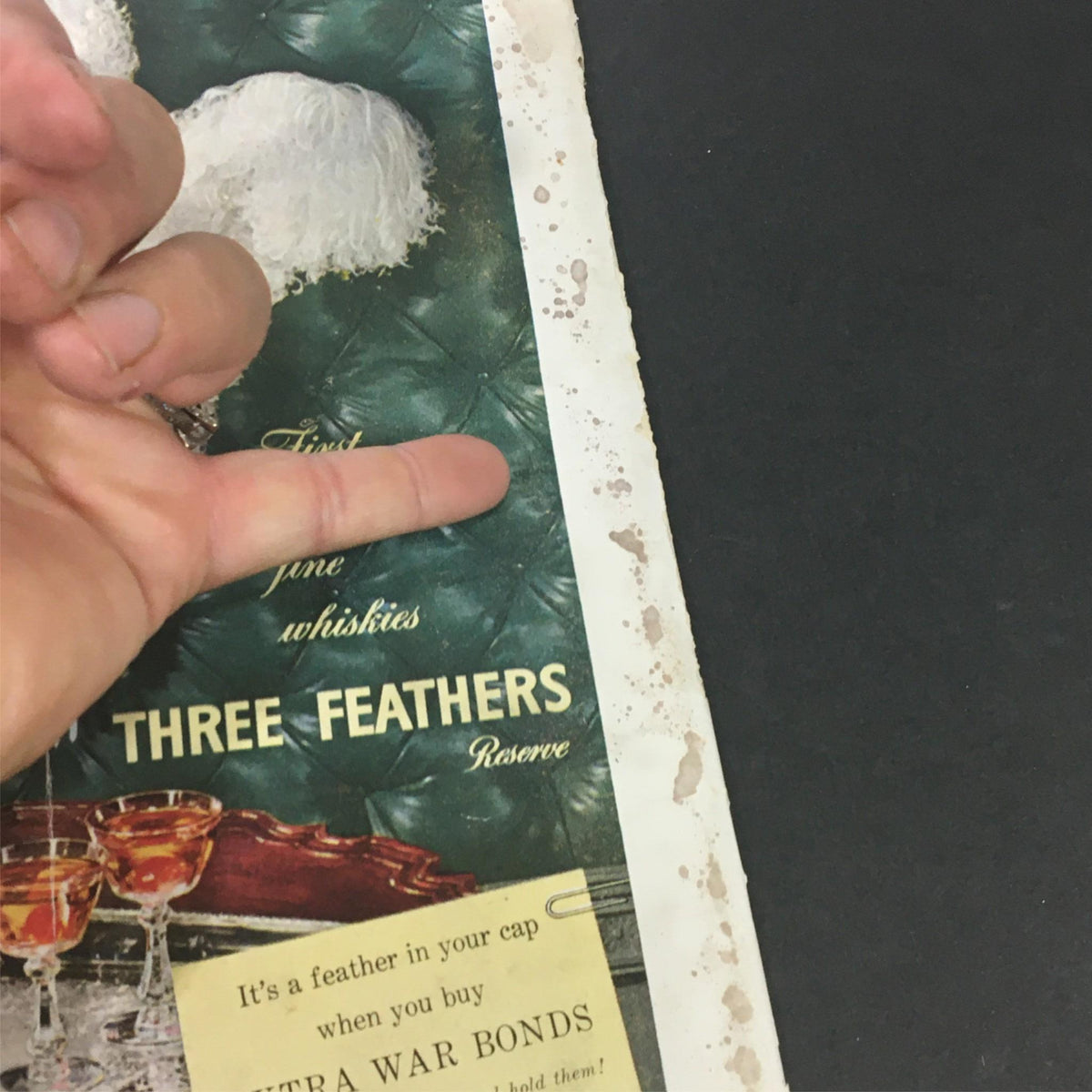
Surviving copies of this issue described as being in good vintage condition with minor edge wear, occasional rips or marks, and binding wear that remains intact occupy an honest and collectible position within the grading spectrum for an eighty-year-old consumer magazine — condition attributes that experienced collectors of wartime-era periodicals understand as characteristic of survival across eight decades rather than as meaningful detractions from historical or collecting value. The intact binding is a specifically meaningful condition attribute for a publication of this age: magazines from the early-to-mid 1940s were bound with adhesives and construction methods that are particularly susceptible to deterioration over time, and surviving copies with binding that remains structurally sound — even with visible wear — represent a better preservation outcome than the detached covers and separated pages that characterize a significant portion of the surviving population of issues from this period. The newsstand origin designation — confirmed by the absence of a mailing label — places surviving copies in the provenance tier that collectors of Gourmet and comparable publications specifically prioritize, as subscription labels on issues of this age were typically applied directly to cover imagery in positions that either permanently obscure the primary design or leave irreversible adhesive damage when removed. A protective plastic covering applied during preservation indicates deliberate archival handling that has helped limit further deterioration of both cover and interior content. Federal wartime paper conservation measures implemented from 1942 onward reduced material quality across the American publishing industry through the war's end, meaning that Gourmet issues from this period are more susceptible to yellowing and brittleness than their prewar counterparts — making any copy retaining complete, readable interior pages and a structurally intact binding a genuine and meaningful preservation of an irreplaceable primary document.
Looking for More Issues Like This?
The September 1944 issue of Gourmet — published at the war's decisive turning point, carrying a cover story on smoking and meat preservation whose subject sits at the precise intersection of wartime practicality and deep American culinary tradition, and representing the magazine's editorial maturity at the center of its wartime publishing era — is among the more historically specific and purposeful collecting targets within the full wartime arc of the title's archive. Issues from this window of the magazine's history surface rarely in condition that retains both intact binding and complete interior pages, and the combination of cover story specificity and historical context gives this issue a documentary significance that extends well beyond its recipes and techniques. The complete Gourmet magazine collection at OriginalMagazines.com spans the full run of the title from its 1941 founding through 2009 and is the most reliable resource for collectors researching available issues across the wartime and early postwar era. For collectors building a broader picture of American publishing culture in 1944 — the year in which the war's outcome became sufficiently clear to begin reshaping the anticipatory psychology of American domestic life — the full 1944 magazine archive covers the range of publications from a year that sits at the precise pivot between the war's most uncertain middle period and the beginning of its conclusive final phase.