


Description
Collector's Note – Why This Issue Matters
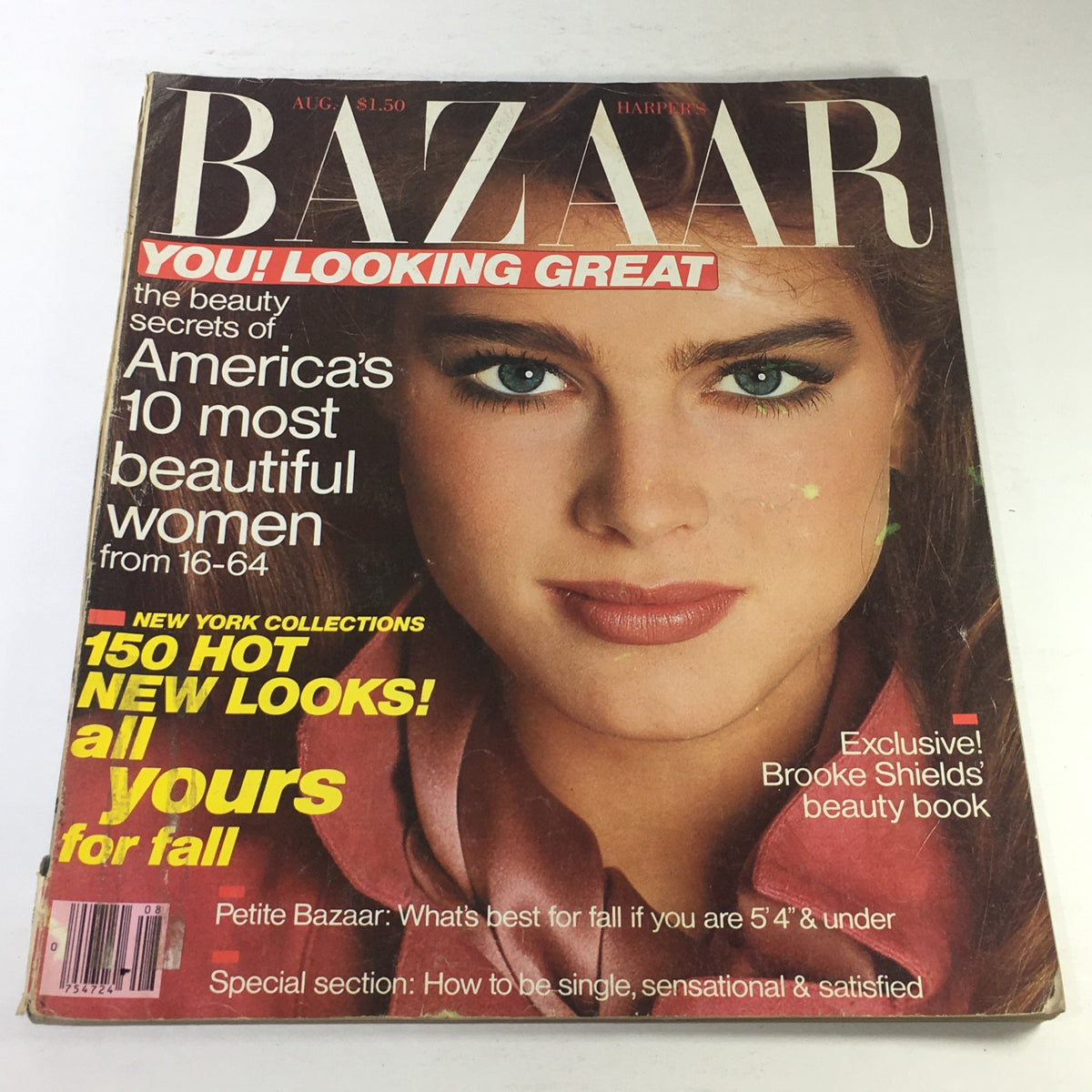
The August 1981 issue of Harper's Bazaar featuring Brooke Shields on the cover documents one of the most culturally consequential young celebrities of the early eighties at a moment when her public presence was at its most intense and contested. Shields was seventeen in August 1981, already the veteran of Pretty Baby, The Blue Lagoon, and the Calvin Klein jeans campaigns that had made her simultaneously one of the most recognized faces in the world and a focal point for national debates about the sexualization of young women in commercial media. A Harper's Bazaar cover appearance in August 1981 — a summer issue of one of the most artistically serious and editorially considered fashion magazines in America — represented a different kind of cultural validation than the controversy-courting campaigns that had preceded it. Bazaar's cover choices were not made casually, and putting Shields on an August 1981 cover was a statement about her standing within the high fashion world rather than merely the entertainment and advertising worlds she had been dominating. For collectors tracking her career across the early-eighties media landscape, the Brooke Shields magazine archive is the most comprehensive resource for following her appearances across multiple major titles throughout the decade, and this Bazaar appearance is a distinctly significant entry in that chronology.
The pairing of Shields with Harper's Bazaar in August 1981 carries additional significance when understood in the context of the magazine's editorial identity and history. Bazaar had been the publication of Richard Avedon, the magazine whose visual tradition was defined by its extraordinary photographic legacy and its commitment to treating fashion imagery as a serious art form. A Shields cover in this context was an implicit argument that she belonged not merely in the world of celebrity and commercial advertising but in the world of serious fashion photography and editorial vision — a claim that was itself culturally loaded given the controversy that had surrounded her career up to that point. The early eighties were a moment when the magazine was navigating its own editorial identity, maintaining its art direction legacy while engaging with the decade's emerging celebrity culture, and a Shields cover represents that navigation in real time. The broader context of the year's publishing landscape is documented across the 1981 magazine collection, which brings together titles from the opening year of the Reagan era's aesthetic and cultural transformation. The full arc of Bazaar's cover choices and editorial identity across this period is traceable through the Harper's Bazaar magazine collection.
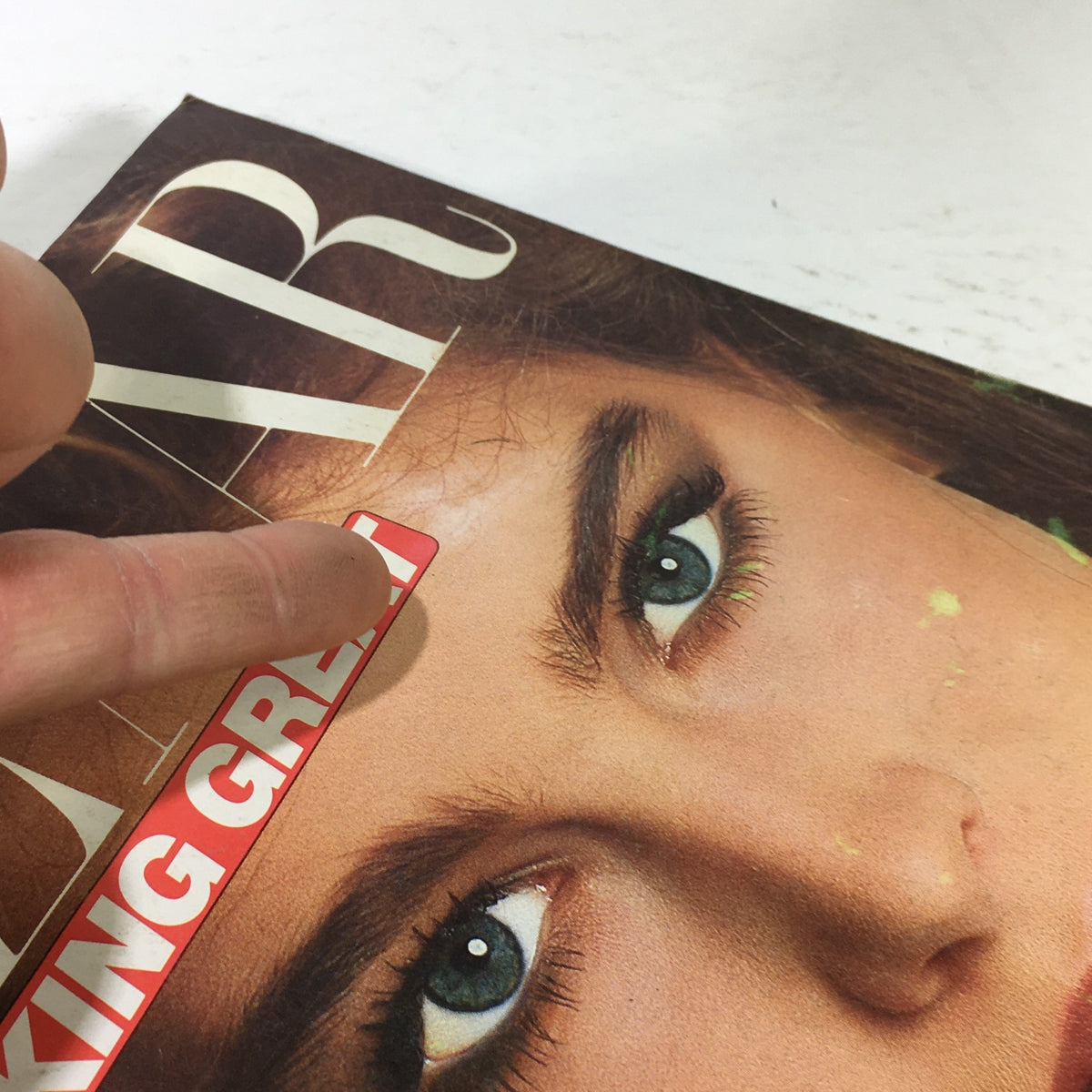
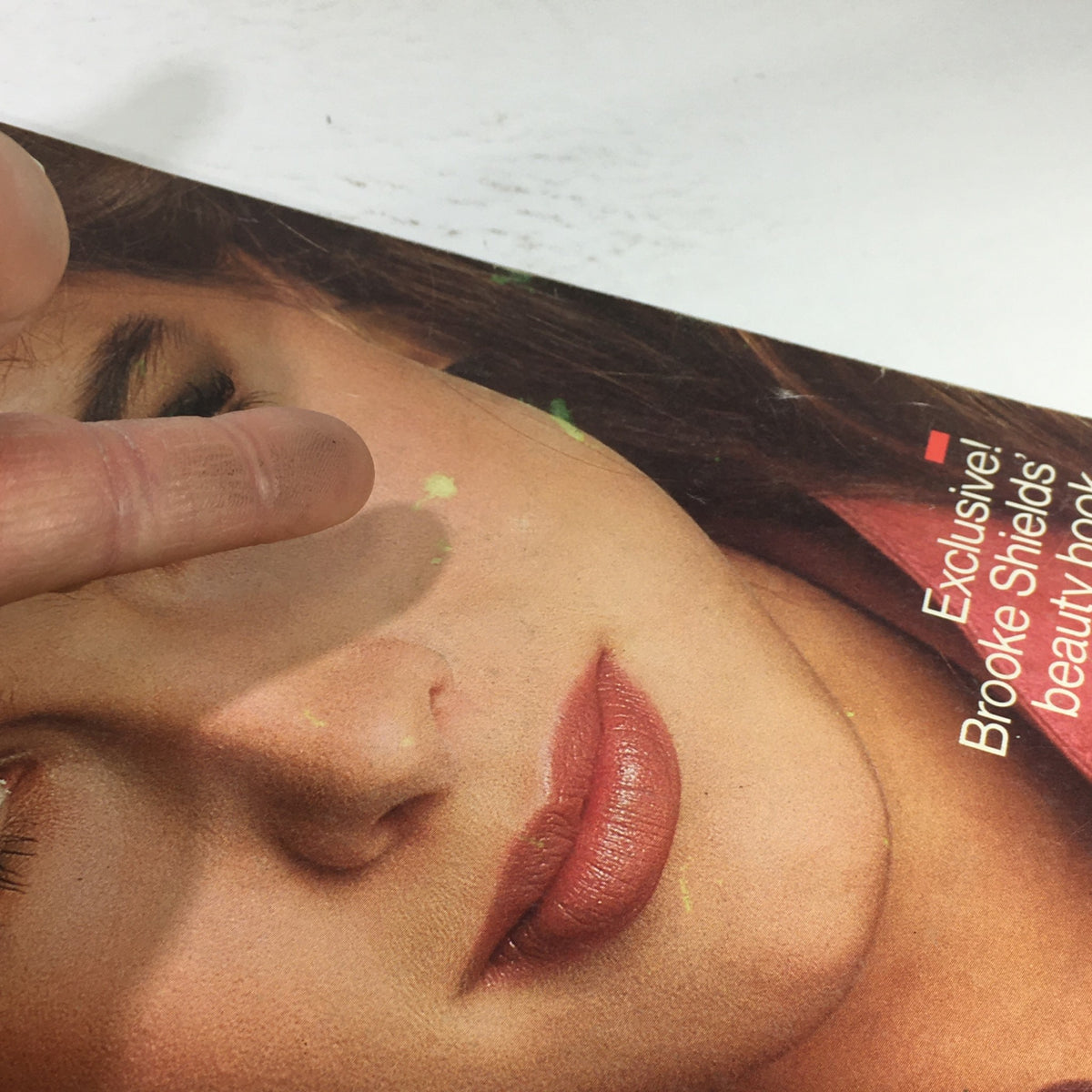
The address label on the front cover of this issue identifies it as a subscription copy, mailed to its original recipient in August 1981. For a cover where Shields's specific visual presence and the magazine's editorial statement about her standing are primary collecting reasons, the label's partial obscuration of the cover image is a condition factor that experienced collectors weigh against label-free newsstand copies of the same issue. The light rips and marks noted in the listing add to the honest condition profile of an original artifact that has passed through four decades without institutional preservation — attributes that collectors of early-eighties fashion magazines evaluate as authentic patina rather than disqualifying defects.
About the Publication
Harper's Bazaar, founded in 1867 and one of the oldest continuously published fashion magazines in the United States, has throughout its history built its identity on a tradition of exceptional art direction, transformative photography, and a commitment to treating fashion as a legitimate cultural art form. By August 1981 it was navigating the early-eighties aesthetic revolution with the full weight of that legacy behind it — a heritage that included the revolutionary art direction of Alexey Brodovitch, the photography of Richard Avedon, and the editorial vision of Diana Vreeland, all of which had established Bazaar as the more intellectually and artistically serious of the two major American fashion titles. Its audience in 1981 was affluent, educated, and fashion-forward, drawn to the magazine's combination of high-fashion authority and genuine cultural ambition that set it apart from more purely commercial competitors.
Key Highlights Inside
- Brooke Shields August 1981 cover — documenting one of the early eighties' most culturally contested and commercially significant young celebrities in a Harper's Bazaar context that represented a specific form of high-fashion editorial validation distinct from the advertising and entertainment coverage that had defined her public image up to that point.
- Summer 1981 fashion editorial content — the warm-weather silhouettes, colors, fabrics, and styling approaches that defined the early-eighties aesthetic in its summer expression, presented through Bazaar's characteristic quality photography and art direction at a moment when the decade's visual language was consolidating rapidly.
- Beauty and lifestyle content consistent with Bazaar's August 1981 summer format — the seasonal beauty directions and lifestyle features that addressed the aspirational concerns of the magazine's affluent, fashion-forward readership at a moment when the early-eighties cultural and aesthetic values were being communicated with increasing confidence and commercial sophistication.
- Period advertising pages representing the luxury fashion and beauty brands investing in Bazaar's summer 1981 audience — a primary document of the early-Reagan-era luxury market at a moment of significant cultural and commercial realignment.
- Note: Specific article titles, bylines, and additional named interior features beyond those indicated in the listing have not been confirmed from available sources. The highlights above reflect what is documented in the listing and Harper's Bazaar's well-established editorial format for this period.
Condition & Rarity
Surviving copies of the August 1981 Harper's Bazaar with Brooke Shields on the cover carry a condition profile that experienced collectors evaluate with the standard distinctions in mind. The front address label identifies this as a subscription copy, which partially obscures the Shields cover image — a distinction that affects display quality and is consistently reflected in how the collector market prices subscription versus newsstand copies of the same issue. Light rips and marks on the cover are the honest attributes of an original, unrestored periodical that has passed through four decades of existence without archival preservation — they identify an authentic artifact rather than a reproduction. Good condition for a subscription copy of this vintage is a reasonable and honest assessment that collectors will calibrate against the specific wear details shown in the provided photographs. The protective plastic sleeve is the correct conservation measure for a magazine of this age and paper stock, stabilizing further deterioration without requiring any alteration to the original item.
Looking for More Issues Like This?
A Brooke Shields Harper's Bazaar cover from August 1981 is a specific and historically interesting find — the combination of her cultural significance in the early eighties with Bazaar's editorial seriousness makes this a more layered document than a standard celebrity fashion cover. If this particular issue is no longer available, the Brooke Shields magazine collection is the best starting point for finding other cover appearances that document her career across the decade's major titles. The full Harper's Bazaar archive covers the complete run of the title for collectors working through its history systematically, and the 1981 magazine collection provides broader context for anyone building an archive of the cultural and aesthetic opening of the Reagan decade.