
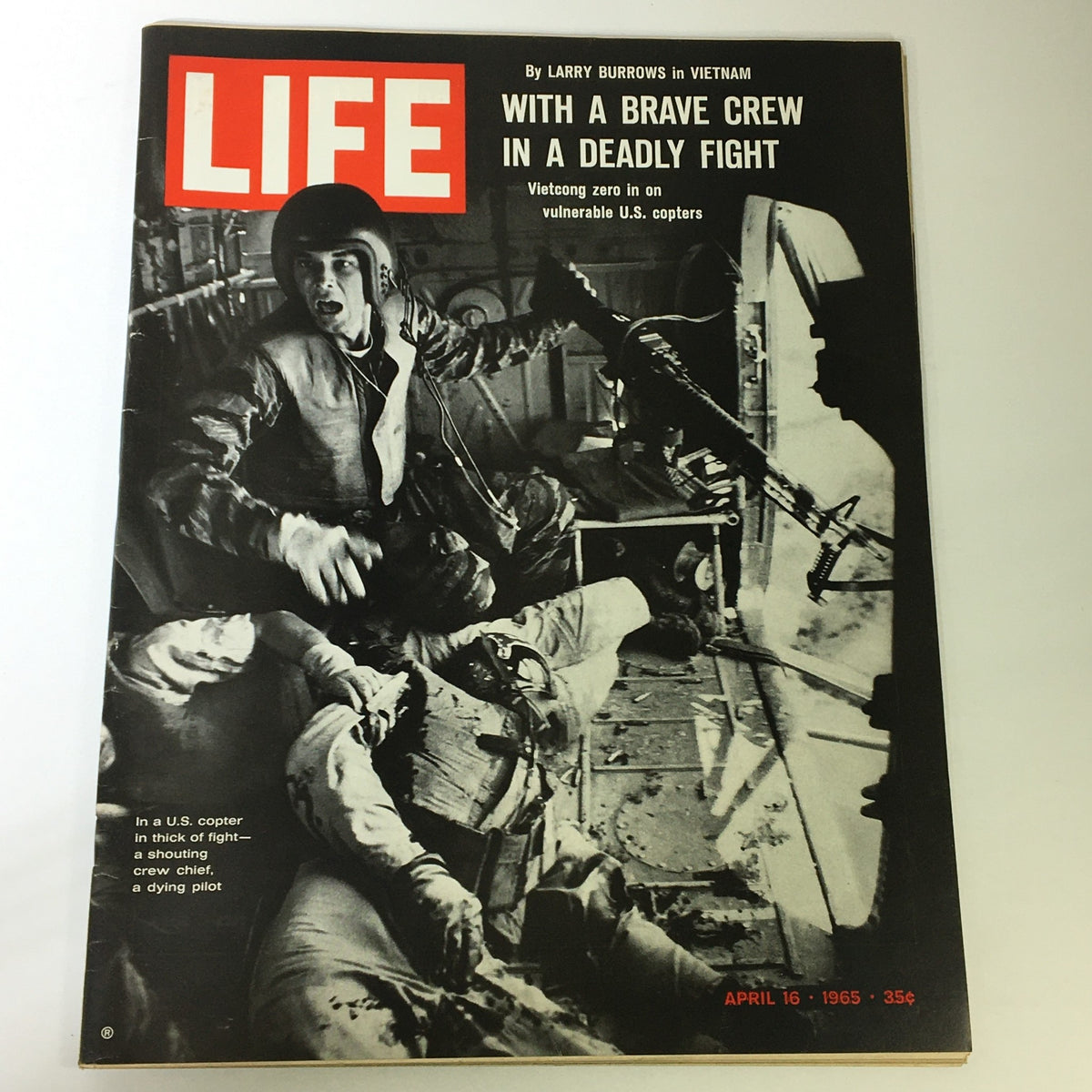
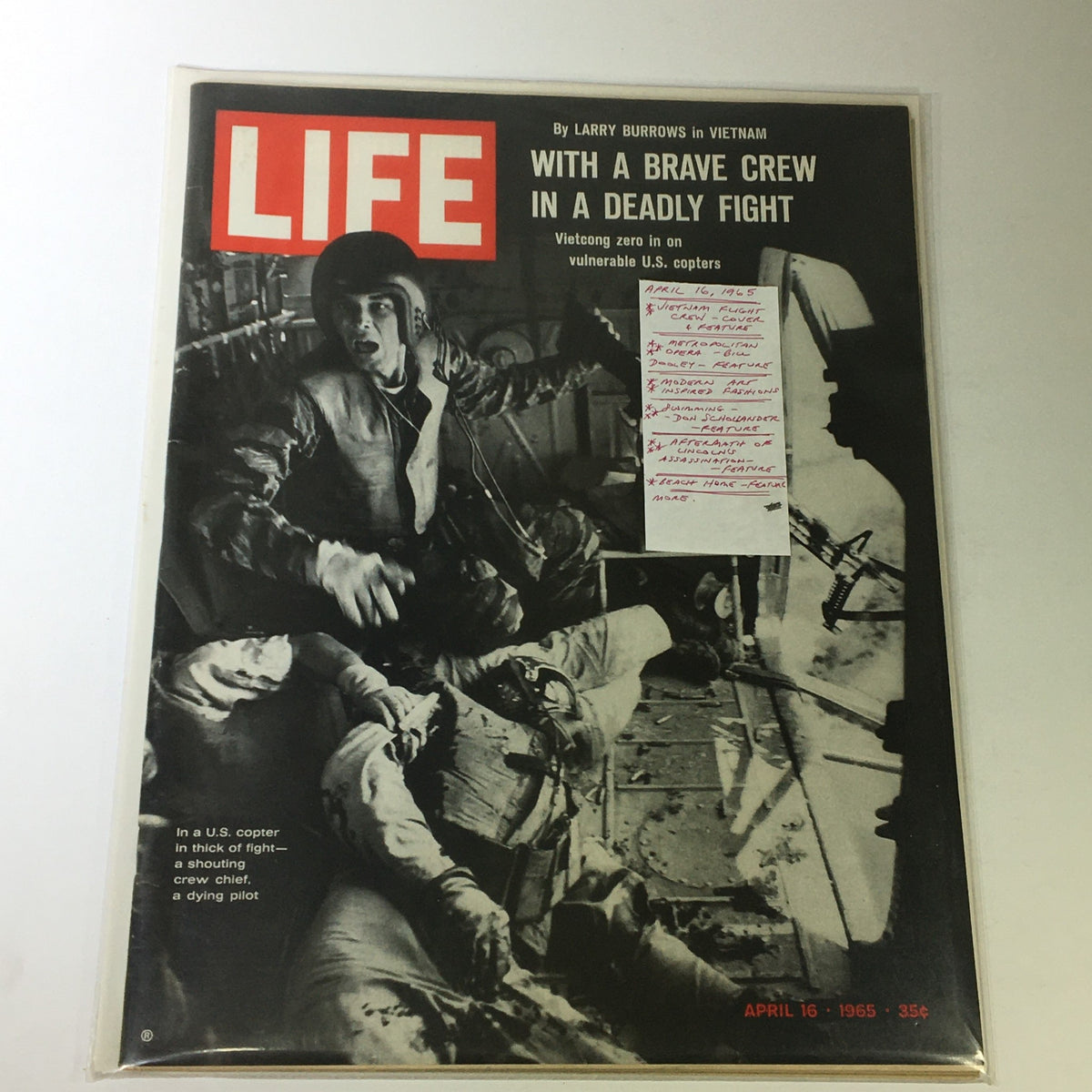
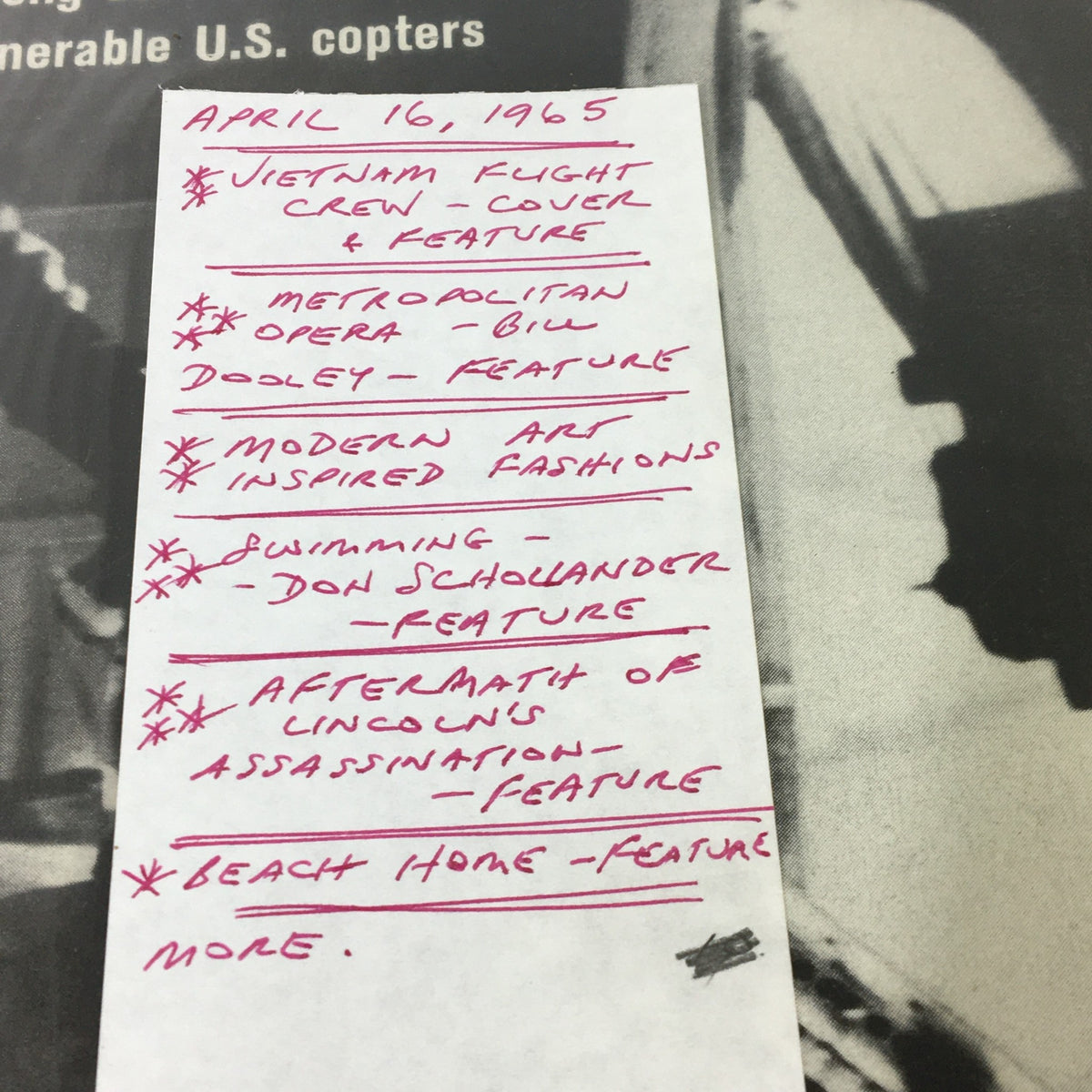


Description
Collector's Note – Why This Issue Matters
The April 16, 1965 issue of Life Magazine featuring Don Schollander documents one of the most decorated American swimmers in Olympic history at the peak of his public recognition. Schollander had won four gold medals at the 1964 Tokyo Olympics — in the 100-meter freestyle, 400-meter freestyle, 4×100-meter freestyle relay, and 4×200-meter freestyle relay — becoming the first swimmer in a single Olympics to win four gold medals and one of the most celebrated American athletes of the Games. The Tokyo Olympics had concluded in October 1964, just six months before this issue's publication date, meaning this Life cover arrived while Schollander's achievement was still fresh in the national memory but after the immediate post-Games media saturation had settled — a window in which a deeper, more considered profile was both possible and editorially appropriate. Life's decision to devote a cover to Schollander in April 1965 reflects the publication's recognition that his combination of athletic achievement, clean-cut public image, and youth — he had been eighteen years old at the Tokyo Games — made him a genuinely compelling figure for a feature treatment beyond the news cycle. Collectors building a record of Life's sports coverage across the 1960s will find the Life Magazine archive at OriginalMagazines.com an essential resource across the publication's decades of athletic and cultural documentation.
The broader context of April 1965 gives this issue a specific historical placement. The United States was six months into its active military involvement in Vietnam following the Gulf of Tonkin Resolution, and the cultural optimism of the early Kennedy years was being tested in ways that would reshape American society across the following decade. Against this backdrop, Schollander represented a form of American achievement — individual excellence, competitive discipline, the clean mythology of Olympic sport — that Life's editors understood as both genuinely newsworthy and culturally restorative. The 1964 Tokyo Olympics had been significant in another way as well: they were the first Summer Games televised internationally via satellite, bringing the spectacle of American athletic achievement to a global audience for the first time at full scale. A Life cover profile of Schollander in April 1965 sits within that expanded media context, documenting an athlete whose visibility extended well beyond the traditional sports press audience. Those researching the sports and cultural landscape of the mid-1960s will find the 1965 magazines collection at OriginalMagazines.com a valuable resource across publications from this specific year.
Schollander went on to win additional medals at the 1968 Mexico City Olympics before retiring, and his career became a touchstone for the development of American competitive swimming as a nationally significant sport. The Santa Clara Swim Club model that produced him influenced the club swimming infrastructure that would develop American Olympic swimming talent for decades. A Life cover from April 1965 documents him at the beginning of that longer arc, when his four Tokyo gold medals were the defining fact of his public identity and his future was still unwritten.
About the Publication
Life Magazine was founded by Henry Luce in 1936 as a weekly photojournalism publication and rapidly became the most influential visual news magazine in the United States, reaching circulations that at its peak exceeded thirteen million copies per week. By 1965 it had been the dominant visual record of American experience for nearly three decades, its photographers producing images that defined how events, people, and culture were understood and remembered by a mass national audience. Its editorial format combined large-format photography with accessible reporting across news, science, sport, culture, and entertainment for a readership that spanned virtually the entire literate American population. A Life cover on an athlete carried genuine cultural authority — the magazine's photographic treatment of its subjects, seen simultaneously by millions of readers, was one of the primary mechanisms by which American athletic achievement was elevated from sporting accomplishment to national story.
Key Highlights Inside
- Don Schollander cover feature — published six months after his four-gold-medal performance at the 1964 Tokyo Olympics, documenting the most decorated American swimmer of those Games at a moment of sustained national recognition rather than immediate post-Games reaction.
- Newsstand edition — confirmed as a newsstand rather than subscriber copy, meaning the cover survives without the mailing label adhesion damage that affects subscriber copies, preserving the Schollander cover photograph in its original unobstructed state.
- Bagged and boarded preservation — a specific archival storage method confirmed in the listing that represents deliberate collector-grade preservation beyond the standard plastic sleeve, indicating the publication has been stored with serious archival intent.
- April 16, 1965 publication date — placing this issue within the specific cultural moment of mid-1960s American optimism and athletic achievement, six months after the Tokyo Olympics and at a time when Schollander's four gold medals remained the defining recent achievement in American Olympic swimming.
- Note: Specific article titles, photographic credits, and additional interior content details beyond the confirmed Schollander cover feature have not been independently verified for this issue. The highlights above reflect confirmed cover content and well-documented historical context for Schollander, the publication, and the period.
Condition & Rarity
The noted condition describes a very good to excellent newsstand copy, bagged and boarded, with no visible wear or damage — representing one of the strongest condition profiles available for a weekly photojournalism magazine now sixty years old. The bagged and boarded storage method — typically involving a backing board for structural support combined with an acid-free or archival-quality bag — goes beyond the standard plastic sleeve in providing protection against humidity, light, and physical damage, and indicates this publication has been in deliberate collector-grade storage at some point in its history. The newsstand origin preserves the cover without the adhesion damage of subscriber labels. No wear or damage on a Life issue of this vintage indicates a copy that has been stored rather than read — pages that retain their original color, a spine without stress marks, and a cover that presents cleanly. For a large-format weekly printed on paper stock susceptible to tanning and edge wear, this level of preservation after six decades is exceptional and represents the condition ceiling for surviving examples of this issue.
Looking for More Issues Like This?
Life Magazine covers featuring Olympic athletes in excellent newsstand condition are among the more specifically rewarding finds in vintage sports press collecting, and the April 1965 Schollander issue — documenting the Tokyo Games' most decorated American swimmer at his peak visibility — holds a particular place in the documentary record of 1960s American competitive swimming. If this issue has already been claimed, the full Life Magazine archive at OriginalMagazines.com is the best place to search for other landmark sports and culture covers from the magazine's 1960s run. Collectors building a broader picture of American sports and cultural life in 1965 will find the 1965 magazines collection worth exploring for period publications across subjects and genres from this specific year.