



Description
Collector's Note – Why This Issue Matters
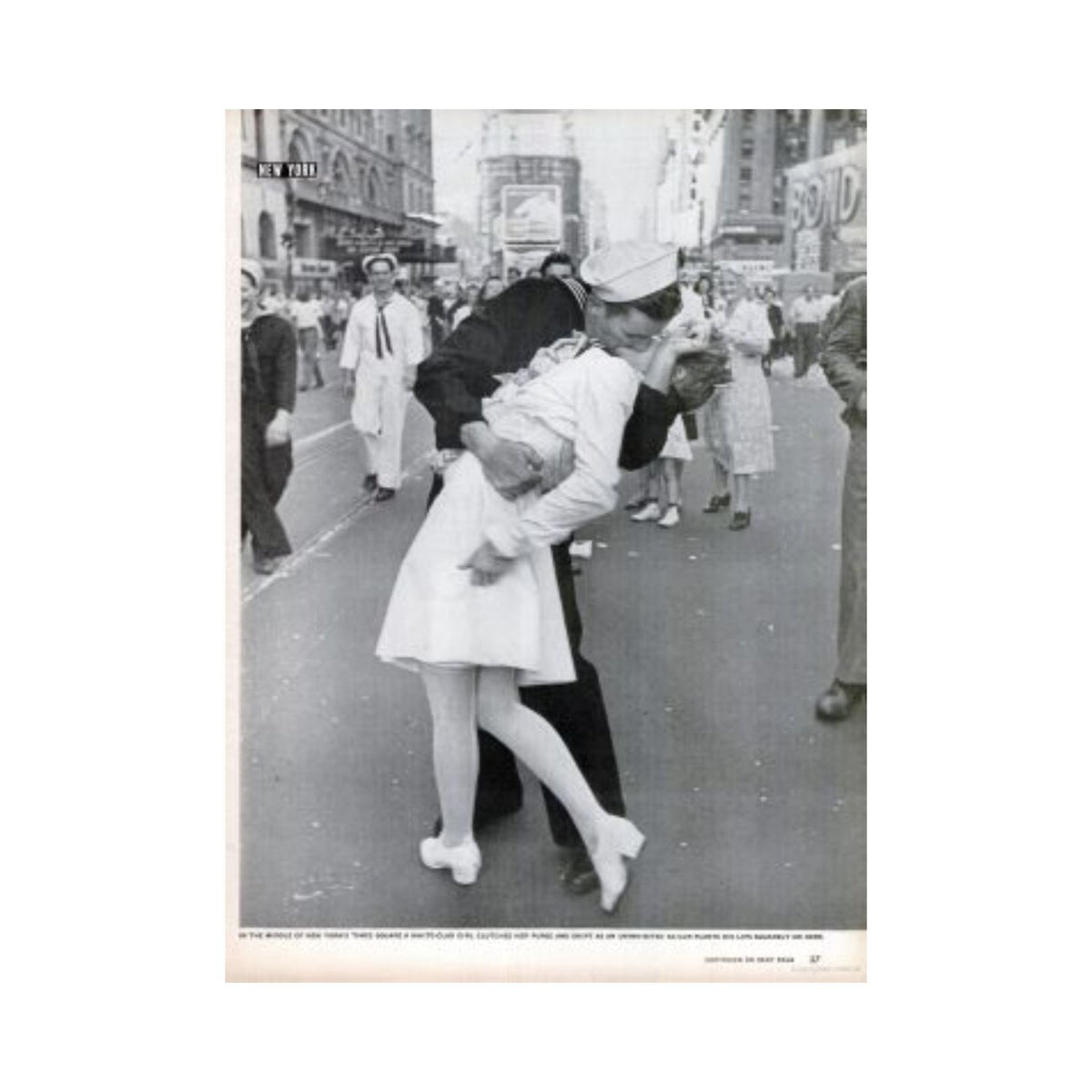
The August 27, 1945 issue of Life magazine is one of the most historically significant single issues in the publication's four-decade run — a primary document of one of the most consequential moments in the history of the twentieth century, produced in the immediate aftermath of the event that ended the deadliest conflict in human history. Japan had announced its surrender on August 15, 1945, and the formal surrender documents were signed aboard the USS Missouri on September 2 — placing this August 27 issue precisely in the extraordinary two-week period between the announcement of surrender and its formal completion, when the American public was processing the reality of total victory with an emotional intensity that had no precedent in living memory. The confirmed table of contents establishes beyond any doubt that this was specifically a victory issue of extraordinary documentary richness: "The Week the War Ended" by Noel F. Busch at page 29 is the article that carries Alfred Eisenstaedt's photograph of the sailor kissing a woman in Times Square — one of the most reproduced and most culturally resonant photographs in American history, whose appearance on the pages of this specific issue makes it a primary document of that image's original publication context. The photograph has been reproduced billions of times across eighty years, but the August 27, 1945 Life is where it first appeared in print, and a surviving copy of this issue is the original printed object from which that extraordinary documentary history flows. For collectors researching Life's wartime and victory coverage, the Life magazine archive is the most comprehensive resource for tracing the publication's documentation of the Second World War from its opening through its extraordinary conclusion.
The full confirmed table of contents of this August 27, 1945 issue reveals a publication of extraordinary editorial ambition and historical density, addressing the full range of what the victory moment meant and what it implied for the immediate future in ways that go far beyond the celebration photography for which this issue is most famous. "The Meaning of Victory" editorial at page 34 was an attempt to interpret the war's conclusion at the moment of its occurrence — a historical document of what American editorial intelligence believed the victory meant in August 1945, before the Cold War, the atomic age's full implications, and the decolonization movements that would follow had reshaped the meaning of 1945 in retrospect. "Russia and the U.S." by Joseph Freeman at page 88 is a primary document of American mainstream media's engagement with the Soviet alliance at the precise moment of its maximum solidarity — weeks after V-J Day and before the Cold War's crystallization — making it a significant historical source for the historiography of the American-Soviet relationship. "Victorious China" at page 37 addresses the Pacific theater's other major front. The Petain guilty verdict coverage at page 73 simultaneously documents the European theater's legal aftermath. And the Krupp family photographic essay at page 80 examines the German industrial dynasty that had armed the Nazi war machine. Taken together, the confirmed contents of this single issue constitute a more comprehensive primary source document of the world in August 1945 than almost any other single publication could provide. The complete 1945 magazine archive provides essential context for understanding this issue within the full publishing landscape of the war's final year.
The presence of the Alfred Eisenstaedt Times Square kissing photograph in this specific issue deserves particular emphasis for collectors approaching it as both a document of media history and a historical artifact. The photograph was taken on August 14, 1945, V-J Day itself, and appeared in the August 27 issue — making this the original publication vehicle for one of the most significant images in the history of American photography. Eisenstaedt photographed multiple couples kissing in Times Square on V-J Day, and the specific image that appeared in Life became the defining visual symbol of the war's end for generations. A surviving copy of the August 27, 1945 Life is therefore an artifact of the specific moment when one of the most historically significant photographs in American history first entered public view.
About the Publication
Life magazine was founded by Henry Luce in 1936 as the first American mass-market weekly photojournalism publication and grew across the following decade into the most widely read, most visually influential, and most culturally significant magazine in the United States. Its photographic documentation of the Second World War — from the first days of conflict through V-E Day and V-J Day — constitutes the most comprehensive and most artistically accomplished visual record of the war produced by any American publication, and its issues from the victory period of 1945 are among the most historically significant in its four-decade run. The August 27, 1945 issue represents the publication at its most historically consequential moment: a publication that had documented the entire war from the American entry in December 1941 through the celebrations of total victory in August 1945, now producing its definitive record of the moment the conflict ended.
Key Highlights Inside
- "The Week the War Ended" by Noel F. Busch (page 29) — the confirmed original publication context of Alfred Eisenstaedt's photograph of the sailor kissing a woman in Times Square, one of the most reproduced and most culturally significant photographs in American history, appearing here in its original August 27, 1945 printed form as a primary document of the image's first public presentation.
- "The Meaning of Victory" editorial (page 34) — a confirmed primary source document of American mainstream editorial interpretation of the war's conclusion at the moment of its occurrence, representing the analytical framework through which American journalism was attempting to make meaning of the victory before the Cold War and subsequent history had reshaped that meaning in retrospect.
- "Russia and the U.S." by Joseph Freeman (page 88) — a confirmed primary source document of American mainstream media's engagement with the Soviet alliance at the precise moment of maximum solidarity, weeks before the Cold War's crystallization made the wartime alliance's full complexity historically visible.
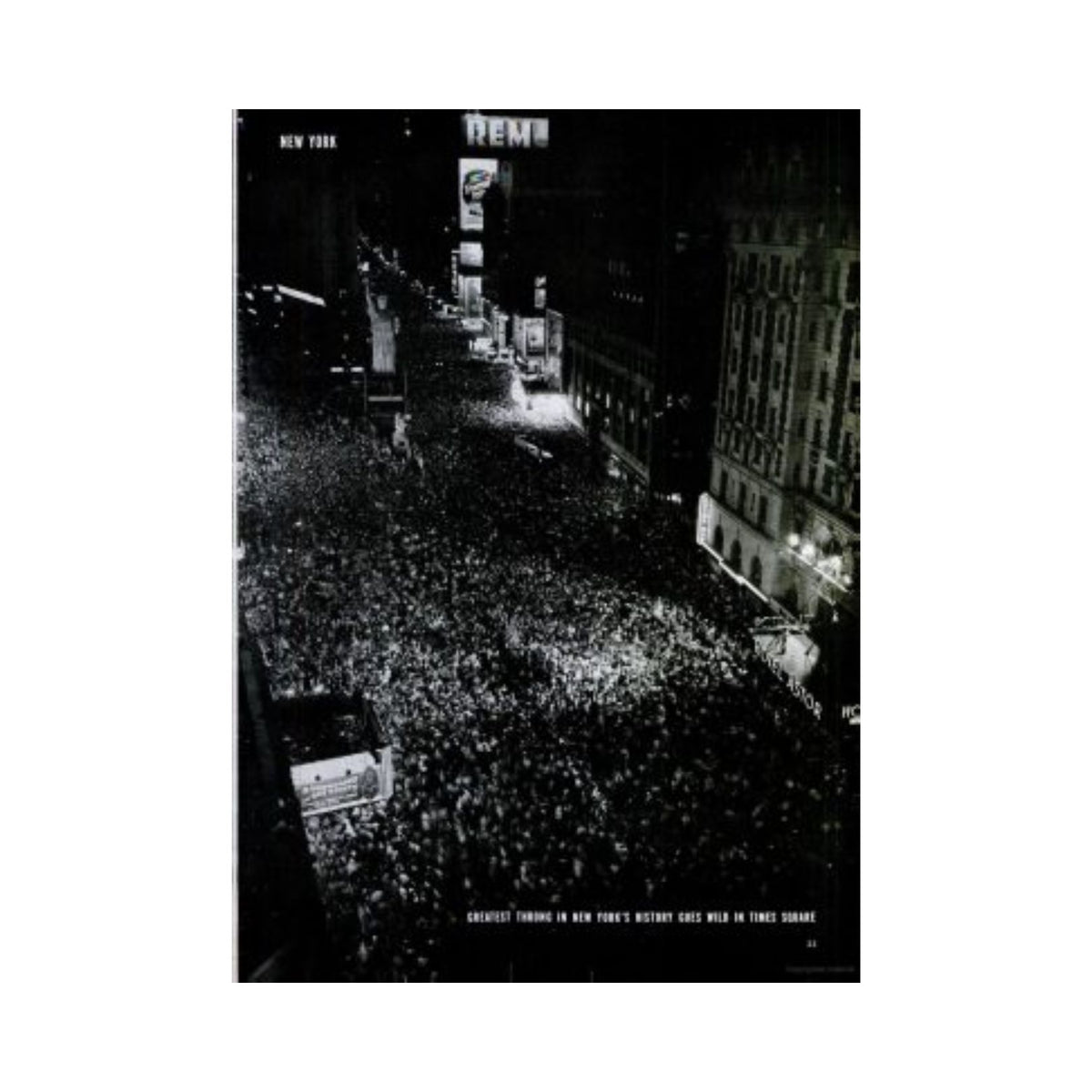
- Victory celebrations coverage (page 21), Victorious China (page 37), and Petain verdict (page 73) — confirmed articles providing a comprehensive documentary snapshot of the world at the precise moment of V-J Day, addressing both the Pacific theater's conclusion and the simultaneous legal and political aftermath of the European theater's earlier conclusion.
- Krupp Family photographic essay (page 80) — confirmed examination of the German industrial dynasty that had armed the Nazi war machine, representing Life's simultaneous engagement with the European war's industrial history at the moment of total Allied victory.
- A fully confirmed table of contents making this one of the most comprehensively documented issues in the Life magazine collector market — a primary source whose specific content has been verified page by page, allowing researchers and collectors to assess its documentary value with unusual precision for a publication of this age.
Condition & Rarity
The listing notes that the image shown is a stock photo representing the issue, and that the specific copy's condition should be assessed from available photographs before acquisition. Surviving copies of this issue present with the physical characteristics consistent with copies of a weekly photojournalism magazine that have passed through eighty years of private or institutional ownership. Life magazine was printed on coated paper stock of relatively good quality for its era — particularly the pages carrying Eisenstaedt's photographs, which were produced to the publication's highest photographic reproduction standards — and the confirmed photographic content of this specific issue makes the interior pages' preservation particularly significant for collectors. The inclusion of a protective plastic sleeve in sold copies indicates an intention to maintain condition for collectible purposes. August 27, 1945 Life magazine issues are among the most historically significant and most consistently sought-after items in the vintage American photojournalism collector market — the original printed publication context of one of the most famous photographs in American history, produced at one of the most consequential moments in the twentieth century, with a fully confirmed content table that establishes its documentary richness beyond any question.
Looking for More Issues Like This?
The August 27, 1945 Life magazine is one of a small number of issues in the publication's entire four-decade run that occupy a genuinely iconic position in the history of American photojournalism — the original publication context of the Times Square V-J Day kissing photograph, and the most comprehensive single-issue documentary record of the moment the Second World War ended. If this particular issue has already been claimed, the full Life magazine archive at OriginalMagazines.com is the most comprehensive resource for exploring other issues from the publication's wartime and postwar run, including additional victory and peace period numbers from the summer and autumn of 1945. Collectors building a wider picture of the 1945 historical and publishing landscape will also find the complete 1945 magazine archive an invaluable reference — spanning titles across the full spectrum of that extraordinary year's output and offering essential context for anyone researching the end of the Second World War, the immediate postwar moment, and the photojournalism that documented both with the visual power and historical depth that Life brought to every major event it covered.