



Description
Collector's Note – Why This Issue Matters
Life Magazine dated December 7, 1942 carries immediate historical weight because of its publication date. It appeared exactly one year after the attack on Pearl Harbor, at a time when the United States was fully engaged in World War II and the American public was following the conflict through newspapers, radio, newsreels, and major illustrated magazines. Life held a special place in that media landscape because it translated wartime events into powerful visual narratives. Its large-format photography gave readers faces, uniforms, aircraft, ships, factories, families, and battlefront scenes that made the war feel personal and immediate.
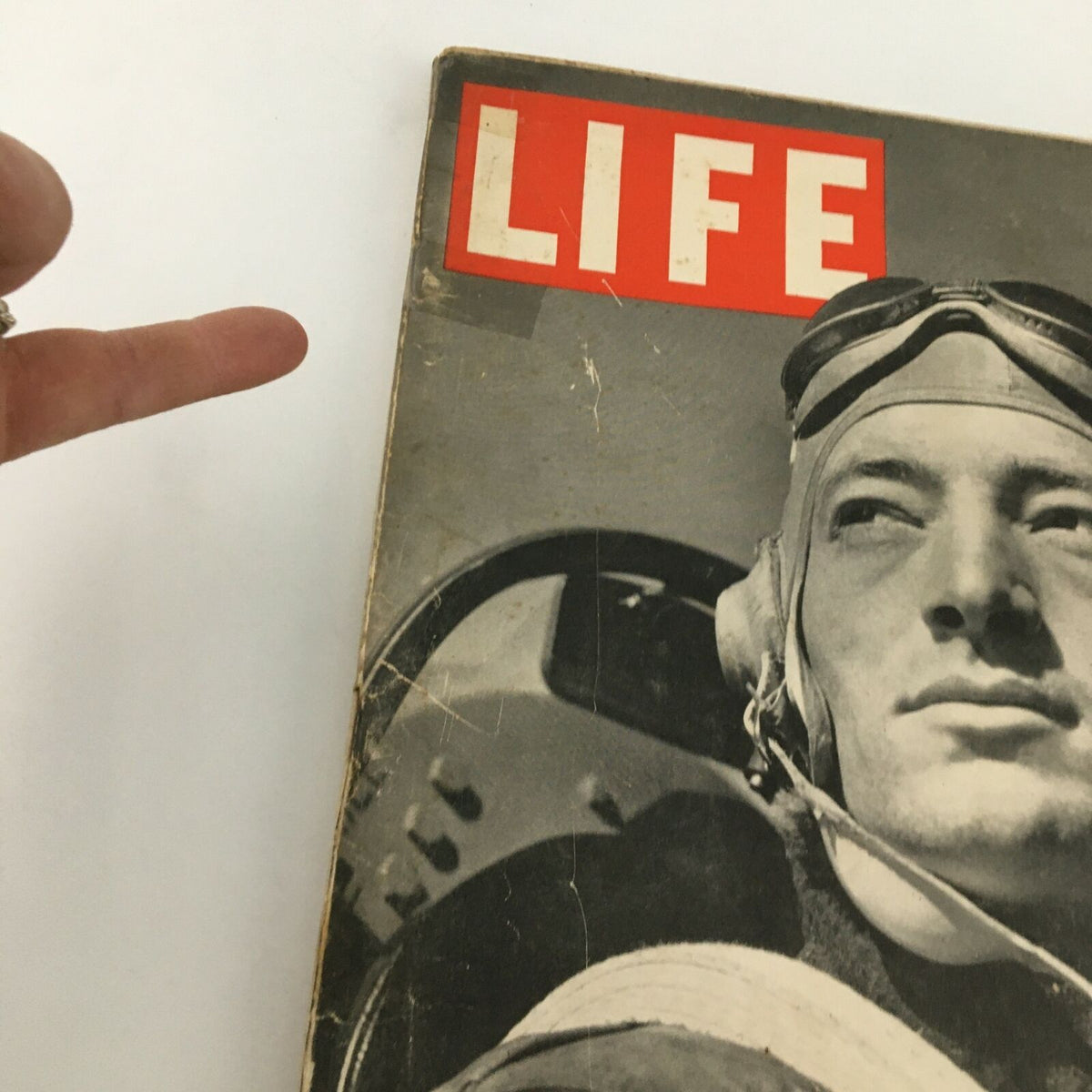
The listing identifies the cover subject as Marine Ace Smith, described as a wartime figure associated with bravery and aviation. In the context of 1942, a Marine ace on the cover would have spoken directly to American interest in the Pacific War, where Marine operations, naval aviation, and air combat were central to public attention. Life’s ability to place a named serviceman on the cover helped personalize a vast global conflict. Rather than presenting the war only through maps, official statements, or broad strategy, the magazine often focused on individual figures whose photographs could stand for courage, service, and national resolve.
The December 7 date gives this issue an added layer of symbolic importance. By late 1942, the first year of America’s war had changed the country’s economy, labor force, military structure, and daily life. Wartime magazines were not simply reporting events; they were helping shape morale, public memory, and the visual identity of the war effort. A Life issue centered on a Marine aviation figure reflects how the magazine connected the home front to the fighting front, allowing readers to see military service as both a national undertaking and a human story.
As part of the broader field of 1942 magazines, this issue belongs to one of the most consequential years in twentieth-century publishing. Periodicals from 1942 document a country in full mobilization, when advertising, photography, journalism, entertainment, and public messaging were all shaped by the war. For collectors of World War II periodicals, Marine Corps history, military aviation coverage, and wartime photojournalism, Life Magazine December 7, 1942 stands as a dated artifact of how American media presented heroism and sacrifice one year after Pearl Harbor.
About the Publication
Life Magazine, relaunched by Henry Luce in 1936 as a weekly picture magazine, became one of the defining American publications of the twentieth century. Its editorial format emphasized large photographs, visual essays, concise reporting, cultural features, and a broad range of subjects designed for a national readership. During World War II, Life became especially important because its photographic approach allowed readers to see the war in ways newspapers alone could not provide. The magazine covered military personnel, battlefront developments, home-front industry, politics, entertainment, science, everyday American life, and the emotional texture of wartime society. Its pages helped create a visual record of the conflict as Americans experienced it week by week. For collectors, wartime Life issues are valued as historical documents because they combine journalism, photography, morale-era messaging, advertising, and the visual language of a nation at war. A December 1942 issue with a military cover subject fits directly within the publication’s role as one of the major American photojournalistic records of World War II.
Key Highlights Inside
- December 7, 1942 issue of Life Magazine, published exactly one year after the Pearl Harbor attack.
- Features Marine Ace Smith, identified in the listing as the cover subject and a wartime figure associated with bravery.
- Connects to World War II military aviation coverage, especially the public interest in pilots, aces, and air combat during the early years of American involvement in the war.
- Represents Life’s wartime photojournalism, when the magazine helped document military service, national morale, and the human side of global conflict for American readers.
- Reflects the early-1940s illustrated-magazine landscape, when large-format photography played a major role in shaping public understanding of the war.
- Relevant to collectors of World War II magazines, Marine Corps history, military aviation imagery, wartime home-front culture, and early-1940s Life Magazine issues.
- Identified as a newsstand copy without a label, an important presentation detail for collectors who value uninterrupted wartime cover photography.
- Specific interior article titles, authors, battle reports, photo essays, or additional named subjects are not confirmed in the listing beyond the Marine Ace Smith cover feature.
Condition & Rarity
Surviving examples of Life Magazine December 7, 1942 should be evaluated by cover presentation, page completeness, spine and binding stability, edge wear, paper condition, surface marks, creasing, and the presence or absence of a mailing label. The listing describes the magazine as being in good condition, a newsstand copy without a label, with minor age-related flaws such as small rips, edge wear, creases, and marks. It also notes that the binding is taped and that the magazine comes with a plastic protective covering. For collectors of wartime Life issues, a no-label newsstand example is meaningful because the cover image remains visually uninterrupted, especially on a military-subject issue where the cover photograph is central to the magazine’s historical identity. Small rips, creases, marks, and edge wear are common on large-format magazines from the early 1940s, particularly issues that were read, stored, and handled for decades rather than preserved immediately as collectibles. Taped binding should be understood as a stabilization or preservation detail rather than an original attribute, and it should be considered alongside page completeness, cover integrity, readability, and overall structure. Plastic covering can help protect the issue during storage and handling, but the underlying magazine condition remains the true basis for collector evaluation.
Looking for More Issues Like This?
The December 7, 1942 Life issue featuring Marine Ace Smith is a strong reference point for collectors interested in World War II journalism, military aviation, Marine Corps history, and wartime American photo magazines. Issues from this period can be especially meaningful because they preserve the war as Americans encountered it week by week through images, captions, reporting, and national magazine design.
Related examples can be explored through the broader Life Magazine collection, where other issues help trace the publication’s visual record of the twentieth century. Collectors studying the same wartime moment may also browse original magazines from 1942, a year rich with World War II coverage, home-front culture, military reporting, and illustrated journalism.