


Description
Collector's Note – Why This Issue Matters
The July 26, 1937 issue of Life Magazine appeared during the first year of the publication’s landmark weekly photojournalism format. Introduced under Time Inc. in November 1936, the redesigned Life placed photography at the center of its editorial identity, using large images and carefully arranged picture sequences to bring public events, personalities, sports, travel, and ordinary life to a national readership. An issue from July 1937 therefore belongs to the formative period in which the magazine was establishing the visual language that would eventually make it one of the most influential American periodicals of the twentieth century. Its pages preserve an early example of how photography, reporting, illustration, and advertising were combined within a mass-market weekly. The issue also reflects a moment when illustrated magazines were becoming increasingly important sources of shared visual experience for Americans living in different regions of the country.
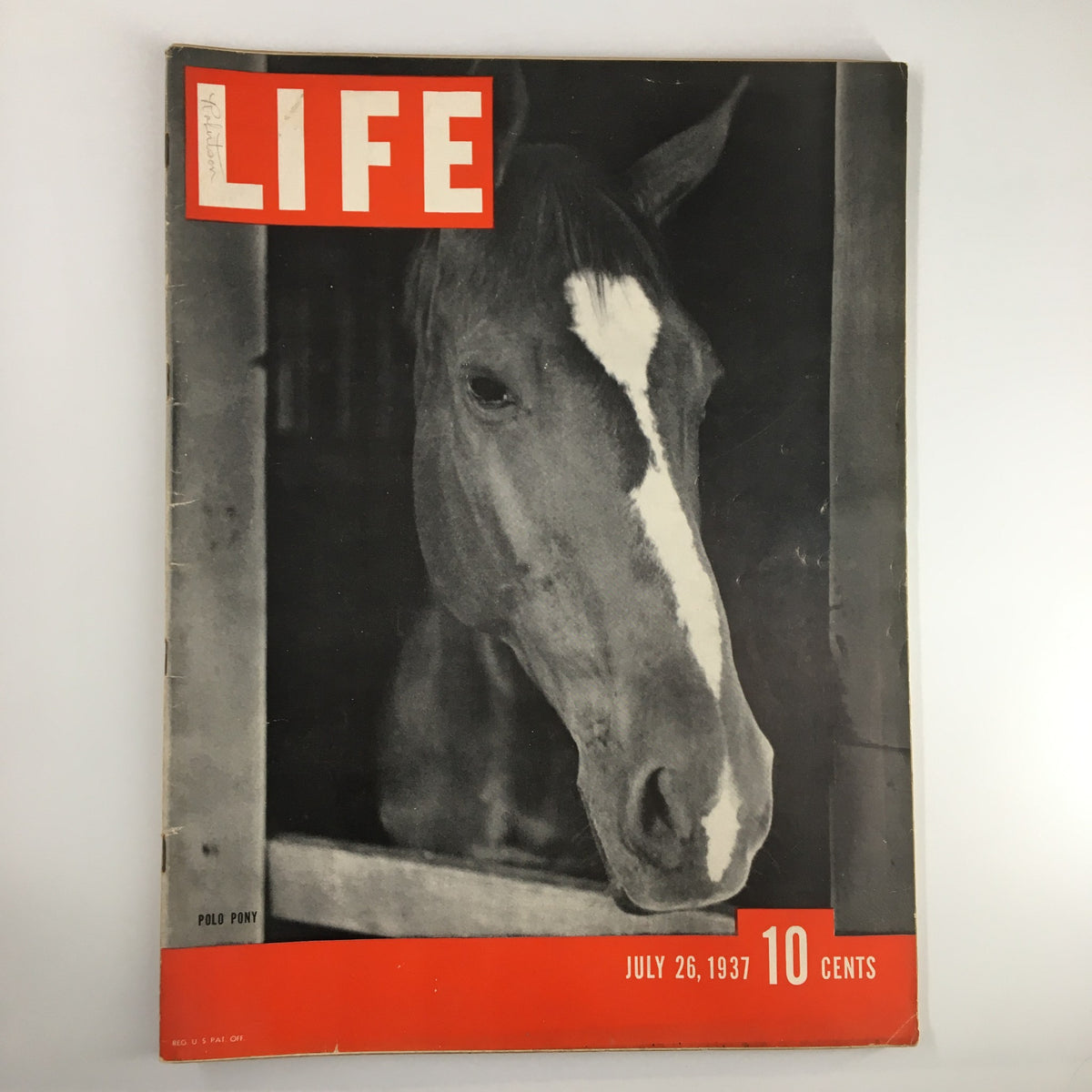
The cover is identified as featuring a polo pony, connecting the issue with a sport long associated with horsemanship, athletic skill, leisure culture, and organized competition. During the 1930s, equestrian subjects gave illustrated magazines opportunities to emphasize movement, balance, physical control, and the expressive qualities of animals through photography. A strong animal image could communicate immediately from the newsstand without requiring explanatory cover lines. The listing does not identify the pony, rider, location, photographer, or any corresponding interior feature, so those details should not be reconstructed without examining the complete magazine. Even without that information, the polo pony gives the July 26 issue a distinctive visual identity and places it within Life magazine’s early tradition of using one arresting photograph to establish the character of a weekly edition.
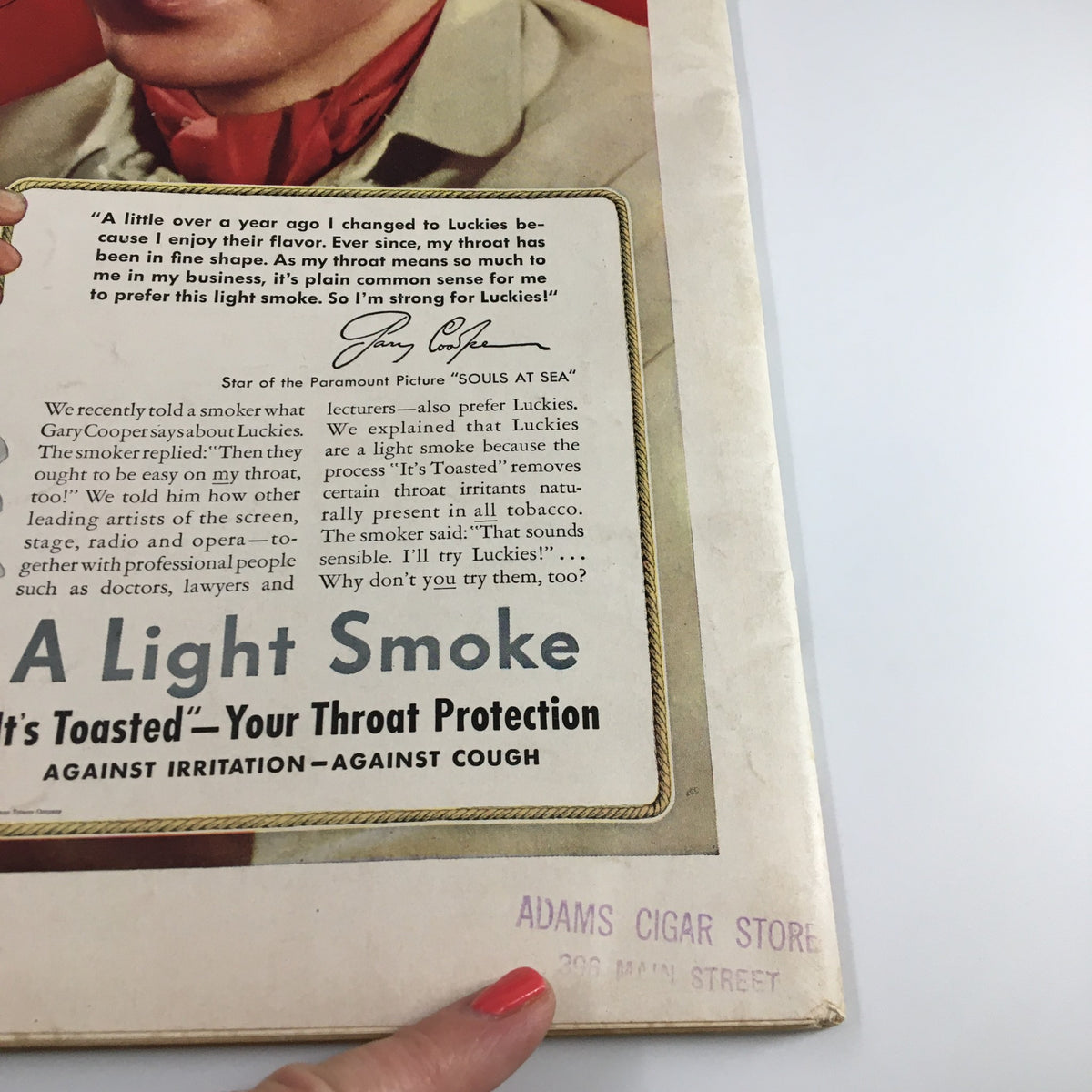
A cigarette advertisement featuring Hollywood actor Gary Cooper adds another documented layer of cultural interest. Cooper was one of the most recognizable leading men of classical Hollywood, known for a restrained screen style that became associated with independence, integrity, and distinctly American forms of heroism. His appearance in a commercial advertisement demonstrates how closely movie celebrity and national consumer marketing were connected during the 1930s. Advertisers frequently relied on the familiarity and public image of film stars to lend personality and authority to everyday products. The specific cigarette brand, advertising copy, photograph, and format of Cooper’s endorsement are not identified in the listing and should therefore remain unconfirmed. For collectors researching original magazines published in 1937, the combination of an equestrian cover, an early Life publication date, and a Gary Cooper advertisement provides a useful record of photography, celebrity culture, advertising, and American print media during the later years of the Great Depression.
About the Publication
Life was an American general-interest picture magazine that began its celebrated photographic weekly format in November 1936. It was intended for a broad national audience interested in current affairs, international events, politics, society, science, sports, entertainment, fashion, travel, and ordinary life. Its editorial method relied heavily on photojournalism, combining full-page photographs, detailed captions, and sequenced picture essays with conventional reporting, short features, maps, illustrations, humor, and commercial advertising. This visual approach allowed readers to encounter distant people, places, ceremonies, and events with a sense of immediacy that text-centered newspapers and magazines could not always provide. Editors used the placement and sequence of photographs to construct narratives, allowing images to carry much of the explanatory weight. Advertising formed another substantial part of the reading experience and now supplies historians with evidence of period products, celebrity endorsements, design conventions, and consumer attitudes. During 1937, the publication was still developing its distinctive balance of documentary seriousness, popular entertainment, visual spectacle, and everyday observation. Early issues now function as primary sources for the study of photography, editorial design, celebrity, consumer marketing, social attitudes, and the growing influence of illustrated mass media before television became a dominant household medium.
Key Highlights Inside
- The issue is dated July 26, 1937, placing it within the first year of Life magazine’s influential weekly photojournalism format and within the publication’s early visual development.
- The front cover is identified as featuring a polo pony, giving the issue a documented connection to equestrian sport, horsemanship, and 1930s leisure culture.
- A period cigarette advertisement featuring Hollywood actor Gary Cooper appears within the magazine, although the specific brand and advertising language are not confirmed.
- The Gary Cooper advertisement reflects the established use of motion-picture celebrities in national consumer marketing during the classical Hollywood era.
- An “Adams Cigar Store” stamp appears on the back, preserving evidence of the magazine’s retail, handling, or distribution history.
- Specific articles, photographers, writers, picture essays, interior personalities, advertisements beyond the documented Cooper appearance, and the precise context of the polo pony cover have not been confirmed from the supplied listing.
Condition & Rarity
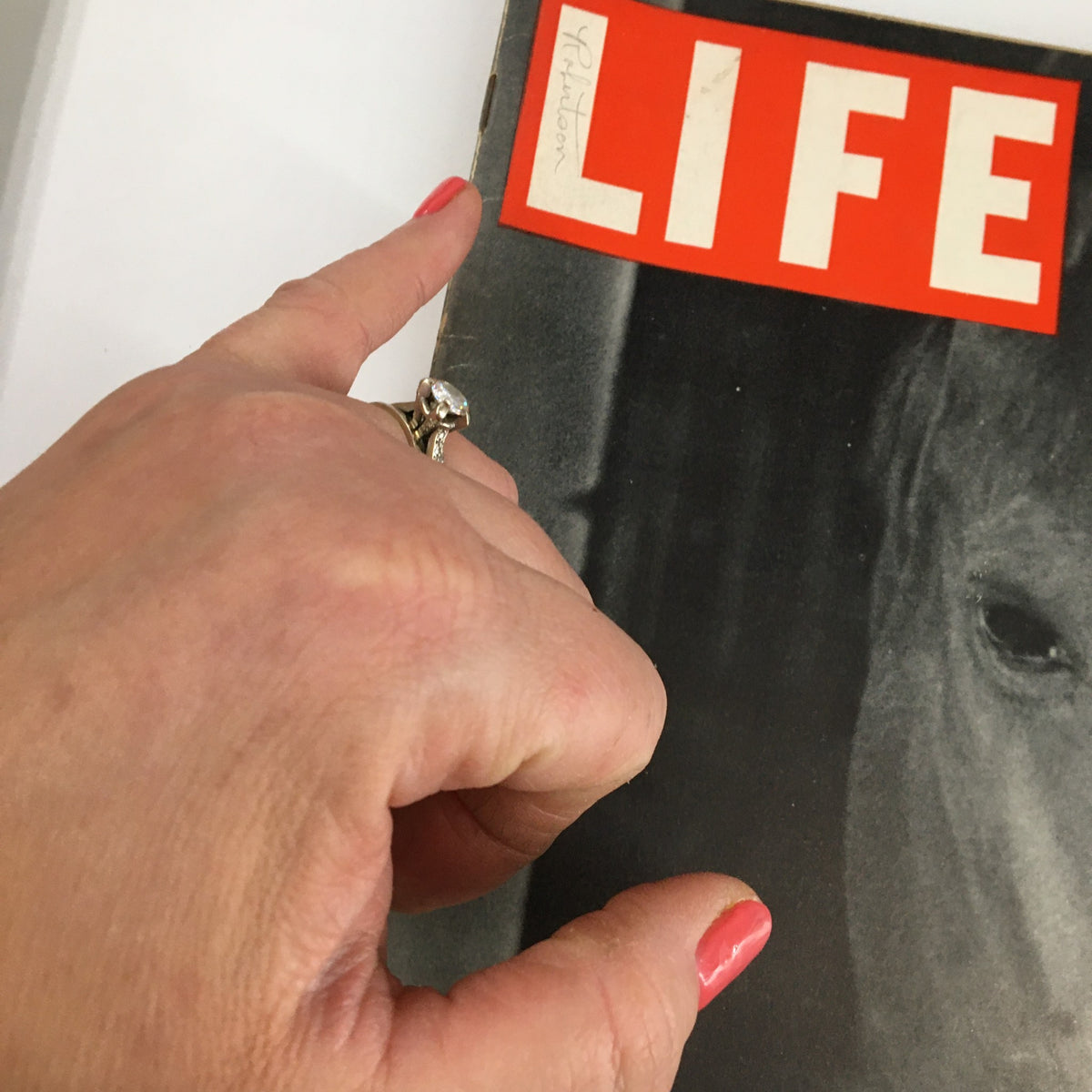
Surviving examples of the July 26, 1937 issue should be evaluated in the stated “Good” condition, with minor wear consistent with handling, reading, shelving, and storage over nearly nine decades. Important inspection points include the outer edges, corners, spine, staples, cover attachment, surface finish, and completeness of the interior page sequence. Large-format magazines are particularly vulnerable to corner bending, edge tears, rubbing, and stress near the binding, even when their overall presentation remains sound. The listing also reports writing inside the magazine, which should be assessed according to its location, extent, and whether it crosses photographs, captions, editorial text, or advertisements. Such annotations form part of an individual magazine’s ownership history, but they generally distinguish it from an otherwise comparable unmarked example. The “Adams Cigar Store” stamp on the back should also be documented rather than removed, since attempted erasure, cleaning, or chemical treatment could damage the paper or printed surface. The stamp may provide evidence of where the magazine was handled or distributed, although the listing does not establish the precise history of the business or the circumstances under which the mark was applied. No mailing-label status is provided, so the issue should not automatically be described as either an unlabeled newsstand example or a subscription copy. The plastic protective covering is a modern preservation accessory rather than original publisher packaging; it can reduce dust, surface abrasion, and unnecessary handling but does not change the underlying grade. No missing pages, detached covers, major tears, moisture damage, clipped material, or restoration are specifically reported, although those attributes remain unconfirmed without a complete page-by-page examination. No verified circulation total or surviving-copy census is supplied for this exact date, so rarity should not be overstated. Cover presentation, interior completeness, structural stability, the extent of the writing, the back-cover stamp, and preservation of the Gary Cooper advertisement are more dependable criteria when comparing surviving examples.
Looking for More Issues Like This?
An exact early issue of Life with a distinctive equestrian cover and documented Hollywood advertising can be a tough find when research is organized by publication date, cover subject, or celebrity appearance. Readers interested in related photography, film culture, advertising, and illustrated history can explore the broader collection of vintage Life magazines. Additional magazines published in 1937 provide wider context for the films, advertising, sports, journalism, design, and popular culture of the same year.