


Description
Collector's Note – Why This Issue Matters
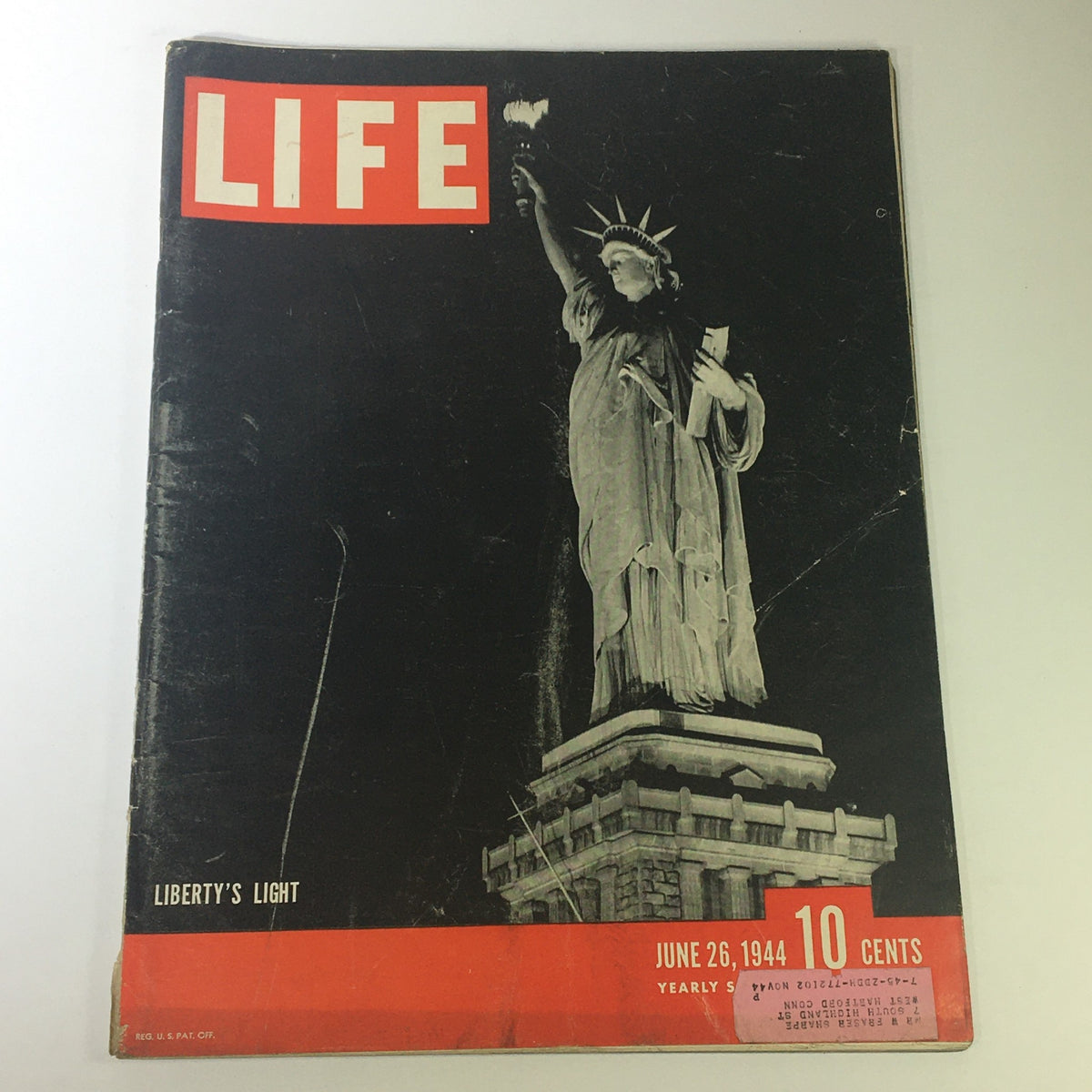
Life Magazine dated June 26, 1944, belongs to one of the most historically charged months of the 20th century. Published only weeks after the Allied landings in Normandy on June 6, 1944, this issue appeared at a moment when the Second World War had entered a decisive new phase in Western Europe. The listing identifies a Statue of Liberty cover, a powerful image in this context: liberty was not an abstract idea in the summer of 1944, but the central language through which Americans understood the war, the liberation of occupied Europe, and the sacrifices being made overseas. For readers encountering the issue at the time, the Statue of Liberty would have carried immediate emotional and political meaning, connecting the American home front to the broader Allied struggle. For collectors today, that cover subject gives the issue a visual identity that is instantly tied to wartime symbolism and national purpose.
The issue is also identified as featuring Charles de Gaulle, the French military leader associated with the Free French movement and later president of France. In June 1944, de Gaulle’s role carried particular weight because France’s liberation was no longer theoretical; Allied forces had begun the campaign that would eventually free Paris and restore French sovereignty. For collectors of vintage Life Magazine issues, the combination of a Statue of Liberty cover and de Gaulle-related wartime content gives this issue a clear historical identity rooted in the politics and symbolism of liberation. It connects American democratic imagery with the European resistance story, making the issue more than a general wartime magazine. It is a dated artifact from the moment when military operations, political leadership, and public hope were converging in the pages of mass-circulation journalism.
Within the broader field of original 1944 magazines, this June 26 issue stands out as a World War II-era publication tied to both American national imagery and European resistance leadership. It reflects how illustrated magazines helped readers understand global events through photography, public figures, symbols, and narrative framing. Even without confirmed full interior article titles beyond the de Gaulle reference, the date, cover subject, and wartime context make the issue a meaningful document of the Allied moment in 1944. The issue also demonstrates how Life used its cover art and photography-driven format to give readers a sense of immediacy during a rapidly changing war. As a collector reference point, it belongs to the small but important category of wartime magazines whose significance comes from the alignment of date, imagery, and historical atmosphere.
About the Publication
Life Magazine was one of the defining American photojournalism magazines of the 20th century, known for its large-format pages, striking photography, accessible reporting, and broad national readership. During World War II, Life played a major role in shaping how Americans saw the war at home and abroad, combining images of military campaigns, political leaders, civilians, industry, culture, and daily life. Its editorial format made each issue a visual record as much as a written one, which is why wartime issues are often collected for their photography, cover subjects, advertisements, and immediate reporting atmosphere. By 1944, Life had become one of the most important mass-circulation magazines through which American readers encountered the visual history of the war. Its strength was not only in reporting events, but in making distant events feel tangible through carefully selected images and clear narrative presentation. For collectors, that combination of photography, design, and historical timing makes wartime Life issues especially useful as primary-source objects.
Key Highlights Inside
- June 26, 1944 issue of Life Magazine, published during a decisive phase of World War II shortly after the D-Day landings in Normandy. The date places the issue directly within the early Allied campaign to liberate Western Europe.
- Features a Statue of Liberty cover, as stated in the listing, giving the issue a strong symbolic connection to American ideals of freedom and wartime purpose. The cover subject is especially meaningful in a 1944 context because liberty and liberation were central themes in Allied wartime messaging.
- Includes material related to Charles de Gaulle, identified in the listing as a key figure connected to the French Resistance and later president of France. His presence links the issue to the political future of France as well as the military events then unfolding in Europe.
- The issue is described as offering detailed photography and articles that reflect the world as it was in 1944, consistent with Life Magazine’s photojournalistic format. That general description should be understood as a broad characterization rather than a confirmed list of specific article titles.
- The listing notes an address label on the front cover, an important collector detail because labels are common on subscription copies and can affect cover presentation. For a cover built around the Statue of Liberty, the placement and visual impact of any label would be worth evaluating carefully.
- Specific interior article titles beyond the Charles de Gaulle reference are not confirmed in the provided listing, so additional contents should not be assumed without direct inspection. The most reliable confirmed points are the publication date, Statue of Liberty cover, de Gaulle reference, address label, protective sleeve, and good overall condition.
Condition & Rarity
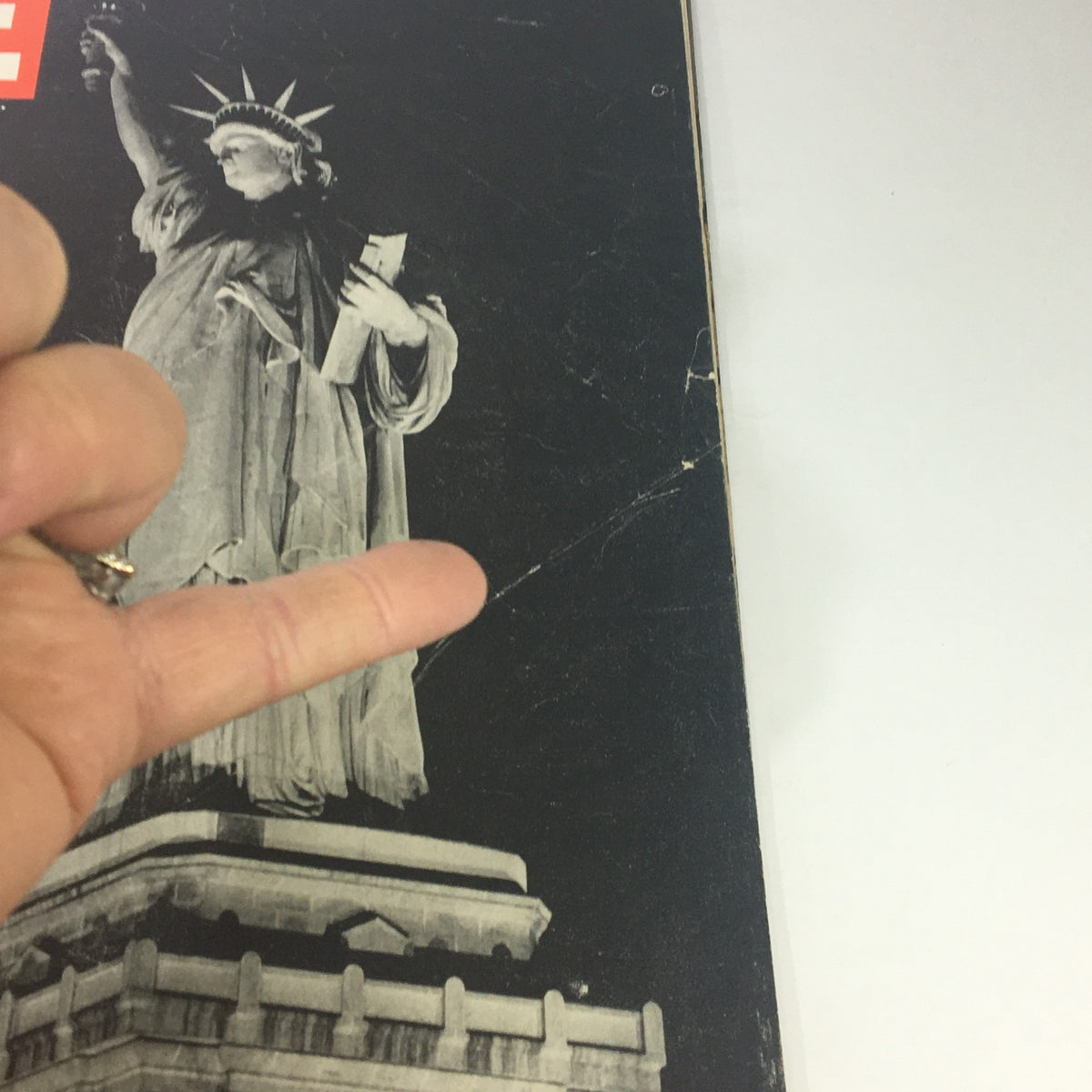
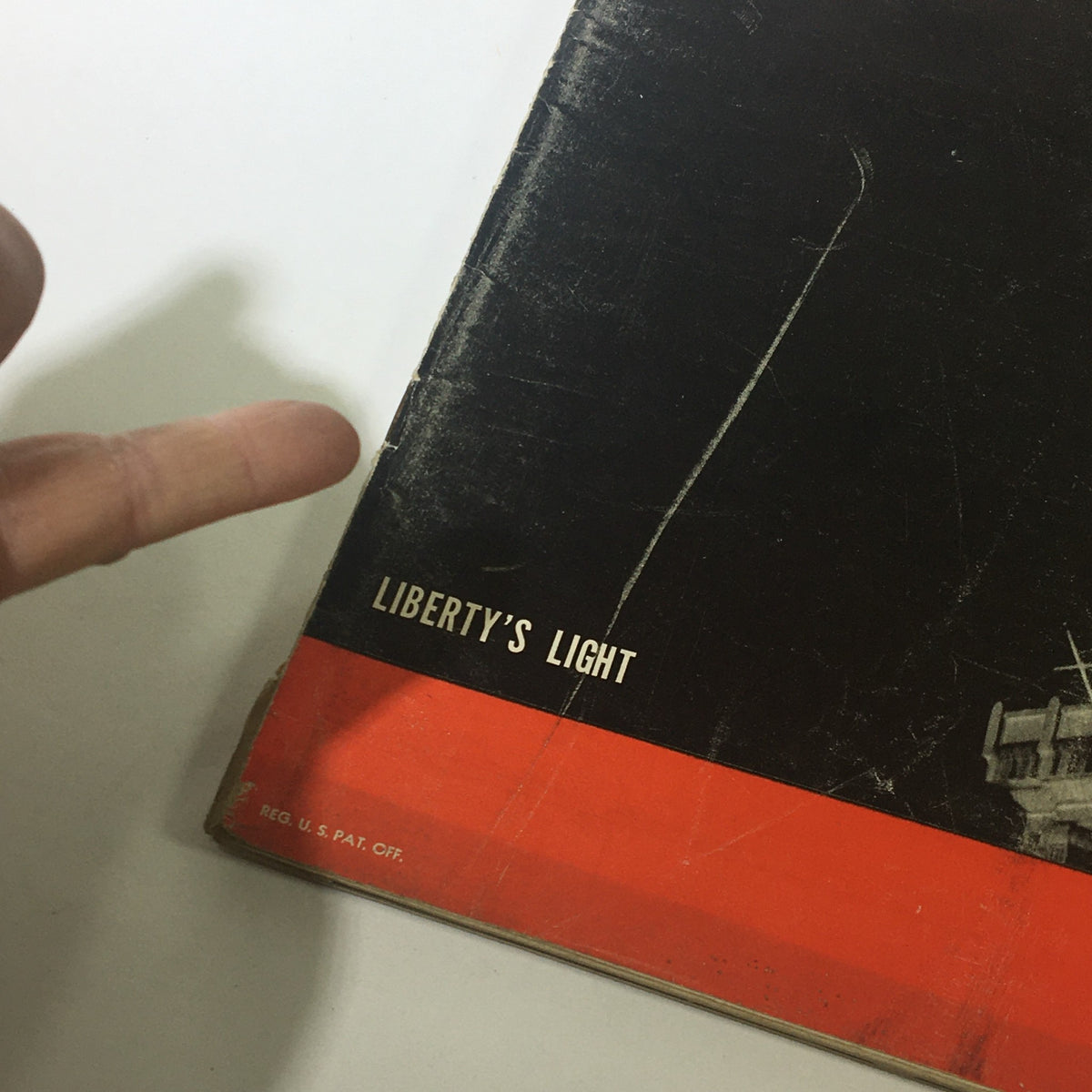
Collector-grade evaluation of this June 26, 1944 issue should focus on cover integrity, spine stability, page completeness, edge wear, surface marks, age toning, and the effect of the address label on the Statue of Liberty cover presentation. The listing describes the magazine as being in good condition with minor wear consistent with age, while also noting that some marks may be present. The address label is an important condition feature: it documents the magazine’s subscription history, but it can reduce display appeal for collectors who prefer unobstructed covers. The listing also states that the magazine has been bagged and boarded in a plastic sleeve, which is a protective storage method commonly used to reduce further handling damage. For wartime Life issues, collectors often pay close attention to whether the cover remains presentable, the large-format pages are complete, and the interior photography has not been clipped or damaged, since these magazines were frequently read, saved, stacked, and handled over many decades. Minor marks and ordinary age wear are expected in many surviving 1940s magazines, but missing pages, detached covers, heavy staining, brittle paper, or clipped photographs would be more serious concerns. Because this issue combines wartime subject matter with a major symbolic cover, the condition of the front cover is especially important to its collector appeal.
Looking for More Issues Like This?
World War II-era issues of Life can be challenging to locate in well-preserved, complete condition, especially when the cover carries major symbolic imagery such as the Statue of Liberty. Readers interested in related wartime photojournalism can browse collectible Life Magazine issues for other examples of the publication’s historical reporting and visual documentation. That broader collection is a useful place to compare how Life covered the war through covers, photographs, public figures, and home-front storytelling.
Collectors who study the war year by year may also find the broader archive of vintage 1944 magazines useful for placing this June 26 issue within the larger print record of D-Day, the liberation of Europe, wartime politics, and American home-front culture. Looking across 1944 helps show how quickly the magazine world responded to major military and political developments. For researchers, that year-based context can make a single issue more meaningful by connecting it to the surrounding sequence of wartime reporting.