



Description
Collector's Note – Why This Issue Matters
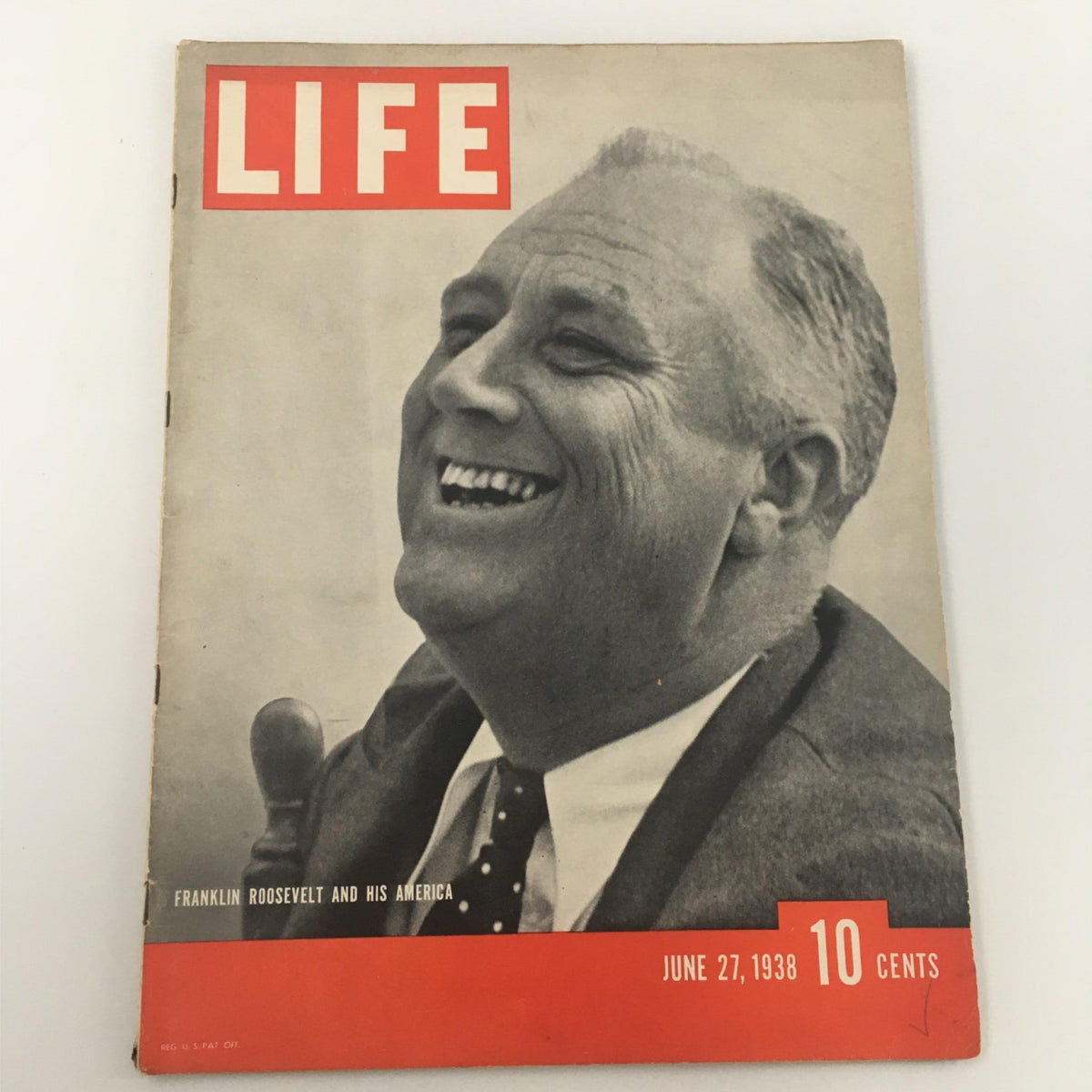
The June 27, 1938 issue of Life magazine presents Franklin D. Roosevelt during one of the most politically difficult periods of his presidency. Roosevelt was serving his second term, and the United States was still struggling with the effects of the Great Depression. Although the New Deal had reshaped the relationship between the federal government and American economic life, the sharp downturn of 1937–1938 had renewed unemployment, weakened industrial production, and intensified debate over the administration’s recovery policies. A cover portrait of Roosevelt from this moment therefore belongs to a larger visual record of presidential leadership under sustained economic and political pressure.
The issue’s cover date is also historically significant because it falls only two days after Roosevelt signed the Fair Labor Standards Act on June 25, 1938. That law established major federal protections involving minimum wages, overtime compensation, working hours, and child labor. Its passage represented an important late achievement of the New Deal, even as Roosevelt faced growing resistance from conservative legislators, business interests, and members of his own party. The magazine should not be assumed to contain detailed reporting on the signing without direct inspection of its pages, but the proximity of the dates places the issue within the immediate atmosphere surrounding one of the era’s most consequential labor reforms.
Within the broader archive of magazines published in 1938, this edition illustrates the increasing authority of photographic journalism in shaping public perceptions of political figures. Roosevelt’s face dominates the cover without competing headlines or decorative text, allowing expression and photographic presence to carry the visual message. That editorial simplicity is characteristic of early Life, where a single image could define the identity of an entire weekly issue. For collectors studying the New Deal, presidential imagery, Depression-era media, or the development of American photojournalism, the June 27 date provides a precise point of connection between political history and mass-circulation publishing.
About the Publication
Life was relaunched by Time Inc. in November 1936 as a large-format weekly picture magazine built around the power of photography. Under publisher Henry R. Luce, it combined extensive photographic essays with concise reporting, captions, maps, illustrations, entertainment coverage, human-interest stories, and advertising. Its audience was broad and national, encompassing readers interested in politics, international affairs, science, sports, entertainment, fashion, industry, and everyday American life. The oversized pages allowed photographs to function as primary narrative elements rather than as minor supplements to text, helping establish a visual style that influenced American journalism for decades. By the summer of 1938, the magazine was still relatively early in this defining phase of its history, making individual issues useful records of how the publication was developing its distinctive balance of news, spectacle, personality, and documentary photography.
Key Highlights Inside
- The issue is dated June 27, 1938 and features President Franklin D. Roosevelt in a prominent black-and-white photographic portrait on the cover. His relaxed expression creates a visually personal presentation of a national political leader during a period of serious economic and legislative conflict.
- The Google Books archive identifies the edition as Volume 4, Number 26, published by Time Inc. The archived issue contains 78 pages, providing an important bibliographic reference for researchers checking the completeness of surviving examples.
- The publication date places the issue during Roosevelt’s second presidential term and the economic contraction commonly known as the Roosevelt Recession of 1937–1938. This context gives the cover added importance as a contemporary portrayal rather than a later retrospective image.
- The date also falls immediately after Roosevelt signed the Fair Labor Standards Act of 1938. While direct coverage of that event should not be attributed without examining the complete interior, the timing connects the issue to a major turning point in federal labor policy.
- The cover reflects the early Life approach of using one dominant photograph with minimal surrounding text. This design gave political portraits a strong documentary presence and made the magazine’s covers recognizable from a distance on newsstands and in subscribers’ homes.
- The supplied listing does not provide a verified table of contents or identify individual articles, photo essays, writers, or photographers from the interior. Specific claims about political reports, cultural features, or other page content should therefore be based on direct examination of the complete issue rather than assumptions drawn from the cover subject.
Condition & Rarity
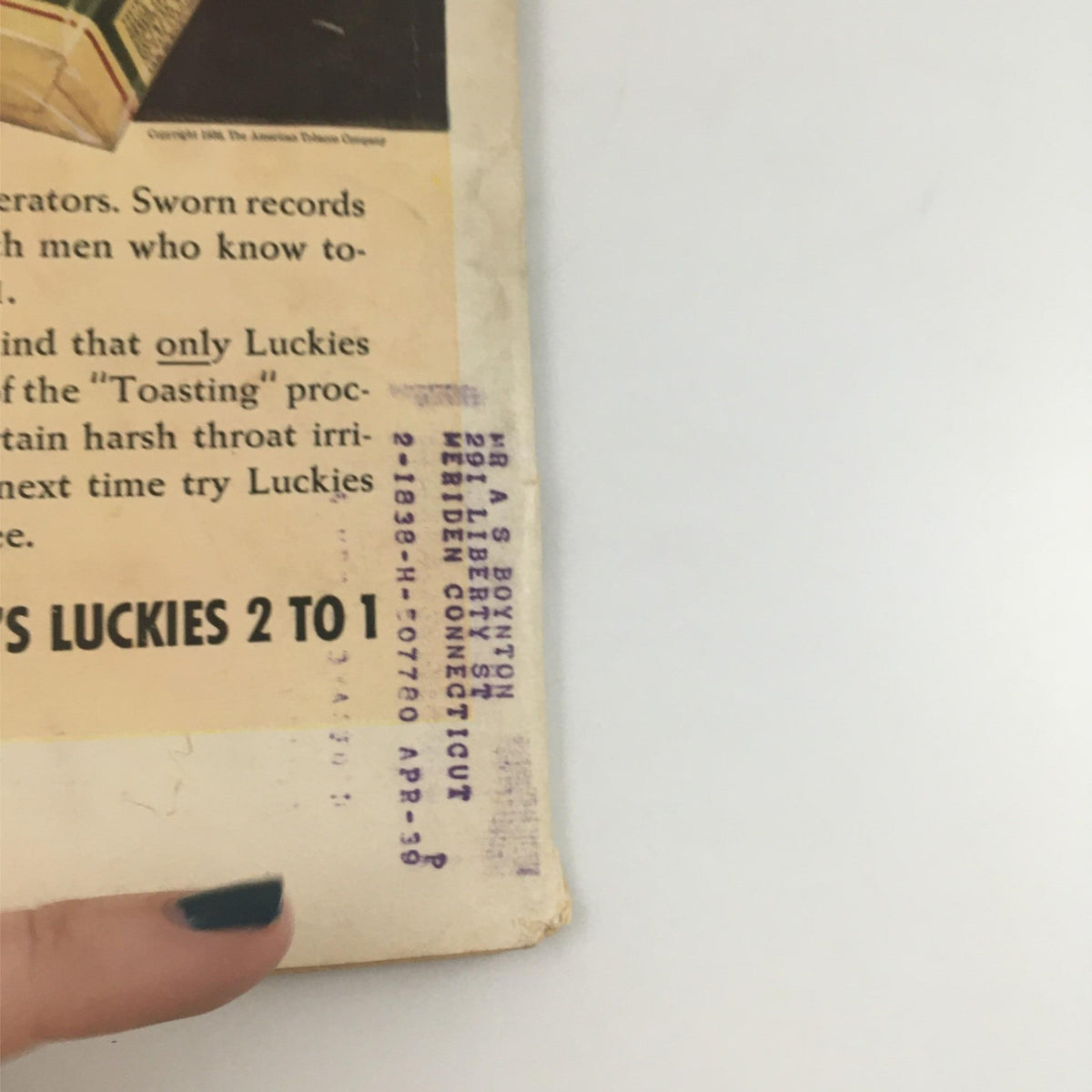
The reported grade is Good, with minor wear along the edges and the possibility of small marks or rips. For an oversized weekly magazine from 1938, such wear is consistent with ordinary handling, mailing, shelving, and long-term storage, but each imperfection should still be considered when assessing collector condition. An address label is present on the front cover, identifying the magazine as a mailed subscription example rather than an unmarked newsstand presentation. Mailing labels are common on surviving periodicals of this era and form part of their distribution history, although cover-focused collectors may place greater visual emphasis on examples where the portrait remains unobstructed. The plastic protective covering mentioned in the listing is a later preservation accessory and not an original component of the magazine. It may help reduce additional exposure to dust, fingerprints, and friction, but it does not determine the underlying grade. Important evaluation points include the attachment of the front and back covers, spine and staple stability, edge tears, corner loss, page completeness, discoloration, moisture damage, writing, and the presence of any removed photographs or advertisements. Because the archived edition is documented as a 78-page issue, page count and structural completeness are especially useful when distinguishing a full magazine from an incomplete or cover-only survivor. Exact rarity should not be inferred from one listing alone; historical relevance, cover appeal, completeness, and preservation all contribute to collector interest.
Looking for More Issues Like This?
The June 27, 1938 Roosevelt issue can be a tough date to locate as a complete magazine, particularly when cover attachment and interior page integrity are priorities. Readers researching comparable political portraits and photographic reporting can explore the broader archive of vintage Life magazines, while the collection of original magazines from 1938 offers additional perspectives on Depression-era politics, entertainment, advertising, and American culture.