

Description
Collector's Note – Why This Issue Matters
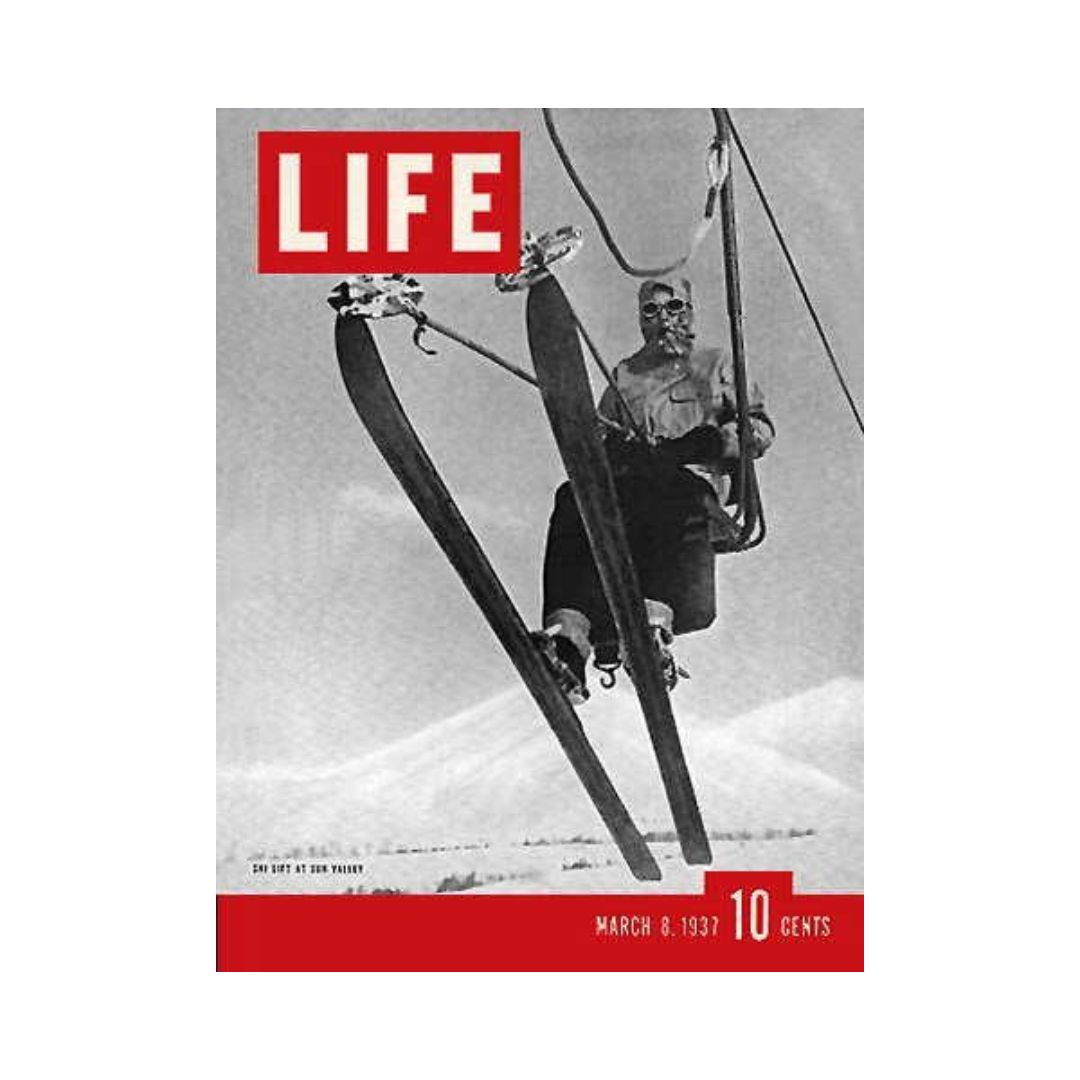
March 8, 1937 places this Life Magazine issue at one of the most consequential moments in the early history of the publication itself. Life had been founded just four months earlier, in November 1936, by Henry Luce, and by March 1937 was still in the earliest stages of establishing the editorial identity and photographic tradition that would make it the most influential photojournalism publication in American history. A March 1937 issue is therefore a primary document of Life at its most formative — a publication still discovering what it could do, what its photographic resources could achieve, and what the American reading public would respond to. The Sun Valley, Idaho skiing cover is a historically interesting choice for this early issue: Sun Valley had opened in December 1936 — just three months before this issue's publication — making it the first destination ski resort in the United States, created by the Union Pacific Railroad under the direction of W. Averell Harriman specifically to generate passenger traffic for its western rail lines. A Life cover story on Sun Valley skiing in March 1937 is therefore not merely a recreational feature but a primary document of the invention of American destination skiing as a mass-market leisure concept, captured at the precise moment of the resort's inaugural season. For collectors building an archive of Life Magazine issues from the publication's founding year and earliest months, this March 8, 1937 edition is among the most historically layered entries in the catalog — a very early Life issue engaging a genuinely new American cultural development at its moment of origin.
The table of contents documented in the listing reveals an editorial range that reflects Life's founding ambition in its earliest months. The Chief Justice Charles Hughes feature documents one of the most significant figures in American constitutional history at a historically specific and charged moment: March 1937 was the height of Franklin Roosevelt's court-packing controversy, in which FDR had proposed expanding the Supreme Court to overcome the conservative majority that had been striking down New Deal legislation. Hughes was the Chief Justice navigating that constitutional crisis, and a Life feature on him in March 1937 is a primary document of the publication engaging the most active constitutional debate in American political life at the most acute moment of its development. The Metropolitan Opera "Tristan" feature documents New York's most prestigious cultural institution in its mid-thirties programming at a specific and historically documentable season. The Studebaker factory production photo essay reflects Life's characteristic early ambition to document American industrial life with the same photographic authority it brought to its political and cultural features — and the Studebaker factory in 1937 was operating in the specific economic landscape of the late Depression, when industrial production was recovering but labor relations were under the most intense strain in American history. Collectors researching American magazines from 1937 will find this Life issue a primary document of extraordinary documentary range across American cultural, industrial, and political life in its most consequential late-Depression year.
The "Sandhog Union Leader Killed" feature adds a labor history dimension of considerable significance. 1937 was one of the most active years in the history of American labor organizing — the sit-down strikes at General Motors in January and February 1937 had just concluded with a landmark union victory, the Steel Workers Organizing Committee was in the middle of its most aggressive campaign, and violence against labor leaders was a documented feature of the period's industrial landscape. A Life feature on the killing of a sandhog union leader in March 1937 is a primary document of American labor history at its most contested and most violent moment, produced by a publication that was itself still defining its editorial relationship to labor and capital. The Chinese mass wedding ceremony, the British rowing teams on the Isis, and the caverns and caves natural history feature round out an editorial package that reflects Life's early and consistent ambition to document the full breadth of world culture and natural life in a single weekly photojournalism publication.
About the Publication
Life Magazine was founded by Henry Luce in November 1936 as a weekly photojournalism publication and operated continuously in that format until 1972, when it transitioned to special issues before relaunching as a monthly in 1978. At the time of this March 1937 issue, Life was barely four months old, still establishing the editorial relationships, photographic standards, and reader expectations that would make it the most widely circulated magazine in the United States within a few years. Its founding conviction — that photography could document history, convey emotion, and communicate across barriers of education and background in ways that text alone could not — was being tested and confirmed in real time with each early issue, and the editorial choices documented in the March 8, 1937 table of contents reflect a publication at its most experimental and most ambitious in the specific context of learning what it could become.
Key Highlights Inside
- Sun Valley, Idaho skiing cover — a primary photographic document of the inaugural season of the first destination ski resort in the United States, opened in December 1936 by the Union Pacific Railroad, capturing a genuinely new American leisure concept at the precise moment of its public debut and constituting one of the earliest major photojournalism treatments of American recreational skiing in the mass-circulation press.
- Chief Justice Charles Hughes feature — a primary document of the most significant figure in American constitutional life during the March 1937 height of FDR's court-packing controversy, capturing a specific and historically consequential constitutional crisis from the perspective of the Chief Justice navigating it at the moment of its maximum political intensity.
- Studebaker factory production photo essay — an early example of Life's characteristic industrial photojournalism, documenting American manufacturing in the specific economic landscape of the late Depression's industrial recovery, produced in the same months when the most significant labor organizing battles in American history were reaching their climactic confrontations.
- "Sandhog Union Leader Killed" feature — a primary document of labor violence in March 1937, the most active month in the history of American union organizing, appearing in Life just weeks after the landmark GM sit-down strike victory and constituting a primary source record of the labor movement's most contested and most dangerous period.
- Metropolitan Opera "Tristan" feature, Chinese mass wedding ceremony, and British rowing teams on the Isis — the international cultural and social range of a March 1937 Life issue documenting world culture across opera, cross-cultural ceremony, and British collegiate sport with the photographic authority that the publication was establishing as its signature in its earliest months of existence.
- Caverns, caves, and creatures natural history feature — Life's characteristic early engagement with natural history photography alongside its political, industrial, and cultural coverage, reflecting the founding editorial vision of a publication that understood the natural world as equally worthy of its photographic resources as any human subject.
Condition & Rarity
Life Magazine issues from March 1937 are approaching their eighty-ninth year of existence, placing them among the oldest surviving examples of a publication that began just four months before this specific issue's publication date. The condition landscape for surviving copies from this period reflects the full weight of nearly nine decades alongside the specific paper quality characteristics of the publication's earliest production runs, which were produced before Life had fully established the printing standards that would define its peak decades. The listing notes that stock photographs are used, meaning individual copies within the available inventory may vary in specific condition details while conforming to the general characteristics expected of an eighty-eight-year-old weekly photojournalism magazine in its founding year. Life's large-format staple-bound design made it susceptible to cover separation, page stress, and the accumulated wear that nearly nine decades of storage inevitably produce, and surviving copies from the 1936-1937 period that retain structural integrity and legible content represent a meaningful category of preservation against the odds of their age. The absence of a newsstand label is noted as a condition positive. Collectors evaluating surviving examples of this issue should prioritize the Sun Valley cover image legibility, the completeness of the Hughes and Studebaker features, and overall structural soundness as primary condition criteria for a publication of this exceptional age and historical significance.
Looking for More Issues Like This?
A surviving copy of the March 8, 1937 Life Magazine with its Sun Valley inaugural season cover, Chief Justice Hughes court-packing controversy feature, Studebaker labor history context, and sandhog union leader documentation is among the most historically specific entries in the publication's founding-year archive — issues from Life's first full year of publication document the birth of American photojournalism's most significant institution at its most formative moment, and issues with this breadth of documented editorial content surface infrequently in any condition. If this issue is no longer available, the full Life Magazine collection at OriginalMagazines.com is the most comprehensive place to browse surviving issues from across the publication's history and locate other founding-year editions, Depression-era industrial features, or significant issues from Life's most historically consequential early run. The 1937 magazine collection brings together surviving issues from across that year's major publications for collectors working to document the full breadth of American print culture during the most consequential year of the New Deal era.