



Description
Collector's Note – Why This Issue Matters
The May 13, 1957 issue of Life magazine brings together two subjects that, at first glance, seem unlikely companions on the same cover — Bert Lahr and the discovery of mushrooms — but both speak to the remarkable editorial range that made Life the most widely read magazine in mid-century America. Bert Lahr was by 1957 one of the most beloved comic performers in the country, permanently enshrined in popular memory as the Cowardly Lion from The Wizard of Oz (1939) but very much an active and critically respected stage presence in the late 1950s. His appearance in Samuel Beckett's Waiting for Godot on Broadway in 1956 had been a genuine cultural event — the unlikely pairing of a broad vaudeville comedian with the most demanding absurdist drama of the postwar era had fascinated critics and audiences alike, and the reverberations of that production were still being felt when this issue went to press.
The mushroom feature is equally significant in ways that have only become clearer with time. The May 1957 Life article on mushrooms — specifically R. Gordon Wasson's account of participating in a Mazatec mushroom ceremony in Oaxaca, Mexico — is now recognized as one of the most consequential pieces of journalism the magazine ever published. It introduced the concept of psychedelic mushroom use to a mainstream American readership for the first time, directly influencing a generation of researchers, writers, and eventually the entire psychedelic movement of the 1960s. Figures including Timothy Leary have cited this specific Life article as a catalyst. For collectors focused on vintage Life magazine issues, the May 13, 1957 edition is not a peripheral curiosity — it is a landmark issue whose cultural afterlife extended decades beyond its publication date.
Taken together, these two features make this a genuinely unusual issue: a document of mid-century American popular culture that managed to capture both the theatrical avant-garde and the prehistory of the psychedelic era within the same covers. That combination is what separates it from dozens of other well-preserved Life issues from the same period. Anyone building a serious collection around magazines from 1957 or the cultural history of the late 1950s will find this issue one of the most substantive single acquisitions available from the decade.
About the Publication
Life magazine, relaunched by Henry Luce in November 1936 as a large-format weekly photojournalism publication, was for much of the mid-twentieth century the highest-circulation magazine in the United States. Its editorial formula — sweeping photography paired with accessible but serious narrative journalism — gave it an unmatched ability to bring distant events, cultural figures, and ideas into American living rooms with an immediacy that no other medium could match before television achieved full penetration. By 1957 Life was navigating the early competitive pressure from television while still commanding enormous readership and cultural authority. Its covers and feature stories remained genuine events in the national conversation, and its editorial ambition — reflected in the willingness to publish both a Bert Lahr profile and a groundbreaking ethnomycology report in the same issue — was very much intact.
Key Highlights Inside
- Feature on Bert Lahr, documenting the comedian and actor at a significant moment in his late career, following his celebrated 1956 Broadway appearance in Waiting for Godot.
- R. Gordon Wasson's account of the discovery and ceremonial use of psilocybin mushrooms in Oaxaca, Mexico — now widely recognized as the article that introduced psychedelic mushroom culture to mainstream American awareness and a foundational document in the history of the 1960s counterculture.
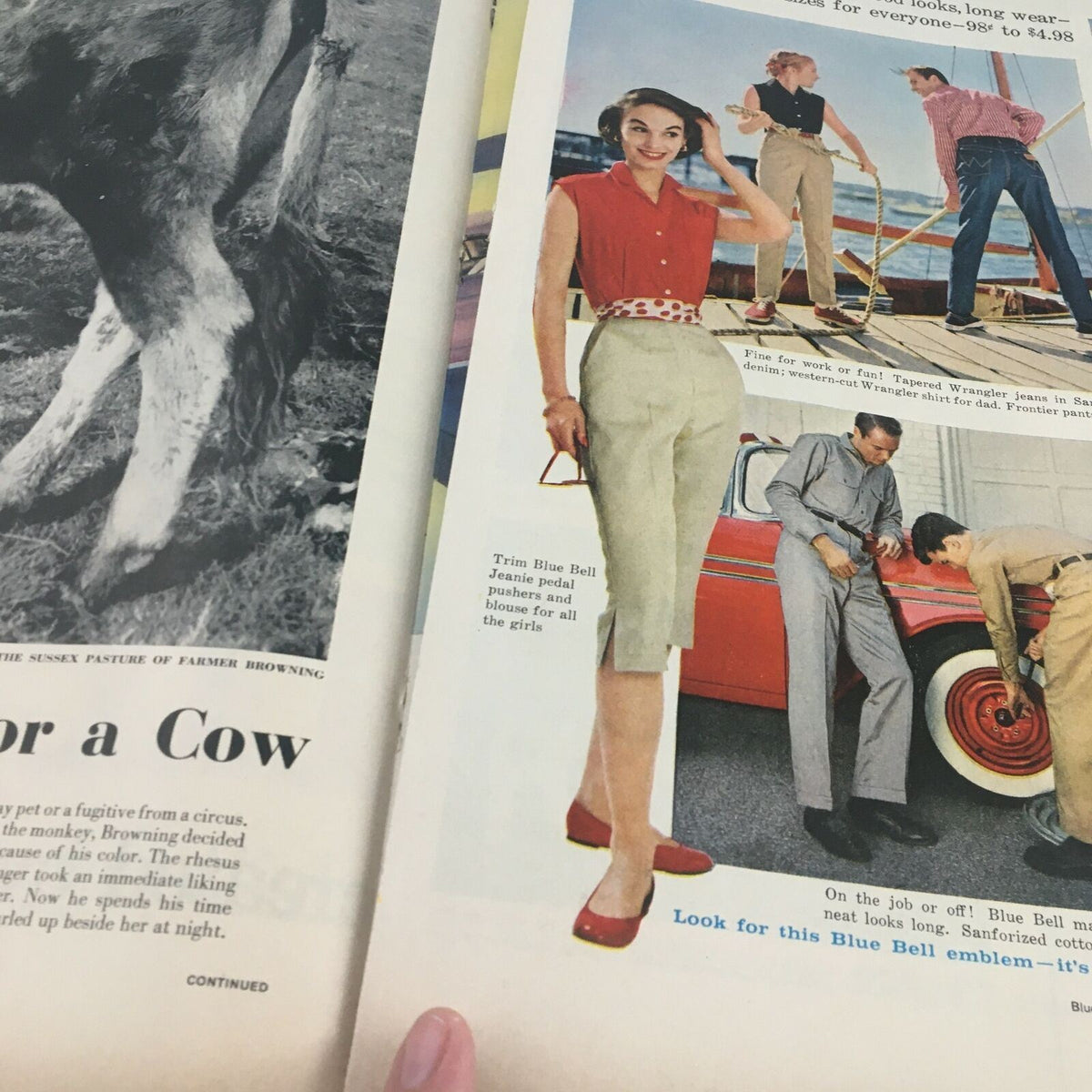
- Photography and visual journalism consistent with Life's signature large-format editorial approach, applied to both the celebrity profile and the ethnographic mushroom feature.
- Period advertising and additional editorial content reflecting mid-1950s American consumer culture and the broad range of subjects Life covered in a typical weekly issue.
Condition & Rarity
The May 13, 1957 issue of Life is among the more actively sought individual issues in the magazine's entire run, and the Wasson mushroom article alone gives it a collector profile well above the average for Life issues of this period. The condition attributes described for surviving copies of this issue — good overall with minor wear, newsstand origin with no address label, visible marks, a small rip, binding wear, protective plastic covering, and loose pages in the 89–100 range — represent an honest and detailed accounting of what decades of storage and handling produce in a large-format weekly of this age. Newsstand provenance with no label is a meaningful positive: the full cover image is unobstructed, and the copy was never subjected to the spine stress of mailing folds. Loose pages in the noted range are a common condition issue for Life issues of this era, as the saddle-stitch binding used for weekly issues of this size tends to weaken at the centerfold and adjacent signatures over time. This does not necessarily indicate missing pages — loose pages that remain present and legible are a far less significant condition concern than actual losses. Collectors evaluating any surviving copy should confirm that all pages in the 89–100 range are present and assess the severity of the rip relative to cover or feature content.
Looking for More Issues Like This?
The May 13, 1957 Life is one of those issues that collectors with knowledge of its contents pursue specifically — and the combination of the Bert Lahr feature and the Wasson mushroom article gives it a dual appeal that keeps demand steady across very different collector communities. If this particular issue is no longer available, the vintage Life magazine collection at OriginalMagazines.com is the best place to explore other significant issues from across the publication's decades of weekly publishing. The 1957 magazine archive is also worth browsing for a broader view of what was being published during this rich and transitional year in American cultural life.