

Description
Collector's Note – Why This Issue Matters
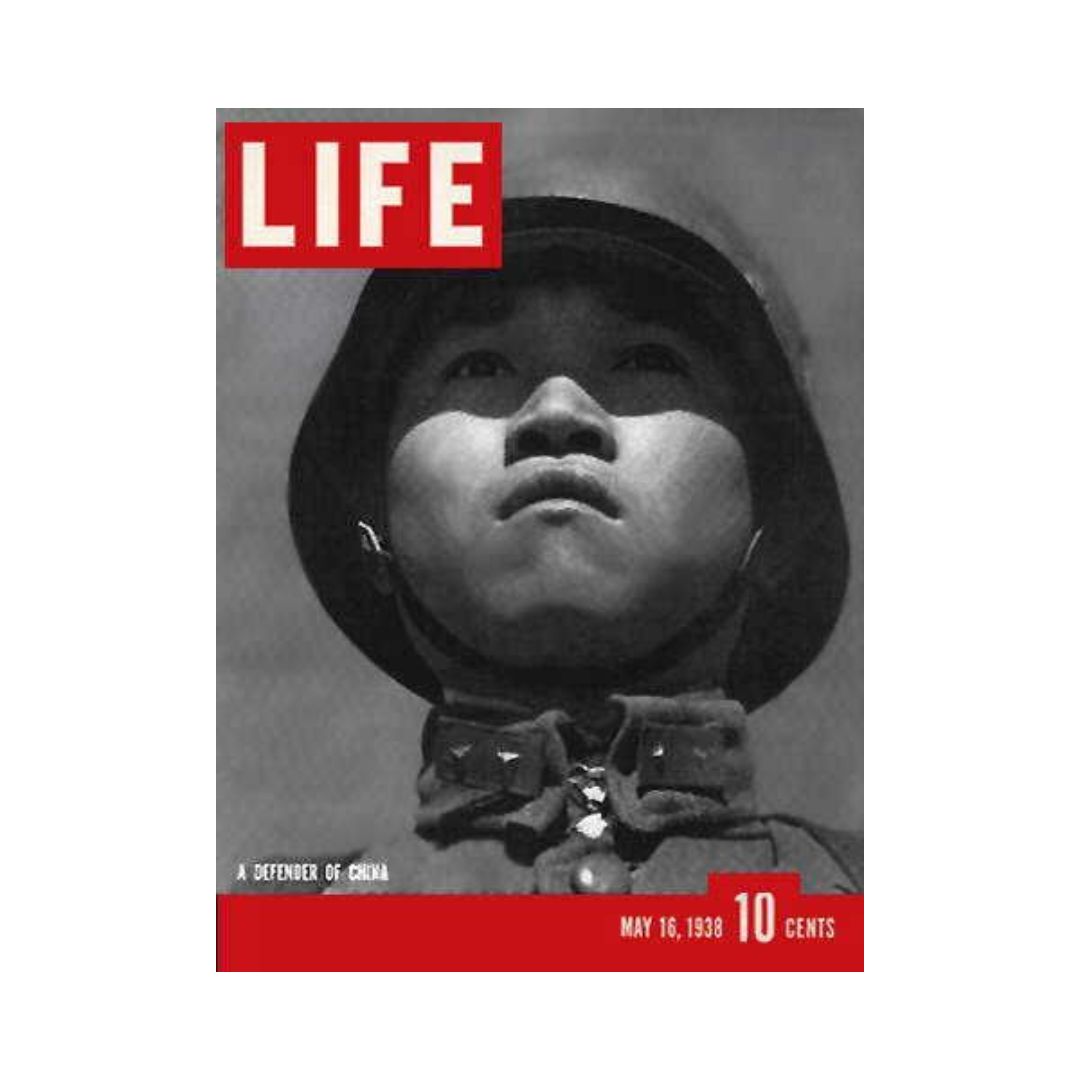
May 16, 1938 is a publication date of extraordinary historical weight, and this Life Magazine issue documents the world at one of the most ominous moments of the twentieth century. The combination of a Chinese soldier on the cover and "Vienna Celebrates Adolf Hitler's Birthday" in the interior constitutes a primary source document of breathtaking historical density — in a single issue, Life was addressing both the Sino-Japanese War, which had been raging since the Marco Polo Bridge Incident of July 1937 and had already produced some of the most horrific atrocities of the era in the Nanjing Massacre, and the newly absorbed Austria celebrating the birthday of the man who had annexed it just two months earlier in the Anschluss of March 1938. The Chinese soldier cover is itself a statement of editorial courage — Life was placing the face of a combatant in an Asian war that many Americans still considered remote on its cover, insisting through photojournalism's specific power that this conflict deserved the same attention as the European crisis. For collectors building an archive of Life Magazine issues from the pre-war period, this May 1938 edition is one of the most historically loaded single issues in the publication's entire archive — a document of the world as it actually was in the spring of the last full year before the Second World War began.
The "Vienna Celebrates Adolf Hitler's Birthday" content is among the most historically significant interior features in Life's pre-war coverage. April 20, 1938 — Hitler's forty-ninth birthday — fell less than a month before this issue's publication, and it was the first birthday he celebrated as the ruler of a Greater Germany that now included Austria. The photographs of Viennese celebrations that Life published would have shown the enthusiastic reception of Nazism in what was ostensibly a sovereign nation that had been absorbed by force just weeks before — a primary source document of the political compliance and genuine popular enthusiasm that the Anschluss generated in Austria, a historical reality that remained contested and uncomfortable for decades. Life's decision to document this celebration photographically, for its enormous American readership, was an editorial act of considerable political significance in the context of American isolationist sentiment and the active debate about whether and how the United States should respond to European fascism. The Spanish art feature — covering Goya, El Greco, Velázquez, Zurbarán, Ribera, and Murillo — adds a culturally resonant dimension: Spain in May 1938 was in the final phase of its Civil War, with Franco's forces approaching final victory and the cultural patrimony of the Spanish masters in a country actively being destroyed by the conflict that had been the decade's first major fascist military intervention. Collectors researching Life Magazine and American magazines from 1938 will find this issue a primary document of extraordinary historical range and documentary significance.
The supporting content documented in the table of contents extends the issue's historical interest well beyond its primary political stories. The Shriners feature, the model planes hobby article, and the Brazil "Weis Weis" Indians documentary photography collectively reflect Life's editorial philosophy at its most characteristic — the juxtaposition of global crisis with American domestic life, the combination of the epochal and the everyday in a single weekly package that was designed to give its readership the complete picture of their world in sixty-odd pages. The race horses photography would have been produced with the same visual ambition that Life brought to its Chinese soldier cover and its Hitler birthday documentation, reflecting the magazine's foundational conviction that photography could find equal dignity and documentary power in the mundane and the momentous. The listing's use of stock photos is a standard practice for dealers with multiple copies of high-demand issues and does not affect the documented content of the issue itself.
About the Publication
Life Magazine was founded by Henry Luce in 1936 as a weekly photojournalism publication and operated continuously in that format until 1972, when it transitioned to special issues before relaunching as a monthly in 1978. At its peak it was among the most widely circulated magazines in the United States, built on the editorial conviction that photography could document history, convey emotion, and communicate across barriers of education and background in ways that text alone could not. Its pre-war coverage from 1936 through 1941 constitutes one of the most significant bodies of documentary photojournalism ever assembled — a weekly visual record of the world moving toward catastrophe, produced by photographers and editors who understood the historical importance of what they were documenting. The May 16, 1938 issue is representative of Life at its pre-war best: using its photographic resources to insist that its American readership see the Chinese soldier's face, see the Vienna celebrations, and look directly at what was happening in Europe and Asia before the choices about how to respond had been foreclosed.
Key Highlights Inside
- Chinese soldier cover — a primary photojournalistic document of the Sino-Japanese War published in May 1938 as Japan's military operations in China were continuing in the aftermath of the Nanjing Massacre, representing Life's editorial insistence that its American readership engage with an Asian conflict that American isolationist sentiment might otherwise have permitted them to ignore.
- "Vienna Celebrates Adolf Hitler's Birthday" — a primary documentary record of the Austrian capital's celebration of Hitler's forty-ninth birthday, published six weeks after the Anschluss had made Austria part of Greater Germany, constituting one of the most historically significant and uncomfortable pieces of contemporary photojournalism in Life's pre-war archive and a primary source document of popular Austrian enthusiasm for Nazism at the moment of the annexation.
- Spanish art masters feature covering Goya, El Greco, Velázquez, Zurbarán, Ribera, and Murillo — a documented engagement with the Spanish artistic heritage published in May 1938 as the Spanish Civil War was in its final phase, with Franco approaching final victory and the country that produced these masters in the last months of a conflict that had already defined the decade's most consequential political crisis.
- The Shriners, model planes hobby feature, and race horses photography — the domestic American content that surrounded and contextualized Life's international crisis coverage, reflecting the magazine's editorial philosophy of presenting the full range of American and world life simultaneously and insisting that its readership hold both the epochal and the everyday in a single weekly frame.
- Brazil's "Weis Weis" Indians documentary photography — ethnographic photojournalism of the kind that Life consistently pursued alongside its political and crisis coverage, reflecting the publication's comprehensive ambition to document human life in all its geographic and cultural diversity within the same pages that covered fascism and war.
Condition & Rarity
Life Magazine issues from May 1938 are approaching their eighty-eighth year of existence, and the condition landscape for surviving copies from this pre-war period reflects the full weight of that age alongside the specific physical challenges of late-thirties American paper stock and printing. The listing notes that stock photos are used, meaning individual copies within the available inventory may vary in specific condition details while conforming to the general characteristics expected of an eighty-seven-year-old weekly photojournalism magazine. Life's large-format staple-bound design from this pre-war period made it susceptible to cover separation, page stress, and the accumulated wear that nearly nine decades of storage inevitably produce. The absence of a mailing label on the cover is a meaningful condition positive for a pre-war Life — subscriber label-free copies preserve the Chinese soldier cover image in its complete, unobstructed form, which is both visually and historically significant for a cover whose documentary power is inseparable from its visual integrity. Collectors evaluating surviving examples of this issue should prioritize cover legibility, the completeness and readability of the Hitler birthday and Spanish art features, and overall structural soundness as primary condition criteria for a publication approaching its ninth decade of existence.
Looking for More Issues Like This?
A surviving copy of the May 16, 1938 Life Magazine with its Chinese soldier cover, Hitler birthday documentation, and Spanish masters feature is one of the more historically dense single issues in the publication's entire pre-war archive — this specific combination of content makes it a primary source document for researchers and collectors working across Sino-Japanese War history, the Anschluss and Austrian Nazism, Spanish Civil War cultural context, and American photojournalism simultaneously. If this issue is no longer available, the full Life Magazine collection at OriginalMagazines.com is the most comprehensive place to browse surviving issues from across the publication's history and locate other pre-war editions, significant political covers, or specific years from Life's most historically consequential decade. The 1938 magazine collection brings together surviving issues from across that year's major publications for collectors working to document the full breadth of American print journalism during the last full year before Europe went to war.