


Description
Collector's Note – Why This Issue Matters
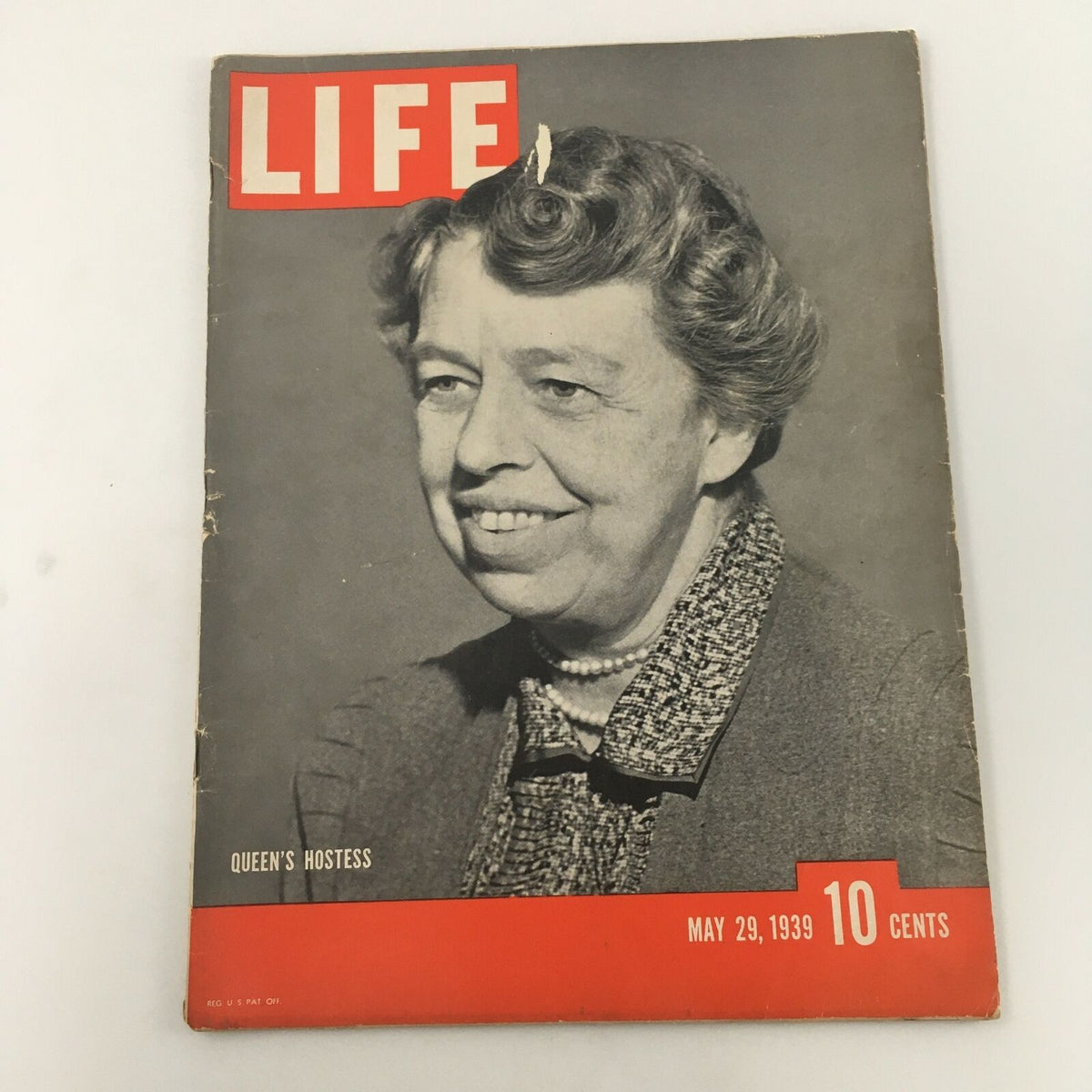
The May 29, 1939 issue of Life Magazine features First Lady Eleanor Roosevelt beneath the cover description “The Queen’s Hostess.” That wording connects the issue directly to preparations for the approaching American visit of King George VI and Queen Elizabeth. As First Lady, Roosevelt helped oversee the ceremonial and social responsibilities associated with receiving prominent foreign guests at the White House. Her appearance on the cover placed a recognizable American public figure at the center of an event involving diplomacy, royal protocol, and international attention.
The issue was published while the king and queen were undertaking their historic North American tour and shortly before they traveled to the United States. Their journey marked the first visit to the United States by a reigning British monarch, giving the preparations surrounding their reception unusual historical importance. The royal tour was carefully observed by newspapers and magazines because it represented more than pageantry during an increasingly uncertain period in international affairs. Published only a few months before the outbreak of the Second World War in Europe, the issue preserves a moment when public ceremony and diplomatic symbolism were becoming closely intertwined.
Life’s decision to frame the approaching visit through Eleanor Roosevelt reflects the magazine’s talent for interpreting major events through individual personalities and memorable photography. The cover does not present diplomacy as an abstract government process but as a visible human responsibility carried by one of the most prominent women in American public life. For collectors, the issue is valuable as a dated visual record of royal interest, White House culture, prewar diplomacy, and the evolving influence of photographic magazines. Additional context can be found through other vintage issues of Life Magazine and through magazines published during 1939, which together document the personalities and events shaping the same historical period.
About the Publication
Life Magazine was relaunched by Time Inc. in November 1936 as a weekly general-interest periodical centered on photojournalism. The title had existed in an earlier form, but its transformation under Time Inc. established the version that became one of the most recognizable American magazines of the twentieth century. Publisher Henry Luce promoted an editorial approach in which photographs carried a substantial share of the narrative rather than merely illustrating written articles. The magazine’s oversized format allowed photographs to appear with a scale and visual force that smaller periodicals could rarely match. Its pages regularly combined documentary images, short explanatory passages, detailed captions, and carefully arranged photographic sequences. Editorial subjects included national politics, international affairs, entertainment, science, fashion, society, sports, industry, and everyday American life. Life was designed for a broad readership rather than a narrowly specialized audience. Its presentation made complex or distant events understandable through photographs that readers could examine directly in their homes. By 1939, the publication had already developed a distinctive editorial identity built around immediacy, visual drama, and accessible reporting. Early issues are now important primary sources because they preserve not only historical events but also the way those events were selected, photographed, captioned, and presented to contemporary readers. Viewed as a group, these magazines provide a detailed visual record of American culture during the years immediately preceding the Second World War.
Key Highlights Inside
- The principal verified feature identifies Eleanor Roosevelt as “The Queen’s Hostess.” The description refers to her ceremonial and social responsibilities surrounding the forthcoming reception of Queen Elizabeth during the British royal visit. It gives the issue a clear connection to White House protocol, international diplomacy, and the public role of the First Lady.
- The May 29, 1939 publication date places the issue during the royal couple’s North American tour and shortly before their arrival in the United States. This timing means the cover anticipates the American portion of the journey rather than reporting on it after its completion. The issue therefore captures the public expectation and media attention that developed around the historic visit.
- The cover demonstrates Life’s established practice of explaining major international events through a recognizable person and a carefully selected photograph. Eleanor Roosevelt provided readers with a familiar American figure through whom the formalities of the royal visit could be understood. The presentation reflects the magazine’s broader ability to combine personality, photography, and historical context within a single memorable cover concept.
- The listing describes the issue as containing photography representative of the late 1930s, but it does not provide a complete table of contents. Specific additional articles, photographers, captions, departments, and interior photo essays cannot be confirmed from the supplied information. Any detailed inventory of the contents should therefore be based on direct examination of a complete surviving issue rather than assumption.
Condition & Rarity
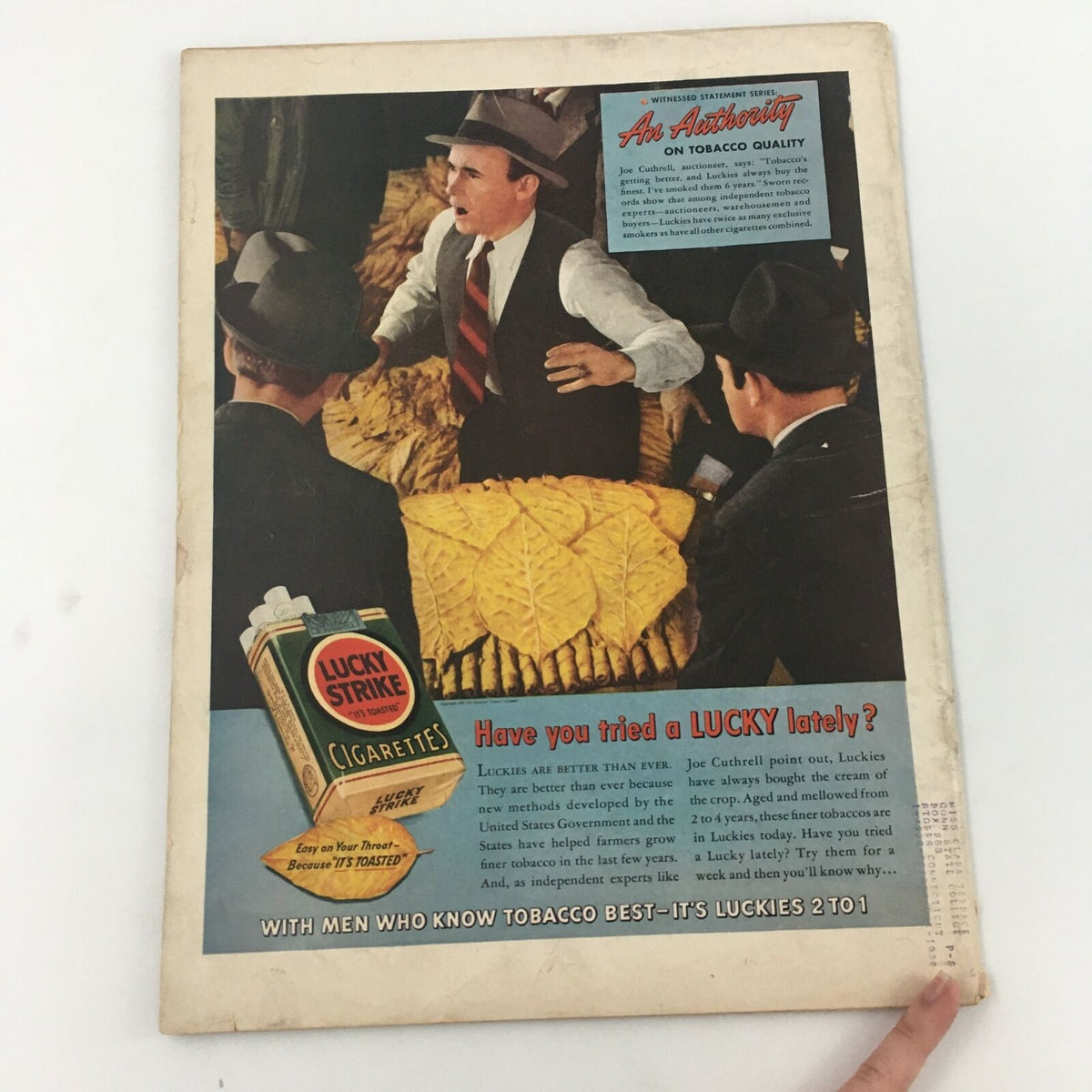
Surviving examples of the May 29, 1939 issue may be described in general collector terms as being in good used condition when they retain their basic structural integrity despite visible age and handling. The original listing notes minor edge wear, which is common among large-format weekly magazines stored for many decades. Small marks or minor rips may also be present, although the supplied description characterizes the overall appearance as good for its age. The significance of such flaws depends on their size, position, and effect on the cover image, spine, printed text, or page attachment. Wear concentrated along exposed edges is generally expected more readily than damage extending deeply into photographs or editorial content. An address label appears on the back, indicating that the magazine was likely delivered through a subscription. Because the label is positioned on the back rather than across the main cover image, its visual impact may be less pronounced, although collectors still examine staining, adhesive residue, and paper disturbance around the label. The magazine is also described as having a plastic protective covering intended to reduce additional handling and storage wear. A protective sleeve can assist preservation, but it does not by itself confirm the condition of the paper, staples, spine, or interior pages beneath it. Collectors evaluating another surviving example should inspect page completeness, binding security, clipping, writing, moisture exposure, brittleness, discoloration, and concealed tears. Condition terminology for vintage magazines is not completely standardized, so a careful physical description is generally more informative than a broad grade alone.
Looking for More Issues Like This?
Exact-date issues from Life’s earliest photojournalism years can be difficult to locate, especially when research is focused on a particular cover subject or historical event. The May 29, 1939 edition is especially relevant to readers studying Eleanor Roosevelt, royal history, American diplomacy, and prewar visual culture. Related material can be explored through the broader collection of vintage Life Magazines. That archive documents many of the political leaders, cultural figures, social customs, and international developments that defined the twentieth century. The collection of original magazines from 1939 provides another useful way to examine the same year across different editorial viewpoints. Comparing multiple publications can reveal how various editors interpreted the royal tour and the changing political atmosphere of the period. Other issues from 1939 also preserve the entertainment, fashion, advertising, technology, and daily concerns that existed alongside major diplomatic events. These surrounding subjects help place the royal visit within the wider cultural experience of contemporary readers. Although the exact May 29 issue may not always be represented among available material, closely related issues can provide meaningful historical and visual context. Together, the Life archive and the broader 1939 collection offer a practical starting point for continuing research into this important prewar moment.