

Description
Collector's Note – Why This Issue Matters
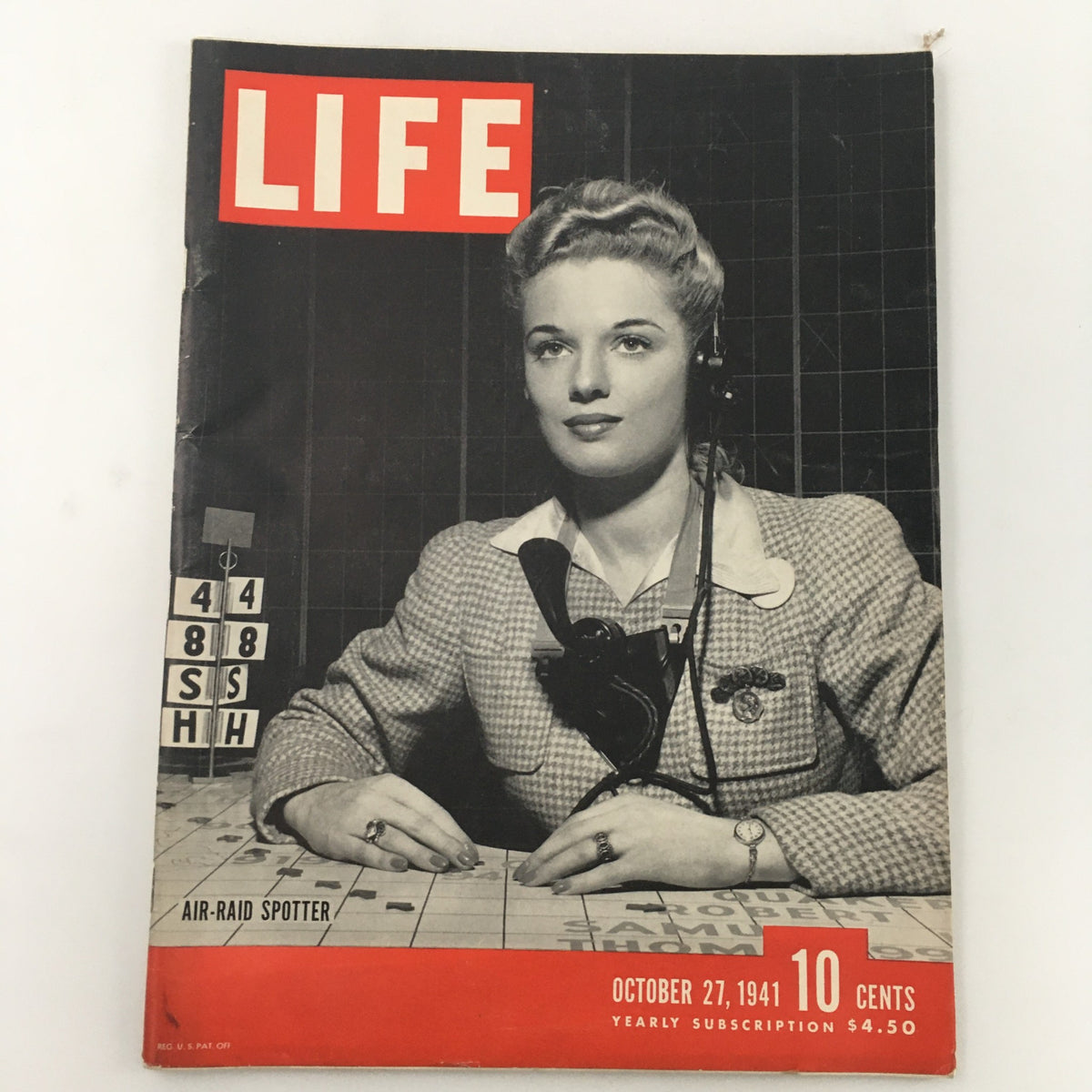
Life magazine dated October 27, 1941 captures the United States at a tense and historically significant moment just weeks before the country entered World War II. The listing identifies the cover subject as a female air-raid spotter, a figure that reflects the growing seriousness of home-front preparedness in the months before the attack on Pearl Harbor. For collectors of vintage Life magazine issues, this cover stands out because it documents both wartime anxiety and the expanding public visibility of women in defense-related roles. The timing gives the issue a sense of immediacy: it belongs to the final stretch of American life before the war became a direct national reality. As a result, the cover is not merely a period illustration or photograph; it is a visual record of a country preparing itself for uncertainty.
The image of a female air-raid spotter is especially meaningful in the context of 1941. Even before formal American entry into the war, civil defense, aviation awareness, and public readiness were becoming part of everyday national life. Women increasingly appeared in public-service and defense-support roles, and a cover like this helps preserve that transition in visual form. It is not only a wartime-adjacent issue; it is a printed record of how American magazines were beginning to represent civilian participation in a global crisis. The cover subject also reflects the broader home-front story that would become central during World War II, when women’s labor, volunteer service, and public responsibilities became more visible across American society.
As a historical artifact, this October 27, 1941 issue belongs to the broader category of original magazines from 1941, a year that carries exceptional importance for collectors of American history. The issue’s value lies in its timing, its cover subject, and its connection to the visual language of the early 1940s. Life was particularly powerful in this period because its large-format photography and illustrated storytelling helped Americans see themselves, their institutions, and world events with unusual immediacy. For researchers and collectors, issues from late 1941 can function almost like primary-source snapshots, preserving public attitudes before later wartime narratives became fixed. This magazine belongs to that narrow and fascinating window when the warning signs of war were visible, but the full American wartime experience had not yet begun.
About the Publication
Life was one of the most influential American picture magazines of the twentieth century, known for its large-format photography, photo essays, human-interest reporting, cultural coverage, and advertisements that reflected everyday American life. Its audience was broad, reaching families, professionals, students, and readers interested in national affairs, entertainment, science, politics, and society. By 1941, Life had become a major visual record of American culture, using photographs and concise reporting to make world events accessible to a mass readership. Issues from the early 1940s are especially important because they capture the United States during a period of dramatic political, military, and social change. The magazine’s format made it especially effective at translating large historical events into personal, visual stories that readers could understand immediately. For collectors, Life is valuable not only for its covers, but also for the way its interior photography, advertisements, and editorial choices preserve the atmosphere of a specific week in American history.
Key Highlights Inside
- October 27, 1941 issue of Life magazine, published during one of the most consequential years in modern American history.
- Cover features a female air-raid spotter, connecting the issue to wartime preparedness, civil defense awareness, and the growing visibility of women in public-service roles.
- Published shortly before the United States entered World War II, giving the issue strong historical context for collectors of prewar and wartime American magazines.
- The listing notes articles, photographs, and advertisements that reflect American life in the early 1940s, making the issue useful as a cultural time capsule as well as a collectible magazine.
- Represents the visual storytelling format that made Life one of the defining American magazines of its era, especially during moments of national tension and rapid social change.
- Specific interior article titles are not confirmed from the listing, so the issue should be understood primarily through its date, publication, cover subject, and stated general contents.
Condition & Rarity
Collector evaluation for the October 27, 1941 issue should focus on its stated very good to excellent condition, overall great shape, minor signs of wear, and protective plastic covering. For a large-format magazine from 1941, even modest preservation is important because Life issues were often read, handled, stored in stacks, or discarded after use. Minor wear is expected on surviving examples of this age, especially along edges, corners, spine areas, and cover surfaces. A protective covering is useful for limiting further exposure to dust, moisture, rubbing, and handling wear. For wartime-era Life magazines, collectors usually look for strong cover presentation, intact pages, readable advertisements, and complete photographic content, since the visual record is central to the magazine’s historical value. Copies connected to defense themes, military preparedness, or home-front life can carry added research interest because they show how the public understood the approaching conflict before and during the war years. In this case, the female air-raid spotter cover makes condition especially important, since the cover image is a major part of the issue’s historical and collector appeal.
Looking for More Issues Like This?
This October 27, 1941 Life issue is the kind of historically themed magazine that can be challenging to find in well-preserved condition, especially with a cover tied so closely to wartime preparedness and women’s civilian defense roles. Collectors researching related material can browse the broader Life magazine collection to compare other original issues from the same influential picture-magazine tradition. Looking across multiple Life issues can help show how the magazine’s visual coverage changed as the United States moved from prewar uncertainty into full wartime mobilization.
For those focused specifically on the year leading into America’s entry into World War II, the 1941 magazine collection offers a useful way to study how different publications documented the mood, imagery, and public concerns of that pivotal year. Original magazines from 1941 are especially rewarding to compare because they preserve history week by week, before later interpretations smoothed the period into a single wartime narrative. Together, these related collections give collectors a broader view of how American print culture recorded one of the most dramatic turning points of the twentieth century.