

Description
Collector's Note – Why This Issue Matters
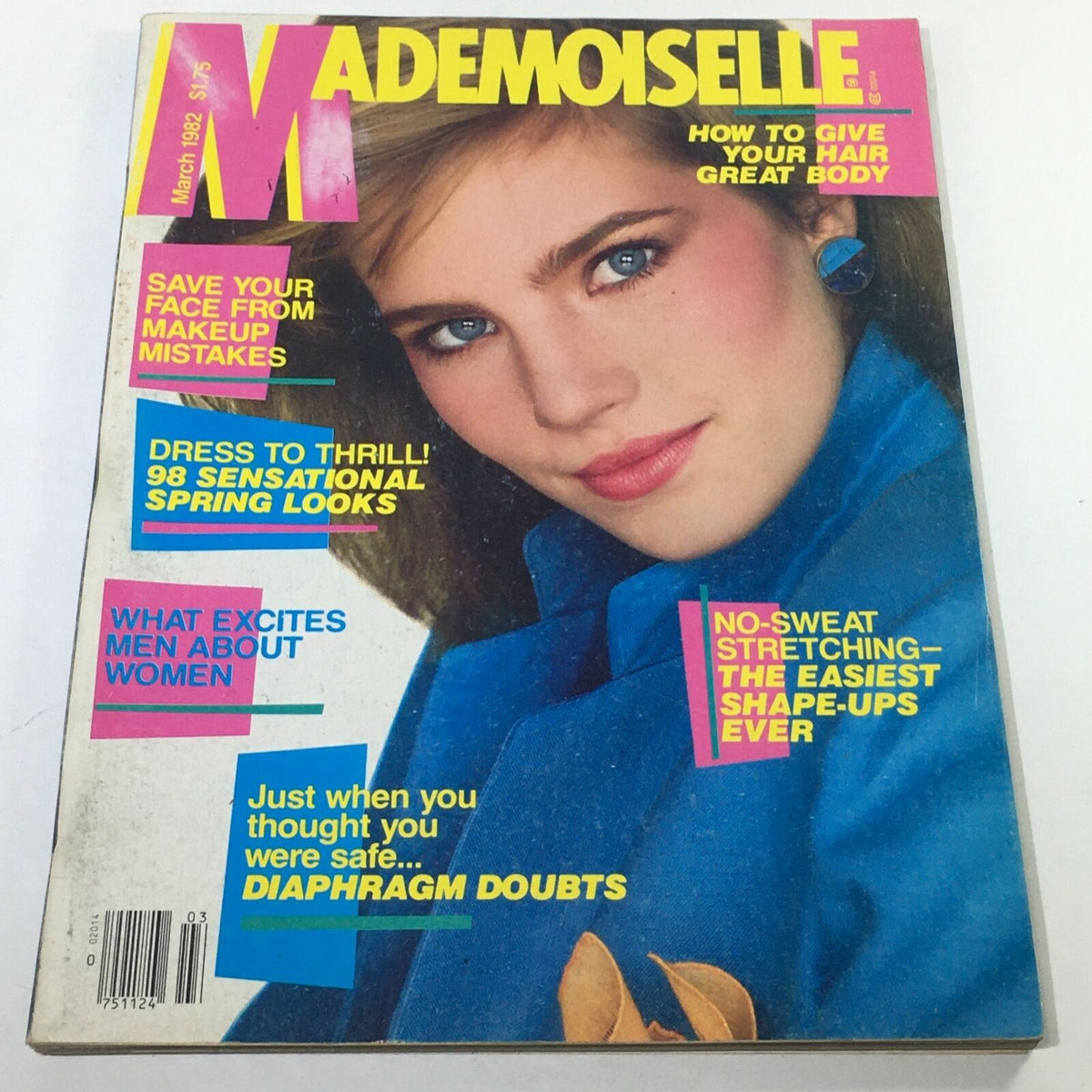
March 1982 is a spring issue of Mademoiselle featuring Teri Farrell on the cover — collectors should note that this is a second March 1982 Farrell cover that appears alongside a similarly described issue in the collector market, and the listing's condition designation of fair helps distinguish it from other surviving copies. As discussed in relation to other Farrell cover appearances on Mademoiselle from this period, she was in 1982 an emerging modeling and acting presence whose early fashion magazine appearances documented the beginning of a career that would later bring her significant television recognition through Cheers and Star Trek: Deep Space Nine. The early career documentation that this kind of pre-fame cover provides is precisely what makes it valuable to collectors interested in her biography, and a March 1982 spring cover represents one of the more significant early data points in that chronology. The Mademoiselle magazine collection provides the full editorial context for the magazine's cover choices across this period, allowing collectors to situate this issue within the publication's early-eighties visual and editorial identity.
The broader context of March 1982 places this spring issue at the opening of the early-eighties fashion season in its most fully consolidated aesthetic form. Power dressing was established doctrine, the fitness-influenced body ideal was actively reshaping beauty standards and clothing design, and the bold color and photographic sensibility of early-eighties fashion imagery had achieved the immediately recognizable quality that defines the era visually. A March spring preview issue of Mademoiselle was communicating those values to a readership of young, college-educated American women whose professional aspirations and personal style were both being shaped by the decade's particular cultural moment — the Reagan-era combination of economic ambition, fitness culture, and assertive aesthetic identity that made the early eighties one of the most stylistically cohesive decades in postwar American fashion history. The 1982 magazine collection provides cross-title context for the larger publishing conversation this issue was part of, and for collectors building a comprehensive picture of the year's cultural and fashion landscape across multiple titles simultaneously.
The fair condition designation for this issue, alongside the marks on the front cover, places it in a different collector category from the better-preserved March 1982 Farrell cover also documented in the market. Experienced collectors understand that fair-condition issues serve a different purpose than display-quality copies — they are the appropriate choice for archival research, reading, and completionist collecting where the interior content and the issue's historical existence as a primary source matter more than the visual presentation of the cover. For researchers working on Farrell's early career chronology, the early-eighties Mademoiselle cover record, or the magazine's spring 1982 editorial content, a fair-condition copy is a fully legitimate and research-useful artifact regardless of its surface wear.
About the Publication
Mademoiselle was a Condé Nast publication founded in 1935 and directed consistently at young, educated American women — college students, recent graduates, and young urban professionals for whom fashion was one dimension of a broader, intellectually engaged life. Its editorial identity distinguished it from competitors through a sustained commitment to literary quality alongside fashion and beauty content, with a publishing history that included notable early or significant work from writers including Sylvia Plath, Truman Capote, Joyce Carol Oates, and Cynthia Ozick. By March 1982 it was navigating the early-eighties cultural transformation with nearly five decades of publishing experience behind it, its editorial voice balancing the career-focused aspirations of its readership with the fashion and beauty authority that had always been central to its identity. Its spring issues were among its most carefully produced of the year, carrying significant advertising support and editorial investment in the seasonal fashion directions that its readership anticipated and followed.
Key Highlights Inside
- Teri Farrell March 1982 spring cover — an early career document for the actress and model who would go on to significant television recognition, captured here in a spring fashion magazine context that represents one of the primary media channels through which modeling and acting careers were built and documented in the early eighties.
- Spring 1982 fashion editorial content — the silhouettes, colors, fabrics, and styling approaches that defined the early-eighties aesthetic in its spring expression, presented through Mademoiselle's characteristic combination of aspirational photography and practical guidance aimed at the college-educated young professional woman of the era.
- Beauty and lifestyle content consistent with Mademoiselle's March 1982 spring preview format — the seasonal beauty directions and practical lifestyle features that addressed the early-eighties young woman's particular concerns and aspirations at a moment when the decade's defining aesthetic values were being communicated with maximum confidence and commercial sophistication.
- Period advertising pages representing the fashion, beauty, and lifestyle brands marketing to young American women in the spring of 1982 — a primary document of early-eighties consumer culture that reflects the specific commercial landscape of a decade defined by brand-consciousness, fitness culture, and the aesthetics of professional ambition.
- Note: Specific article titles, bylines, fiction contributors, and additional named interior features beyond those indicated in the listing have not been confirmed from available sources. The highlights above reflect what is documented in the listing and Mademoiselle's well-established editorial format for this period.
Condition & Rarity
This issue carries a fair condition designation — a classification that experienced collectors understand as distinct from good or very good condition and that indicates more significant wear than the minor patina of age that well-preserved copies exhibit. Edge and binding wear alongside marks on the front cover are the specific attributes noted, and the provided photographs are the appropriate reference for assessing their extent and their impact on the Farrell cover image's visual integrity. Fair condition does not disqualify an issue from collector significance — it establishes the appropriate context for its use, which for this issue is archival research, completionist collecting, and biographical documentation rather than display. The no-label, newsstand origin remains a positive attribute within this condition profile: the cover image survives without the additional obscuration of a subscription label, preserving the full photographic composition as originally designed even within the wear that fair condition implies. The protective plastic sleeve on preserved copies is the correct conservation measure for a magazine of this age, stabilizing further deterioration without requiring any alteration to the original item.
Looking for More Issues Like This?
Teri Farrell cover appearances on Mademoiselle from the early eighties are a specific and genuinely rewarding area of collecting for anyone building a serious archive of her early career or the magazine's spring 1982 publishing record. If this particular issue is no longer available, the full Mademoiselle magazine collection at OriginalMagazines.com is the most comprehensive source for exploring other issues across the title's long publishing history, with strong representation in the eighties decades that collectors of the era prioritize. For anyone building a broader archive of the early-eighties cultural and fashion moment, the complete 1982 magazine collection brings together fashion, culture, news, and lifestyle titles from a year that sits at the stylistic heart of one of the most visually distinctive decades of the twentieth century.