
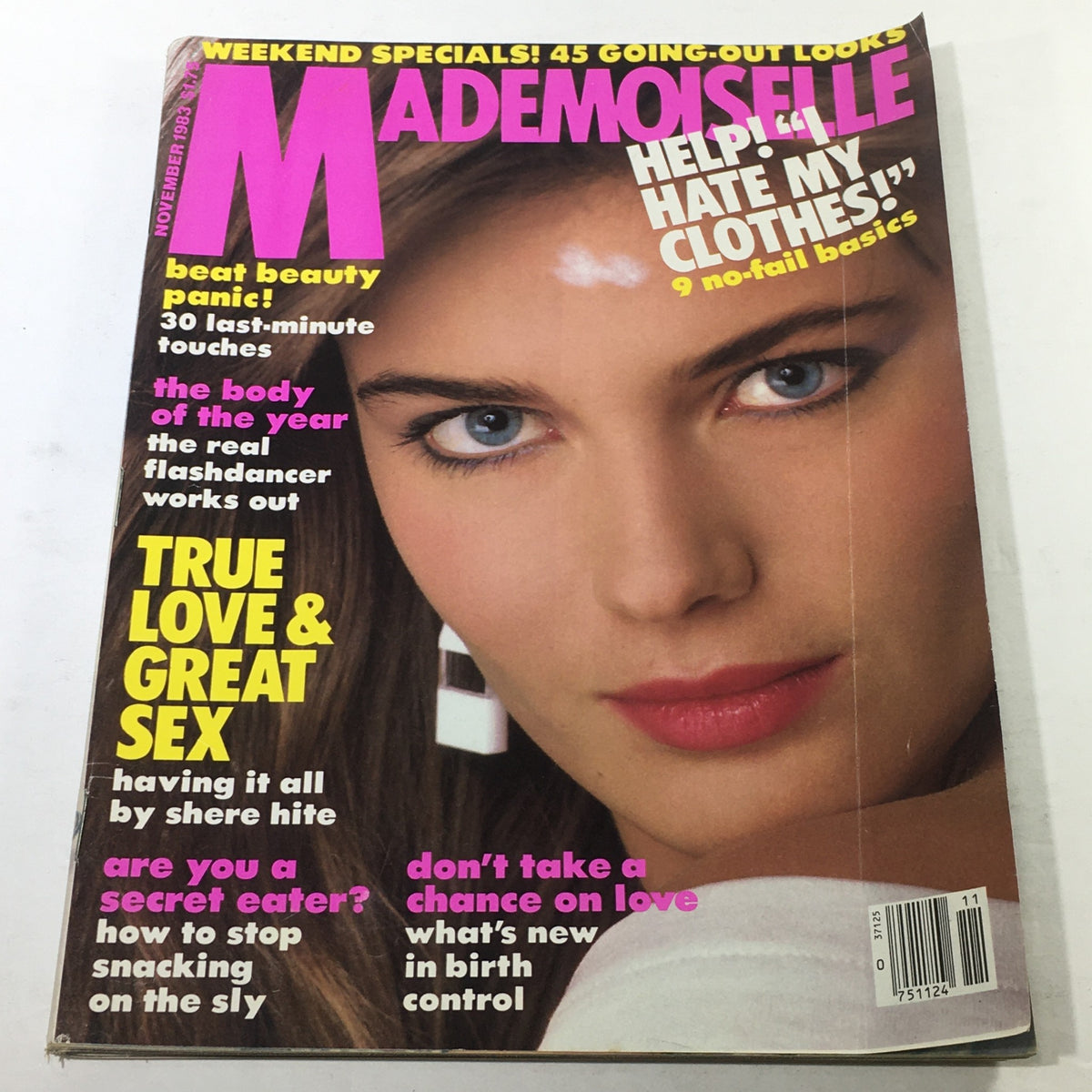



Description
Collector's Note – Why This Issue Matters
The November 1983 issue of Mademoiselle Magazine — a confirmed newsstand, label-free copy with a fashion cover — documents American women's fashion publishing at a specific and commercially significant moment in the publication's annual calendar. November was one of the more carefully produced months in Mademoiselle's publishing year: the fall fashion season was at its height, the approaching holiday season was beginning to shape editorial and advertising choices, and the combination of fashion authority and pre-holiday lifestyle guidance gave November issues a specific commercial and editorial weight within the Condé Nast portfolio. By November 1983, Mademoiselle was operating at the height of its commercial relevance within the early Reagan era's distinctive consumer culture — a period when the power-dressing aesthetic, bold color use, and the combination of professional ambition with fashion consciousness were defining what mainstream American women's magazines presented as aspirational for their college and young professional readership. The early-to-mid 1980s were a genuine moment of transformation in women's fashion publishing, and Mademoiselle's November 1983 fashion cover is a primary document of how the publication was translating those forces into editorial content for its specific demographic. For collectors building archives around Mademoiselle Magazine's complete publishing history, November issues from the early 1980s represent the publication at a specific period of its editorial maturity and commercial peak.
The confirmed newsstand, label-free origin of this issue is a meaningful collector's distinction within the Mademoiselle archive. The magazine's subscriber-heavy distribution model meant that labeled copies represent the majority of surviving issues from this period — unlabeled newsstand copies were purchased at retail rather than delivered through subscription, placing them within the smaller subset of surviving issues that reached their original readers through active purchase rather than passive delivery. That distinction adds a specific provenance dimension to an issue whose cover subject is unidentified but whose physical format establishes it as a retail-channel document of the publication's newsstand presence in November 1983. The early-Reagan-era fashion content that a November 1983 Mademoiselle would have contained — the bold color palettes, the power-shoulder silhouettes, the combination of career-oriented practicality with genuine fashion ambition that defined the decade's women's magazine aesthetic — is itself a primary document of the cultural forces that were shaping American women's public self-presentation at a specific and historically interesting transitional moment. Collectors researching American women's fashion publishing from 1983 will find November issues from the major fashion titles among the more commercially and editorially substantial entries from the year's publishing calendar.
About the Publication
Mademoiselle Magazine was founded in 1935 by Street & Smith Publications and acquired by Condé Nast in 1959, where it operated as a companion to Vogue aimed at a younger demographic — primarily college-aged and young professional women whose fashion aspirations were genuine but whose circumstances differed from Vogue's more aspirationally elevated readership. The magazine's editorial formula combined fashion and beauty content with career guidance, fiction, and cultural commentary that recognized its readers as intelligent women navigating the full range of contemporary life. By November 1983, Mademoiselle had been in continuous publication for nearly five decades and was operating with a clear editorial identity within the Condé Nast portfolio, with its November pre-holiday issues combining the fall fashion season's final editorial statement with the beginning of the holiday commercial push that gave this specific month a particular commercial and editorial significance within the publication's annual calendar.
Key Highlights Inside
- As a November 1983 Mademoiselle, this issue would have been produced at the intersection of the fall fashion season's editorial authority and the pre-holiday commercial momentum — a combination that gave November issues a specific dual function as both seasonal fashion statement and lifestyle guidance for the year's most commercially intensive consumer period.
- The November 1983 fashion content documented in this issue reflects the specific early Reagan-era aesthetic at its most consolidated — power-shoulder silhouettes, bold color use, and the combination of professional ambition with genuine fashion consciousness were defining the decade's women's magazine aesthetic, and a November Mademoiselle from this year is a primary document of those forces in their mainstream fashion magazine expression.
- The confirmed newsstand, label-free origin distinguishes this issue from the subscriber-delivered copies that represent the majority of surviving Mademoiselle issues from this period — a retail-channel provenance that places it within the smaller subset of the surviving population that reached its original reader through active newsstand purchase.
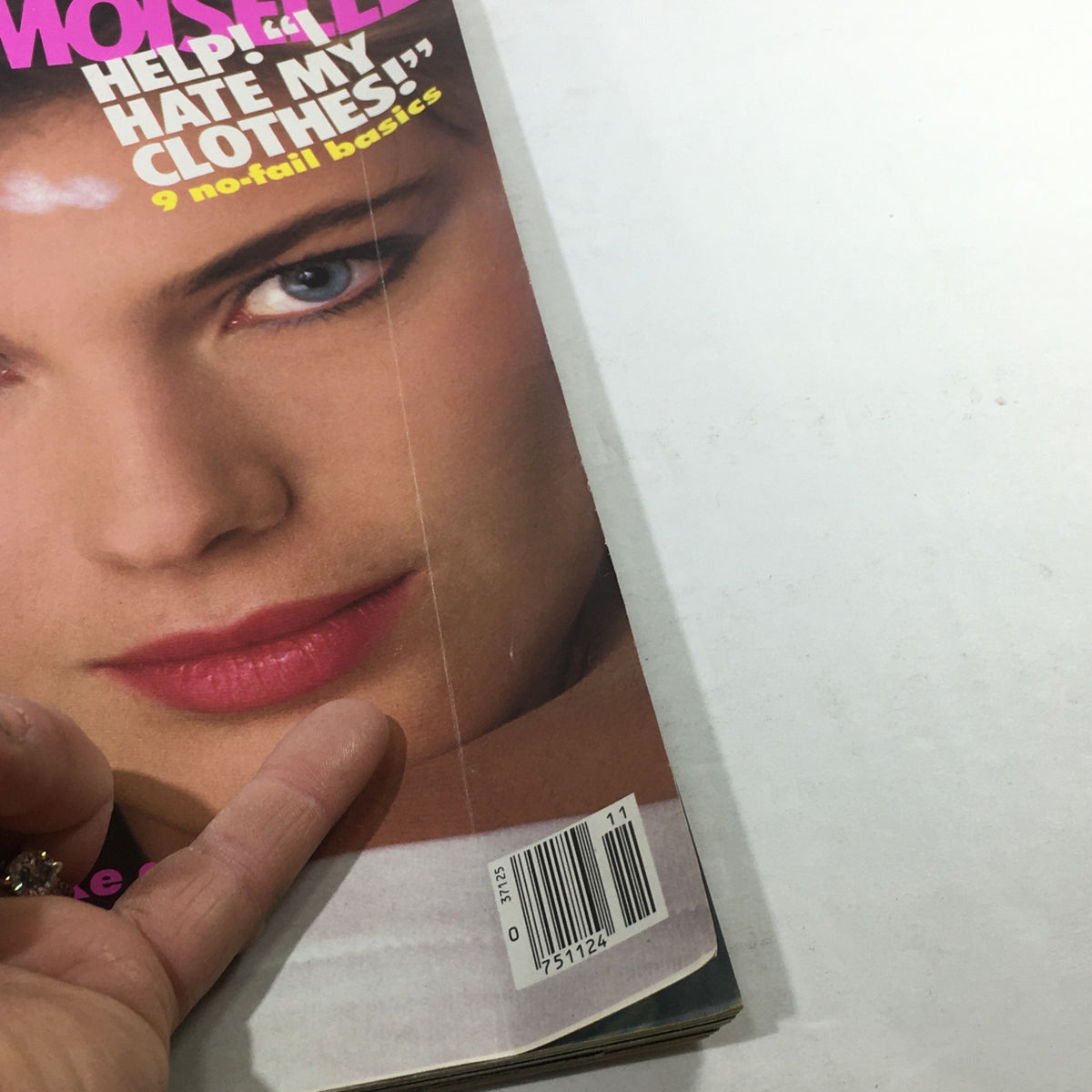
- The confirmed marks and bent creases on the front cover are the most significant display-quality condition factors and should be evaluated from the provided photographs to understand their location and severity relative to the cover's primary fashion imagery — their specific visual impact on the cover determines the issue's display suitability independently of its research and archival value.
- Note: The listing does not identify the cover subject or any specific article titles, named contributors, or featured models for this issue. Interior details and cover identity are unconfirmed beyond the publication title, date, and general fashion cover format. The highlights above reflect what is documentable about Mademoiselle's November publishing tradition and the 1983 cultural context.
Condition & Rarity
Surviving copies of this issue are in Good condition with the specific profile the listing describes: edge and binding wear, possible marks or rips, and confirmed marks and bent creases on the front cover — a condition profile that collectors should evaluate carefully against the provided photographs before acquisition. The marks and bent creases on the front cover are the most consequential condition factors for display-oriented collectors, and their location relative to the cover's fashion imagery determines the degree to which the issue is suitable for display versus research purposes. The confirmed newsstand, label-free origin is a positive condition attribute that preserves the cover's original retail presentation without subscriber label surface disruption. The plastic protective covering provides appropriate stabilization for a forty-two-year-old fashion magazine in this condition, helping to prevent further cover surface deterioration during handling and storage. For collectors whose primary interest is the documentary and research value of November 1983 Mademoiselle's fashion content and publication history — rather than pristine display quality — the confirmed intact status and Good condition grade represent a workable archival survival for a publication of this age and paper stock.
Looking for More Issues Like This?
Mademoiselle November issues from the early 1980s represent the publication's pre-holiday editorial statement during one of American women's fashion publishing's most commercially vibrant decades, and confirmed newsstand copies without subscriber labels are the less common surviving format within the population of issues from this period. The Mademoiselle Magazine collection at OriginalMagazines.com is the most comprehensive place to browse available issues across the publication's long history of engaging with college and young professional women's fashion and culture. For collectors building a broader picture of American women's publishing in 1983, the 1983 magazines collection offers a wide cross-section of titles that together capture the full range of that year's American fashion and popular culture publishing.