


Description
Collector's Note – Why This Issue Matters
September 1981 is one of the most significant dates in the annual fashion magazine calendar, and a Mademoiselle September issue from this particular year documents the early-eighties aesthetic at one of its most energetically formative moments. The September number was the fashion industry's flagship publishing event of the year — the moment when the major titles committed their full editorial and photographic resources to presenting the autumn collections, setting the visual agenda for the season ahead, and making their most unambiguous statement about the direction of fashion and the identity of their readership. September 1981 arrived as the Reagan era's cultural confidence was hardening into a specific and highly legible aesthetic vocabulary: the power shoulder had arrived, color was becoming bolder and more deliberate, and the aspirational register of American fashion publishing was shifting decisively away from the somewhat introspective, bohemian sensibility of the late seventies toward something more overtly glamorous, more metropolitan, and more aggressively self-assured. A September issue from this precise moment captures that shift at its most charged and consequential — the point at which the new decade's aesthetic was declaring itself fully and irrevocably. Collectors tracing the full evolution of the publication across its most culturally significant decades will find the Mademoiselle magazine archive the most comprehensive resource for understanding how the title navigated the transition from the seventies into the very different visual and cultural world of the eighties.
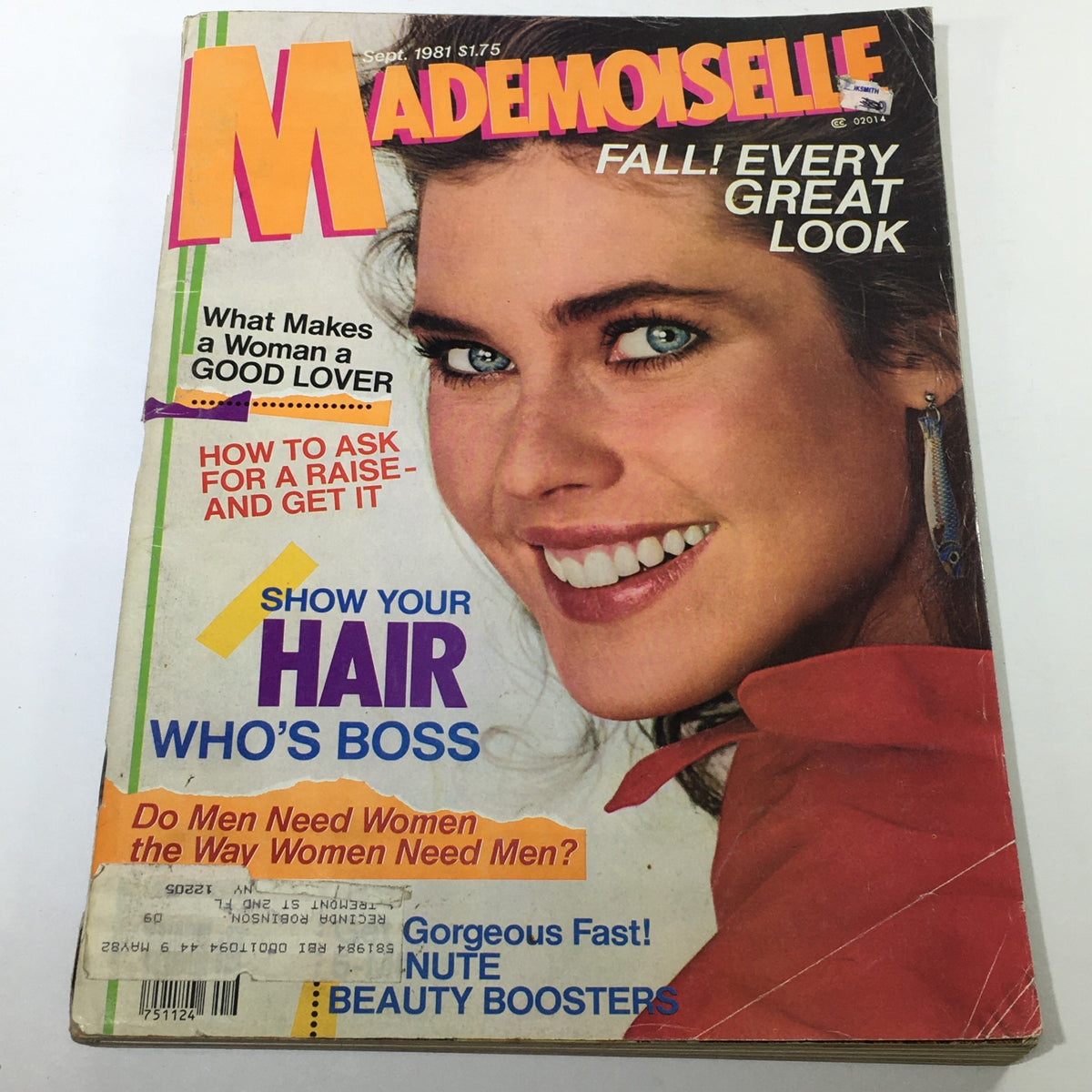
The cover appearance of Carol Alt gives this issue an identity and historical significance that extends well beyond its status as a routine September number. In September 1981 Alt was at the beginning of what would become one of the most celebrated modeling careers of the decade — a rise that would take her to the covers of over 500 magazines worldwide, to a Sports Illustrated Swimsuit Issue cover appearance, and to a position as one of the defining faces of the early-to-mid-eighties supermodel era. Her Mademoiselle September 1981 cover appearance is therefore a document of that career at its inception, capturing a face and a presence that the fashion industry had already recognized as exceptional but that had not yet achieved the household-name celebrity it would carry by the mid-decade. Collectors researching Alt's extensive print career across the full arc of her modeling years will find the Carol Alt magazine archive the most concentrated resource for tracing her cover appearances and editorial work across the titles and decades that defined her career — and this September 1981 Mademoiselle sits near the beginning of that record as one of the earliest major institutional endorsements her career received. The broader context of the early-eighties modeling industry and its relationship to the decade's shifting cultural mood makes this cover a richer document than it might initially appear, and collectors building a comprehensive picture of how the supermodel era emerged from its formative years will find the complete 1981 magazine archive an invaluable resource for cross-referencing how other titles were addressing the same aesthetic transition at the same moment.
The specific combination of Carol Alt and a Mademoiselle September cover also carries significance in terms of what it says about how the magazine understood its readership at this moment. Alt's particular appeal — athletic, confident, striking in a way that projected strength rather than fragility — was precisely the visual argument that the early-eighties fashion industry was making about what aspiration should look like for the young American woman. This was not the ethereal, distanced glamour of the high-fashion tradition; it was something more accessible and more physically grounded, more aligned with the decade's emerging interest in fitness, health, and the visible display of capability and vitality. A Mademoiselle September cover featuring Alt in 1981 was therefore an editorial statement about the magazine's understanding of its reader's aspirations at a moment when those aspirations were being actively redefined by the culture around them — a statement preserved in physical form in every surviving copy of this issue.
About the Publication
Mademoiselle was founded in 1935 by Street & Smith Publications and acquired by Condé Nast in 1959, developing across four decades into the most intellectually serious and editorially ambitious title in the American young women's magazine market. Its core reader was understood to be college-educated, culturally curious, and aesthetically ambitious — a woman who demanded genuine fashion intelligence but also expected her magazine to engage seriously with literature, culture, and the real complexity of her life. This positioning gave the title an editorial range and depth that set it apart from more narrowly fashion-focused competitors throughout its history, and its fiction department became legendary by publishing early work from writers including Sylvia Plath, Truman Capote, and Joyce Carol Oates, among many others. The magazine's September issues were its annual flagship productions — the numbers in which the full weight of its editorial ambition, photographic investment, and advertising revenue were concentrated into the most comprehensive possible statement about the coming season. By September 1981 the title was navigating the transition from the complex seventies sensibility it had articulated so well toward the more overtly glamorous register that the new decade demanded, making issues from this transitional period particularly valuable as documents of an editorially sophisticated institution responding to one of the most significant cultural shifts of the postwar era.
Key Highlights Inside
- A cover portrait of Carol Alt at the beginning of what would become one of the most celebrated modeling careers of the 1980s — the styling, photography, and visual presentation document the specific aesthetic moment of September 1981, positioned at the cusp of the full eighties aesthetic consolidation and representing the early articulation of the decade's aspirational visual vocabulary by a title whose editorial judgment carried genuine authority over its demographic.
- Autumn 1981 collections coverage constituting the editorial core of the September flagship number — the most significant fashion editorial investment of the year, presenting the season's silhouettes, color stories, and styling directions at the precise moment the early-eighties aesthetic was declaring itself most fully and the transition from the late-seventies sensibility was becoming irreversible.
- Beauty and lifestyle editorial content consistent with Mademoiselle's September format — coverage reflecting the early-eighties shift toward the bolder, more structured approach to makeup, hair, and personal presentation that accompanied the decade's broader aesthetic transformation and that the magazine was uniquely positioned to translate for its educated, fashion-forward readership.
- Advertising content from the leading apparel, cosmetics, fragrance, and accessories brands of the autumn 1981 season — in a September flagship issue this advertising investment would have been at its annual peak, making the commercial pages a significant primary document of how the fashion and luxury industries were visually repositioning themselves for the new decade's consumer culture.
- Editorial content consistent with Mademoiselle's cross-disciplinary format, potentially encompassing fiction, cultural commentary, and lifestyle features alongside the autumn fashion core — the title's intellectual identity ensured that even its most commercially significant seasonal numbers retained the editorial breadth that distinguished it from more narrowly focused competitors.
- Note: The listing confirms an address label on the front cover as a condition attribute. Specific article titles, interior photography credits, featured designers, and full content details have not been independently confirmed for this issue. The highlights above reflect what is verifiable from the cover subject, date, and the publication's well-documented editorial format and approach for the period.
Condition & Rarity
Surviving copies of this issue present with the physical characteristics consistent with subscription copies that have passed through private ownership over more than four decades. The presence of an address label on the front cover confirms subscription rather than newsstand origin — a condition attribute that affects the cover face directly and that collectors evaluating any surviving copy of this issue should assess carefully against available photographs, as it introduces a permanent visual element that the original cover design did not include. Minor edge wear, bent creases at the front corners, and general aging at forty-plus years are the expected surface characteristics of a subscription copy that has been handled and preserved rather than stored in archival conditions, and they are consistent with a Good grade under standard periodical collecting criteria — fully readable, completely displayable as a historical artifact, and collectible with the honest patina that distinguishes an authentic survivor from an artificially preserved example. Bent corner creases are among the most common condition attributes encountered in surviving copies of subscription magazines from this period, resulting from the handling involved in postal delivery and subsequent storage, and they do not affect the interior content or the magazine's integrity as a historical document. The inclusion of a protective plastic sleeve indicates conscious collectible treatment at some point in the magazine's ownership history, a circumstance that reliably correlates with better interior page condition, staple integrity, and spine stability than copies stored without protection. Early-eighties Mademoiselle September issues with identified supermodel-era cover subjects represent a specific and well-recognized category within the Condé Nast back-issue collector market — flagship numbers produced at the peak of the publication's annual editorial investment, documenting a cover subject at the beginning of a career that would define the visual culture of the decade.
Looking for More Issues Like This?
Early-eighties Mademoiselle September issues featuring cover subjects who went on to define the supermodel era are among the most historically resonant finds in the vintage American fashion magazine collector market — and a Carol Alt cover from September 1981, arriving at the very beginning of one of the decade's most celebrated modeling careers, is a more significant artifact than its surface condition might initially suggest to collectors unfamiliar with the period's history. If this particular issue has already been claimed, the Carol Alt magazine collection at OriginalMagazines.com is the best starting point for finding other issues that document her career across its full and extraordinary span. The full Mademoiselle archive is equally worth exploring for other flagship September numbers and key fashion issues from the pivotal early-eighties years, and the complete 1981 magazine archive rounds out the picture for collectors researching the early Reagan era's fashion culture and the emergence of the eighties supermodel generation in the broader publishing context of that transformative year.