


Description
Collector's Note – Why This Issue Matters
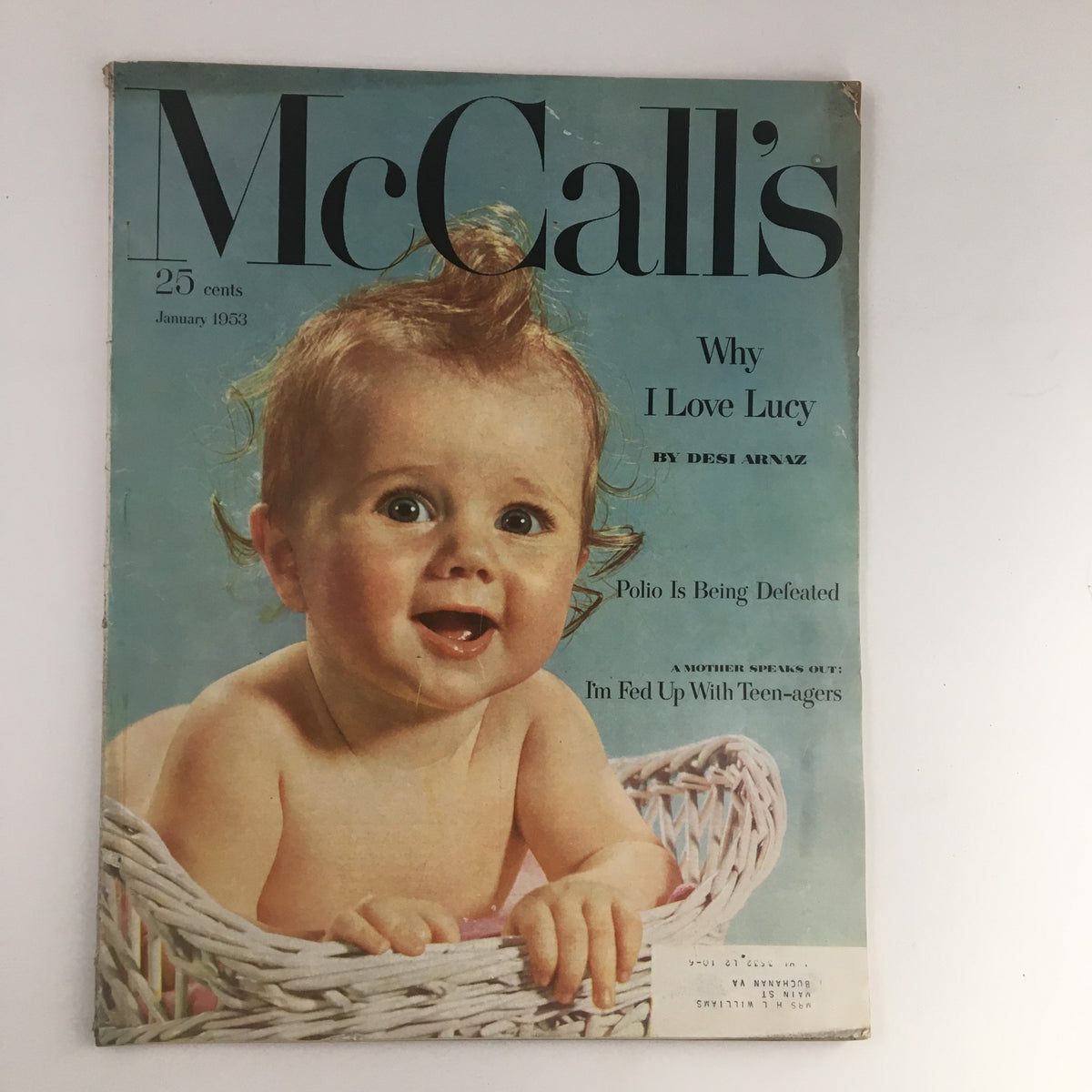
The January 1953 issue of McCall's magazine is a remarkably complete portrait of American domestic and cultural life at the opening of one of the most thoroughly documented decades in the country's social history. The feature that gives this issue its listing title — "I'm Fed Up With Teen-agers" by Abigail Hadden — is a primary document of the specific anxieties about American adolescence that would intensify throughout the 1950s, culminating in the moral panic over juvenile delinquency that produced congressional hearings, the Comics Code Authority, and a generation of sociological hand-wringing about what was happening to American youth. A mother speaking frankly about her frustrations with teenagers in January 1953 was articulating feelings that millions of McCall's readers recognized, and the editorial decision to publish it reflects the magazine's consistent willingness to give voice to domestic realities that the idealized family imagery of the era often obscured. For collectors building archives of vintage McCall's magazine issues, this kind of social document — honest, specific, and rooted in the genuine tensions of its moment — is among the most historically revealing content the publication produced.
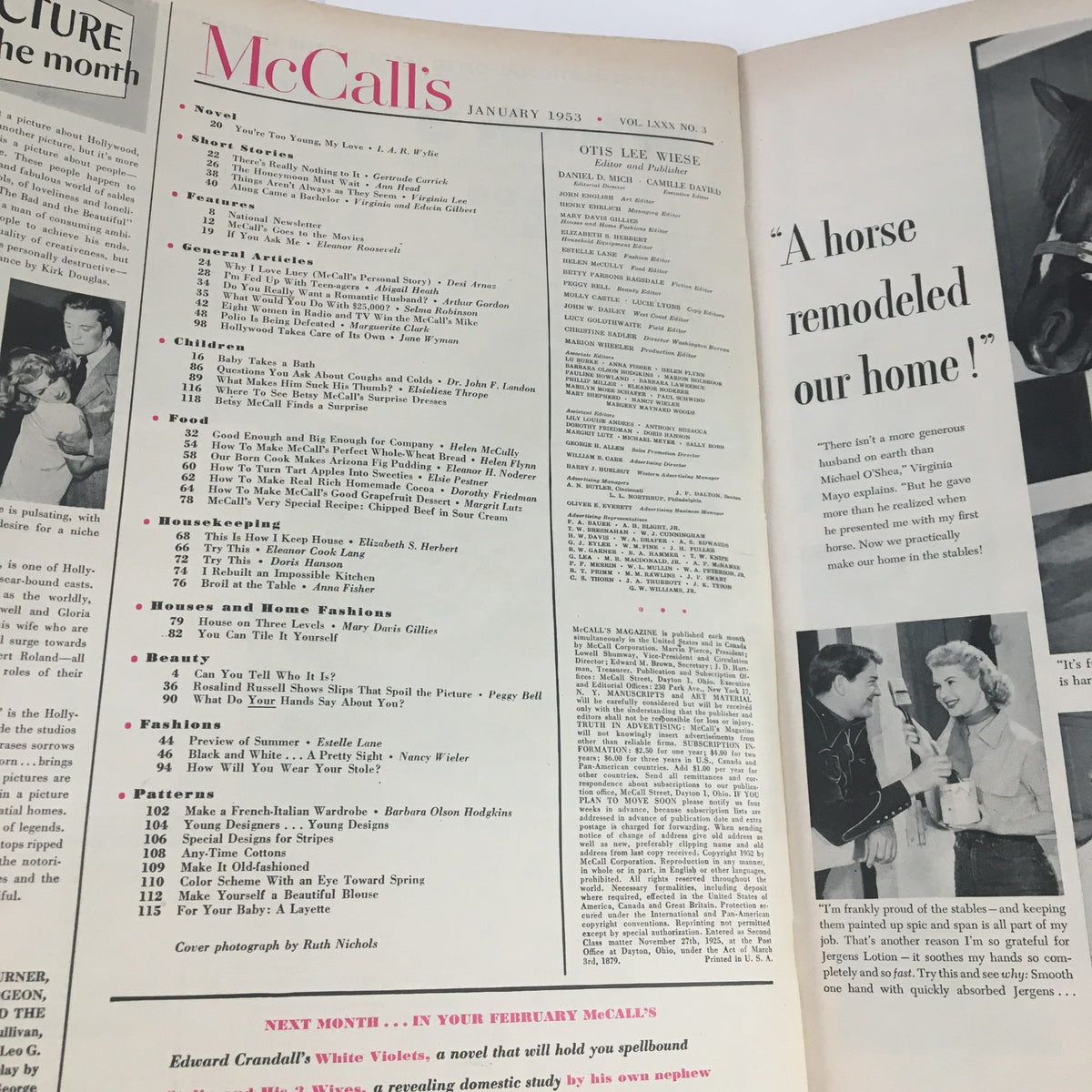
The celebrity and cultural content of this issue adds multiple layers of documentary interest. Desi Arnaz's personal essay "Why I Love Lucy" places this issue in direct relationship with the most popular television program in America — I Love Lucy had premiered in October 1951 and by January 1953 was the dominant force in American television, and an Arnaz first-person piece in McCall's was the kind of access that reflected the magazine's editorial reach and its readers' genuine investment in the Arnaz-Ball partnership as both a television and a domestic story. Eleanor Roosevelt's regular "If You Ask Me" column, present in this issue, reflects the former First Lady's sustained engagement with American women's public and domestic concerns through the women's press of the early 1950s. Jane Wyman's Hollywood philanthropy feature and Rosalind Russell's fashion appearance round out a celebrity presence that gives this issue exceptional documentary breadth across entertainment, politics, and fashion. Collectors of 1953 magazines will find this issue documents the early-fifties domestic and cultural landscape with unusual completeness and named specificity.
The magazine's medical and public health content reflects the specific anxieties of early-1950s American family life with the same directness as its teen-parenting coverage. "Polio Is Being Defeated" by Marguerite Clark arrived two years before Jonas Salk's vaccine would be announced in April 1955, documenting the ongoing effort to combat the disease that had been the most feared threat to American children for a generation. A January 1953 McCall's article on polio research was speaking to a readership for whom that disease was a genuine and present fear, not a historical retrospective — giving this domestic magazine content a public health documentary dimension that goes well beyond its homemaking identity.
About the Publication
McCall's, founded in 1873 as The Queen and published under the McCall's name from 1897, was by January 1953 one of the three dominant American women's service magazines alongside Ladies' Home Journal and Good Housekeeping, with a circulation in the millions and an editorial identity built on the combination of fiction, fashion, sewing patterns, celebrity journalism, and practical domestic guidance that defined the genre. Its audience was married, middle-class, and broadly representative of American women in their twenties through forties who looked to the magazine for a comprehensive account of how domestic life should be lived and what cultural life was worth attending to. The January issue was traditionally one of its strongest editorial numbers, carrying the combination of post-holiday reset energy and new-year aspiration that made the winter opening issue a significant editorial and advertising event.
Key Highlights Inside
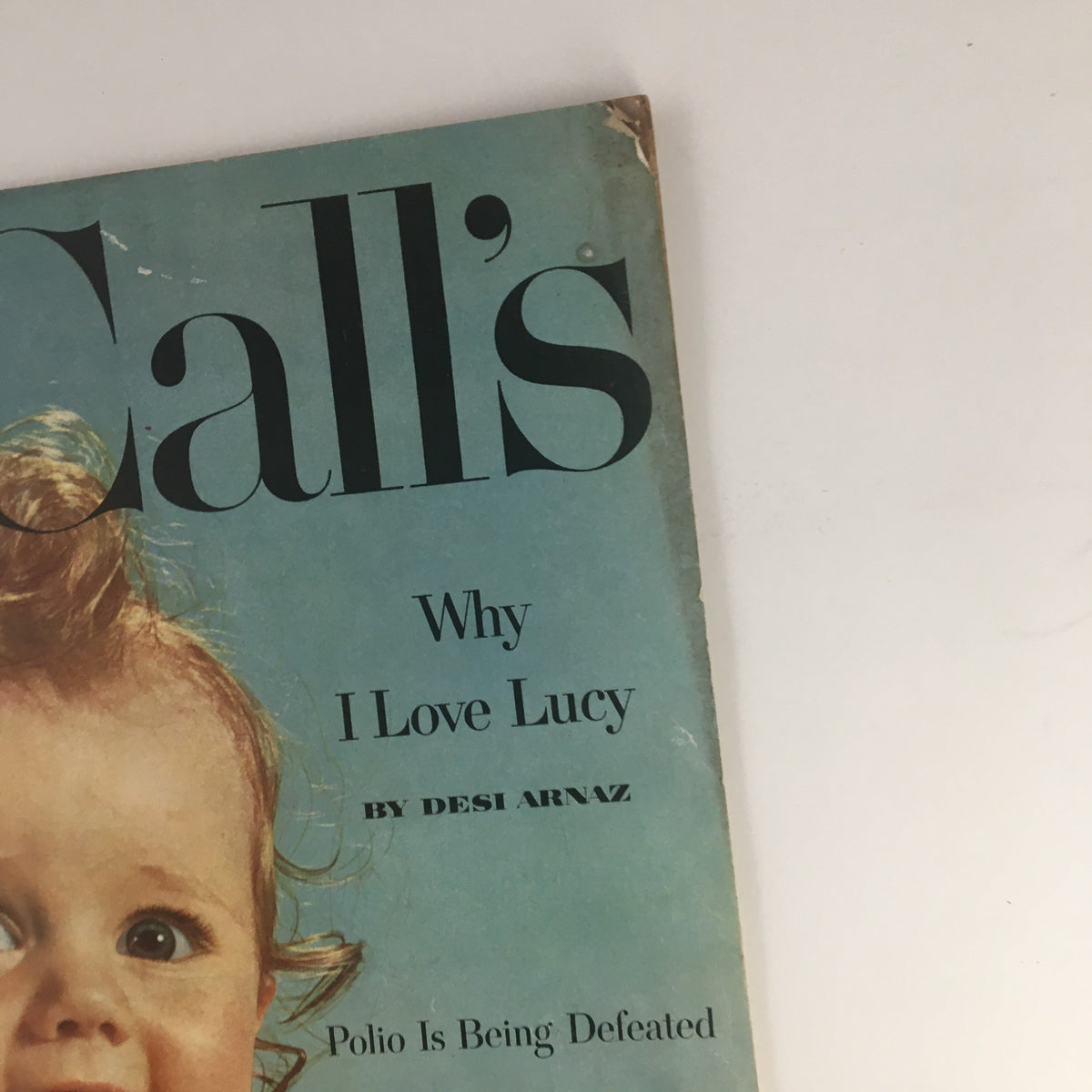
- "Why I Love Lucy" — Desi Arnaz (McCall's Personal Story) — A first-person essay by the star and producer of America's most popular television program, providing intimate access to the Arnaz-Ball partnership at the height of I Love Lucy's cultural dominance in January 1953.
- "I'm Fed Up With Teen-agers" — Abigail Hadden — A frank maternal perspective on the tensions of parent-teen relationships, published at the beginning of the decade when American anxiety about adolescence would reach its most intense public expression.
- "If You Ask Me" — Eleanor Roosevelt — The former First Lady's regular column addressing American women's public and domestic concerns, reflecting her sustained engagement with women's magazine readership throughout the 1950s.
- "Polio Is Being Defeated" — Marguerite Clark — A public health feature on the ongoing effort to combat polio, published two years before the Salk vaccine announcement, documenting the disease as a present concern rather than a historical memory.
- "Hollywood Takes Care of Its Own" — Jane Wyman — A Hollywood philanthropy feature by the Academy Award-winning actress, reflecting McCall's consistent integration of celebrity journalism with its domestic content.
- Subscription label on front cover — The noted address label identifies this as a mailed subscriber copy, partially obscuring the lower cover as is standard for addressed subscription editions of the era.
Condition & Rarity
Good condition with minor wear, a subscription address label on the front cover, some marks, and plastic protective covering represents an honest assessment of a seventy-plus-year-old monthly women's magazine. The subscription label is a permanent condition factor that partially obscures the lower cover — collectors whose priority is full cover presentation should note this accordingly. Minor marks and wear are standard at the good-condition grade for a publication of this age. The plastic protective covering indicates deliberate preservation and generally correlates with stable interior page condition. For a January issue with the density of named celebrity and social content confirmed in this table of contents — the Desi Arnaz essay, the Eleanor Roosevelt column, the polio feature — interior page completeness is the primary research and collector value driver, and the good overall condition noted suggests the primary editorial content is intact and legible.
Looking for More Issues Like This?
A January 1953 McCall's with a Desi Arnaz personal essay, Eleanor Roosevelt's column, and the teenage parenting piece is a content-rich and historically specific find — the kind of issue where the editorial depth significantly exceeds what the cover condition alone would suggest. The broader McCall's magazine archive at OriginalMagazines.com spans many decades of the publication's run and is worth exploring for other issues with landmark celebrity journalism and social documentation. For collectors focused on the early-fifties domestic and cultural moment, the complete 1953 magazine collection documents a range of titles from a year that captured American domestic life at one of its most thoroughly observed and socially self-conscious moments.