



Description
Collector's Note – Why This Issue Matters
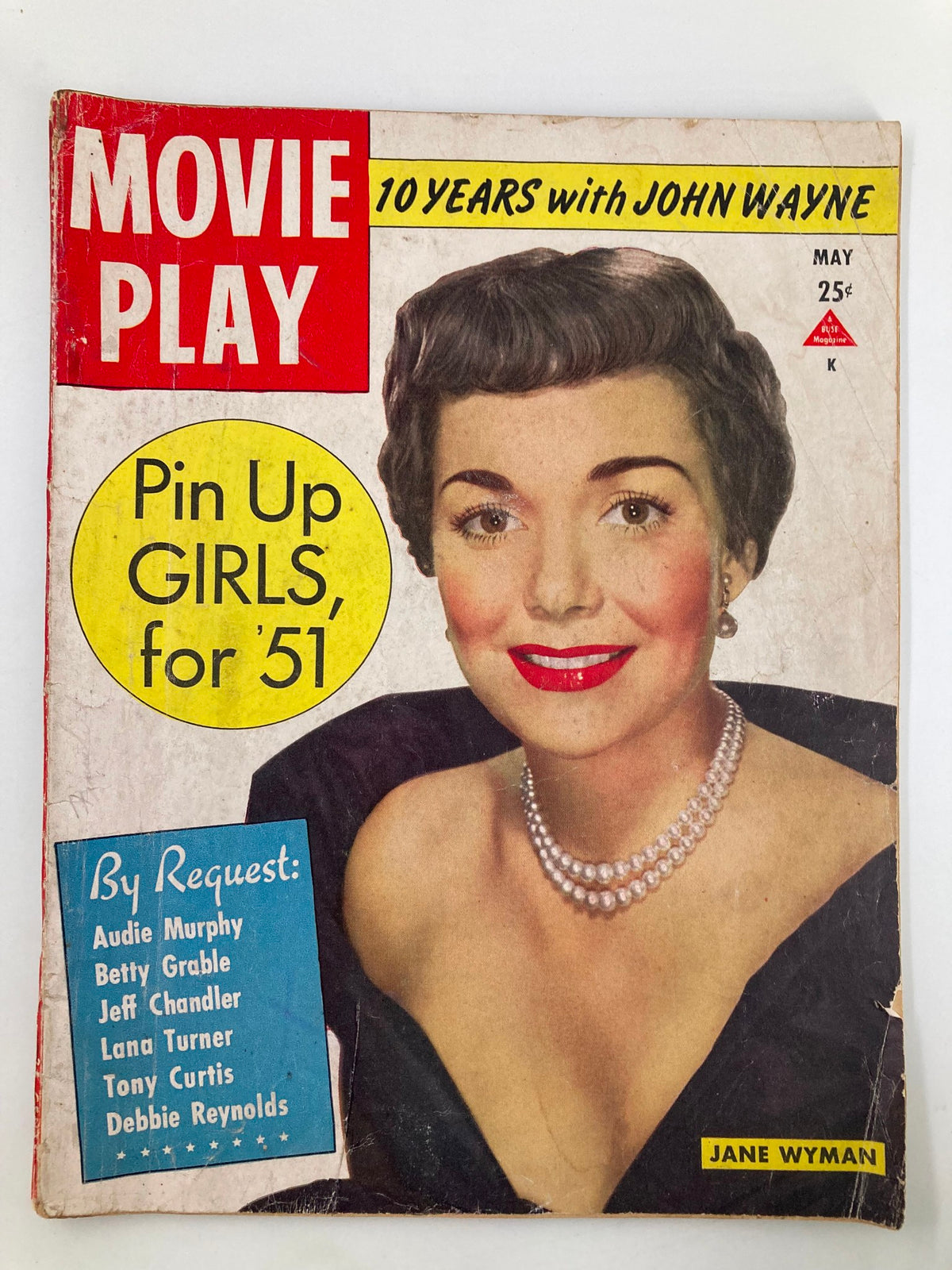
May 1951 found Hollywood in the middle of one of its most complicated and fascinating periods. The studio system that had defined the industry for three decades was beginning to fracture under pressure from the Paramount Decree, the rise of television, and the lingering anxieties of the Red Scare, which had sent shockwaves through the entertainment community via the House Un-American Activities Committee investigations of the late 1940s. Against that turbulent backdrop, the stars on the covers of fan magazines like Movie Play carried an outsized cultural weight — they represented glamour, stability, and the enduring appeal of the movies at a moment when the industry needed reassurance that its audience hadn't defected to the small screen. A cover pairing Jane Wyman and John Wayne in May 1951 was, in that context, a carefully chosen statement of Hollywood's continued vitality. Collectors assembling a documentary record of magazines from 1951 will find this issue sits at a genuinely interesting intersection of celebrity culture and industry anxiety.
Jane Wyman was at or near the peak of her critical standing in May 1951. Her Academy Award-winning performance in Johnny Belinda in 1948 had permanently elevated her from competent contract player to serious dramatic actress, and her subsequent work in Stage Fright and The Glass Menagerie had consolidated that reputation. By 1951 she was also navigating the very public aftermath of her divorce from Ronald Reagan, which had been one of Hollywood's most closely watched separations and kept her in the fan press with a frequency that extended well beyond her film work. Fan magazine readers of the era were acutely interested in Wyman as both actress and public figure, and her presence on a Movie Play cover reliably signaled substantial interior coverage. John Wayne, meanwhile, was entering the decade-long stretch that would cement his status as the defining masculine icon of American cinema. His work in She Wore a Yellow Ribbon, Sands of Iwo Jima, and Rio Grande between 1949 and 1950 had made him the top box office draw in the country, and his visibility in the fan press reflected that dominance completely.
The pairing of Wyman and Wayne on a single cover is itself editorially interesting — they represented quite different strains of Hollywood stardom in 1951. Wyman was a prestige dramatic actress whose appeal was rooted in emotional depth and critical credibility, while Wayne was a genre titan whose cultural power derived from his near-mythological embodiment of American frontier values. That Movie Play placed them together suggests an issue with broad editorial ambition, reaching simultaneously for the magazine's female readership drawn to Wyman's personal narrative and the wider audience captivated by Wayne's box office supremacy. For collectors of classic Hollywood fan magazines, this kind of cover calculus is itself a document of how the industry understood and managed its own star system in the early 1950s.
About the Publication
Movie Play was an American fan magazine operating during Hollywood's golden and post-golden age, targeting the broad popular audience that consumed celebrity journalism about the film industry with genuine appetite throughout the mid-twentieth century. Like its contemporaries — Photoplay, Modern Screen, and Silver Screen — Movie Play combined star profiles, gossip columns, candid photography, and behind-the-scenes reporting to create a reading experience that felt like privileged access to a world most readers could only dream of inhabiting. Its editorial format was built around the star system itself, with cover selections and interior features driven entirely by the relative prominence and public fascination attached to specific actors and actresses at any given moment. By 1951, the fan magazine category was facing the same pressures as the broader industry, with television beginning to fragment the audience that had once had no choice but to consume Hollywood culture through print, making surviving issues from this transitional period particularly valuable as records of the fan press at a moment of genuine uncertainty about its own future.
Key Highlights Inside
- Cover feature on Jane Wyman and John Wayne, two of the most prominent and editorially compelling figures in Hollywood at the time of publication, each representing a distinct mode of star power that Movie Play's readership followed closely.
- Interior coverage almost certainly touching on Jane Wyman's personal life and career trajectory in the aftermath of her divorce from Ronald Reagan and her establishment as a leading dramatic actress of the post-Belinda era.
- John Wayne coverage reflecting his status as the country's top box office attraction following a remarkable run of Westerns and war films between 1949 and 1950 that had made him the most commercially reliable star in Hollywood.
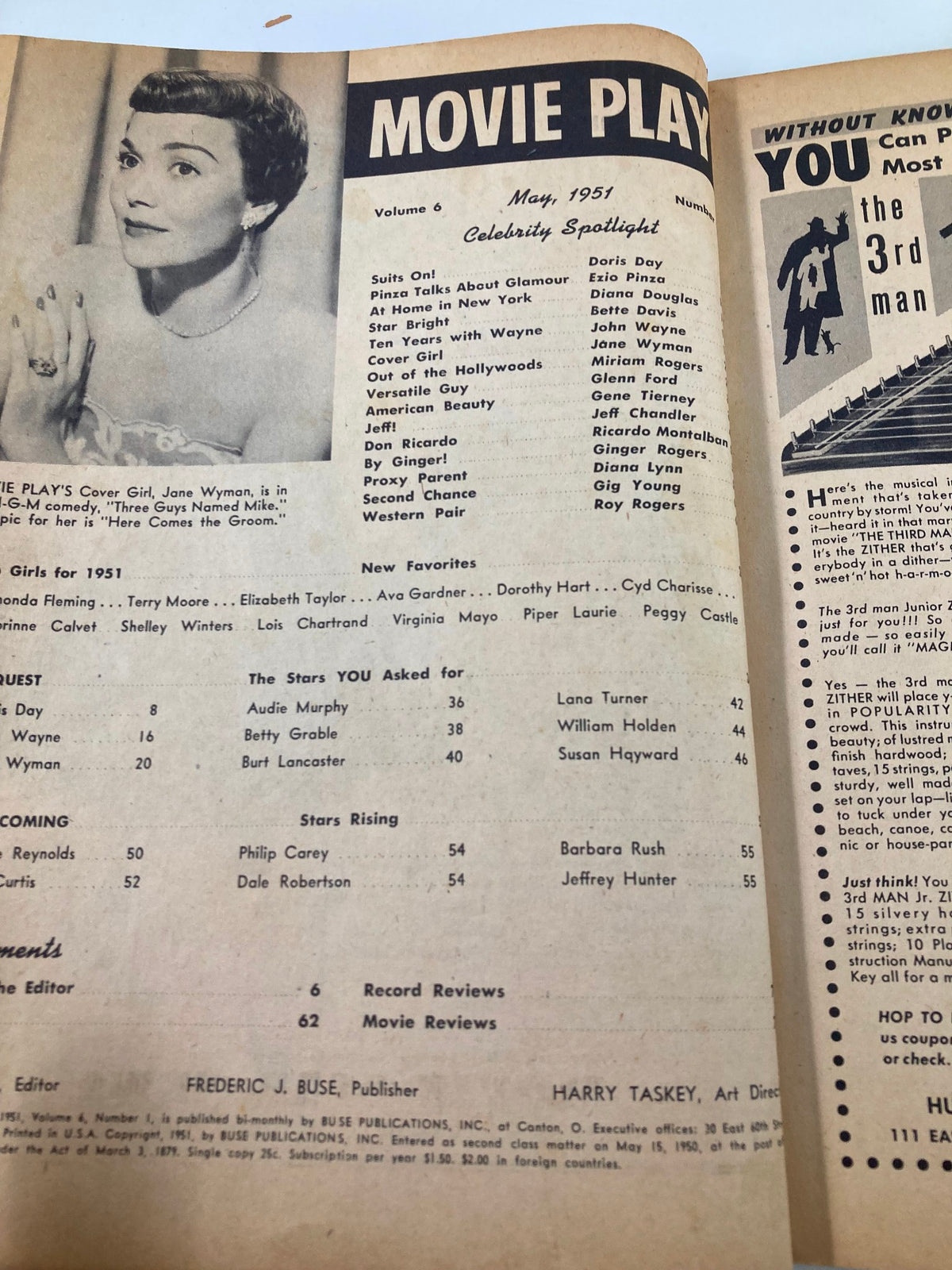
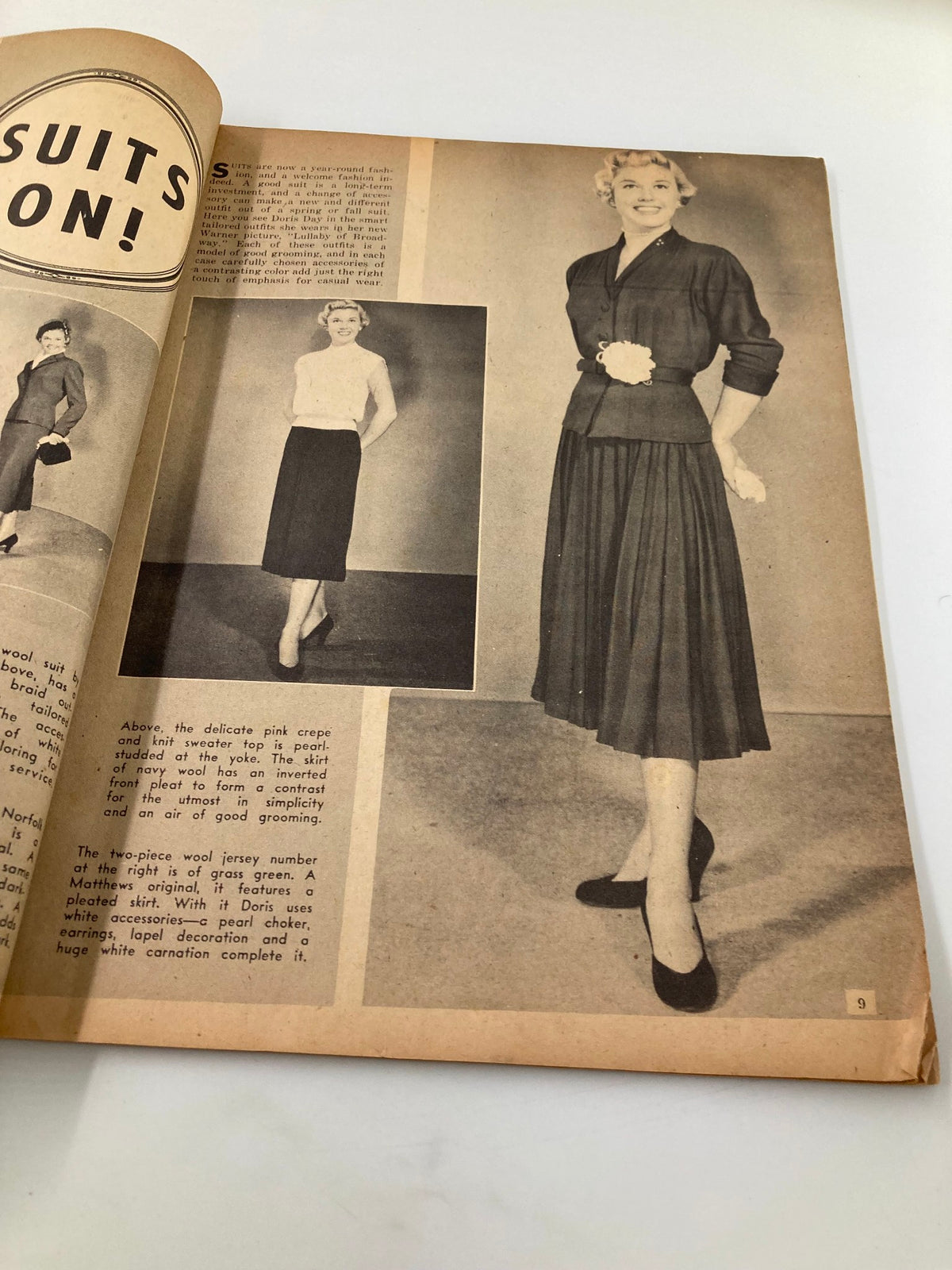
- Photography consistent with Movie Play's editorial standard of the era, which emphasized glamorous portraiture and candid imagery designed to give readers the sense of intimate access to stars that was the fan magazine genre's primary commercial appeal.
- Note: Specific article titles, additional featured subjects, and interior page details beyond the cover stars have not been independently confirmed for this issue. The highlights above are drawn from the named cover subjects, publication date, and Movie Play's well-documented editorial approach during this period.
Condition & Rarity
This issue is a newsstand copy, meaning it entered circulation through retail distribution rather than postal subscription delivery, preserving the cover free of the mailing labels and address markings that diminish both the visual presentation and collector value of subscriber copies. The condition reflects honest age-related wear: creasing is noted on the front corners, and the binding shows stress consistent with a magazine now more than seventy years removed from its print date. Marks and rips may be present on the cover and binding, which are standard characteristics for a circulated newsstand copy of this vintage rather than indicators of unusual damage or mishandling. The pages are described as intact, which remains the most critical structural criterion for a periodical of this age — a complete issue retains its identity as a coherent document in a way that a fragmented one does not. A protective plastic sleeve has been applied, providing a barrier against further dust accumulation, handling wear, and environmental exposure. When evaluating any surviving copy of this issue, collectors should prioritize page completeness, cover legibility, and spine integrity, treating corner creasing and surface marks as expected and accepted attributes of an unrestored newsstand copy from the early 1950s.
Looking for More Issues Like This?
Fan magazines from the early 1950s featuring major Hollywood stars in strong condition are genuinely difficult to track down — the combination of aging paper stock, high original circulation, and decades of casual storage means that well-preserved copies surface infrequently and don't tend to stay available for long. If this particular May 1951 Movie Play is unavailable, the 1951 magazine collection at OriginalMagazines.com offers a broad range of titles from that year across multiple genres, making it a rich resource for collectors documenting classic Hollywood and mid-century American popular culture through its original print record.