



Description
Collector's Note – Why This Issue Matters
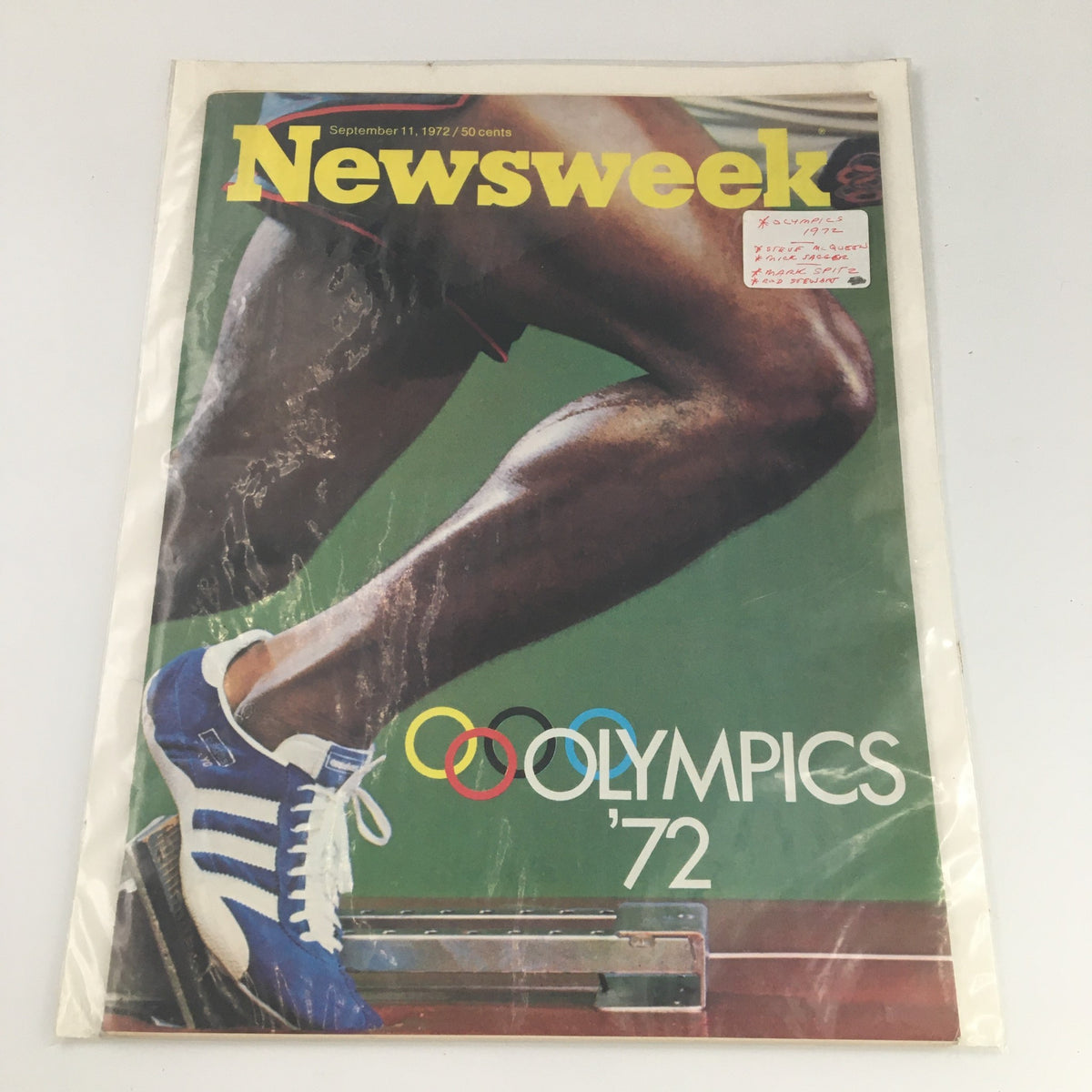
The September 11, 1972 issue of Newsweek magazine belongs to one of the most heavily studied weeks in modern Olympic history. Its date places it immediately in the aftermath of the 1972 Summer Olympics in Munich, an event remembered both for athletic achievement and for the terrorist attack that permanently changed the security culture of international sport. For collectors, a newsweekly from this exact moment is not simply a sports-periodical artifact; it is part of the contemporary print record of how the American press interpreted the Munich Games as they were still unfolding in public memory. The issue captures the intersection of sport, geopolitics, media urgency, and public grief at a moment when weekly magazines still played a central role in shaping national understanding.
The listing also identifies Mick Jagger as a featured subject, tying the issue to another defining current of the early 1970s: the global rise of rock celebrity as mainstream news. By 1972, Jagger and the Rolling Stones had moved beyond music pages into the broader cultural conversation, representing youth culture, celebrity, performance, and controversy in a way that national magazines increasingly treated as serious social material. That combination — the Munich Olympics and Jagger-era rock culture — gives this issue a useful cross-collecting appeal among readers of political history, sports history, 1970s media, and popular music. It reflects a period when news magazines were widening their cultural lens, treating rock stars, athletes, and world leaders as part of the same public conversation.
Within the larger field of 1972 magazines, this issue reflects a year when weekly news magazines were still central to how Americans processed world events. Before digital archives and instant updates, a dated issue like this served as a compact record of the week’s priorities: international crisis, cultural change, and the personalities shaping public attention. It also offers collectors a fixed publication date connected to a clearly identifiable historical moment, which is one reason dated newsstand magazines from major-event weeks remain especially useful as reference artifacts. Even without assuming unverified interior details, the stated subjects alone place the issue firmly within the visual and editorial memory of 1972.
About the Publication
Newsweek was one of the major American weekly news magazines of the twentieth century, known for combining national and international reporting with politics, business, culture, sports, and opinion-oriented analysis. Its audience included general readers who wanted a concise but authoritative digest of the week’s events, and its format made it especially important before the internet era, when magazines such as Newsweek helped shape the public’s understanding of fast-moving events through edited reporting, photography, essays, and cover-driven issue identity. Like its peer newsweeklies, Newsweek translated complicated global developments into a format designed for broad public readership. Issues from the early 1970s are particularly valuable as cultural documents because they preserve not only the events being reported, but also the language, priorities, photography, and editorial framing of the period.
Key Highlights Inside
- September 11, 1972 issue of Newsweek, placing it directly within the news cycle surrounding the Munich Olympics and the wider international response to the Games.
- Identified in the listing as featuring coverage of the 1972 Olympic Games held in Munich, making it relevant to collectors of Olympic history, sports journalism, and twentieth-century world events.
- Identified in the listing as including a spotlight on Mick Jagger, linking the issue to early-1970s rock culture and the expanding presence of music figures in mainstream news coverage.
- Newsstand-origin issue, a detail often noted by collectors because it indicates the magazine was not a subscriber-labeled copy and may retain a cleaner front-cover presentation.
- Described in the listing as having strong visual appeal, with no visible wear noted and protective boarded plastic used for storage.
- Interior article titles, page-by-page contents, and specific article authors are not confirmed from the listing, so no additional inside features are assumed here.
Condition & Rarity
The listing describes the issue as being in very good condition, with no visible wear or damage, and protected in boarded plastic. For collectors of newsweeklies, these details matter because weekly magazines were often read, folded, clipped, mailed, or discarded soon after publication. A newsstand copy without visible wear is generally more desirable than a heavily handled example, especially when the cover subject is tied to a major historical event. Bagging and boarding are preservation measures rather than original attributes, but they indicate an effort to protect page integrity, cover surfaces, corners, and spine condition during storage. When evaluating surviving copies of this issue, collectors typically look closely at spine stress, cover gloss, mailing labels, page toning, creases, tears, and whether the magazine remains complete. The stated newsstand status and absence of visible wear make those condition points especially relevant for comparison against more commonly handled examples of weekly news magazines from the same era.
Looking for More Issues Like This?
Original examples of event-specific Newsweek issues from 1972 can be difficult to locate in strong condition, especially when the issue connects major world news with recognizable cultural figures. Readers researching similar material may want to browse the broader Newsweek magazine collection for other twentieth-century newsweekly issues. Newsweek’s format makes it especially useful for collectors who want dated snapshots of how major events were reported at the time, rather than later retrospectives.
For collectors focused on the year itself, the 1972 magazines collection is also a useful place to explore periodicals from the same historical moment, including issues tied to politics, sport, entertainment, and the culture of the early 1970s. Browsing by year can help place this September 1972 issue alongside other magazines that documented the same era from different editorial perspectives.