


Description
Collector's Note – Why This Issue Matters
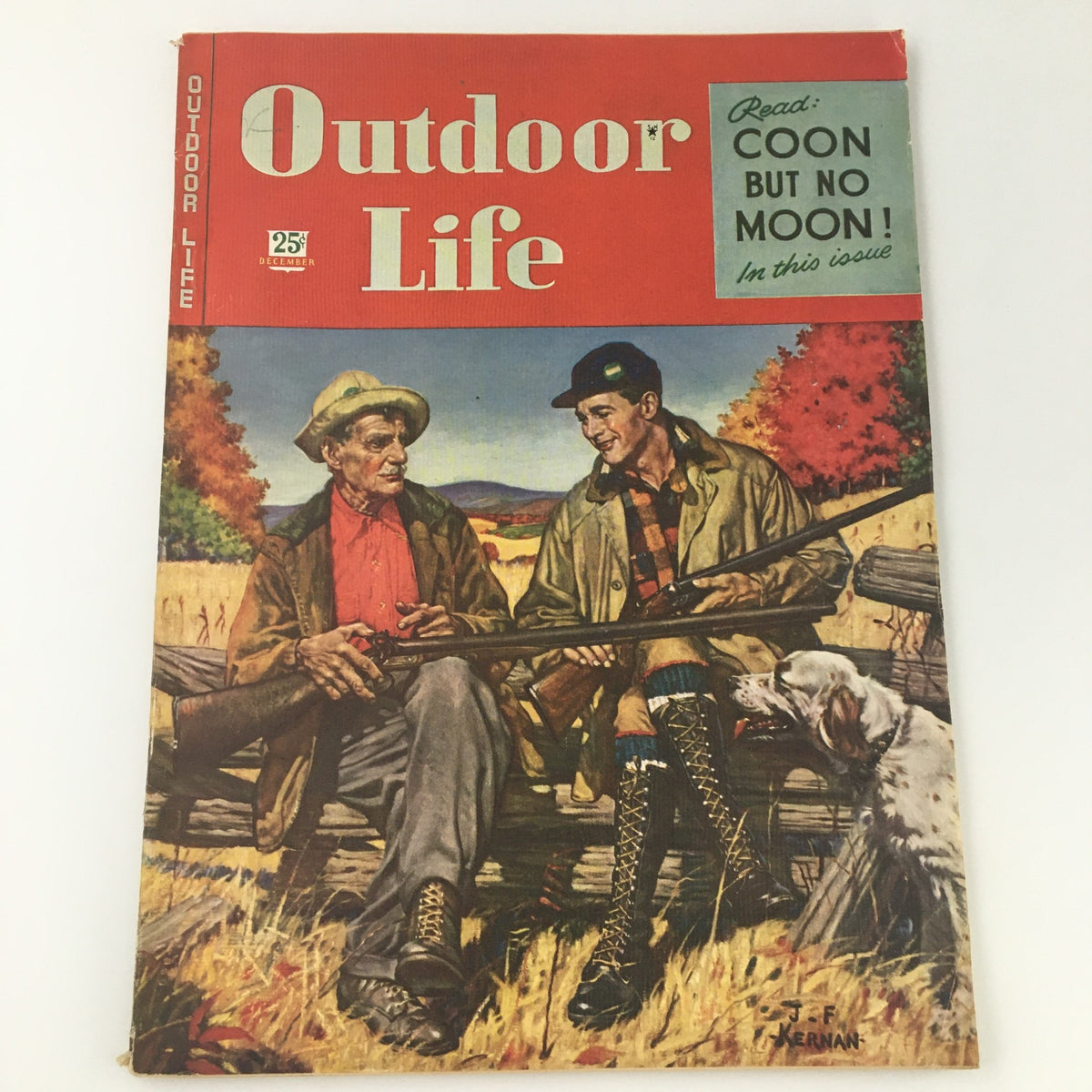
The December 1946 issue of Outdoor Life — Volume 98, Number 6, titled "Coon But No Moon" — arrives in the first full peacetime December since 1940, and that context matters enormously for understanding what this magazine meant to its readers at this moment. Millions of American servicemen had returned from Europe and the Pacific in the preceding months, and the reconnection with hunting, fishing, and the outdoor life that many of them had grown up with represented something more than recreation. It was a return to normalcy, to the rhythms and freedoms of American life that the war had suspended, to a relationship with the natural world that industrialized military service had made impossible for years. A December 1946 issue of Outdoor Life, with its winter hunting cover story about raccoon hunting by moonlight, documents the moment when that reconnection was actively occurring — when the outdoor sporting press was meeting a readership hungry for exactly the content it had always provided, now freighted with the additional emotional weight of homecoming.
The cover title "Coon But No Moon" is characteristic of the magazine's editorial voice in this period — specific, evocative, rooted in the practical knowledge and regional vernacular of the American sporting tradition. Raccoon hunting at night, traditionally conducted with hounds and lanterns in the absence of moonlight, was a deeply regional practice with roots across the rural South and Midwest, and its appearance as a cover story in a nationally distributed sporting magazine reflects the breadth of outdoor culture that Outdoor Life served. The magazine understood its readers as participants in a living tradition rather than spectators of nature, and its coverage of hunting, fishing, and outdoor skills was written from the inside — by people who did these things and for people who did them too. For collectors focused on vintage Outdoor Life magazine issues that document the American sporting tradition at a specific historical moment, the immediate postwar issues occupy a particularly resonant place — they capture the tradition in the act of reasserting itself after years of wartime disruption.
The broader context of December 1946 gives this issue additional layers of historical significance. The postwar outdoor sporting boom was just beginning — returning veterans, flush with savings from years of military pay with nowhere to spend it, were buying firearms, fishing equipment, and hunting licenses in record numbers, and the outdoor sporting industry was entering one of the most expansive periods in its history. Wildlife management and conservation were becoming increasingly sophisticated disciplines, with the lessons of the Dust Bowl and decades of unregulated hunting driving new approaches to habitat and species management. Outdoor Life in this period was both a participant in and a document of that transformation, covering the practical aspects of outdoor sport alongside the emerging conservation ethic that would eventually reshape the relationship between hunters, anglers, and the natural world. Among surviving magazines from 1946, issues of Outdoor Life from this transitional postwar moment are primary documents of an American cultural tradition reasserting itself with particular energy and conviction.
About the Publication
Outdoor Life, founded in 1898 and by 1946 one of the oldest and most widely read sporting magazines in the United States, served a readership of hunters, anglers, and outdoor enthusiasts across the country with a format that combined practical how-to content, regional hunting and fishing reports, wildlife coverage, and the narrative tradition of outdoor adventure writing that stretched back to the nineteenth century. Its editorial voice was authoritative and participatory — written by practitioners for practitioners — and its coverage reflected the full geographic and seasonal diversity of American outdoor sport, from Alaska to Florida and from the Atlantic coast to the Rocky Mountains. By December 1946, with a circulation that had grown steadily through the war years despite paper shortages and competing priorities, the magazine was positioned to serve a readership that was larger, more broadly distributed, and more eager for its content than at any previous point in its nearly fifty-year history.
Key Highlights Inside
- "Coon But No Moon" — the cover story documenting raccoon hunting, one of the most deeply rooted traditions in American rural sporting culture, published in the first peacetime December issue since 1940 and reflecting the immediate postwar return to the outdoor life that millions of returning veterans were actively embracing.
- Winter hunting and outdoor content characteristic of Outdoor Life's December editorial calendar — seasonal coverage of the pursuits, techniques, and regional traditions that defined the American sporting year in the immediate postwar period.
- Coverage reflecting the postwar outdoor sporting boom, documenting an industry and a readership both in the process of expanding rapidly as returning servicemen reconnected with the hunting and fishing traditions they had left behind during the war.
- Period advertising throughout the issue, documenting the firearms, ammunition, outdoor equipment, and related products that were being marketed to American sportsmen in late 1946 — a commercial record of considerable specificity for collectors of mid-century Americana and sporting goods history.
- Note: Specific additional articles, featured writers, and regional reports beyond the cover story are unconfirmed for this issue. "Coon But No Moon" is the documented editorial centerpiece based on the listing.
Condition & Rarity
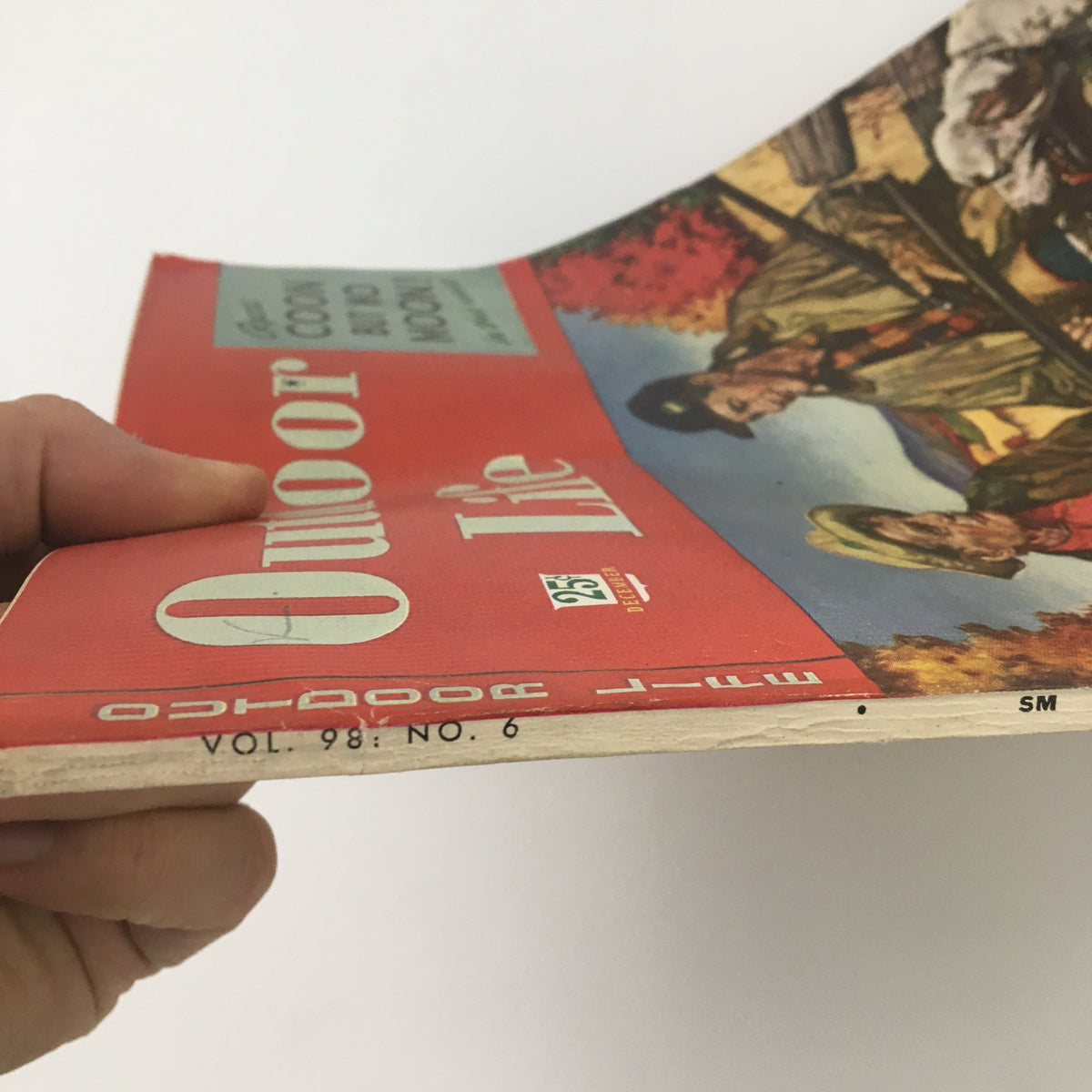
Newsstand origin with no address label is the preferred configuration for a collectible Outdoor Life issue from 1946, and it is the less common one — the magazine's subscription base was substantial in the immediate postwar period, and labeled copies make up the majority of surviving issues from any given month of this era. Minor edge wear, occasional rips or marks, and other age-consistent imperfections are honest and expected for an eighty-year-old monthly sporting magazine; the paper stock used by Outdoor Life in the mid-1940s reflects the material constraints of the wartime and immediate postwar period and is prone to tanning, edge brittleness, and surface oxidation over eight decades of storage. A plastic protective sleeve indicates deliberate preservation, which limits further surface deterioration and dust accumulation. When evaluating any surviving copy of this issue, the priority attributes are the legibility and color integrity of the cover image and title, the completeness of the page count, the flexibility of the interior pages, and the security of the spine staples — monthly sporting magazines of this era used lightweight staple binding that is frequently a point of structural failure in copies that have been stored and handled over many decades.
Looking for More Issues Like This?
Immediate postwar Outdoor Life issues in newsstand condition are genuinely rewarding finds for collectors of mid-century Americana and American sporting history, and December issues with strong cover stories carry a particular seasonal resonance that broadens their appeal. If this issue has already found a home, the Outdoor Life magazine collection at OriginalMagazines.com spans multiple decades of the publication's long history and periodically surfaces issues from the formative postwar years worth serious attention. For collectors assembling a broader picture of American life and culture in the first full year after the war's end, the 1946 magazine collection offers a rich range of titles from a year of extraordinary historical transition — well worth exploring if this issue brought you here.