



Description
Collector's Note – Why This Issue Matters
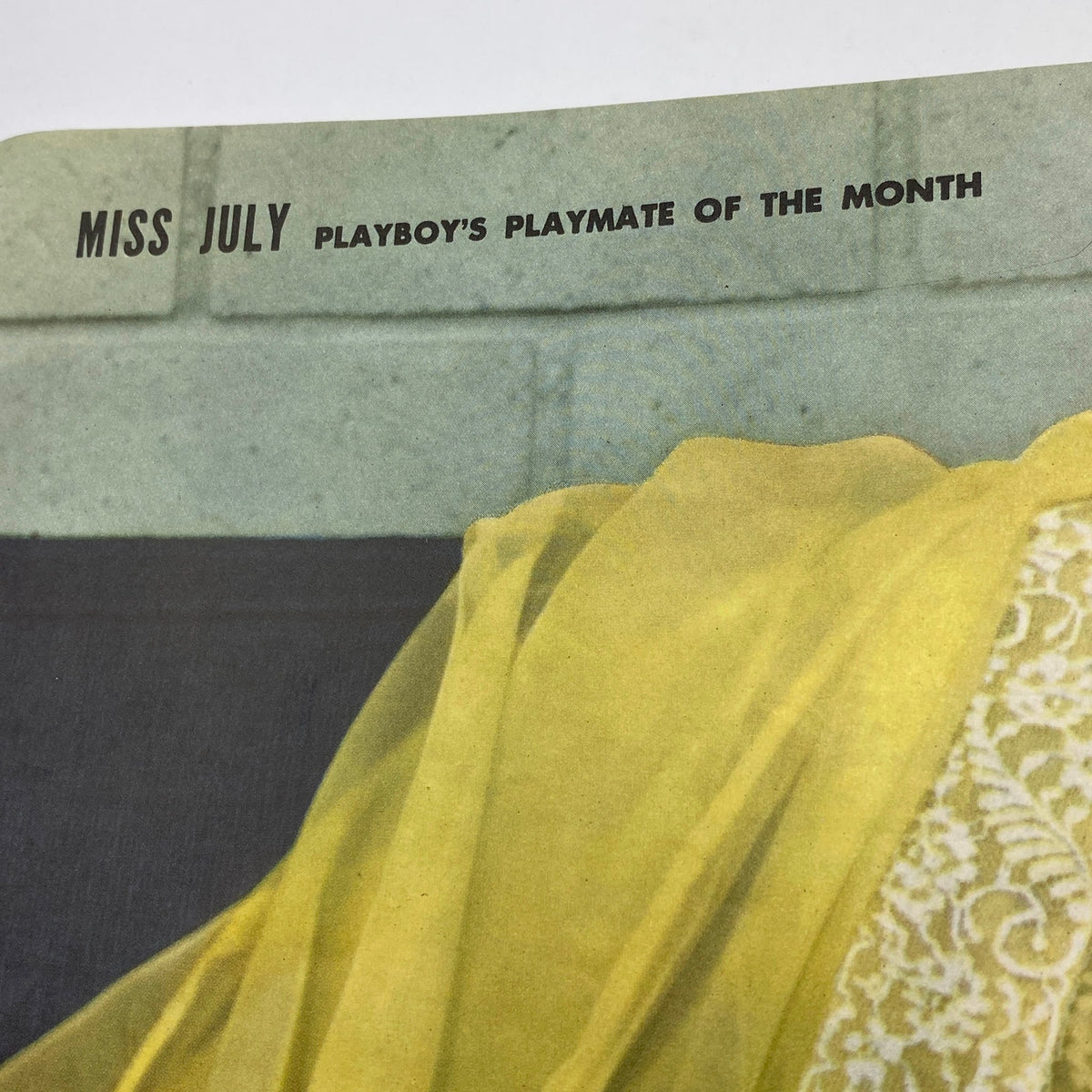
This July 1957 issue of Playboy arrives from one of the most formative stretches of the magazine's early history, a period when Playboy was still establishing the editorial and visual conventions that would define it for decades. Founded just four years earlier in 1953, the magazine was by 1957 firmly building its reputation around a monthly centerfold feature, and this issue's Playmate, Carrie Radison, represents part of that early run of women who helped define the visual identity of the publication in its first decade. The mid-1950s were a formative period for Playboy's centerfold format specifically, as the magazine worked out the photographic style, editorial framing, and presentation that would become industry standard for the genre going forward. An issue from this early stretch of the magazine's history offers a useful window into that formative period, well before Playboy's format had calcified into the more familiar conventions of later decades. For collectors focused on the magazine's earliest years, issues from 1957 sit at a particularly interesting point, capturing a publication still actively shaping the template it would follow for the rest of the century. This issue is one such artifact, a snapshot of Playboy in its early, still-forming years.
The mid-1950s also represented a broader moment of change in American print culture, as men's lifestyle publishing shifted away from the more conservative pin-up traditions of earlier decades toward the specific blend of lifestyle content, editorial ambition, and photography that Playboy pioneered. Hugh Hefner's approach, combining serious journalism and fiction with the centerfold format, distinguished the magazine from its competitors almost from its founding, and by 1957 that approach was gaining real commercial traction. Issues from this period reflect a publication still refining exactly how much editorial weight to give its written content relative to its photography, a balance that would shift and evolve throughout the magazine's history. That evolving balance makes early issues like this one useful reference points for understanding how the magazine's identity was still being negotiated in its first years. Readers picking up this issue in the summer of 1957 were encountering a publication in the midst of defining itself, not one operating from an already-established formula. That distinction matters for anyone studying the magazine's development as a media institution.
Carrie Radison herself later became associated with the magazine beyond her centerfold appearance, having gone on to work as one of the earliest Playboy Bunnies once the Playboy Club concept launched in the years that followed. That connection between a magazine's featured Playmates and the broader Playboy brand, including the clubs that would open across the country starting in 1960, is a notable pattern collectors often trace through the magazine's early history. A Playmate who continued her association with the brand in this way offers an additional layer of historical interest beyond the centerfold appearance alone. It reflects how thoroughly some of the magazine's early models became embedded in the broader Playboy business as it expanded outward from print into nightclubs and later other ventures. This issue captures the print starting point of that trajectory for its featured Playmate. That kind of continuity between a magazine appearance and the wider Playboy enterprise adds context often absent from a purely photographic reading of any single issue.
For collectors and historians tracing the magazine's earliest years, issues from 1957 sit at a valuable point in Playboy's timeline, close enough to the magazine's founding to still carry the character of an emerging publication, but far enough along to reflect real commercial and editorial momentum. This issue, anchored by its featured Playmate and centerfold, represents exactly that kind of early-era artifact. It stands as a document of a magazine actively building both its visual format and its broader cultural presence in real time, well before either had become the fixed institution later generations would recognize. That combination of formative photography and early brand-building context is part of what makes issues from this specific stretch of Playboy's history consistently significant to serious collectors of the title.
About the Publication
Playboy was founded in 1953 by Hugh Hefner and quickly grew into one of the most influential men's lifestyle magazines of the 20th century, combining photography with fiction, journalism, and cultural commentary aimed at a readership the magazine cultivated as sophisticated and culturally engaged. From its earliest years, a central and defining feature of the magazine's format was the monthly Playmate centerfold, a photographic convention that became one of the most recognizable aspects of the publication's identity. By 1957, the magazine had already built substantial commercial momentum, expanding its circulation and reputation while still actively refining the editorial and visual conventions of its early years. Its audience consisted primarily of young, professionally engaged American men, a readership the magazine's combination of lifestyle content and photography was specifically designed to reach. Advertising within issues from this period commonly reflected products marketed to that same aspirational male readership, offering useful secondary context for researchers studying mid-century consumer culture. The magazine's early Playmate features, including those from 1957, represent some of the format's foundational examples, produced before the centerfold convention had become fully standardized across the industry. That formative quality is part of why issues from Playboy's first several years continue to draw significant collector interest today, distinct from the magazine's later, more established decades.
Key Highlights Inside
- The centerfold feature of Carrie Radison, this issue's Playmate. Her appearance places this issue among Playboy's early, formative Playmate features. She later went on to work as one of the earliest Playboy Bunnies.
- Editorial and photographic content consistent with Playboy's mid-1950s format, blending lifestyle material with fiction and cultural commentary. The magazine was still actively developing its signature editorial balance during this period. This issue reflects that early developmental stage of the publication's identity.
- Photography consistent with Playboy's production standards of the era. The magazine's centerfold format was still being refined during these early years. Specific photographers or additional visual features for this issue are not detailed in available records.
- Additional fiction or journalism likely present, consistent with Playboy's standard issue structure of the period. Issues typically combined several written features alongside photography. Specific additional bylines for this issue are unconfirmed beyond the featured Playmate content.
- Advertising content reflecting the aspirational, consumer-driven readership Playboy cultivated in the mid-1950s. These pages offer useful secondary context for researchers studying period consumer culture. Specific advertisers appearing in this issue are not detailed in available records.
- A newsstand edition without the original subscriber label, a variant often preferred for its unobstructed cover presentation. Label-free copies are commonly sought by collectors for display purposes. This distinction remains a notable point of interest for collectors tracking issue variants.
Condition & Rarity
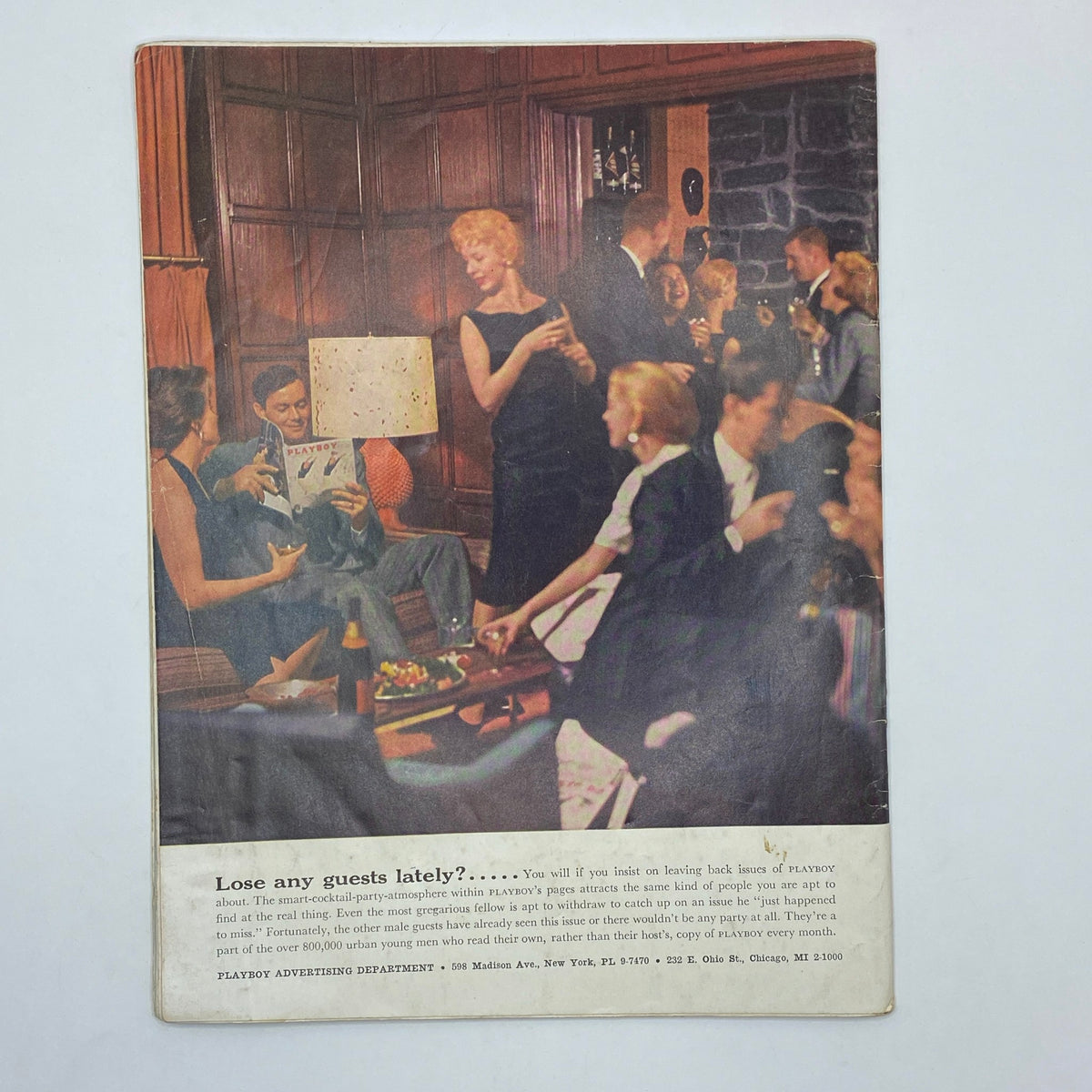
This issue is described as being in excellent condition with light wear typical for its age, a grade reflecting a copy that has held up unusually well given nearly seven decades since publication. At this grade, collectors can generally expect minimal handling marks, strong cover gloss retention, and solid structural integrity in the binding and spine. That level of preservation is notably harder to find among early Playboy issues than among later decades of the magazine's run, since 1950s issues were produced in smaller volumes and have had considerably more time to accumulate wear. It is a newsstand copy issued without the original subscriber label, a variant collectors often value for the cleaner, unobstructed presentation of the cover art. Label-free newsstand copies typically lack the mailing label, address stamp, or subscription crease found on copies distributed by mail, a distinction many collectors consider preferable for display and archival purposes. Early Playboy issues from the 1950s are generally quite scarce in excellent condition, as the disposable nature of newsstand publishing meant many copies were discarded, heavily handled, or damaged in storage well before their collectible value was recognized. That scarcity is compounded for issues from the magazine's first several years, when print runs were comparatively modest relative to Playboy's later, much larger circulation. A plastic protective covering, when present, functions as a stabilizing measure intended to preserve a copy's current condition rather than a factor that changes its underlying grade. Collectors evaluating any surviving copy of this issue should look closely at cover gloss, spine tightness, and page color, since these are the attributes most likely to distinguish a genuinely excellent-grade copy from one merely described as such. Overall, an excellent-grade, label-free newsstand copy from this early period represents an unusually well-preserved example of what collectors can expect to find for a Playboy issue of this vintage.
Looking for More Issues Like This?
Early Playboy issues from the magazine's first several years, particularly well-preserved copies like this one, are genuinely difficult to find today given how few survived in strong condition from such a limited original print run. The scarcity only increases for issues carrying a well-documented Playmate feature, since interest in specific centerfold appearances often drives additional collector demand beyond general issue scarcity. For those drawn to this particular issue, our Playboy collection is an excellent place to continue browsing, since it gathers surviving issues from across the magazine's long publishing history, including other early and formative issues from the 1950s. That collection offers a broader look at how the magazine's format and editorial ambitions evolved from its founding through later decades. Collectors with a specific interest in the magazine's earliest Playmates or its formative centerfold conventions may find related material of interest scattered throughout that same collection. Beyond the publication itself, our 1957 magazines collection offers useful context for the broader publishing landscape of the same year, well beyond Playboy alone. Browsing by year can surface material outside a single title, which is often valuable for collectors and researchers interested in a specific cultural moment rather than one particular magazine. Given how scarce well-preserved early Playboy issues tend to be once found, we'd encourage anyone interested in this era to browse both collections at their own pace. There is always more of this history available than a single issue can represent on its own. We hope these collections help round out whatever corner of Playboy's early history you're most drawn to.