



Description
Collector's Note – Why This Issue Matters
The July 1961 issue of Playboy Magazine featuring Sheralee Conners as the Playmate of the Month — with the centerfold confirmed intact — is a primary document of the magazine at one of the most culturally significant and most editorially ambitious phases of its entire publishing history. By July 1961, Playboy had been publishing for seven and a half years, and in that time had transformed itself from a single-issue gamble financed on borrowed money into one of the most commercially successful and culturally consequential magazines in American publishing history. The early-to-mid 1960s Playboy was, in the specific sense that matters most for collectors who understand the publication's full arc, the magazine at the peak of its intellectual and literary ambition — the period when its fiction program was attracting contributions from the most distinguished American writers, when its interview format was becoming one of the most respected long-form conversation vehicles in American journalism, and when the specific vision of sophisticated adult American masculinity that Hugh Hefner had been developing since 1953 was achieving its fullest and most convincing expression. A July 1961 issue is a document of that specific and historically important phase of the publication's creative development. For collectors building around vintage Playboy issues from the magazine's early-to-mid-1960s golden period, this July 1961 edition represents the publication operating at a genuinely distinctive and historically recognized phase of its editorial ambition and creative authority.
Sheralee Conners's status as the July 1961 Playmate of the Month places her within the specific history of the magazine's Playmate tradition at a moment when that tradition was fully established and nationally recognized. The Playmate of the Month feature had been a fixture of the magazine since its early issues, and by July 1961 the format — the gatefold centerfold photograph accompanied by the biographical Data Sheet and the specific visual presentation that Hefner and his photographers had been refining since the magazine's founding — was as familiar to its enormous readership as any recurring feature in American magazine publishing. The confirmation in the listing that the centerfold remains fully intact is a significant condition attribute for any collector who understands the specific challenges of preserving early-to-mid-1960s Playboy issues: centerfolds from this period were frequently removed by original readers, and intact examples represent a meaningfully more complete historical document and a more physically whole artifact for collectors who value the magazine's original format and presentation. The newsstand origin with no label is an additional positive condition attribute, preserving the full visual integrity of the July 1961 cover without the permanent label adhesive damage that subscriber copies frequently sustained. For collectors focused on magazines from 1961, this issue captures the specific cultural atmosphere of the Kennedy-era American popular culture at one of its most optimistic and most creatively energized early-decade moments.
The broader cultural context of July 1961 enriches this issue for collectors who engage with the full historical moment. The Kennedy presidency was in its sixth month — the Bay of Pigs had been followed by the Vienna Summit with Khrushchev in June, and the Berlin Crisis was in its most acute phase with the Wall's construction beginning in August, just weeks after this issue's publication. In the specific domestic cultural atmosphere of July 1961, Playboy was operating as one of the most visible and most commercially successful expressions of a distinctly American postwar liberalism — the combination of consumer optimism, sexual frankness, intellectual aspiration, and cultural confidence that the Kennedy era had made the dominant tone of American cultural self-presentation. A July 1961 Playboy is simultaneously a document of that cultural confidence and a primary artifact of the specific vision of adult American life that Hefner's magazine was both reflecting and actively constructing for its enormous readership. The fiction, the interviews, the cultural criticism, and the Playmate imagery all existed in July 1961 as integrated components of a coherent editorial vision whose historical significance has only become more fully visible with the passage of time and the fuller understanding of how completely that vision shaped American popular culture across the following decades.
About the Publication
Playboy Magazine was founded by Hugh Hefner and launched in December 1953, initially produced out of his Chicago apartment with financing that included a personal loan and investments from a small group of supporters. By July 1961, it had established itself as one of the most commercially successful and culturally significant magazines in American publishing history, with a circulation well over one million copies per month and a contributing roster of fiction and nonfiction writers, cultural critics, and public intellectuals of genuine distinction. Its format combined the centerfold photography and Playmate of the Month feature that had become its most discussed element with fiction, interviews, cultural criticism, jazz reviews, food and wine writing, and the lifestyle content that gave the magazine its specific aspirational masculine identity. The early-to-mid 1960s period is consistently recognized by serious collectors and cultural historians as the phase in which the magazine's editorial ambition was at its peak — the years when its literary and intellectual programming was most seriously engaged and most genuinely distinguished, before the commercial and cultural pressures of the later decade began to shift the editorial balance away from the intellectual aspirations of its founding vision.
Key Highlights Inside
- Sheralee Conners Playmate of the Month centerfold, confirmed fully intact: The centerfold's confirmation as fully intact is the most significant positive condition attribute for a July 1961 Playboy — intact centerfolds from the early-to-mid 1960s represent a meaningfully more complete and more historically whole artifact than the majority of surviving copies from this period, in which centerfold removal by original readers was extremely common.
- Early-to-mid-1960s literary and intellectual content at the magazine's peak editorial ambition: July 1961 falls within the specific phase of Playboy's publishing history that serious collectors and cultural historians consistently identify as its most editorially ambitious — the period when the fiction program, interview format, and cultural criticism were operating at their highest level of literary and intellectual distinction.
- Kennedy-era American cultural confidence and consumer optimism documentation: A July 1961 Playboy is a primary document of the specific cultural atmosphere of the Kennedy presidency's first year — the combination of consumer optimism, intellectual aspiration, and sexual frankness that defined the early-Kennedy domestic cultural moment and that the magazine was both reflecting and actively constructing for its enormous readership.
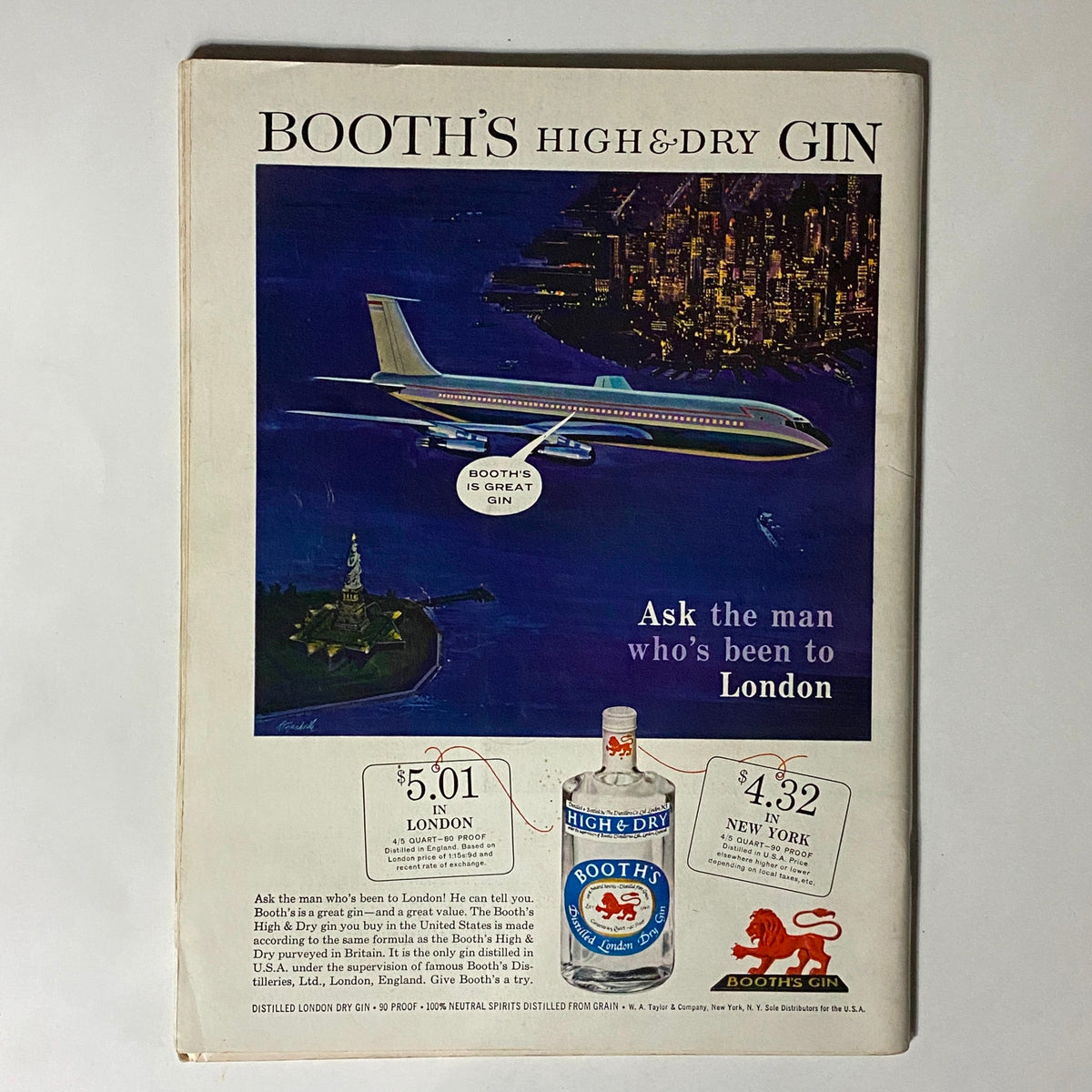
- Period advertising as historical primary source: The advertising in a July 1961 Playboy — liquor brands, hi-fi equipment, men's clothing, and the full range of aspirational consumer products marketed to the magazine's specifically defined adult male readership — constitutes primary historical material reflecting the consumer aspirations and lifestyle identity of American masculinity at one of its most culturally and commercially confident early-decade expressions.
- Note: Specific fiction titles, named contributing writers, interview subjects, and individual editorial features for this issue have not been confirmed from available listing details beyond the Sheralee Conners Playmate feature. The above reflects what is verifiable from the cover subject, the centerfold confirmation, the publication date, and the well-documented editorial practices of Playboy Magazine during its early-to-mid-1960s golden period.
Condition & Rarity
A Good condition rating with a fully intact centerfold, no label, and protective plastic covering for a sixty-four-year-old monthly magazine represents a meaningful and specifically positive condition profile that collectors of early-to-mid-1960s Playboy issues will read accurately. The centerfold's integrity is, for any issue from this period, the most practically significant single condition attribute — intact centerfolds in early-to-mid-1960s Playboy are a meaningfully smaller subset of surviving examples than the total number of surviving copies, and a confirmed fully intact centerfold in Good condition represents a more complete and more historically whole artifact than the majority of what the collector market produces for issues of this age and period. The newsstand origin with no label is the second most important positive attribute — preserving the full visual integrity of the July 1961 cover without the permanent adhesive damage that subscriber copies frequently sustained. Good condition in a sixty-four-year-old monthly magazine indicates a structurally complete and readable copy with visible evidence of its years, and does not compromise the primary documentary and collector value of this issue. The protective plastic covering provides the appropriate ongoing preservation format.
Looking for More Issues Like This?
A July 1961 Playboy with Sheralee Conners's Playmate centerfold fully intact, no label, and Good overall condition — a primary document of the magazine at the peak of its early-to-mid-1960s editorial ambition, in the specific cultural atmosphere of the Kennedy era, with the centerfold integrity that distinguishes this copy from the majority of surviving examples — is among the more complete and historically significant collector results that the early-to-mid-1960s Playboy market produces. If this particular issue has already been claimed, the broader Playboy Magazine collection at OriginalMagazines.com spans the publication's remarkable run from its 1953 founding and regularly includes issues from the early-to-mid-1960s golden period that document the magazine's editorial ambition, its Playmate tradition, and its specific vision of American masculine culture at its most commercially confident and most creatively engaged. Collectors with a specific focus on the cultural and popular landscape of 1961 will find the 1961 magazine archive a rich source of primary material from the opening year of a decade whose significance for American popular culture was genuinely extraordinary.