
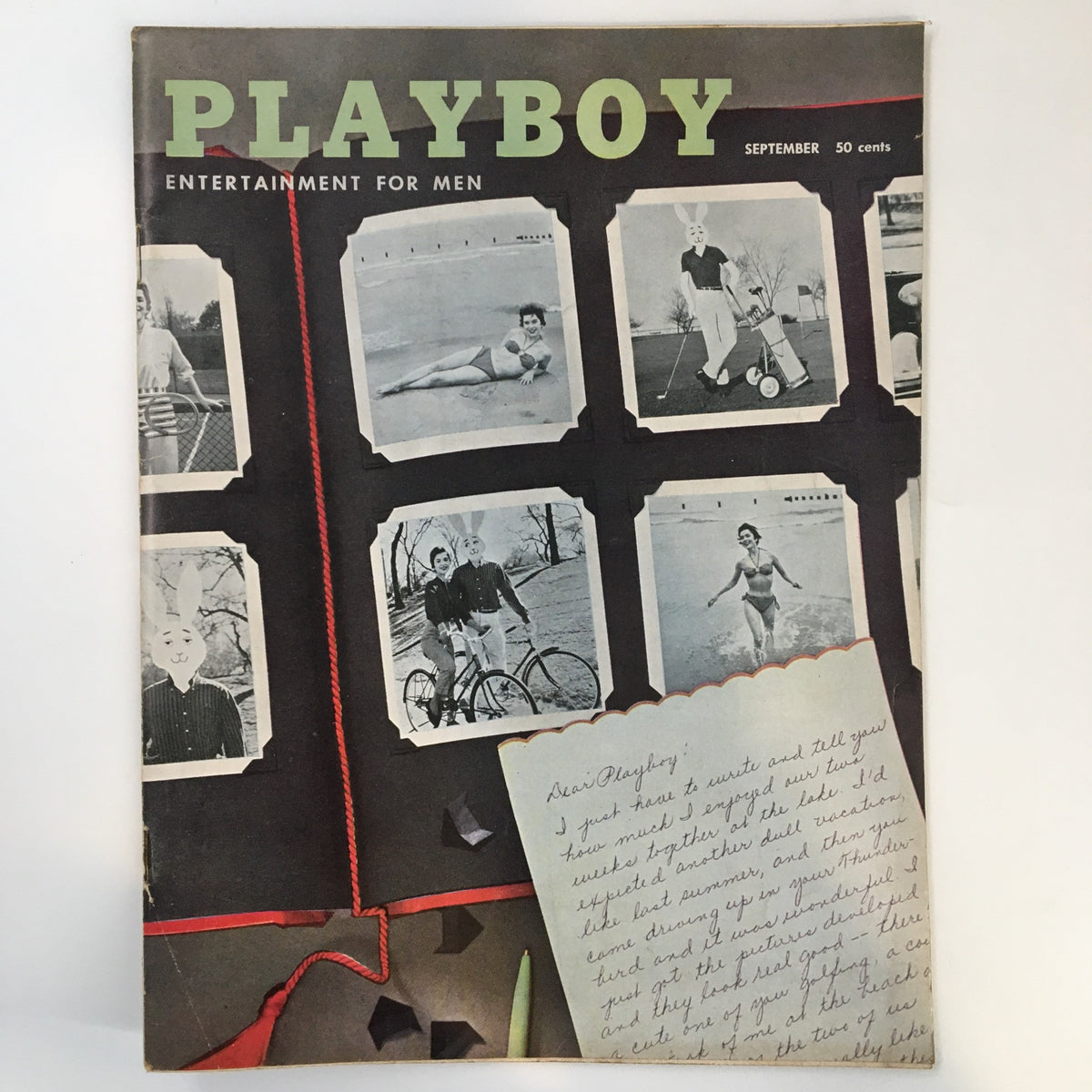


Description
Collector's Note – Why This Issue Matters
September 1956 places this issue in the third year of Playboy's existence — a period when the magazine was still actively defining what it was going to be, and when every issue carried the energy of a publication that knew it had touched something real in the culture and was pressing forward with confidence. Hugh Hefner had launched Playboy in December 1953 with a first issue featuring Marilyn Monroe, and by 1956 the magazine had survived its precarious early months and established itself as a genuine phenomenon. It was no longer a gamble. It was an institution in the making. Issues from this founding era — the first three or four years of publication — occupy a distinct and elevated tier in the collector market precisely because they document the magazine finding and cementing its identity, before it became the polished, globally recognized brand it would be by the early 1960s. For collectors assembling a serious archive of the publication's early run, the Playboy magazine collection is the most comprehensive single source for issues spanning the full publishing history.
The specific feature noted in this issue — The Playboy After Hours — is one of the magazine's most historically significant recurring sections. Introduced in the early years of the publication, "Playboy After Hours" was a culture and entertainment column that reviewed jazz, fiction, film, theater, and nightlife, functioning as a sophisticated guide to the leisure life Hefner was actively constructing as an aspirational ideal for his readership. It was foundational to the magazine's identity as something more than a pin-up publication — it positioned Playboy as a cultural arbiter, a taste-making editorial voice aimed at the young, urban, upwardly mobile American man of the postwar era. The presence of this section as a named feature on a 1956 issue is a direct window into that early editorial philosophy, before the format had fully standardized. Collectors working through mid-century American culture more broadly will find that 1956 magazine issues across titles document a moment of remarkable postwar confidence and cultural energy that is impossible to fully appreciate through retrospective sources alone.
The intact pin-up is a detail that matters significantly in the evaluation of early Playboy issues. The centerfold and associated pin-up content were central to the magazine's identity and commercial appeal, and a substantial proportion of surviving copies from this era are missing these pages — removed by original owners, damaged, or separated over the decades of handling the magazines inevitably endured. A copy retaining its original pin-up in attached condition represents a more complete artifact, and that completeness is precisely what serious collectors prioritize when evaluating early issues against one another.
About the Publication
Playboy was founded by Hugh Hefner and first published in December 1953 from Chicago, initially self-funded and produced on a shoestring. Its stated audience was the sophisticated urban American man — educated, culturally curious, professionally ambitious, and interested in the finer pleasures the postwar economic boom was making accessible to a new middle class. The magazine's format combined glamour photography and centerfold features with serious literary fiction, cultural criticism, jazz coverage, lifestyle advice, and what would become the famous Playboy Interview — a long-form conversation format that over the decades secured candid, extended discussions with some of the most significant figures in twentieth-century politics, entertainment, and intellectual life. By 1956 the magazine was firmly established, nationally distributed, and already attracting contributions from writers and thinkers who lent it a literary credibility that complicated and enriched its identity well beyond its reputation as a men's entertainment magazine. It remains one of the most collected American periodicals of the twentieth century, and its earliest issues — particularly those from the first five years of publication — are among the most actively sought by serious collectors.
Key Highlights Inside
- The Playboy After Hours — one of the magazine's defining early recurring features, covering jazz, entertainment, nightlife, and culture in the sophisticated editorial voice that distinguished Playboy from its contemporaries and established its identity as a taste-making publication rather than a simple men's entertainment title.
- Original pin-up intact and attached — a meaningful condition point for any surviving copy of a 1956 issue, as the pin-up pages are among the most commonly missing elements in early Playboy copies that have passed through decades of handling and use.
- Photography, fiction, and lifestyle content consistent with Playboy's established 1956 editorial format — the mix of glamour imagery, cultural commentary, and aspirational lifestyle content that had, within three years of launch, made the magazine one of the most talked-about publications in America.
- Note: Specific article titles, bylines, fiction contributors, and additional interior features beyond those named in the listing have not been confirmed from available sources. The highlights above reflect what is documented in the listing and Playboy's well-established editorial format for this period.
Condition & Rarity
Early Playboy issues in good, displayable condition are among the more genuinely scarce items in American periodical collecting, and the September 1956 issue is no exception. Copies from the magazine's first three years of publication were handled as reading material by their original owners, not preserved as collectibles — the concept of archiving them for future value simply wasn't part of how most readers related to them at the time. Minor wear on a surviving copy of this age is both expected and honest; it marks an original, unrestored artifact rather than a reproduction. The absence of a newsstand label is a meaningful positive in collector evaluation: label-free copies preserve the full cover design as it was originally printed, without the adhesive marks or obscured imagery that subscription labels leave behind. The protective plastic sleeve present on preserved copies is the standard and correct approach to stabilizing further deterioration. Most critically, the intact and attached pin-up distinguishes a complete copy from the significant number of surviving 1956 issues from which those pages have been removed — completeness is the single most important variable in evaluating early Playboy copies, and it elevates the standing of any surviving issue that retains it.
Looking for More Issues Like This?
Mid-1950s Playboy issues in complete, displayable condition are among the tougher finds in vintage periodical collecting — they surface less frequently than later issues and tend to move quickly when they do. The full Playboy magazine collection at OriginalMagazines.com is the best place to search for other issues across the magazine's run, with particular depth in the vintage decades that collectors prize most. For anyone building a broader picture of mid-century American print culture, the 1956 magazine archive brings together titles across entertainment, news, fashion, and lifestyle from the same year — a vivid cross-section of postwar America at one of its most culturally energetic moments.