




Description
Collector's Note – Why This Issue Matters
The June 1964 issue of Pop Weekly — Issue #44 — featuring Elvis Presley, The Shadows, and The Searchers is a primary document of British pop music journalism at one of the most historically consequential and creatively explosive moments in the genre's entire history. By June 1964, the British music scene that publications like Pop Weekly served had been transformed beyond recognition. The Beatles had conquered America in February of that year, appearing on The Ed Sullivan Show to an audience of seventy-three million viewers and triggering the British Invasion that would permanently reshape the global pop landscape. The Rolling Stones had released their debut album in April. The Kinks, The Animals, and dozens of other British groups were in the process of recording or releasing their first major work. The Searchers — one of the Merseybeat groups featured in this issue — were genuine chart stars in both Britain and America, their jangly guitar sound and close harmonies making them one of the defining sounds of the moment. And The Shadows, Cliff Richard's instrumental backing group turned chart artists in their own right, remained one of the most commercially successful and musically influential acts in Britain despite the seismic changes happening around them. For collectors who focus on vintage magazines featuring Elvis Presley, a British pop weekly from this precise moment of musical revolution — with Elvis sharing pages with the British acts that were in the process of challenging his global dominance — is a document of unusual historical tension and cultural significance.
Elvis Presley's presence in this June 1964 British pop weekly captures a specific and historically interesting moment in his career and cultural standing. The Beatles' American breakthrough had fundamentally altered the narrative of popular music, and part of that narrative's reshaping involved a reassessment of Elvis's position in the hierarchy of rock and roll. He had been the defining figure of the genre since 1956, but by mid-1964 he was increasingly focused on his Hollywood film career — a commercial strategy that was generating enormous revenue but that the most critically engaged music press was beginning to view with ambivalence. A British pop weekly featuring Elvis alongside the current wave of British beat groups in June 1964 is therefore a document of pop journalism navigating that transition: acknowledging Elvis's foundational status and continuing commercial appeal while simultaneously covering the new acts that were redefining what popular music could be. That juxtaposition — Elvis alongside The Searchers and The Shadows, in June 1964 — is precisely what makes this issue historically revealing. Collectors building archives around the music magazines of 1964 will find this issue an essential document of that transitional moment in pop history.
The British context of this publication adds a further dimension that distinguishes it from American music coverage of the same period. British pop weekly publications like Pop Weekly served a readership of intensely engaged young music fans who were experiencing the British beat boom from the inside — as participants in a cultural movement rather than observers of it from across the Atlantic. The Shadows and The Searchers, while known in America, were primarily creatures of the British charts and the British touring circuit, and their coverage in a British publication carried a specificity and intimacy that American coverage could not provide. An issue that covers these acts alongside Elvis — still the global standard against which all pop success was measured — captures the particular quality of British pop culture in mid-1964: acutely conscious of its American inheritance while simultaneously in the process of producing something genuinely new and globally influential.
About the Publication
Pop Weekly was a British pop music magazine published in the early-to-mid 1960s, aimed at the young British music fan audience that had been created by the explosion of rock and roll, skiffle, and beat music since the late 1950s. British pop weeklies of this era — which included titles like Melody Maker, New Musical Express, and smaller publications like Pop Weekly — served a readership that consumed music coverage with extraordinary intensity, following the careers of their favorite acts through chart positions, touring schedules, and the kind of personal detail that the fan press specialized in providing. The format typically combined news, interviews, photo features, and chart coverage in a weekly package that treated pop music as serious cultural business worthy of dedicated journalistic attention. Issues from 1964 represent the format at its most historically significant moment, produced in the middle of the British beat boom that transformed global popular music.
Key Highlights Inside
- Coverage of Elvis Presley in a British pop weekly context — documenting the American rock and roll originator's ongoing cultural presence and commercial relevance at the precise moment when the British acts he had influenced were in the process of mounting a global challenge to his dominance, creating the specific historical tension that makes this pairing so revealing as a document of 1964 pop culture.
- Coverage of The Searchers — one of the defining Merseybeat groups of the British Invasion era, whose jangly guitar sound and close harmonies had produced major chart successes in both Britain and America and whose specific sonic identity was one of the most influential of the British beat boom's early phase.
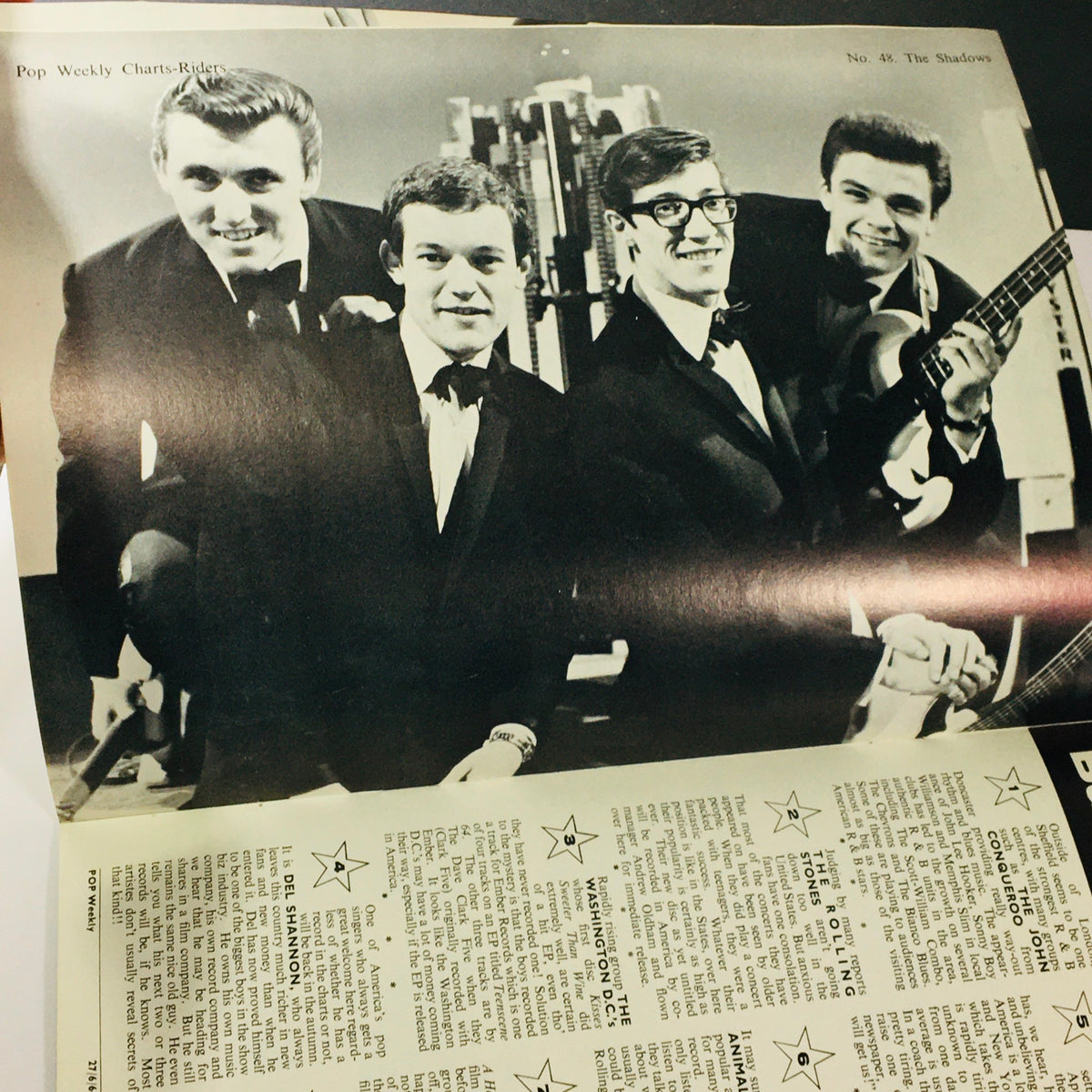
- Coverage of The Shadows — the instrumental group that had evolved from Cliff Richard's backing band into one of the most successful British acts of the early 1960s, whose distinctive guitar sound had influenced the development of British beat music and who remained commercially dominant even as the Merseybeat groups were reshaping the pop landscape around them.
- Editorial content reflecting the specific pop cultural atmosphere of June 1964 — a month when the British Invasion was in full force, the charts on both sides of the Atlantic were being transformed by the new wave of British groups, and the music press was actively documenting the most rapid and consequential transformation in popular music's history to that point.
Note: Specific article titles, bylines, interview subjects, and additional editorial details beyond the cover-named artists are unconfirmed for this issue from available sources. The highlights above reflect verifiable historical context drawn from the cover subjects, issue number, publication date, and the well-documented editorial character of British pop weeklies during this period.
Condition & Rarity
This copy is identified as a no-label newsstand edition with minor edge wear and potential small rips or marks — an honest condition profile for a British pop weekly now more than sixty years old that was produced as an inexpensive, high-circulation consumer publication rather than a premium archival product. British pop weeklies of this era were printed on relatively lightweight paper stock, sold for a few pence, and consumed actively by their young readership rather than preserved — which makes surviving newsstand copies in any condition meaningfully less common than their original circulation numbers would suggest, as the vast majority were discarded, damaged, or lost in the decades since publication. The no-label newsstand provenance means the cover has not been subjected to the subscription label adhesive damage that affects mailed copies, preserving the cover art as originally printed. The plastic protective sleeve indicates deliberate preservation-conscious storage at some point in the copy's history. For a British pop weekly from June 1964 — a publication produced at the exact center of the British Invasion — a no-label newsstand copy in good structural condition with readable interior pages represents a preservation outcome that collectors of 1960s British music ephemera will recognize as meaningful.
Looking for More Issues Like This?
A British pop weekly featuring Elvis Presley, The Shadows, and The Searchers from June 1964 is a historically specific find that sits at the very center of the British pop explosion — these publications were consumed rather than collected at the time, and surviving newsstand copies from this precise moment in music history are worth seeking out. If this issue has already found a home, the dedicated Elvis Presley magazine collection at OriginalMagazines.com is an excellent first resource for collectors building a serious archive of his documented career across decades and across both American and British publications. Collectors focused on the full musical and cultural landscape of the British Invasion year will also find it well worth exploring the full 1964 magazine archive, which brings together music and general interest publications from the most consequential year in the history of popular music's global development.