


Description
Collector's Note – Why This Issue Matters
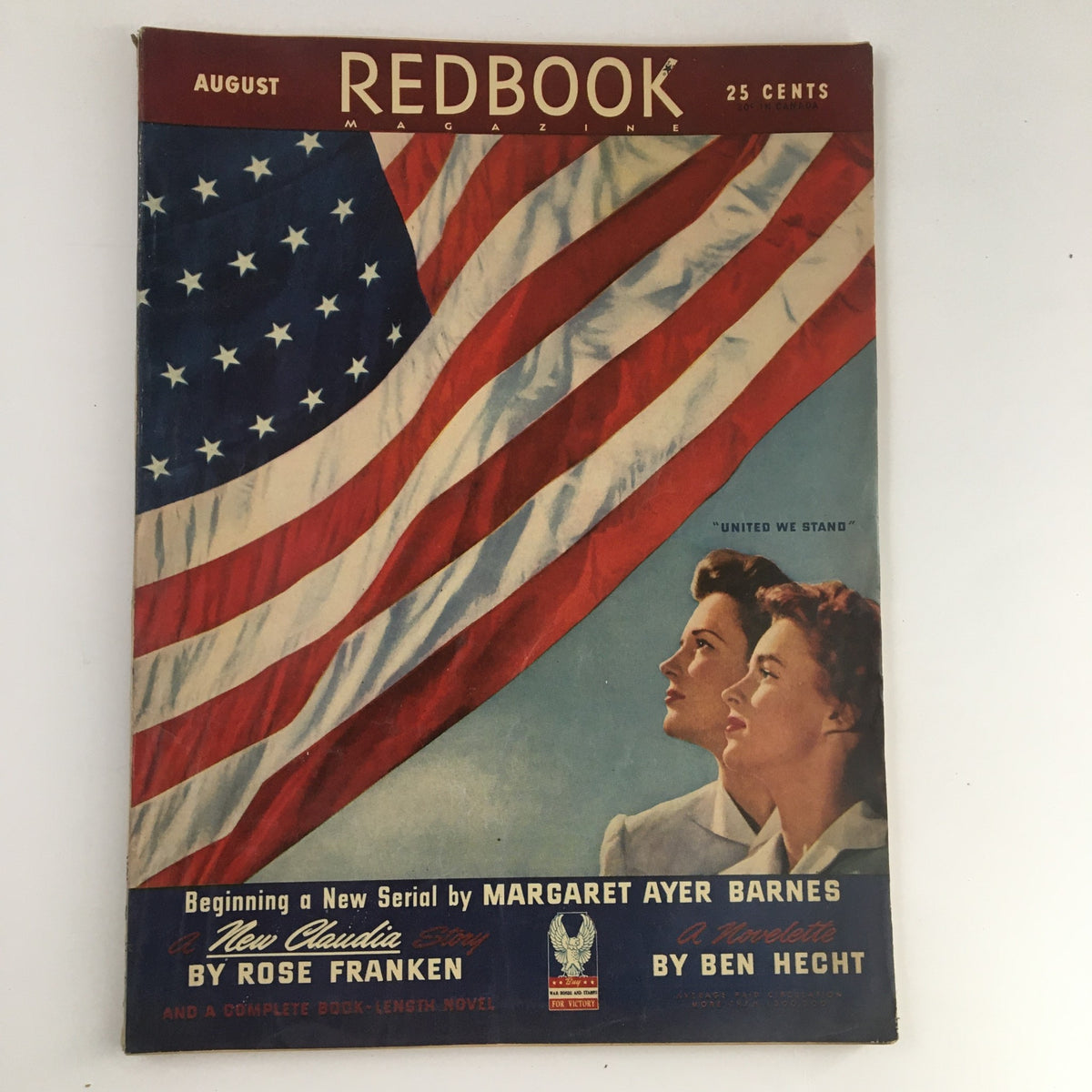
This August 1942 issue of Redbook carries a cover theme tied directly to one of the most coordinated patriotic publishing efforts in American magazine history. During July 1942, just seven months after the United States entered World War II following Pearl Harbor, roughly five hundred American publications simultaneously adopted the American flag for their covers under the rallying slogan "United We Stand," a coordinated industry-wide effort timed around Independence Day to promote national unity and rally public support for the war effort. Redbook's participation in this campaign, whether appearing in the original July wave or closely following with this August issue, places the magazine within a genuinely significant and well-documented moment of wartime media history rather than a generic patriotic gesture chosen independently by a single publication. The phrase itself carried additional resonance that very summer, since Queen Wilhelmina of the Netherlands had invoked nearly identical language in her August 5, 1942 address to the United States Congress, declaring "united we stand, and united we will achieve victory" in a speech emphasizing solidarity among the Allied nations. That a queen-in-exile and hundreds of American magazine publishers were independently reaching for the same unifying language within weeks of each other speaks to how thoroughly this rhetoric of collective resolve had saturated the American wartime moment by mid-1942.
For Redbook specifically, a women's magazine whose readership consisted largely of wives and mothers navigating the realities of wartime domestic life, this cover theme reflects the particular way the magazine industry mobilized civilian publishing in service of the broader war effort. Women's magazines during this period played a significant role in shaping homefront morale, encouraging rationing compliance, war bond purchases, and the kind of steady domestic resolve that wartime planners considered essential to sustaining the public through years of uncertain conflict. A cover built around national unity imagery would have resonated directly with Redbook's core readership, many of whom had husbands, sons, or brothers serving overseas or about to be called into service as the American mobilization effort accelerated through 1942. This period also coincided with significant early wartime anxiety, since the summer of 1942 came before any major Allied victories had reversed the war's early momentum, making messages of unity and shared sacrifice especially urgent rather than merely decorative.
For collectors, this issue offers genuine documentary value as a participant in a specific, datable moment of American magazine history, when the publishing industry coordinated an unusually unified patriotic response to the nation's entry into global conflict. That documented historical specificity, rather than a vague sense of wartime nostalgia, gives this issue real substance within the broader landscape of Redbook magazine collecting, where World War II-era issues addressing the homefront experience remain a consistently significant area of interest for collectors and researchers of American media history.
About the Publication
Redbook, founded in 1903, had by the early 1940s established itself as a leading American magazine aimed at a broad readership of women, particularly wives and mothers navigating marriage, family, and domestic life. During the World War II years, Redbook and similar women's magazines took on an additional civic role, helping translate the demands of the war effort into practical guidance for households managing rationing, conserving resources, and maintaining morale while loved ones served overseas. The magazine's wartime-era format typically combined fiction, beauty and household advice, and feature journalism with content that increasingly addressed the realities of life on the homefront, reflecting how thoroughly the war had reshaped the everyday concerns of its readership. Redbook's participation in the broader 1942 magazine industry's "United We Stand" patriotic cover campaign reflects this dual role, balancing its traditional service journalism with an active contribution to wartime civilian morale efforts. This combination of domestic-focused content and patriotic civic engagement was characteristic of how American women's magazines navigated their editorial responsibilities during the war years, and issues from this period remain valuable historical records of how the conflict reshaped everyday American media and domestic life.
Key Highlights Inside
- Cover artwork built around the "United We Stand" slogan and American flag imagery, tied to a coordinated July-August 1942 magazine industry campaign. Approximately five hundred American publications adopted similar flag-and-slogan covers that summer to promote wartime national unity. This places Redbook's cover within a specific, well-documented moment in American publishing and wartime morale history.
- Editorial content reflecting Redbook's wartime-era focus on domestic life under the pressures of national mobilization. Women's magazines of this period regularly addressed rationing, household management, and morale-building content aimed at readers navigating separation from loved ones in military service. This kind of content was a defining feature of homefront-era women's magazine publishing.
- Advertisements characteristic of the World War II homefront economy, often reflecting rationing, war bond promotion, or patriotic consumer messaging. Period advertising from this era offers valuable historical insight into how American consumer culture adapted to wartime constraints. These advertisements are frequently of particular interest to collectors and researchers studying wartime homefront history.
- Fiction and feature content typical of Redbook's broader editorial format during this period. The magazine continued to offer original fiction and lifestyle content even as wartime themes increasingly permeated its pages. This combination of escapism and timely relevance was characteristic of women's magazine publishing throughout the war years.
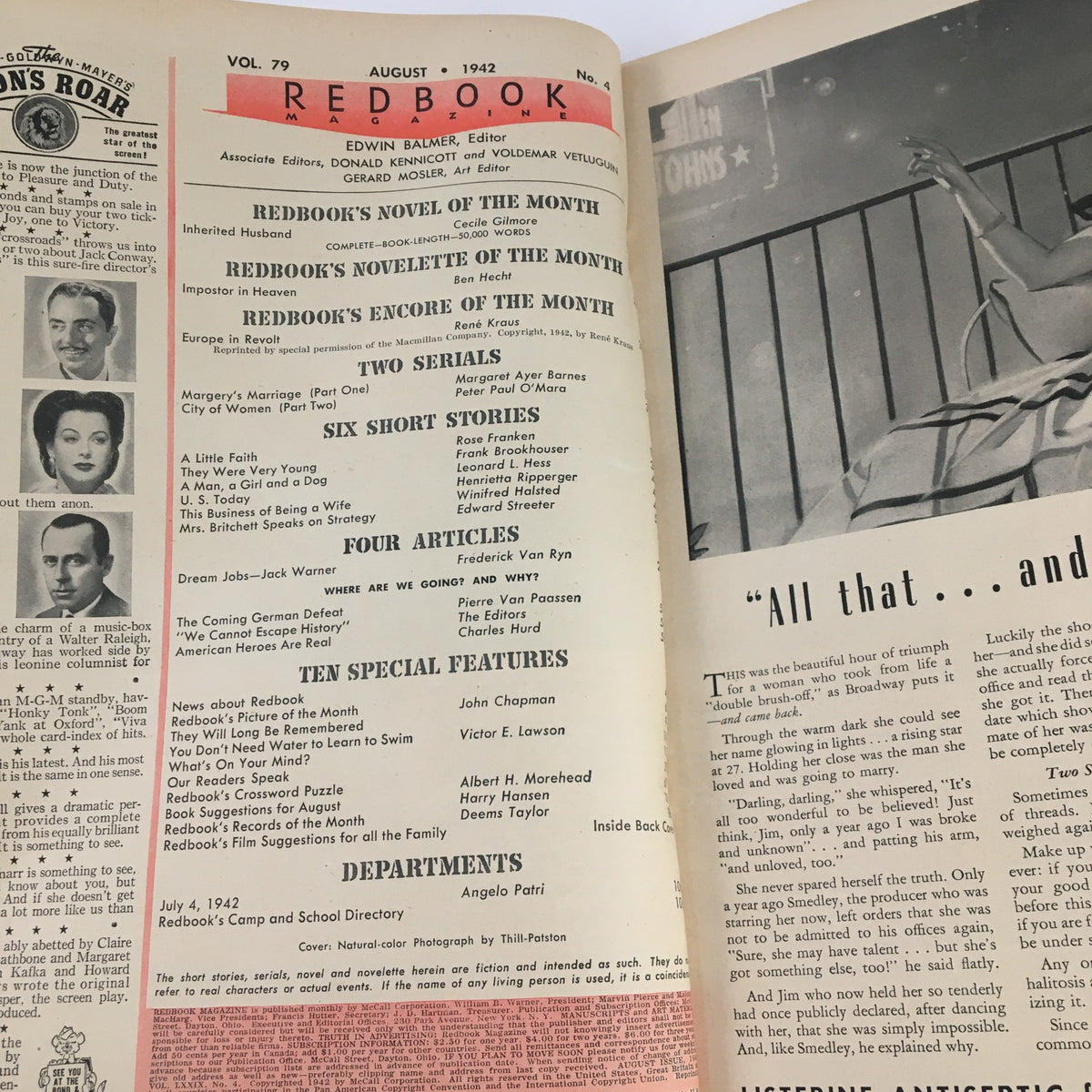
- Specific additional articles for this issue beyond its cover theme are not detailed in available listing information. Readers interested in the full editorial content of this issue are encouraged to view it directly. Wartime-era issues of Redbook are not always comprehensively indexed issue by issue outside of the original print runs.
Condition & Rarity
Surviving copies of this issue are generally evaluated using the same standards collectors apply across vintage wartime-era magazines: cover and spine integrity, page completeness, and overall condition free of significant brittleness, foxing, or moisture damage given the wartime paper stock typical of this period. A copy described as being in good condition, with minor wear throughout, would be considered a reasonable survivor for a magazine now more than eighty years old, an age at which some structural wear is expected rather than exceptional. Paper quality during the World War II years was often affected by wartime material shortages, which can make magazines from this specific period somewhat more prone to brittleness than issues published just before or after the war. A plastic protective sleeve is a standard and effective safeguard for an issue of this age, helping prevent further handling wear and environmental damage, though it cannot reverse deterioration that occurred prior to the magazine's preservation. The absence of a subscription label reflects the issue's original newsstand distribution, and unlabeled wartime-era copies are generally considered desirable among collectors focused on this period's civilian publishing history. Given this issue's documented connection to a specific, coordinated patriotic publishing campaign, collectors focused on World War II homefront history may weigh the issue's cover theme and historical context particularly heavily relative to minor cosmetic wear. Pages free of active brittleness or further tearing represent the most relevant ongoing benchmark for a wartime-era magazine of this age.
Looking for More Issues Like This?
A Redbook issue tied to the documented 1942 "United We Stand" magazine industry campaign offers genuine historical substance for collectors and researchers interested in American World War II homefront media. If this particular issue isn't available, it's worth browsing the broader Redbook magazine collection for other issues spanning this title's long run, including additional wartime-era issues addressing the homefront experience. Collectors focused on the era itself may also want to look through the full range of 1942 magazines for other issues from that pivotal early war year. Each of these collections offers a different way into the period, whether the interest lies in this specific title's editorial history or the broader cultural and political snapshot of a single transformative year. A single year's worth of magazines often tells a fuller story than any one issue alone, particularly for a year defined so completely by America's entry into global conflict. Browsing by year can also be a productive way to discover other magazines that participated in the same coordinated patriotic cover campaign, since many publications across the industry adopted similar imagery that summer. Whichever angle appeals most, the 1942 collection is a solid starting point for going deeper into this consequential period of American history and magazine publishing.