




Description
Collector's Note – Why This Issue Matters
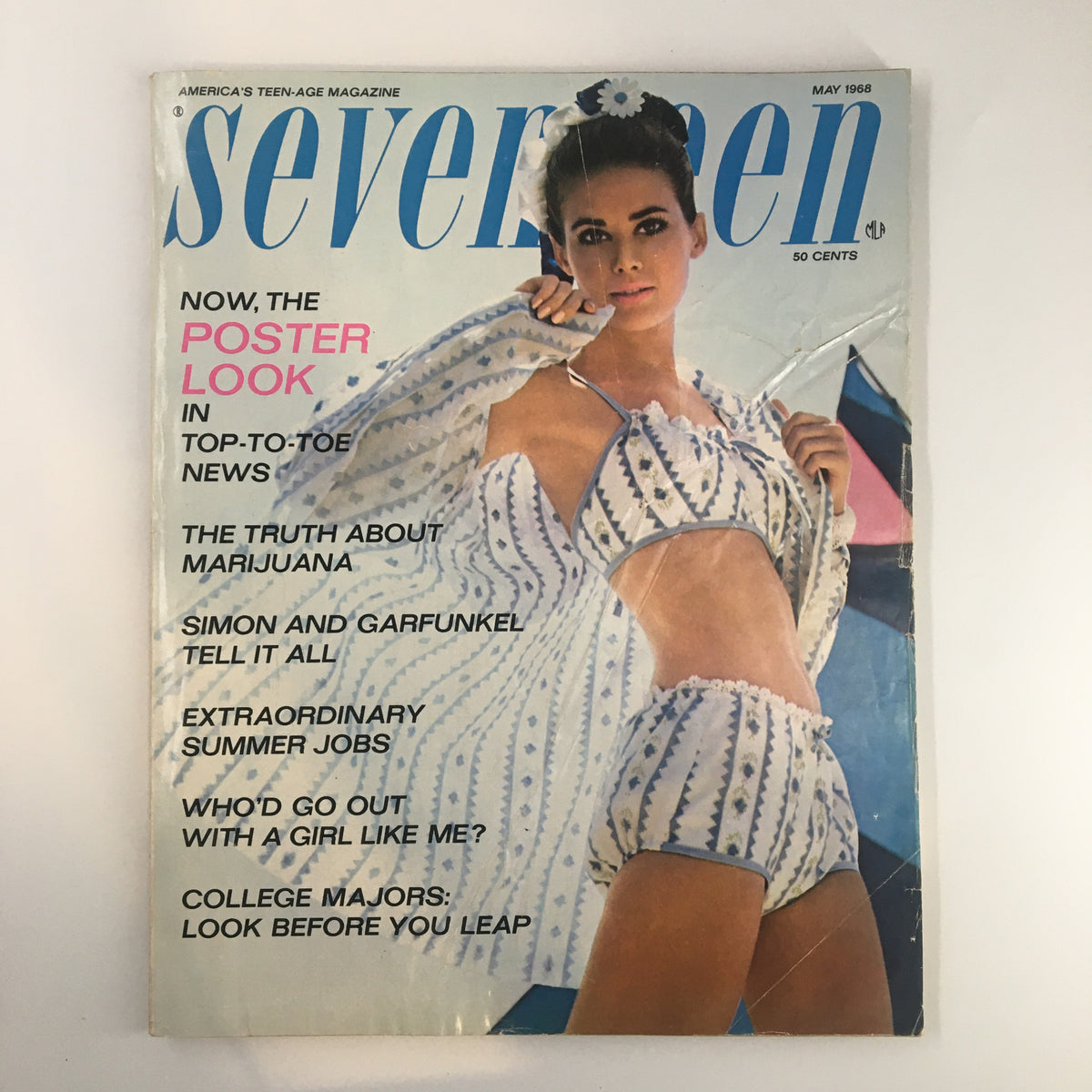
The May 1968 issue of Seventeen featuring Simon and Garfunkel documents the duo at the precise peak of their commercial and cultural authority. By May 1968, Paul Simon and Art Garfunkel had released Sounds of Silence (1966), Parsley, Sage, Rosemary and Thyme (1966), and Bookends, which came out in April 1968 — just one month before this issue reached newsstands. Bookends would go on to reach number one on the Billboard 200 and is now considered one of the defining albums of the era, with "Mrs. Robinson" — written for Mike Nichols' film The Graduate — becoming one of the year's most discussed songs. The Graduate itself had been released in December 1967 and was still in wide release in the spring of 1968, with Simon and Garfunkel's soundtrack establishing their sound as the emotional register of a generation's self-examination. A Seventeen interview in May 1968 reached exactly the teenage audience that had made them icons, at exactly the moment their cultural footprint was largest. For collectors building a serious archive through the Seventeen magazine run of the late 1960s, this issue is among the most musically significant the publication produced in this period.
The broader context of May 1968 amplifies this issue's historical weight considerably. It was one of the most turbulent months in modern American and global history: Martin Luther King Jr. had been assassinated on April 4, Robert Kennedy would be assassinated on June 5, student uprisings were convulsing Paris and American campuses, and the Vietnam War was at the center of a generational conflict over values, authority, and the future of the country. Simon and Garfunkel's music — elegiac, literary, suffused with a melancholy intelligence that was simultaneously personal and broadly shared — had become the sound of young America processing these upheavals. An interview with them in Seventeen in May 1968 was not merely celebrity coverage: it was a conversation between a teenage readership and the artists who were most precisely articulating what that generation felt. For anyone researching American youth culture and popular music in the extraordinary year of 1968, this issue is a primary document of that relationship.
The "Tell It All" interview framing noted in the title suggests a behind-the-scenes, candid approach to coverage — the kind of access journalism that Seventeen was particularly effective at delivering to its teenage readership, presenting major cultural figures in more personal and approachable terms than the prestige music press. Simon and Garfunkel in 1968 were not typically associated with the teenage magazine circuit — their sensibility was more literary and adult than most of their pop contemporaries — which makes their Seventeen appearance an editorially interesting choice and a document of how broadly their appeal crossed demographic lines during this period.
About the Publication
Seventeen magazine, founded in 1944 and by the late 1960s the dominant American magazine for teenage girls, combined fashion, beauty, fiction, and cultural coverage aimed at a readership navigating the transition from adolescence to young adulthood. Its editorial approach in 1968 reflected the significant tension between its traditional focus on fashion and domesticity and the rapidly changing world its readers were inhabiting — a world of protest, the counterculture, and a fundamental questioning of the social roles Seventeen had historically been designed to help young women inhabit. Its coverage of figures like Simon and Garfunkel reflected a genuine engagement with the cultural forces shaping its readership, and the late-1960s issues are among the most historically interesting in the magazine's long run for exactly this reason.
Key Highlights Inside
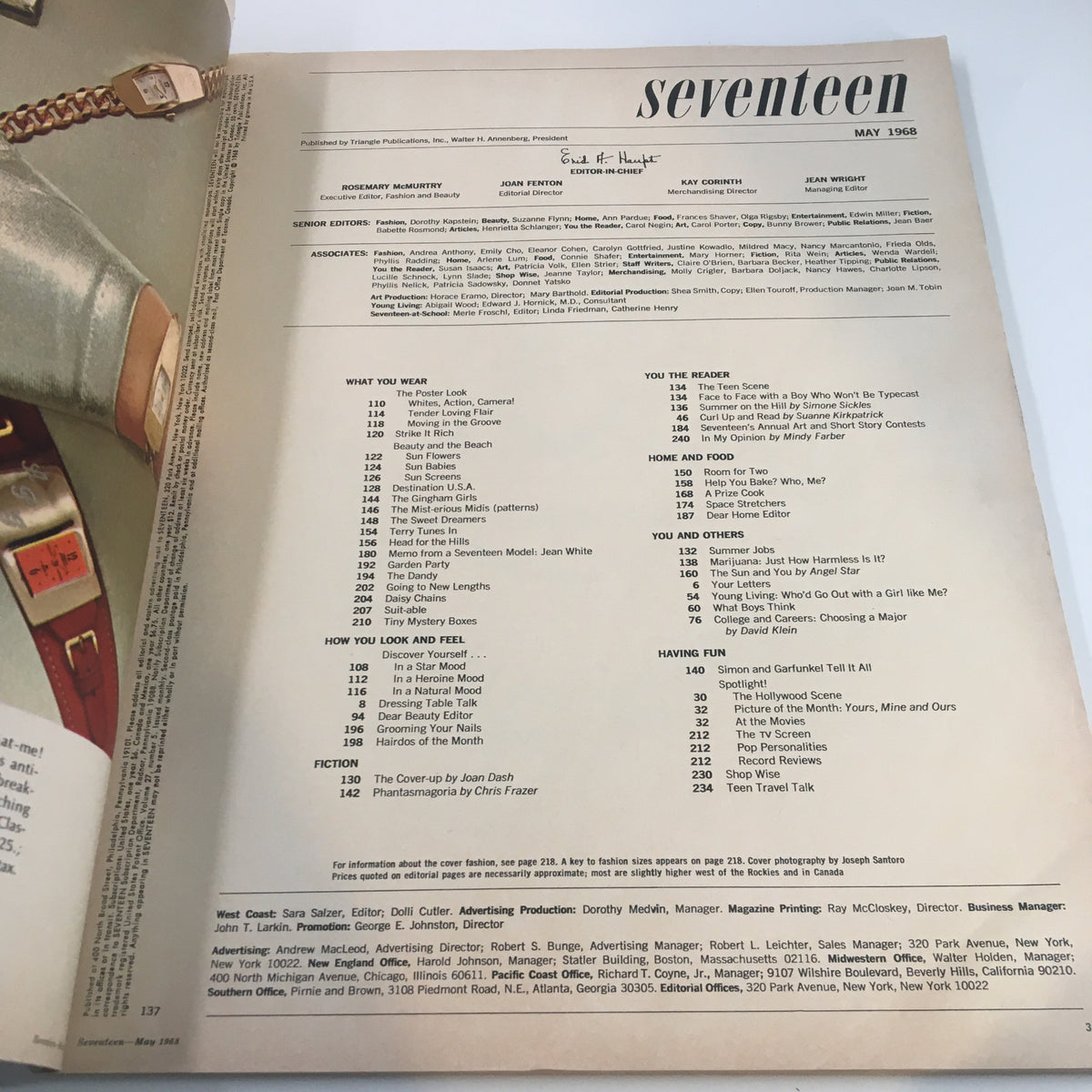
- Simon and Garfunkel "Tell It All" interview — a behind-the-scenes feature on the duo published in May 1968, one month after the release of Bookends and during the peak cultural moment of their careers, reaching Seventeen's teenage readership at the height of the duo's influence on American youth culture.
- Publication context of May 1968 — one of the most historically charged months of the decade, with the assassinations of King and Kennedy bracketing this issue and the broader social upheaval of 1968 forming the backdrop against which Simon and Garfunkel's music was being heard and felt.
- Newsstand copy without subscriber label — the preferred state for display-oriented collectors, presenting the full visual impact of the cover without address label interruption.
- Fashion and cultural content consistent with Seventeen's late-1960s editorial identity — a publication in genuine tension between its traditional format and the rapidly changing world its readers were inhabiting, producing some of the most culturally interesting issues in its history during this period.
- Note: Specific additional article titles, fashion features, and other editorial content beyond the confirmed Simon and Garfunkel interview have not been independently verified from the listing. Interior details should be confirmed against a physical copy for comprehensive research purposes.
Condition & Rarity
Surviving copies of this issue in good condition present the expected profile of a fifty-five-year-old monthly magazine that has been handled through decades of use before entering a collection. Good condition with minor wear throughout and creases in the front corners is an honest assessment for a publication of this age; corner creasing is among the most common structural characteristics of vintage magazines that were stored flat or folded at some point in their history and does not typically affect interior page integrity or the legibility of the cover image. A newsstand copy without subscriber label is the preferred state for display and carries a consistent premium in the collector market. A plastic protective sleeve confirms deliberate preservation effort. Simon and Garfunkel interview issues from their late-1960s peak are sought by multiple collecting communities — music memorabilia collectors, Seventeen magazine completists, and 1968 cultural history archivists — sustaining consistent demand for surviving copies in any displayable condition.
Looking for More Issues Like This?
Simon and Garfunkel coverage in mainstream teenage magazines from their 1968 peak is a genuinely specific collecting category, and this Seventeen interview issue is among the more historically significant examples available. If this May 1968 issue has already found a home, the full Seventeen magazine collection at OriginalMagazines.com spans the publication's coverage of multiple decades of American youth culture and is the right place to continue exploring. The complete 1968 magazines collection is essential browsing for anyone building a broader archive of American popular culture from one of the most consequential years of the twentieth century.