




Description
Collector's Note – Why This Issue Matters
The April 14, 1952 issue of Time Magazine — Vol. 59, No. 15 — places Fulton J. Sheen on its cover at the precise moment he had become the most watched religious figure in American television history. Sheen's program Life Is Worth Living had premiered on the DuMont network in February 1952 — just two months before this issue's publication date — and its immediate ratings success had produced one of the most remarkable cultural stories of the early television era. Broadcasting without a script, using only a blackboard as a prop, and delivering forty-five-minute talks on philosophy, ethics, and faith to a primetime audience, Sheen had demonstrated that serious religious and intellectual content could not only survive on commercial television but could dominate it. His ratings were competing directly with Milton Berle's enormously popular Texaco Star Theatre on NBC — a fact that generated considerable press attention and the famous quip that both men worked for the same boss. A Time cover in April 1952 is the mainstream press's formal acknowledgment that Sheen had become a genuine television phenomenon, documented at the moment of maximum public surprise at his success. Collectors researching Time's coverage of American religious and cultural figures across the 1950s will find the Time Magazine archive at OriginalMagazines.com a comprehensive resource.
The broader significance of Sheen's April 1952 Time cover extends beyond his individual celebrity. His success on Life Is Worth Living represented something genuinely novel in postwar American culture: the demonstration that a Catholic bishop could achieve mainstream Protestant-majority acceptance on a national scale, through the medium of television, by engaging with universal philosophical and ethical questions rather than sectarian doctrine. In 1952 American Catholicism was still navigating real social boundaries — the election of a Catholic president was still eight years away and widely considered impossible — and Sheen's television presence constituted a form of cultural bridge-building whose significance was recognized at the time. His Emmy Award for Most Outstanding Television Personality in 1952, beating out Lucille Ball, Edward R. Murrow, and Arthur Godfrey, confirmed that the industry itself had recognized what his audience already knew. The 1952 magazines collection at OriginalMagazines.com provides context across publications from this extraordinary year in American television and cultural history.
Vol. 59, No. 15 places this issue in the middle of Time's spring 1952 publishing schedule — a year dominated by the Korean War, the Eisenhower-Taft Republican primary contest, and a television industry in the process of completing its displacement of radio as America's primary entertainment medium. That Sheen appears on the cover in April 1952 alongside these larger forces reflects Time's editorial judgment that his cultural impact was significant enough to stand alongside the year's political and military news — a judgment that the subsequent decades' assessment of his influence has consistently supported.
About the Publication
Time Magazine was founded in 1923 by Henry Luce and Briton Hadden as the first American weekly news magazine, and by 1952 it had been the dominant publication of its format for nearly three decades. Its editorial model synthesized the week's news across politics, science, religion, culture, and international affairs into a single authoritative weekly package anchored by a cover story that functioned as the publication's explicit declaration of the week's most significant subject. The cover portrait format was one of the most recognized conventions in American journalism, and a Time cover appearance carried genuine cultural weight as a marker of significance that transcended the subject's own field. Its readership was broadly educated, middle- and upper-middle-class Americans who relied on it as a primary synthesizer of national and international events.
Key Highlights Inside
- Cover portrait of Fulton J. Sheen — published two months after the premiere of Life Is Worth Living on the DuMont network, documenting the television phenomenon at its moment of maximum public and press attention, before his Emmy win later in 1952 confirmed the industry's recognition of his impact.
- Vol. 59, No. 15, dated April 14, 1952 — published during the same spring that Sheen's ratings were directly competing with Milton Berle's, placing this cover within the specific and well-documented moment when his television success was still a fresh and surprising story for the American press.
- Issue appearing in the year Sheen would win the Emmy for Most Outstanding Television Personality, beating Lucille Ball, Edward R. Murrow, and Arthur Godfrey — the cover anticipates a recognition that the broader entertainment industry would formalize later in the same year.
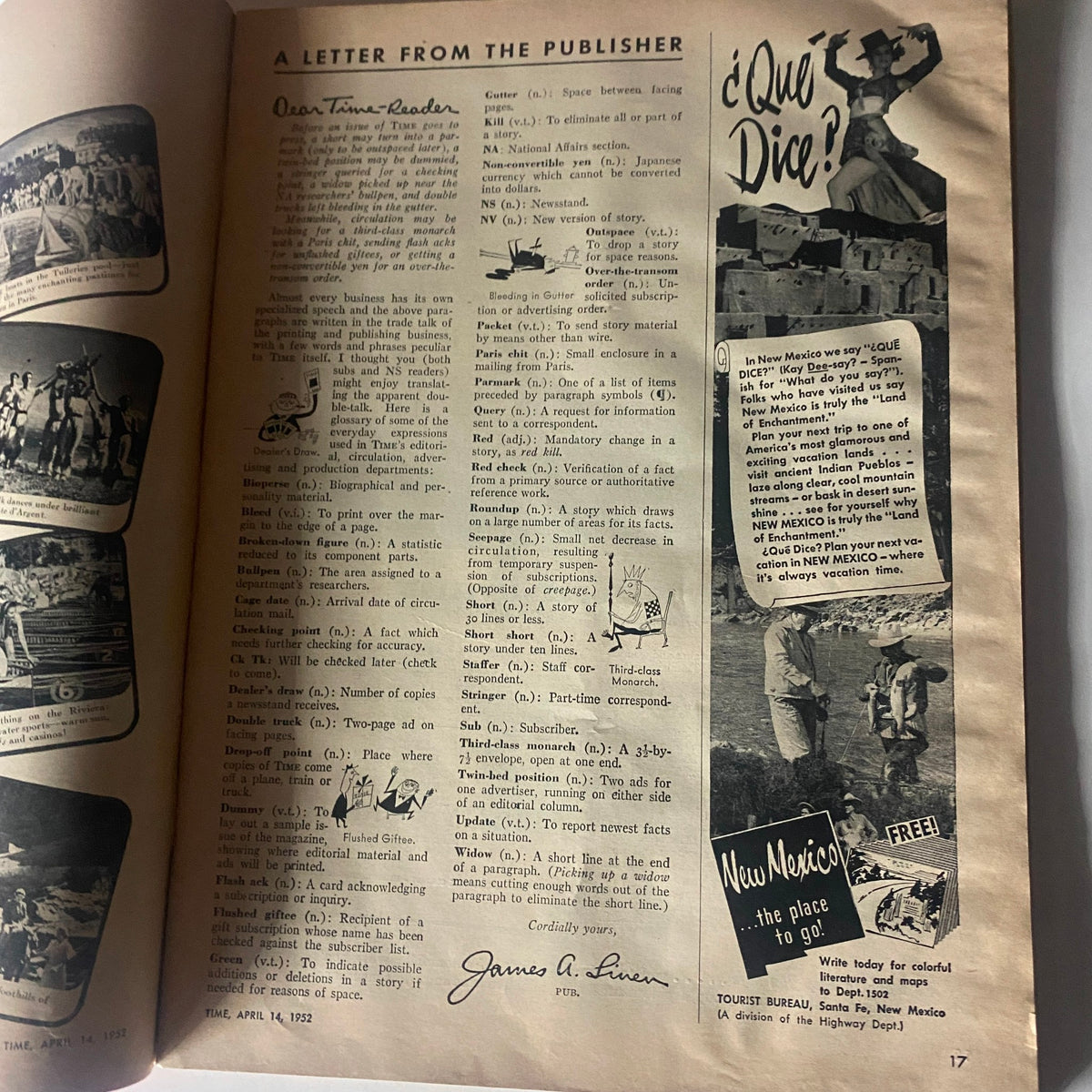
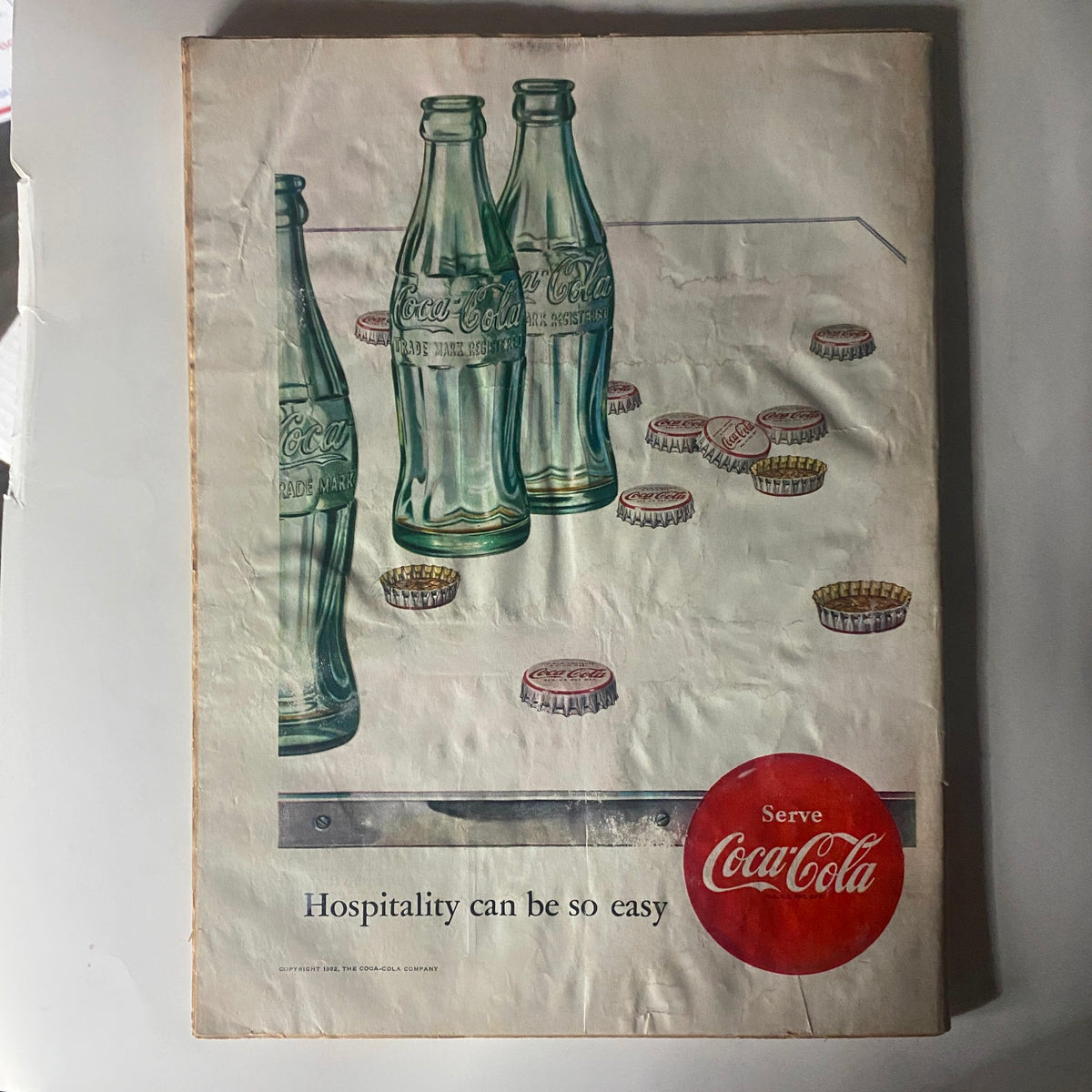
- Water damage and cover creases noted — condition disclosures that affect display value and research usability and should be assessed in listing photographs for their extent and placement relative to the cover portrait and interior pages.
- Note: Specific article titles, bylines, and interior content details beyond the confirmed cover subject have not been independently verified for this issue. The highlights above reflect confirmed cover content and well-documented historical context for Sheen, the publication, and the period.
Condition & Rarity
The noted condition describes a copy with creases on the front cover, potential marks or rips within the pages, water damage, and a plastic protective sleeve. The water damage is the most significant condition disclosure and should be evaluated carefully in the listing photographs — water damage on a weekly newsmagazine can range from minor tide-line staining at page margins to more substantial structural damage affecting cover integrity and page legibility, and the specific nature and extent matter considerably for both display and research evaluation. The cover creases add a second layer of condition consideration, and their placement relative to the Sheen portrait determines how substantially the cover's display value is affected. For collectors whose primary interest is the historical content and documentation value of this specific issue — Sheen at the exact moment of his television breakthrough — legible interior pages and a structurally complete copy represent the minimum functional requirement, with display-grade condition representing a higher bar that this issue's noted attributes may or may not meet depending on the photograph assessment.
Looking for More Issues Like This?
Fulton Sheen Time covers from the Life Is Worth Living era are a specific and actively sought configuration for collectors at the intersection of American religious history, early television history, and mid-century press collecting — and the April 1952 issue, from the program's first season, occupies the most historically charged position in that documentary record. If this issue has already been claimed, the full Time Magazine collection at OriginalMagazines.com is the best place to search for other landmark covers from the 1950s spanning religion, culture, and public life. Collectors building a broader picture of 1952 — the year American television completed its displacement of radio as the dominant entertainment medium — will find the 1952 magazines collection rich with period material worth exploring alongside it.