





Description
Collector's Note – Why This Issue Matters
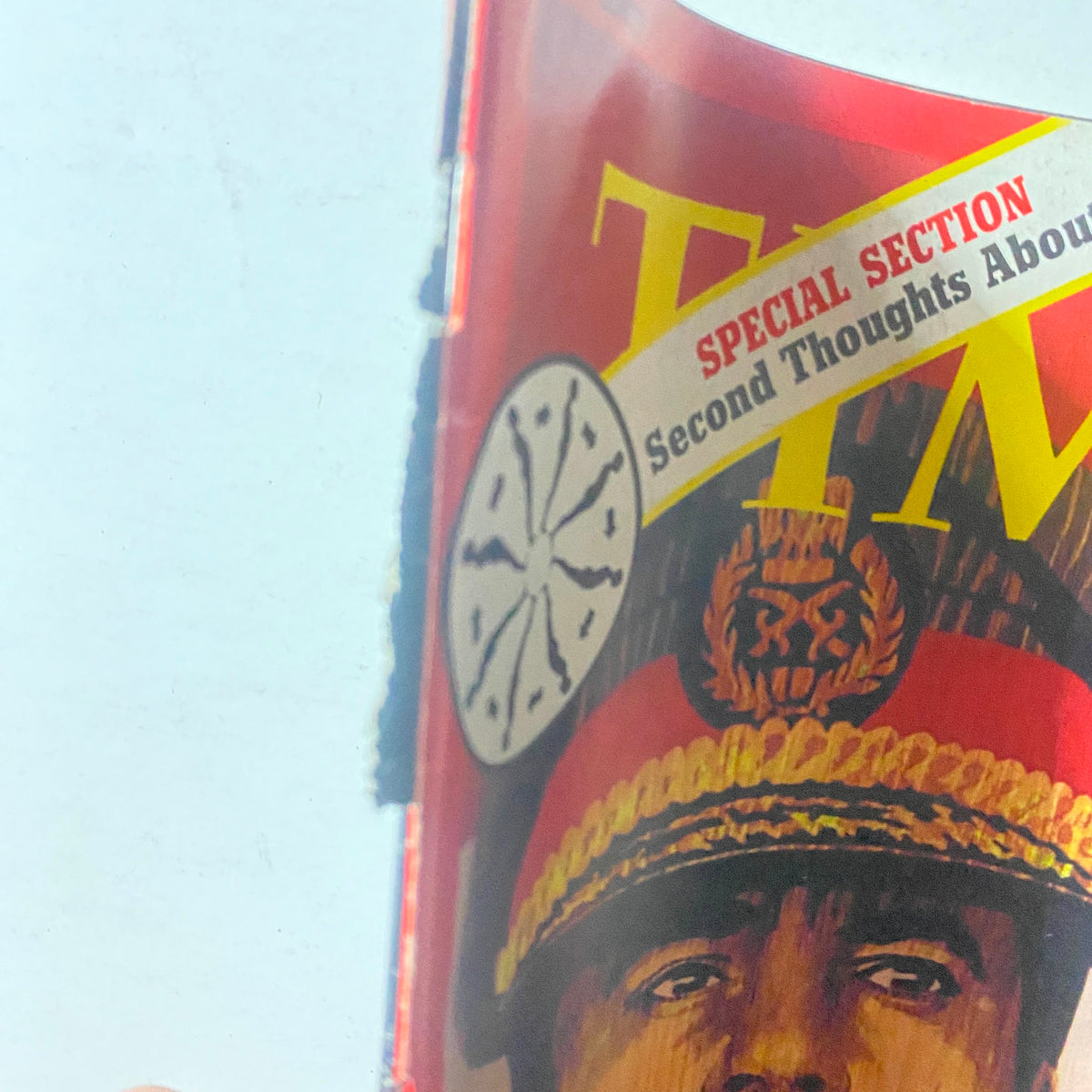
The April 2, 1973 issue of Time Magazine featuring Muammar Gaddafi on the cover is a primary document of one of the most consequential and genuinely enigmatic figures in the history of modern Middle Eastern and African politics — and its publication date places it at a specific and historically revealing moment in Gaddafi's trajectory from young revolutionary leader to internationally disruptive force. Gaddafi had come to power in Libya through a military coup in September 1969, deposing the monarchy of King Idris at the age of twenty-seven and establishing himself as one of the youngest heads of government in the world. By April 1973, he had been in power for three and a half years, and the full contours of his ideology and his governing style were becoming visible to the international community in ways that were generating both intense attention and genuine alarm. He had nationalized Libyan oil production and extracted dramatically improved terms from Western oil companies, a pattern that would contribute to the oil crisis of 1973 and that positioned him as a leading voice for Arab resource nationalism. He was pursuing his vision of pan-Arab unity with an aggressive and often destabilizing diplomatic activism — pursuing mergers with Egypt, Syria, and other Arab states that invariably failed but that kept him at the center of regional political conversation. And his support for Palestinian militant groups and his increasingly confrontational rhetoric toward Israel and the West were making him one of the most discussed and most feared leaders in the Middle East. For collectors building around vintage Time Magazine issues focused on Cold War Middle Eastern history, this April 1973 cover is a primary document of one of the era's most significant and consequential regional figures at a historically specific moment of maximum international attention and diplomatic impact.
The specific timing of April 2, 1973 gives this Time cover a historical precision that rewards careful attention from collectors who understand the full arc of what followed. The Arab oil embargo that would reshape the global economy was still seven months in the future, but the political and diplomatic conditions that would make it possible — the nationalization of oil production, the coordination among OPEC members, the hardening of Arab consensus around oil as a political weapon — were all actively developing in the spring of 1973, and Gaddafi was one of the most vocal and aggressive advocates for precisely this kind of economic confrontation with the West. The Yom Kippur War of October 1973, which would trigger the oil embargo and transform the geopolitical landscape of the Middle East, was being set in motion by the political dynamics that a serious April 1973 Time feature on Gaddafi would have been attempting to analyze and explain. A Time cover on Gaddafi in early April 1973 therefore arrives at the precise threshold of one of the twentieth century's most consequential economic and political crises, capturing a key actor in that crisis at the moment just before it fully erupted. For collectors focused on magazines from 1973, this issue documents the pre-oil-crisis Middle Eastern political landscape with the contemporaneous precision that only a primary source can provide.
Gaddafi's own biography and his subsequent four decades in power give this April 1973 Time cover a retrospective significance that compounds with the passage of time. He would remain in power until 2011, when the Arab Spring uprising and NATO military intervention ended his rule and his life in one of the most dramatic political collapses of the early twenty-first century. Across those decades, he remained one of the most internationally discussed and consistently provocative figures in world politics — supporting various armed groups, sponsoring the Lockerbie bombing in 1988 that killed 270 people, and eventually pursuing a diplomatic rehabilitation in the early 2000s before his final overthrow. A Time cover from April 1973 documents him at the very beginning of this extraordinary forty-two-year rule — a young revolutionary leader of thirty-one, unknown to most Americans until very recently, whose full historical significance was entirely in the future. That specific quality — of a cover that captures a figure at the dawn of a career that would prove historically consequential in ways its original audience could not have fully anticipated — is precisely what makes primary sources like this April 1973 Time so valuable as historical documents.
About the Publication
Time Magazine was founded in 1923 by Henry Luce and Briton Hadden as the first American weekly newsmagazine, and by April 1973 it had established itself across five decades as the most widely read and culturally influential news publication in the United States. Its editorial format organized the week's news into clearly defined sections — National Affairs, Foreign News, Business, Science, Medicine, Art, Cinema, and more — written in the publication's characteristic compact, opinionated prose style and built around the cover portrait that functioned as the magazine's primary editorial statement about who and what defined the week's significance. The choice to put a foreign political figure on the Time cover was always a deliberate and editorially serious decision, indicating that the editors judged the figure important enough to the American national interest to warrant the most prominent placement in American weekly journalism. A Gaddafi cover in April 1973 represented exactly that judgment — that this Libyan leader's actions and ideology were consequential enough to American interests, Middle Eastern stability, and global oil economics to demand the full editorial treatment that a Time cover story provided.
Key Highlights Inside
- Muammar Gaddafi cover feature — Libya's revolutionary leader in early 1973: A Time cover story on Gaddafi in April 1973 would have engaged with his ideology, his governing philosophy, his pan-Arab ambitions, his oil nationalization policies, and his increasingly confrontational posture toward the West — providing the American newsweekly readership with the kind of comprehensive analytical portrait of an unfamiliar foreign leader that Time's cover story format was specifically designed to produce.
- Pre-oil-embargo Middle Eastern political landscape: Published seven months before the Arab oil embargo that would transform the global economy, this issue would have engaged the specific political and economic developments in the Arab world that were making the coming crisis possible — Libya's oil nationalization, OPEC's growing coordination, and the specific confrontational posture of leaders like Gaddafi who were advocating the use of oil as a political weapon.
- Pan-Arab nationalism and Cold War Middle Eastern geopolitics: Gaddafi's pan-Arab ideology and his relationships with other Arab leaders — the failed merger attempts with Egypt, Syria, and others — were among the defining dynamics of early-1970s Middle Eastern politics, and a serious Time treatment of his leadership in April 1973 would have engaged these regional dynamics with the analytical depth the magazine's readership expected.
- Early Nixon administration foreign policy and Middle Eastern engagement: The Nixon administration's Middle Eastern policy in April 1973 was navigating the specific complexities of the Arab-Israeli conflict, oil economics, and Cold War competition for influence in the region, and any Time cover story on Gaddafi would have situated his leadership within that American foreign policy context and its implications for US strategic interests.
- Note: Specific interior articles, column subjects, named contributors, and individual features beyond the Gaddafi cover story have not been confirmed from available listing details. The above reflects what is verifiable from the cover subject, the publication date, and the well-documented political career of Muammar Gaddafi and the editorial practices of Time Magazine in April 1973.
Condition & Rarity
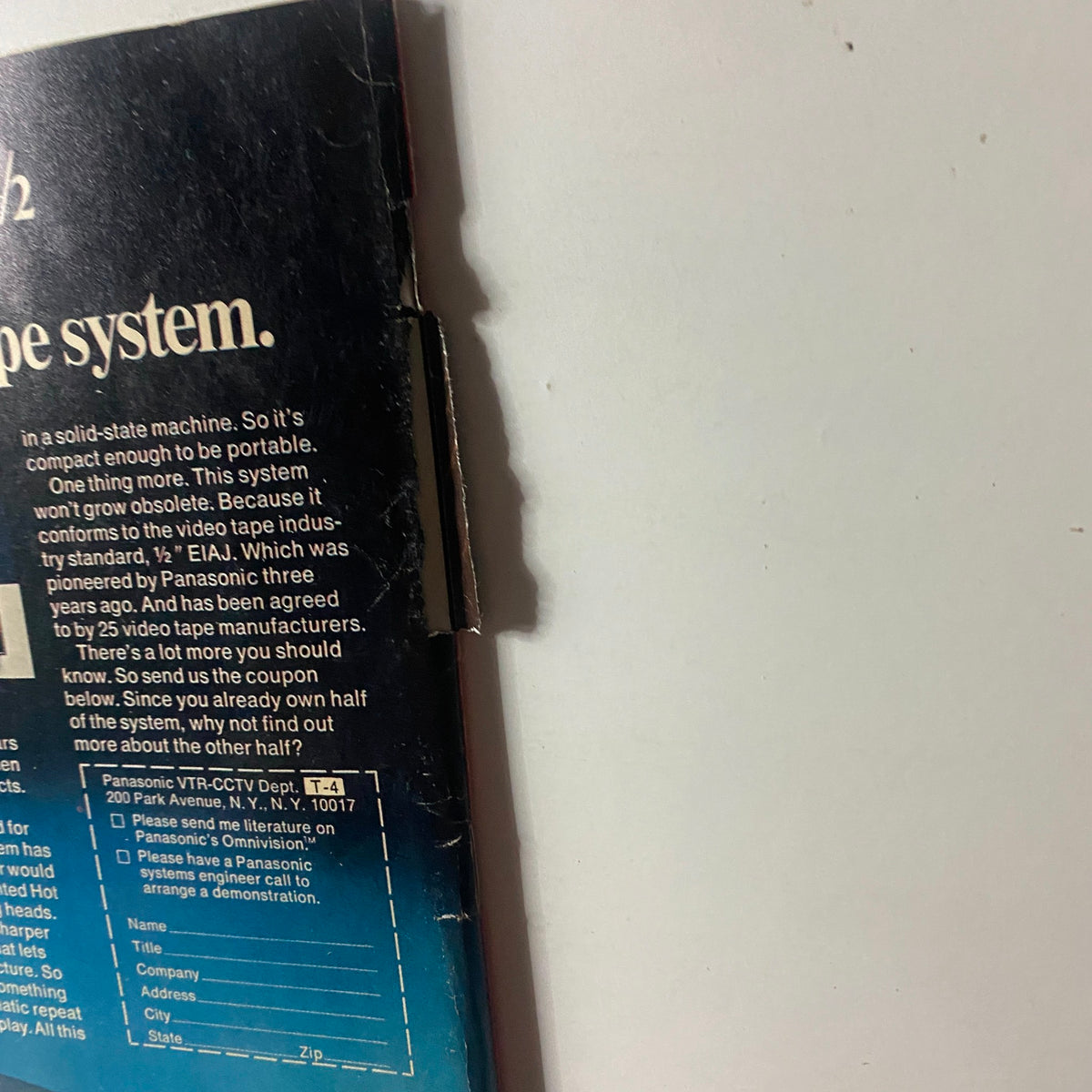
A condition profile noting some rips but overall intact and no label for a fifty-two-year-old weekly newsmagazine represents an honest assessment that collectors of early-1970s Time issues should read accurately. The rips noted in the listing are a specific condition detail that collectors should assess carefully against the provided photographs — their location relative to the Gaddafi cover portrait, their extent, and their impact on the visual presentation of the cover image are the key factors in evaluating how significantly they affect the display and collector value of the issue. An intact overall structure with all pages present is the most important positive attribute for a magazine of this age and editorial significance, as content completeness is the primary value driver for an issue whose historical interest lies in its written and photographic engagement with one of the most consequential foreign political figures of the era. The absence of a mailing label is a meaningful positive attribute, preserving whatever visual integrity the cover retains without the permanent label adhesive damage that subscriber copies frequently sustained. The protective plastic covering provides the appropriate ongoing preservation format for a publication of this age, protecting the cover surface and interior pages from further handling abrasion and environmental exposure.
Looking for More Issues Like This?
An April 1973 Time with Muammar Gaddafi on the cover — documenting one of the most consequential and internationally disruptive political figures of the late twentieth century at the dawn of his extraordinary forty-two-year rule, published at the precise threshold of the oil crisis that would transform the global economy later that same year — is a primary document whose historical significance has only grown with the passage of time. If this particular issue has already been claimed, the broader Time Magazine collection at OriginalMagazines.com spans the publication's complete run and regularly includes Cold War-era covers that document the major figures and events of the early-to-mid 1970s Middle Eastern political landscape with the editorial authority and analytical depth that made Time the definitive American newsweekly of its era. Collectors with a specific focus on the political and geopolitical atmosphere of 1973 — the year of the Yom Kippur War, the Arab oil embargo, Watergate's final crisis, and Vietnam's conclusion — will find the 1973 magazine archive an exceptionally rich source of primary material from one of the most historically consequential years of the entire postwar period.