


Description
Collector's Note – Why This Issue Matters
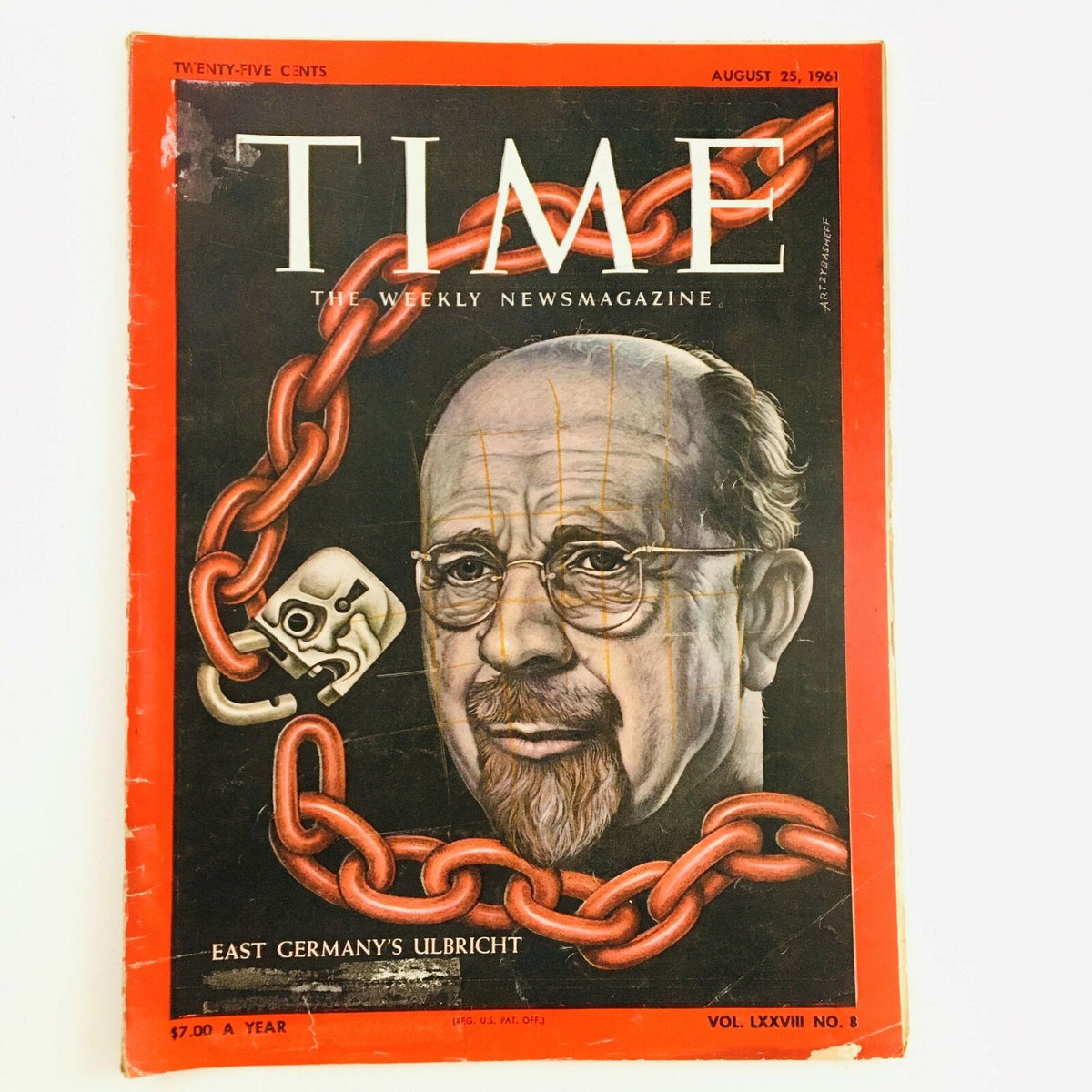
The August 25, 1961 issue of Time magazine, Vol. 78 No. 8, is anchored in one of the most tense moments of the Cold War. The listing identifies East Germany’s Walter Ulbricht as the cover subject, placing this issue directly in the political atmosphere surrounding divided Germany, Soviet-aligned Eastern Europe, and the escalating confrontation between communist and Western powers. Ulbricht was the dominant leader of East Germany during this period, and his appearance on the cover reflects how closely American news magazines were watching developments in Berlin and the German Democratic Republic. For collectors, the issue is not simply a political cover; it is a dated artifact from the exact period when the postwar division of Europe became visibly permanent. That immediacy gives the magazine historical weight beyond its standard weekly format.
The date is especially significant because August 1961 was the month the Berlin Wall began to rise, physically dividing East and West Berlin and becoming one of the defining symbols of the Cold War. A Time issue dated August 25, 1961 would have reached readers during the immediate aftermath of that dramatic geopolitical rupture. For collectors of vintage Time magazine issues, this issue is valuable as a contemporary American newsweekly response to East Germany, Walter Ulbricht, and the hardening division of Europe. It captures how the crisis was framed for American readers before decades of hindsight turned the Berlin Wall into a fixed historical symbol. That makes the issue useful for studying not only the event itself, but also the language and emphasis of Cold War journalism as events were unfolding.
As part of the wider landscape of 1961 magazines, this issue documents a year when Cold War anxieties were not abstract. They were visible in Berlin, debated in American homes, and interpreted through weekly news coverage. The listing notes coverage of Walter Ulbricht and the political climate of East Germany, making the issue a useful reference point for collectors interested in 20th-century geopolitics, Cold War media, and the way American journalism framed communist leadership during a pivotal historical moment. It also reflects the role of weekly magazines as interpreters of international affairs before television news and later digital media changed the rhythm of public understanding. In that sense, the issue preserves both a political event and the media culture through which that event was first understood.
About the Publication
Time was one of the most influential American weekly news magazines of the 20th century, known for its concise reporting style, distinctive cover portraits, and broad coverage of politics, international affairs, business, culture, science, and public figures. By 1961, it was a major interpretive news source for American readers seeking context on global events. Its editorial format typically combined cover stories, national and international news sections, short analytical articles, and highly recognizable visual presentation. For collectors, Time issues are especially useful because they preserve how major events were explained to the public as they were unfolding, before later historical interpretation softened or simplified them. The magazine’s weekly cadence also makes individual dates important, since each issue reflects a narrow window of public attention and editorial judgment. In Cold War issues especially, the covers often function as a visual index of which leaders, crises, and international tensions were considered urgent at that moment.
Key Highlights Inside
- August 25, 1961 issue of Time magazine, identified as Vol. 78 No. 8.
- Features East Germany’s Walter Ulbricht on the cover, according to the listing.
- Connected to the Cold War political climate surrounding East Germany and divided Berlin.
- Published in the same month the Berlin Wall began to be constructed, giving the issue strong historical context.
- The listing describes coverage and insights related to Walter Ulbricht and East Germany’s political situation.
- Useful for collectors studying how American news media presented communist leadership and the Berlin crisis to a general readership.
- Specific interior article titles are not confirmed beyond the stated focus on Ulbricht and East Germany.
Condition & Rarity
Collector evaluation for this issue should focus on the front cover, spine stability, page completeness, edge wear, creasing, and the address label noted in the listing. The magazine is described as being in good condition, with minor wear consistent with age, including a few creases particularly on the front cover. The address label is an important condition factor because mailing labels can interrupt the cover presentation, especially on issues centered around major political figures. The plastic protective covering noted in the listing is consistent with common preservation practice for vintage news magazines, helping reduce further handling wear while keeping the issue available for research, display, or archival comparison. With early-1960s newsweeklies, collectors often assess both visual appeal and documentary completeness, since the value of the issue depends heavily on the cover, date, and historical context remaining intact. Wear such as creasing, small marks, or label presence should be weighed against the issue’s political importance and its connection to a major Cold War moment.
Looking for More Issues Like This?
The August 25, 1961 Walter Ulbricht issue is the kind of Cold War newsweekly that can be difficult to match by exact date, cover subject, and historical timing. Collectors interested in similar political and international coverage may want to browse other Time magazine back issues for more examples of 20th-century news as it was originally reported. Related issues can help trace how American magazines followed Berlin, Soviet influence, European division, and the personalities who shaped Cold War policy.
For broader context around the same year, OriginalMagazines.com’s 1961 magazine collection offers a useful way to compare Cold War coverage, politics, culture, advertising, and public opinion across American periodicals from a highly consequential year. Studying magazines from the same year can reveal how international crises appeared alongside domestic news, consumer culture, entertainment, and the everyday concerns of American readers.