




Description
Collector's Note – Why This Issue Matters
Ernest Hemingway on the cover of Time Magazine on December 13, 1954 is one of the most precisely timed literary cover stories in the magazine's history. The Nobel Prize in Literature had been awarded to Hemingway on October 28, 1954 — just six weeks before this issue's cover date — and Time's December cover represents the American mainstream press's full engagement with what that prize meant for the most famous American writer of the twentieth century. The Nobel committee's citation had praised his "powerful, style-forming mastery of the art of narration," acknowledging both the body of work and the specific stylistic revolution Hemingway had engineered in American prose. His acceptance speech, delivered through the American ambassador in Stockholm because Hemingway was too ill to travel, was characteristically precise and moving — it addressed the solitude of the writer's work and the impossibility of fully capturing what a writer most truly feels. Time's cover story arrived at the moment when the prize had crystallized public attention on Hemingway's legacy and invited serious assessment of what his career had actually achieved. For collectors building a serious archive of Ernest Hemingway's documented presence in the press, this cover is the foundational mainstream document of the Nobel recognition — the moment American journalism formally took stock of his place in literary history.
The timing also carries personal context that gives the issue additional depth. Hemingway had survived two consecutive plane crashes in Africa in January 1954, while on safari, and his survival had briefly been reported as uncertain — early wire reports had incorrectly stated he had died. He emerged from those crashes with serious injuries including a fractured skull, cracked vertebrae, and internal damage that would affect him for the rest of his life. The Nobel Prize arrived less than a year after that near-death experience, and the combination of survival and recognition gave the autumn of 1954 a particular emotional weight in Hemingway's biography. He was fifty-five years old, physically diminished, and being honored with the highest recognition in world literature. Time's December cover engages with that convergence — a man whose adventurous public persona had always been inseparable from his literary identity, now forced to reckon with both mortality and legacy simultaneously. The Time magazine archive from the mid-1950s contains several landmark literary covers, and this one stands above most for the density of biographical and cultural significance it captures.
Hemingway's subsequent years were marked by declining health and the creative difficulties that accompany it, and he died by suicide in July 1961. The December 1954 Time cover is therefore one of the last major press documents of Hemingway at a moment of genuine public triumph — the Nobel recognition arriving before the full weight of his physical decline had become apparent to the world. For collectors of magazines from 1954, this issue sits alongside the Claire McCardell Time cover from May of the same year as one of the two most historically significant cultural covers the magazine produced that year.
About the Publication
Time was founded in 1923 by Henry Luce and Briton Hadden as the first American weekly news magazine. By 1954 it was one of the most widely read publications in the United States, reaching millions of Americans weekly with its signature format of opinionated news summaries organized across departments — National, Foreign, Business, Science, Arts — anchored each week by a cover story on the figure or event the editors judged most significant. A Time cover in the mid-1950s carried considerable cultural authority, and the magazine's Arts coverage in this period engaged seriously with American literature at a level of depth and intelligence that distinguished it from more superficial competitors. Putting a novelist on the cover was not routine, and doing so in the weeks following a Nobel Prize reflected the magazine's genuine investment in the cultural significance of the honor.
Key Highlights Inside
- Ernest Hemingway Nobel Prize cover feature — The cover story engages with Hemingway's Nobel Prize in Literature, awarded October 28, 1954, examining both the body of work the Nobel committee recognized and the broader question of what his stylistic innovations had meant for American and world literature.
- Post-Africa plane crash context — The issue appears less than a year after Hemingway's near-fatal plane crashes in January 1954, giving the Nobel recognition a biographical dimension — a man who had survived serious physical trauma being honored with the world's highest literary distinction — that Time's cover story would have engaged with directly.
- Mid-century American literary culture documentation — As a contemporaneous account of Hemingway's Nobel recognition, the issue captures his standing in American literary life at a specific and unrepeatable moment, before the health decline of his final years and before the retrospective reassessments that followed his 1961 death.
- Nobel acceptance speech context — Hemingway's inability to travel to Stockholm for the prize ceremony — a consequence of his ongoing injuries from the Africa crashes — and the acceptance speech he delivered through the American ambassador are part of the biographical record this issue engages with.
Condition & Rarity
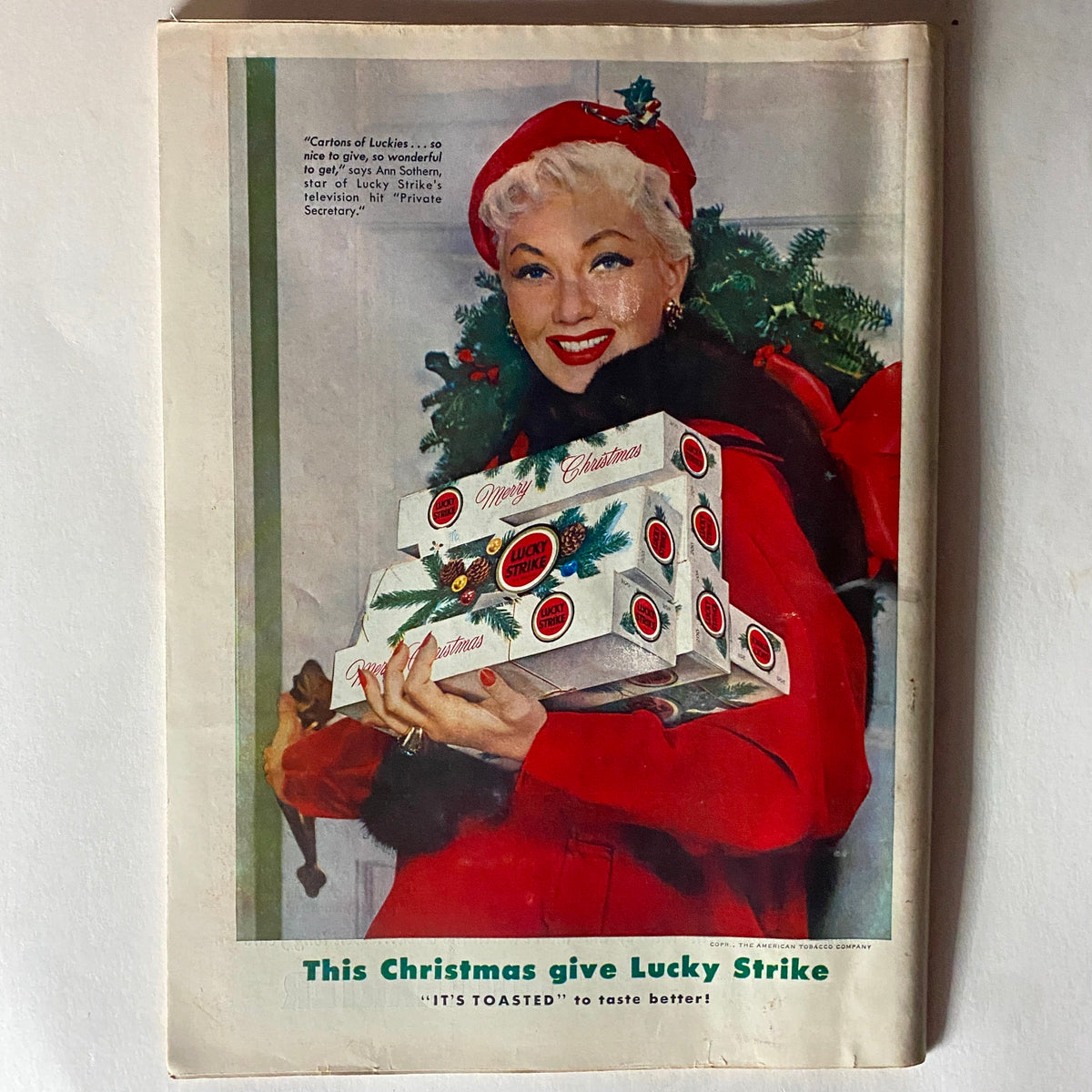
Time issues from 1954 are now seventy years old, and the condition factors relevant to collector evaluation reflect that age directly. Good vintage condition with a crease on the back cover indicates that the front cover and interior pages are intact and display-viable, with the crease confined to the back — a meaningful distinction, since the front cover portrait of Hemingway is the primary display element and its integrity is the most important condition factor for collector purposes. The back cover crease is a standard vintage defect that does not affect the issue's readability or the visual quality of its primary face. The listing does not specify label presence or absence, which collectors should confirm through available photographs; a label-free front cover is consistently preferred for issues of this subject matter. Protective plastic covering indicates deliberate preservation storage, which at this age typically correlates with better overall page stability than unprotected storage produces. For any surviving copy, interior page tanning and brittleness are expected findings at seventy years and should be assessed carefully before handling.
Looking for More Issues Like This?
Ernest Hemingway press material from the Nobel Prize period — the weeks and months surrounding the October 1954 award — is among the most purposefully collected in American literary memorabilia, and this Time cover is the single most prominent mainstream document of that recognition. The Ernest Hemingway magazine collection at OriginalMagazines.com is the natural place to continue, gathering his most significant press appearances across publications and across the full arc of his public career. The broader Time magazine archive covers the magazine's full run of literary and cultural covers, and the 1954 magazine collection provides broader context for one of the most culturally rich years of the postwar decade.