


Description
Collector's Note – Why This Issue Matters
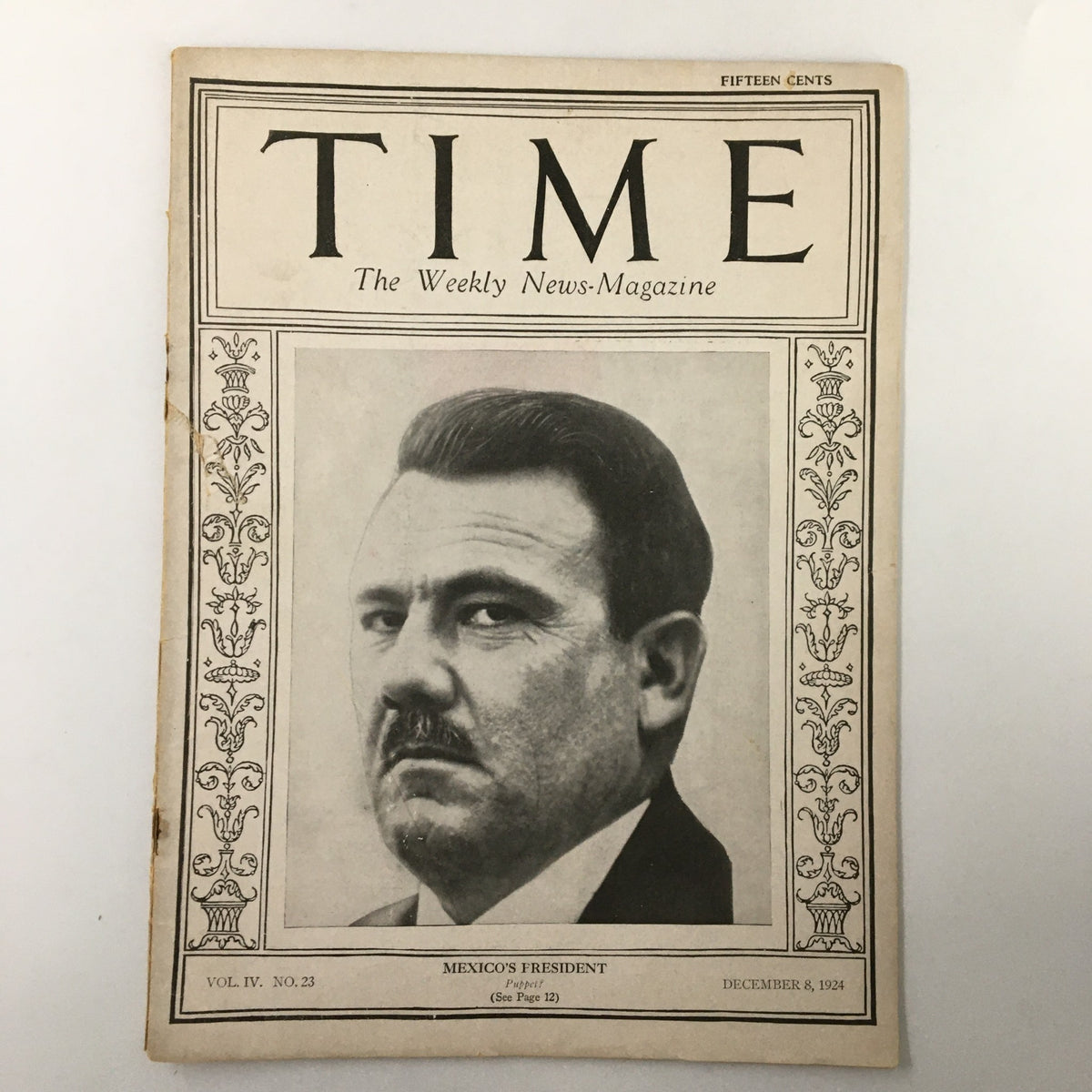
Time Magazine Vol. 4, No. 23, dated December 8, 1924, featuring Plutarco Elías Calles, is a document of unusual historical depth. Time had been publishing for less than two years when this issue appeared — the magazine launched in March 1923 — and its decision to put a Mexican president-elect on the cover in its fourth volume reflects the publication's early ambition to cover world affairs with the same seriousness it brought to domestic news. Calles had won the Mexican presidential election in July 1924 and was preparing to take office on December 1, 1924 — just one week before this issue's cover date. The timing is precise: this is a cover published at the exact moment of Calles's inauguration, documenting the transfer of power in a country whose relationship with the United States was complicated, contested, and consequential. For collectors building a serious early-run vintage Time Magazine archive, issues from 1924 represent the publication in its founding years, before it had established the visual and editorial conventions that would define it for decades.
Calles himself is a figure of enormous importance in Mexican history, and Time's coverage of his ascent reflects an American press that was paying close attention to its southern neighbor in the mid-1920s. The Mexican Revolution had formally ended with the Constitution of 1917, but the country remained in a volatile period of institutional construction. Calles would go on to found the Partido Nacional Revolucionario in 1929 — the precursor to the PRI, which would govern Mexico for most of the twentieth century — and his presidency from 1924 to 1928 was marked by the Cristero War, a violent conflict between the federal government and Catholic rebels that drew international attention. The period known as the Maximato, during which Calles dominated Mexican politics even after leaving the presidency, makes him one of the most significant political figures in twentieth-century Latin American history. A Time cover issued at the moment of his inauguration is a primary source document for that story. Collectors focused on American magazines from 1924 will find this issue among the most historically specific and internationally significant covers from that year of the magazine's early run.
About the Publication
Time Magazine was founded in March 1923 by Henry Luce and Briton Hadden as the first American weekly newsmagazine, designed to synthesize the week's events into concise, opinionated coverage for a general educated readership. In its first years of publication — of which Vol. 4, No. 23 is a part — the magazine was still establishing its editorial identity and visual format, operating with a smaller staff and more modest production than the institution it would become. Its early covers featured black-and-white portrait illustrations rather than the full-color photography that would come to define the magazine later, and its international coverage reflected a genuine editorial commitment to world affairs at a moment when American isolationism was a powerful force in domestic politics. Issues from 1923 and 1924 are among the rarest in Time's entire publishing history, predating the mass-circulation era by several years.
Key Highlights Inside
- Cover feature on Plutarco Elías Calles, published December 8, 1924 — one week after his inauguration as President of Mexico on December 1, making this a contemporaneous document of one of the most significant political transitions in post-Revolutionary Mexican history.
- Vol. 4, No. 23 places this issue in Time's second full year of publication, during the magazine's founding era when its editorial voice and visual format were still being established.
- Calles's presidency initiated the Maximato period of Mexican politics and his later founding of the PRI's precursor party — events that would define Mexican political life for most of the twentieth century, all of which were ahead of him at the time this cover appeared.
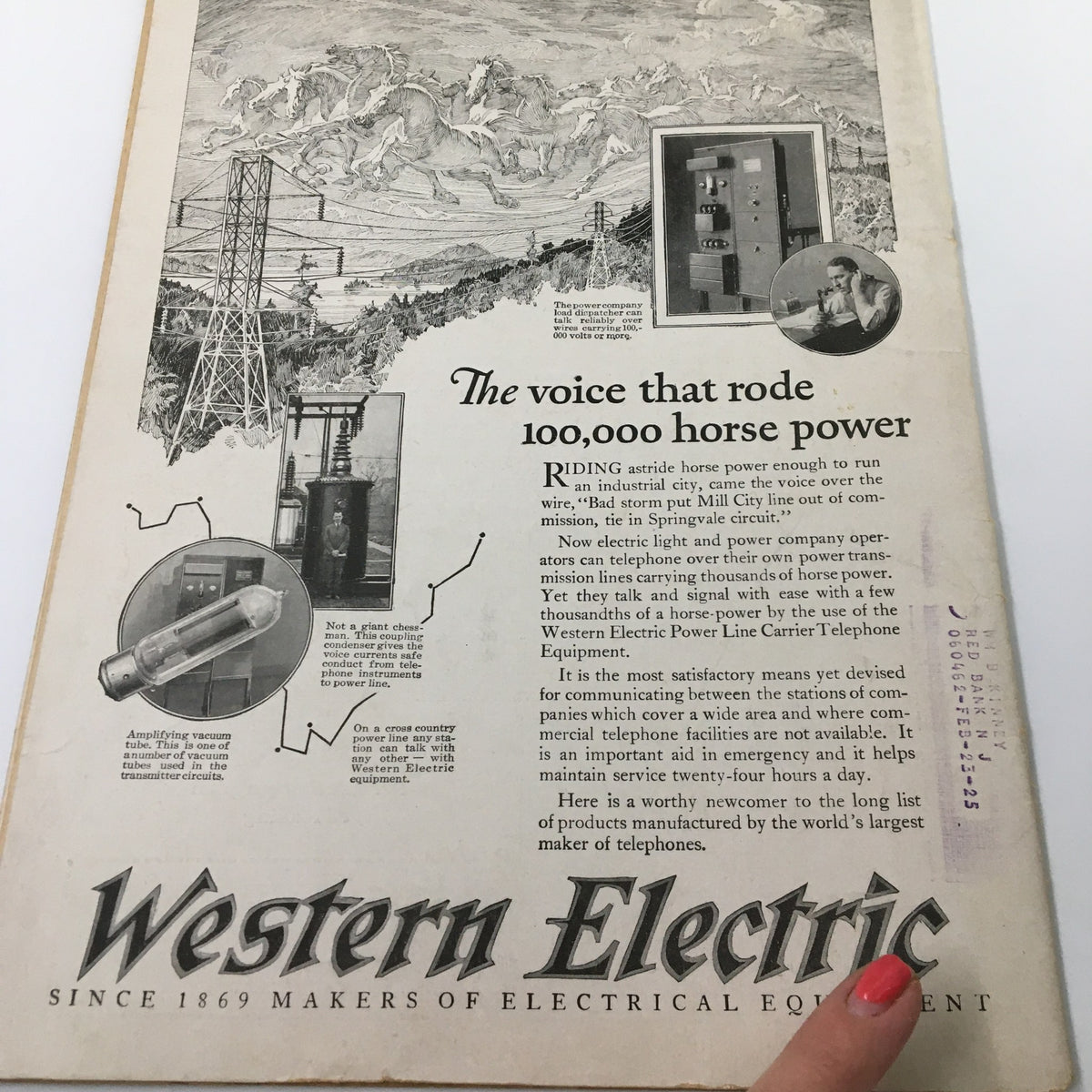
- Label noted on the back cover rather than the front — a meaningful distinction that preserves the cover portrait without defacement, the preferred state for display-focused collectors.
- Note: Specific interior articles, additional international and domestic news features, and supporting content beyond the Calles cover story have not been independently confirmed from the listing and are not detailed here.
Condition & Rarity
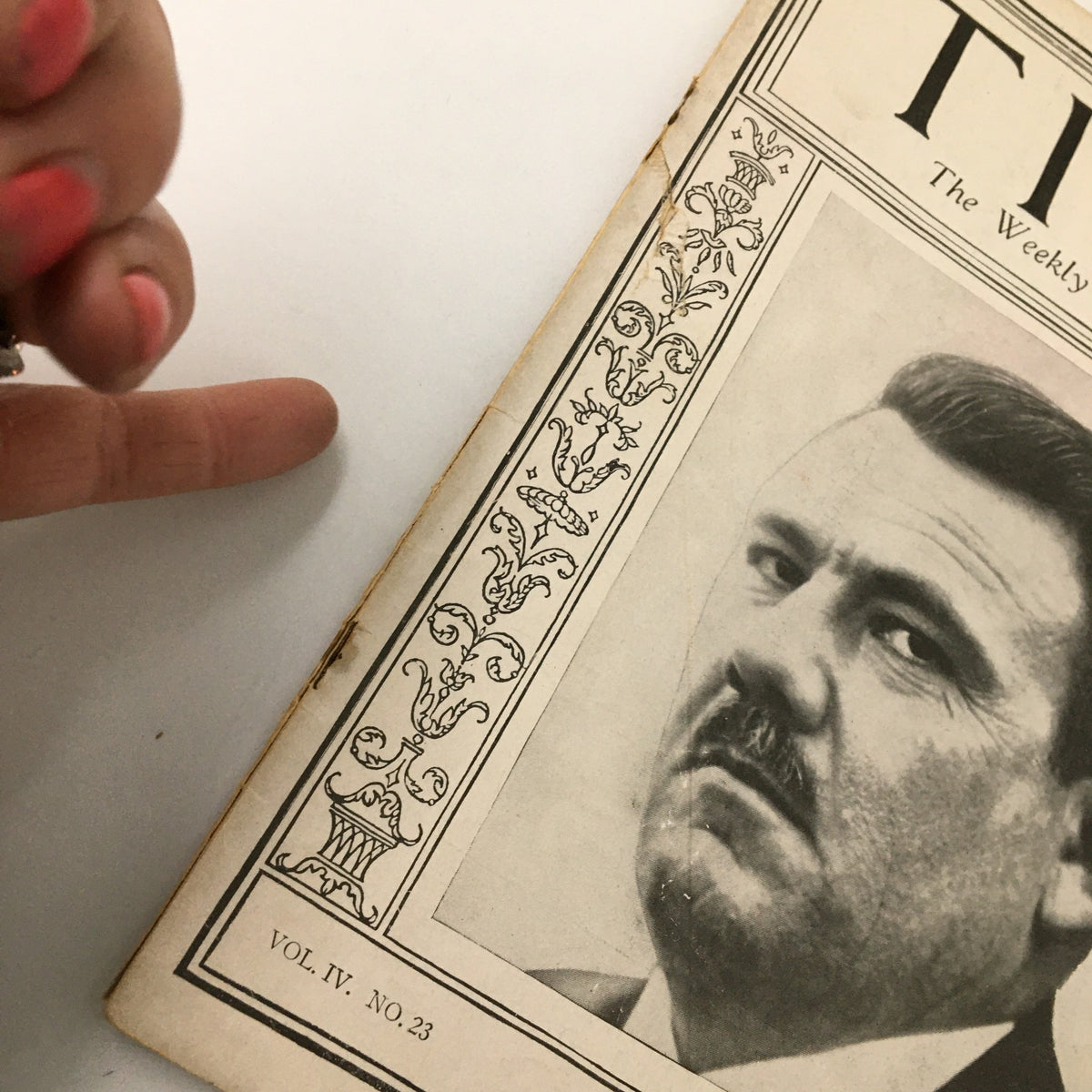
This issue presents in Good condition, with minor wear throughout, marks on pages, and some wear at the binding — entirely consistent with a magazine now approaching its centenary. The label is noted as appearing on the back cover rather than the front, which is a meaningful preservation detail: the cover portrait survives without the defacement of a front-label application, making it more desirable for display than a front-labeled copy of the same issue. A protective plastic sleeve has been applied, appropriate for a publication of this age. At one hundred years old, any surviving copy of a 1924 Time should be assessed carefully for paper brittleness, tanning, and spine integrity — the paper stock of early 1920s periodicals is more susceptible to deterioration than the coated stock used in later decades. Issues from Time's 1923 and 1924 volumes are among the scarcest in the magazine's entire run, produced in circulation numbers that were a fraction of what the magazine would achieve in subsequent decades, and the natural attrition of a century makes any presentable surviving copy a genuinely uncommon artifact.
Looking for More Issues Like This?
Early Time issues from the 1920s occupy a distinct and specialized corner of the vintage magazine market, and finding specific covers from this founding era in presentable condition requires both patience and knowledge of where to look. The broader Time Magazine archive at OriginalMagazines.com spans the full publication history from the founding years forward, making it the most comprehensive place to explore what's available from the early run. Collectors interested in the political and cultural history of the 1920s will also find the 1924 magazine collection worth browsing for a wider view of what American print media looked like in the year this remarkable early issue appeared.