



Description
Collector's Note – Why This Issue Matters
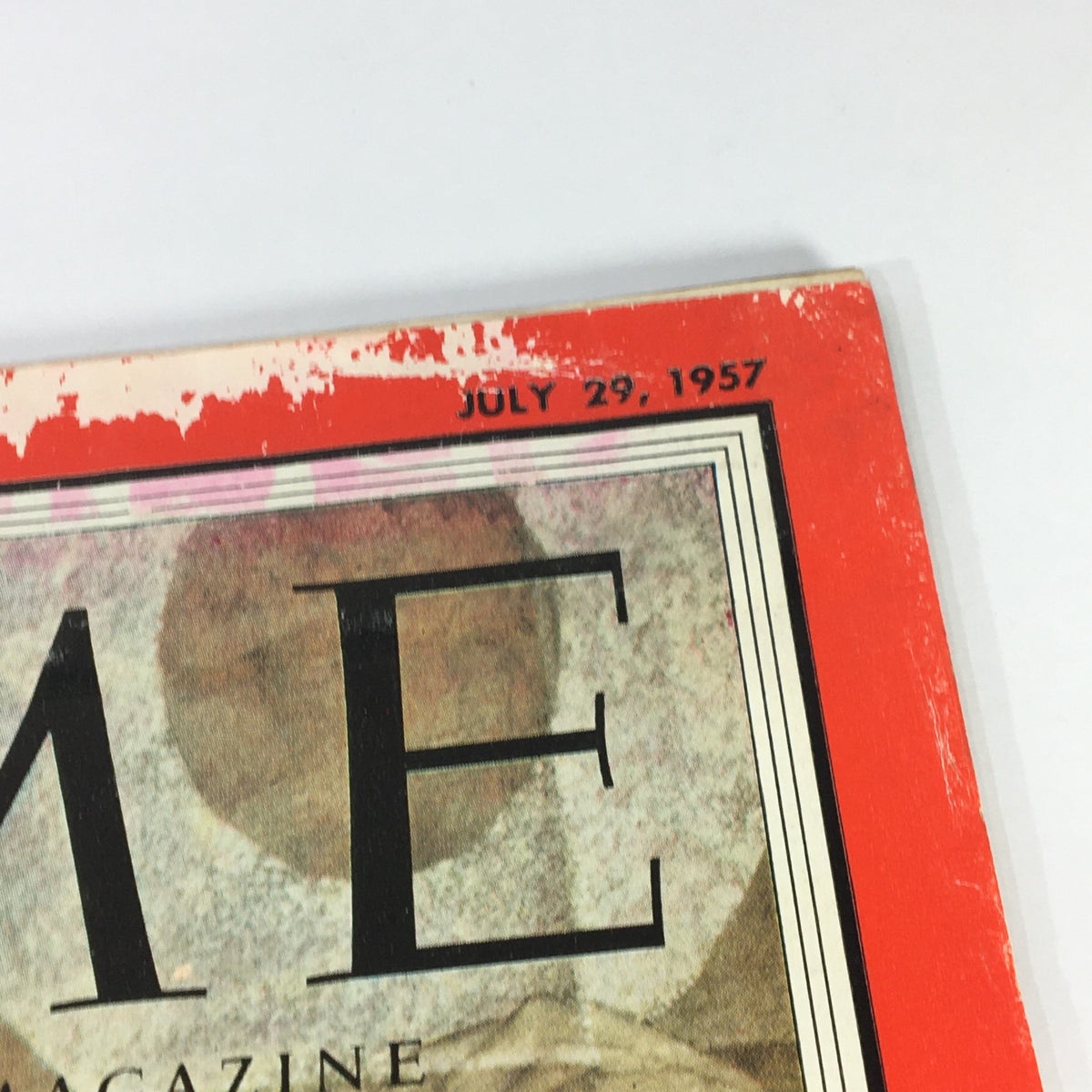
The July 29, 1957 issue of Time magazine featuring Kim Novak on the cover is one of the most visually striking and culturally significant Hollywood covers the magazine produced during the 1950s — and the timing of its publication places it at a precise and historically interesting moment in Novak's career. By the summer of 1957, Kim Novak had emerged as one of the most bankable and discussed actresses in Hollywood, a Columbia Pictures contract player whom studio head Harry Cohn had been developing as a replacement for the difficult and independent Rita Hayworth. She had delivered a series of commercially successful films in the mid-1950s — Picnic (1955), The Eddy Duchin Story (1956), Pal Joey (1957) — and was in the process of becoming the rare actress whose public persona was as complex and discussed as her film performances. The Time cover in July 1957 arrived just as her cultural profile was reaching its pre-Vertigo peak — Alfred Hitchcock's Vertigo, which would give her the most celebrated performance of her career, was still almost a year away from release. A Time cover at this exact moment captures Novak in the window between studio stardom and the kind of serious critical recognition that Vertigo would eventually bring — a document of a specific phase of a career that would prove to have multiple distinct chapters. For collectors building a comprehensive archive of Kim Novak's appearances in major American print media, this July 1957 Time cover is the single most significant newsstand document from her career's most commercially dominant period.
The cultural significance of a Time magazine cover in 1957 extended well beyond simple celebrity recognition. Appearing on the cover of Time was, throughout the postwar decades, widely understood as a marker of having achieved a specific threshold of national importance — the magazine's cover selection process was taken seriously as a cultural endorsement, and the editors' decision to place Kim Novak on the July 29 cover was a statement that she had moved beyond being merely a successful actress to becoming a genuine cultural figure whose significance extended into the broader American conversation about beauty, femininity, and the nature of Hollywood stardom in the television age. The late 1950s were a period of genuine anxiety for the Hollywood studio system — television was drawing audiences away from movie theaters, the old studio contract system was breaking down, and the question of what would sustain and define film stardom in the new media environment was actively debated. Novak's particular kind of stardom — visually arresting, emotionally ambiguous, somehow both accessible and mysterious — was itself part of that conversation, and a Time cover story in July 1957 would have engaged with those larger questions about Hollywood and American popular culture through the specific lens of her career and persona. Collectors focused on the full arc of Time's coverage of Hollywood and American cinema across the 1950s will find this issue a particularly rich document of that decade's ongoing negotiation between the old studio system and the new media landscape.
The broader cultural moment of July 1957 adds further texture to this issue's historical interest. The late 1950s were the height of the Cold War's most anxious domestic phase — Sputnik was still three months away, but the cultural mood of the period was already characterized by the particular combination of surface prosperity, suburban expansion, and underlying social tension that defined the Eisenhower era's final years. Hollywood stardom in this context was not simply entertainment but a cultural mechanism for processing and projecting American ideals about beauty, femininity, ambition, and identity — and Kim Novak's particular screen presence, with its quality of vulnerability and latent mystery, spoke to something in the cultural atmosphere of 1957 that a Time cover story was uniquely positioned to document and analyze for a national readership. The full magazine landscape of 1957 captures the late Eisenhower era at a specific and historically rich moment, and this Time cover is one of its most visually distinctive and culturally resonant artifacts.
About the Publication
Time magazine was founded in 1923 by Henry Luce and Briton Hadden as the first American weekly newsmagazine, and by 1957 had been the most widely read and culturally influential newsweekly in the United States for more than three decades. Its editorial format organized the week's major news into consistent departmental sections — national affairs, international news, business, science, arts, and society — anchored by a cover story chosen with deliberate attention to both news significance and cultural resonance. The cover selection process at Time was itself a cultural institution — appearing on the cover was widely understood as a marker of having reached a threshold of national importance, and the magazine's art department worked with portrait artists and photographers to create distinctive, often painted cover images that were immediately recognizable on newsstands across the country. By July 1957, Time was publishing to a weekly readership of millions and was read across the full spectrum of educated American life — making its selection of Kim Novak for a summer 1957 cover a meaningful and deliberate statement about her cultural significance that extended well beyond the entertainment press.
Key Highlights Inside
- Cover feature on Kim Novak — published in July 1957 at the peak of her Columbia Pictures contract stardom, approximately one year before the release of Alfred Hitchcock's Vertigo, documenting her cultural standing at the specific moment when she had achieved maximum commercial visibility in Hollywood while the most critically significant work of her career still lay ahead.
- Analysis of Novak's screen persona and Hollywood stardom consistent with Time's established approach to celebrity cover stories — examining the subject not merely as an entertainment personality but as a cultural figure whose significance could illuminate broader questions about American popular culture, the studio system, and the nature of film stardom in the television age.
- Entertainment industry context covering the state of Hollywood in mid-1957 — a period of genuine institutional transition as the old studio contract system was giving way to independent production, television was reshaping American leisure habits, and the question of what would sustain film stardom in the new media environment was being actively negotiated by studios, audiences, and the press simultaneously.
- News and cultural coverage across Time's standard weekly departments documenting the American and international landscape of late July 1957 — the final years of the Eisenhower presidency, the ongoing Cold War, and the particular combination of postwar prosperity and underlying social tension that characterized the period's cultural atmosphere.
- Note: Specific individual article titles, additional features, and interior content beyond the Kim Novak cover story have not been confirmed for this issue. The above reflects only what is verifiable from the listing, the cover, and the well-documented historical context of this publication date.
Condition & Rarity
This issue is identified as a newsstand copy with no mailing label — confirming that the cover is presented without the adhesive damage or paper obstruction that subscriber labels frequently caused on American newsweeklies of this era, and that the full cover portrait of Kim Novak is visible and unobstructed, which for a cover of this visual quality and historical significance is the most desirable collecting state. Minor edge wear, possible small rips or marks, and minor marks throughout are noted in the listing and are entirely consistent with honest survival across nearly seventy years — characteristics entirely expected for a weekly newsmagazine from 1957 printed on paper stock designed for mass newsstand distribution rather than archival preservation. The plastic protective covering present on surviving copies in this condition provides ongoing preservation support against the environmental factors that affect paper quality in publications of this age. When evaluating any surviving copy of this July 29, 1957 issue, collectors should examine the cover portrait condition and color retention — Time covers of this era were often produced as painted or illustrated portraits rather than photographic images, and the condition of the cover art is the primary factor in the issue's visual collector appeal — the spine fold and staple integrity, the overall tanning levels of the interior page block, and any brittleness in the pages that would indicate advanced paper degradation requiring careful handling.
Looking for More Issues Like This?
Late-1950s Time Hollywood covers in newsstand condition are among the more satisfying finds in the postwar American newsweekly collecting market — the combination of the magazine's distinctive cover art tradition, the cultural weight of a Time cover appearance in this period, and the specific historical significance of Kim Novak's pre-Vertigo career moment makes this July 1957 issue a document that film history collectors, Time cover collectors, and 1950s Hollywood enthusiasts all pursue for overlapping reasons. The full Kim Novak magazine archive at OriginalMagazines.com is the most focused place to explore her other significant print appearances across the peak years of her career. The complete Time magazine collection spans the full range of the publication's cover history and is essential browsing for anyone building a serious run of Hollywood and entertainment covers from the golden age of the studio system. For collectors working through the broader American magazine landscape of the late Eisenhower era, the complete 1957 magazine collection covers the full range of titles from a year that sits at the cultural apex of postwar American prosperity.