


Description
Collector's Note – Why This Issue Matters
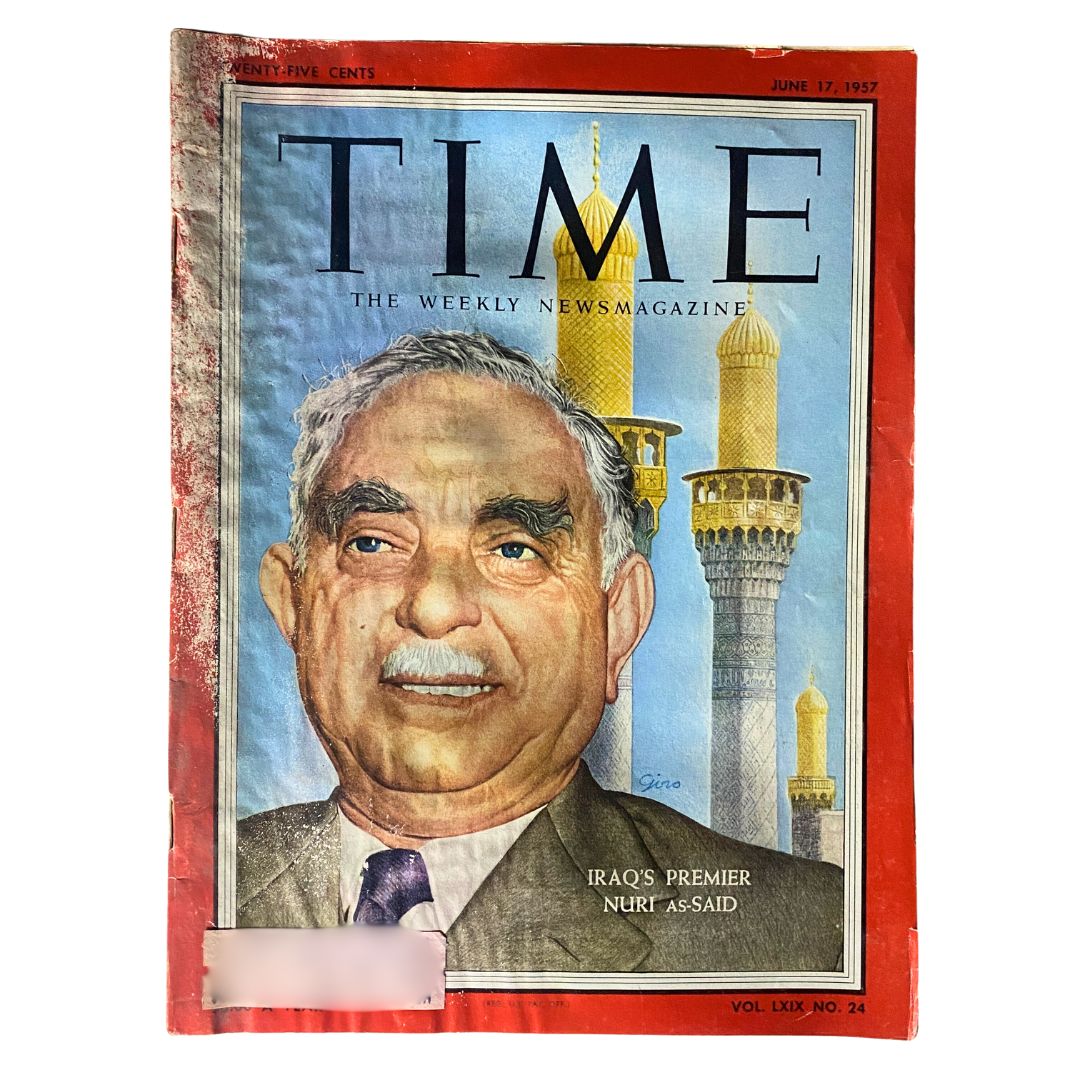
This June 17, 1957 issue of Time Magazine features Nuri as-Said on its cover, under the title "The Pasha," capturing Iraq's dominant political strongman at a moment of genuine, if ultimately fragile, apparent stability, just over a year before the violent 1958 coup that would topple the Iraqi monarchy and claim his life. As Time's own cover story described him, Nuri as-Said had already served numerous terms as Prime Minister of Iraq by this point, making him one of the most enduring and powerful political figures in the country's history since it gained nominal independence from British administration in the early 1930s. The magazine's profile traced his remarkable personal history in vivid detail, from his birth in Ottoman-era Baghdad in 1888 through a grueling multi-week caravan journey across bandit-infested desert to attend military academy in Constantinople, and eventually to his role fighting alongside T. E. Lawrence during the Arab Revolt, riding as part of the crew of an armored Rolls-Royce during operations against Ottoman forces. That personal history, connecting Nuri directly to some of the most romanticized episodes of early 20th-century Middle Eastern history, gave Time's American readership a genuinely rich biographical portrait of a leader whose importance to Western Cold War strategy in the region was rapidly growing but whose personal story remained largely unfamiliar to most Americans.
The issue's coverage extended beyond Nuri's personal biography into a detailed portrait of Baghdad's rapid modernization under his government's ambitious development program, describing a capital city whose population had doubled to roughly one million within just five years, its streets increasingly jammed with American automobiles as new infrastructure projects, including fresh bridges spanning the Tigris River, struggled to keep pace with the city's breakneck growth. That development program had been funded substantially through a renegotiated fifty-fifty profit-sharing agreement with the Iraq Petroleum Company, reflecting the increasingly central role oil revenue was beginning to play in reshaping the Iraqi economy and urban landscape during this period. Nuri's government had also formed the Baghdad Pact in 1955, a Western-aligned regional security arrangement that positioned Iraq firmly within the American and British Cold War strategic framework in the Middle East, a positioning that made him a figure of considerable interest and importance to American foreign policy readers of Time at this exact moment. This issue's substantial attention to both Nuri's personal history and Iraq's rapid physical transformation under his leadership offers a genuinely comprehensive contemporary portrait of a nation and a leader at what appeared, from the outside, to be a moment of confident, Western-aligned progress.
That appearance of stability would prove tragically short-lived. Nuri as-Said's pro-Western, staunchly anti-communist and anti-Nasserist political positioning, while central to his standing with American and British allies, had already begun generating serious domestic opposition by the time this issue was published, with an emerging coalition of nationalist, communist, and Ba'athist opposition groups coordinating against his government throughout 1957. Barely thirteen months after this cover story's publication, the July 1958 Iraqi coup would violently overthrow the Hashemite monarchy Nuri had served for decades, and Nuri himself would be captured while attempting to flee the country and killed by the revolutionaries. That devastatingly abrupt end, arriving so soon after this issue's confident portrait of Baghdad's development and Nuri's seemingly secure political position, gives this cover feature a genuinely poignant historical resonance in retrospect, capturing a leader and a political order at what turned out to be very near the height of their apparent stability, just before a violent and complete collapse that would reshape Iraqi politics for decades to come.
For collectors of Middle Eastern history and Cold War-era foreign policy specifically, this issue offers a richly documented artifact capturing Nuri as-Said and Baghdad's rapid mid-1950s development at a moment of apparent, if ultimately illusory, stability. Its publication just over a year before the monarchy's violent collapse gives it a genuinely significant retrospective weight for anyone studying the Hashemite Iraqi state's final years. This issue stands as a substantive primary source for understanding how American readers were introduced to one of the pivotal, and ultimately tragic, political figures of mid-century Iraqi and Middle Eastern history.
About the Publication
Time Magazine was founded in 1923 by Henry Luce and Briton Hadden and grew into one of the most influential news and current affairs publications in American history, known for its weekly coverage of politics, business, culture, and international affairs. The magazine's cover feature became one of its most recognizable editorial conventions, regularly spotlighting major international figures and developments, often accompanied by substantial reported features examining a subject's personal history alongside their broader political and strategic significance. Time's coverage of Middle Eastern leaders during the 1950s reflected the region's growing importance to American Cold War strategy, particularly as oil wealth and Western-aligned security arrangements like the Baghdad Pact increasingly shaped the geopolitical landscape. The magazine's profiles frequently combined rich biographical detail with substantive analysis of a leader's domestic policies and international positioning, an approach this issue's Nuri as-Said feature exemplifies directly. Time's audience was broad and national, reaching a readership across the country interested in comprehensive, digestible coverage of international developments and the leaders shaping American foreign policy interests abroad. Advertising within the magazine during this period reflected products aimed at a broad, educated, and professionally engaged national readership. Time's willingness to devote substantial cover attention to a leader largely unfamiliar to most American readers reflected the magazine's broad editorial ambition to introduce significant international figures well before their ultimate historical fate had become apparent. This issue exemplifies that editorial approach clearly, capturing a leader and a political order at a moment that would soon prove to be their final apparent peak.
Key Highlights Inside
- A cover feature titled "The Pasha," profiling Iraqi Prime Minister Nuri as-Said. The piece traces his personal history from Ottoman-era Baghdad through military academy in Constantinople and service during the Arab Revolt. This issue captures him at what appeared to be the height of his political stability, just over a year before his violent death in the 1958 Iraqi coup.
- Detailed coverage of Baghdad's rapid modernization under Nuri's development program, including a doubling of the city's population within five years. New infrastructure projects, including bridges over the Tigris, struggled to keep pace with the capital's growth. This context reflects the broader economic transformation underway in Iraq during this period.
- Context on Nuri's role in the 1955 Baghdad Pact, a Western-aligned regional security arrangement. This positioning made Iraq a significant strategic partner for American and British Cold War policy in the Middle East. It situates this issue within the broader geopolitical stakes of the region during this period.
- Biographical detail connecting Nuri to figures including T. E. Lawrence during his service in the Arab Revolt. This personal history offered American readers a vivid and unfamiliar portrait of a leader central to contemporary Middle Eastern politics. It remains a notable feature of this issue's substantial cover profile.
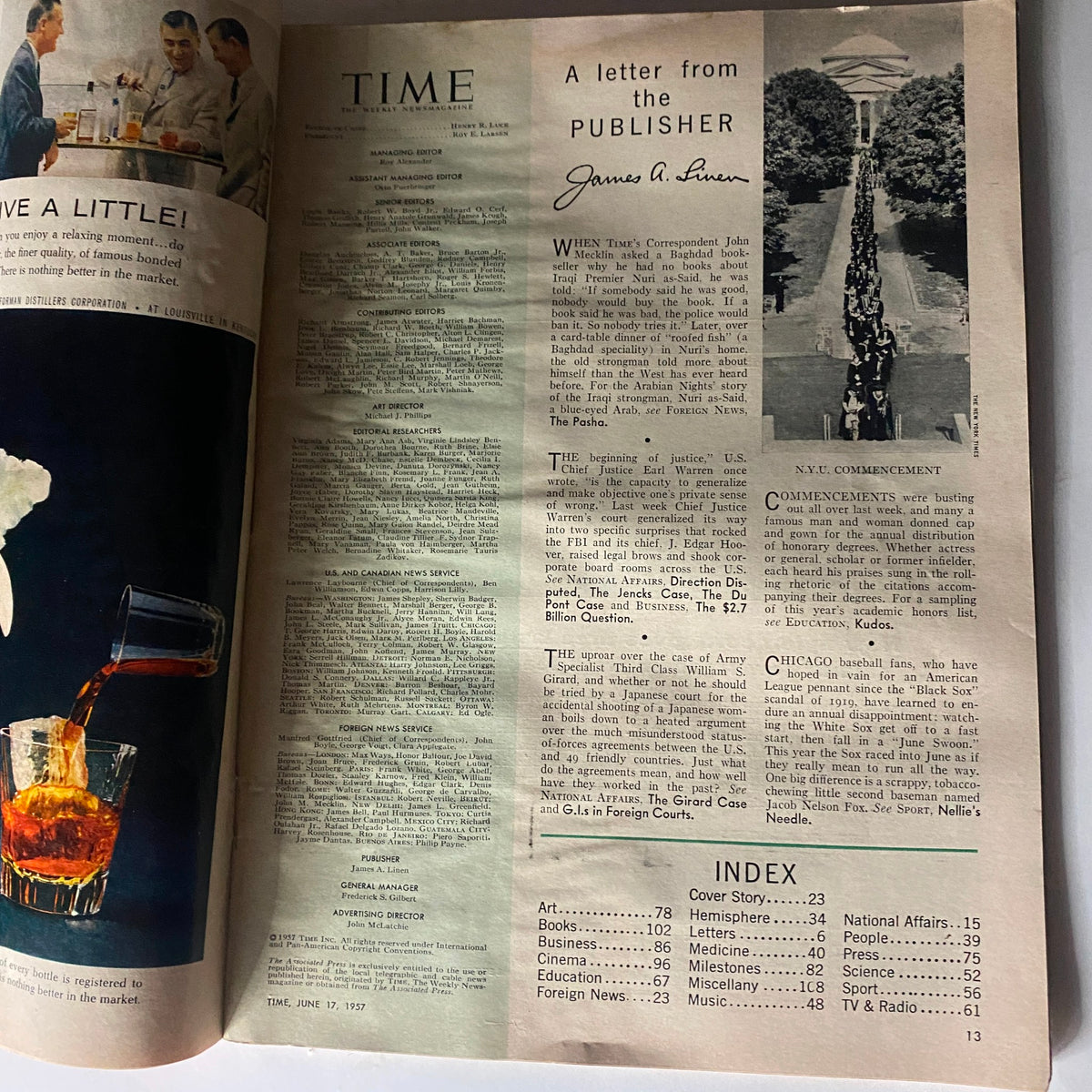
- Additional international and political reporting likely present, consistent with Time's standard weekly issue structure. Issues typically combined multiple substantial features per edition. Specific additional article titles for this issue beyond the featured Nuri as-Said coverage are not detailed in available records.
Condition & Rarity
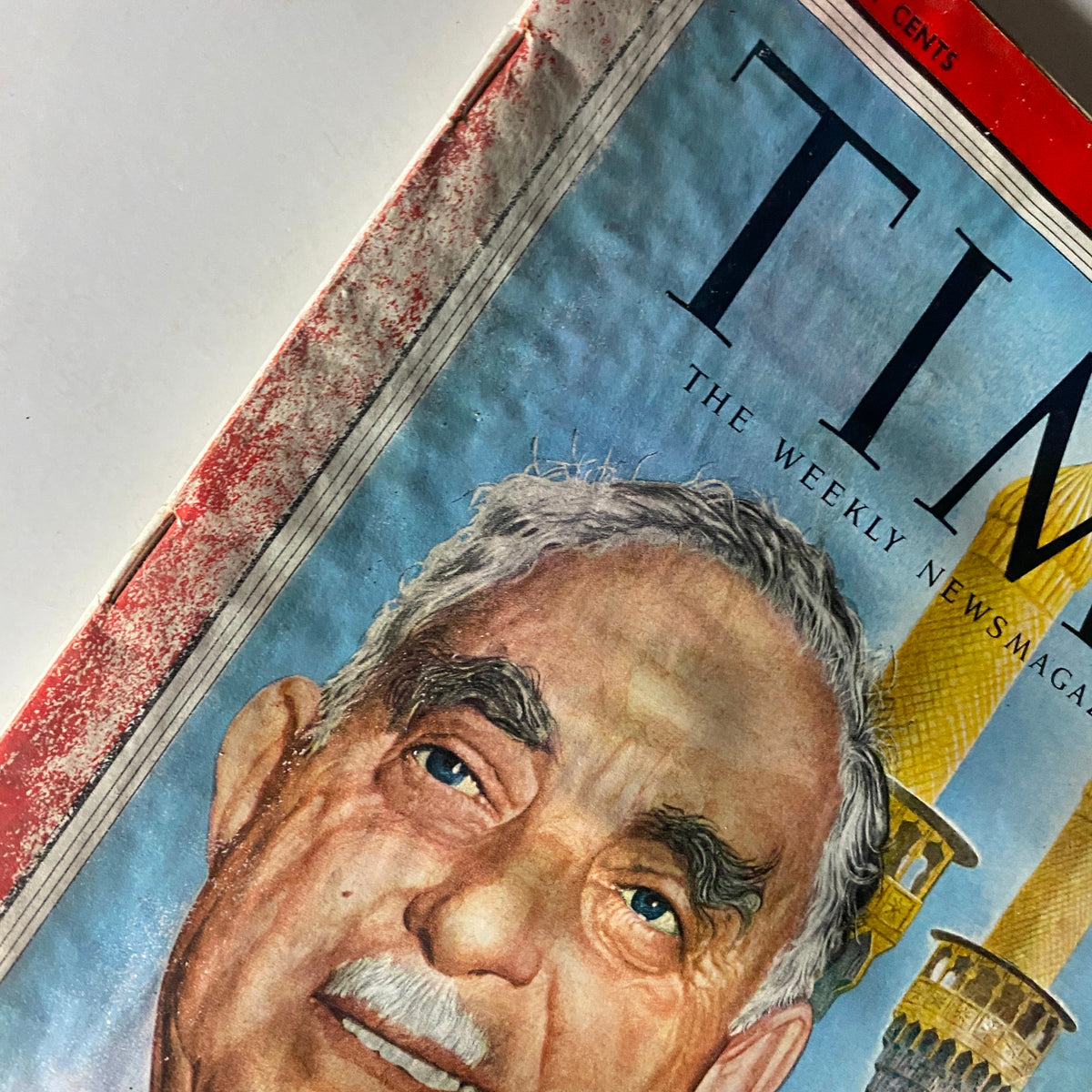
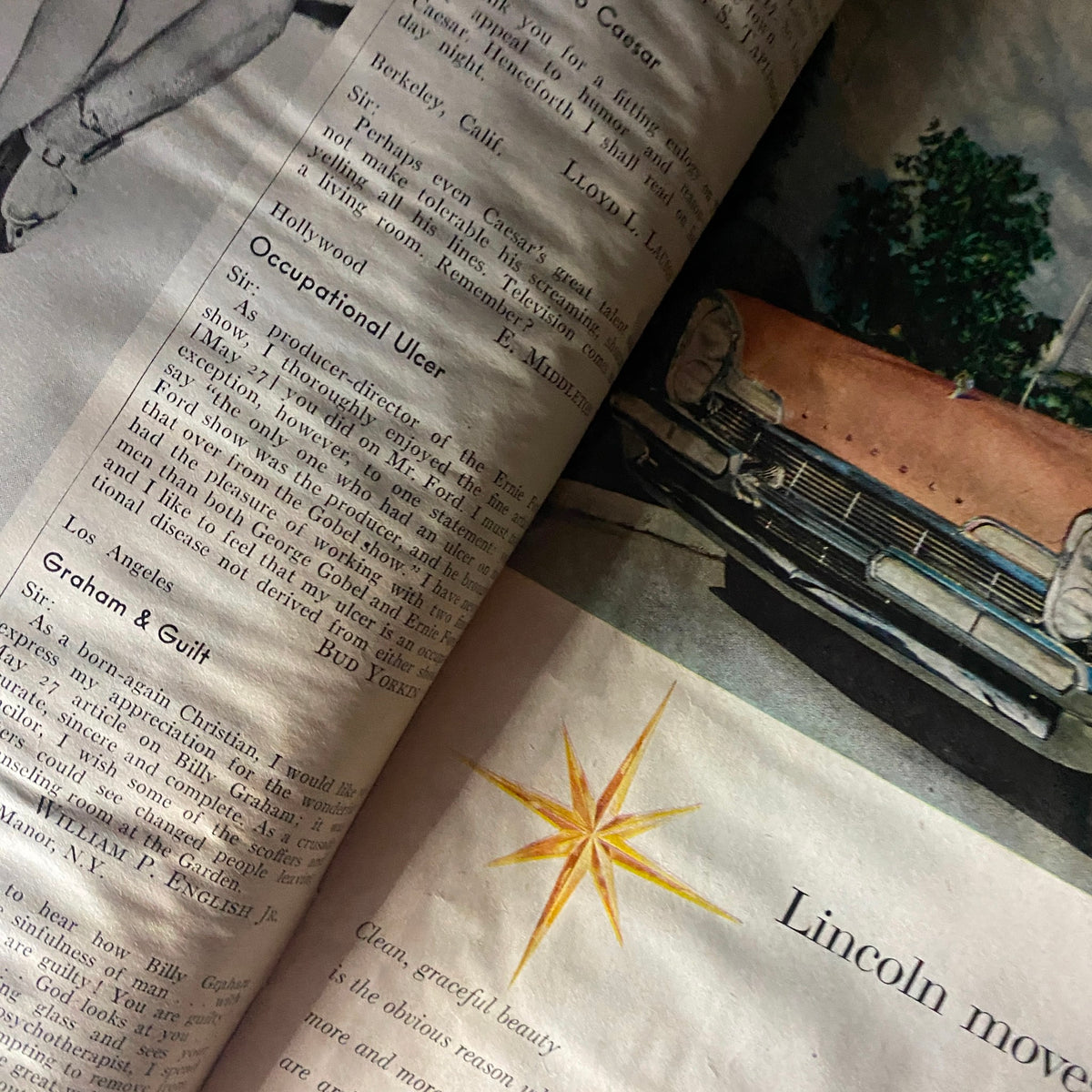
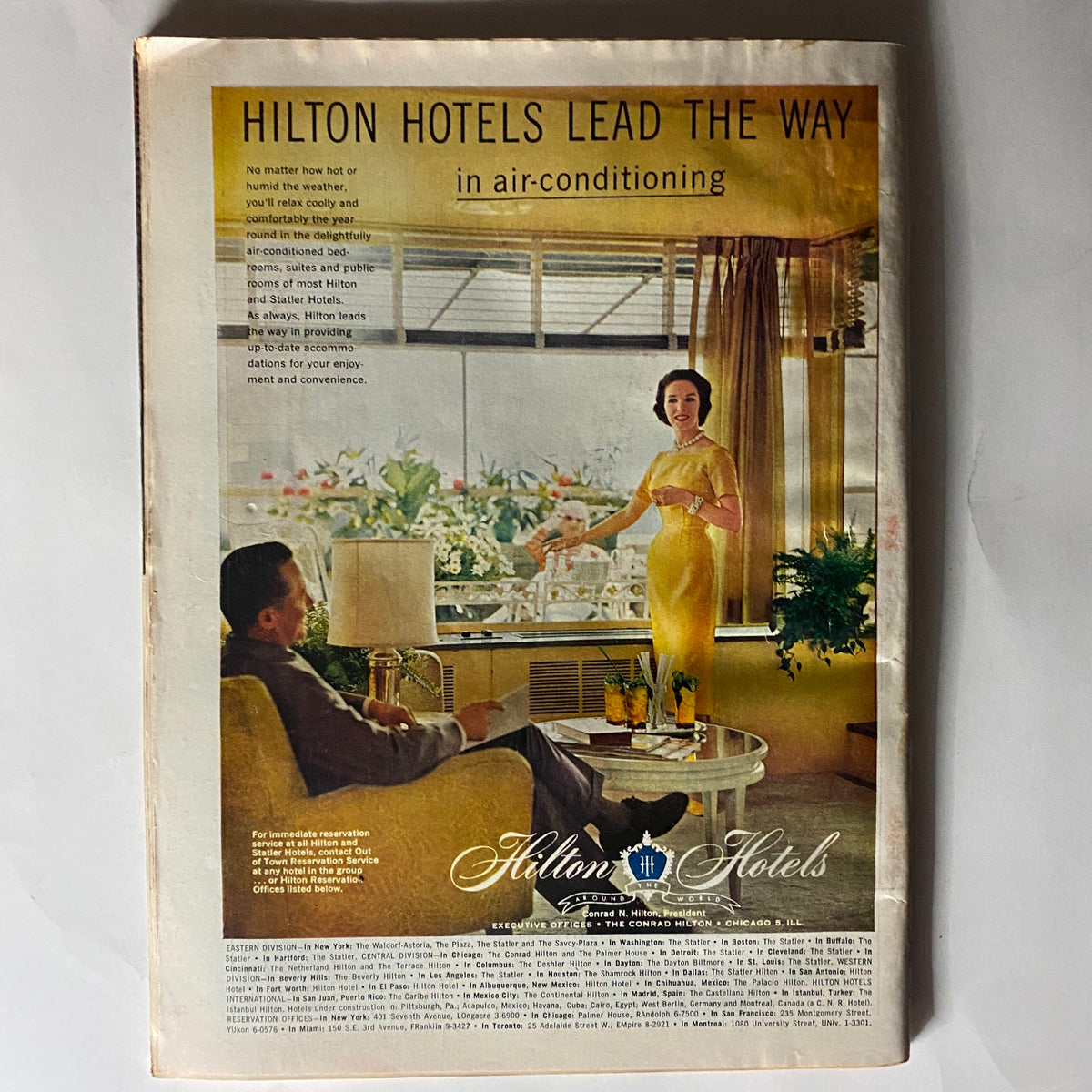
This issue shows creases on the front cover, marks and rips throughout, and some water damage, characteristics collectors should generally expect from a periodical that has survived nearly seven decades since its original publication. Water exposure is one of the more significant condition factors collectors evaluate for vintage periodicals, since it can affect page integrity and staining more substantially than ordinary handling wear. Time Magazine issues from this period were produced in large volumes and read broadly across the country, meaning surviving copies in pristine condition represent a smaller proportion of original print runs than the sheer circulation numbers might suggest. Cover feature issues connected to significant and ultimately tragic historical figures, particularly one capturing a leader so close to a dramatic and violent downfall, often draw additional collector interest beyond the magazine's general publishing history. A plastic protective covering, when present, functions as a stabilizing measure intended to prevent further deterioration rather than a factor that changes the underlying grade already present. Collectors evaluating any surviving copy of this issue should weigh the noted water damage and wear against the issue's genuine historical significance, since both factors affect overall desirability. Given this issue's connection to a pivotal and poignant moment in Middle Eastern political history, a surviving copy showing this level of wear still represents a meaningful find for collectors of Cold War and Middle Eastern history.
Looking for More Issues Like This?
Issues of Time Magazine capturing significant Middle Eastern political figures at pivotal, and in this case tragically fleeting, moments of apparent stability are genuinely valuable finds for collectors of Cold War and Middle Eastern history specifically. For those drawn to this particular issue, our Time Magazine collection is an excellent place to continue browsing, since it gathers other surviving issues from across the publication's long history of political and international cover journalism. That collection offers a broader look at how Time's cover choices documented the shifting concerns and key figures of the Cold War across different years and regions. Collectors interested in the wider context of 1957, including the Baghdad Pact and the final years of the Hashemite Iraqi monarchy, may also want to explore our 1957 magazines collection, which spans titles well beyond news journalism alone. Browsing across both collections can be especially valuable for collectors interested in Middle Eastern political history or the broader publishing landscape of this specific year. Given how significant issues connected to pivotal historical turning points like this one tend to be among collectors once discovered, we'd encourage anyone interested in this period to browse these collections at their own pace. There is always more of this history available than a single issue can represent on its own. We hope these collections help round out whatever corner of Cold War and mid-century Middle Eastern history you're most drawn to.