




Description
Collector's Note – Why This Issue Matters
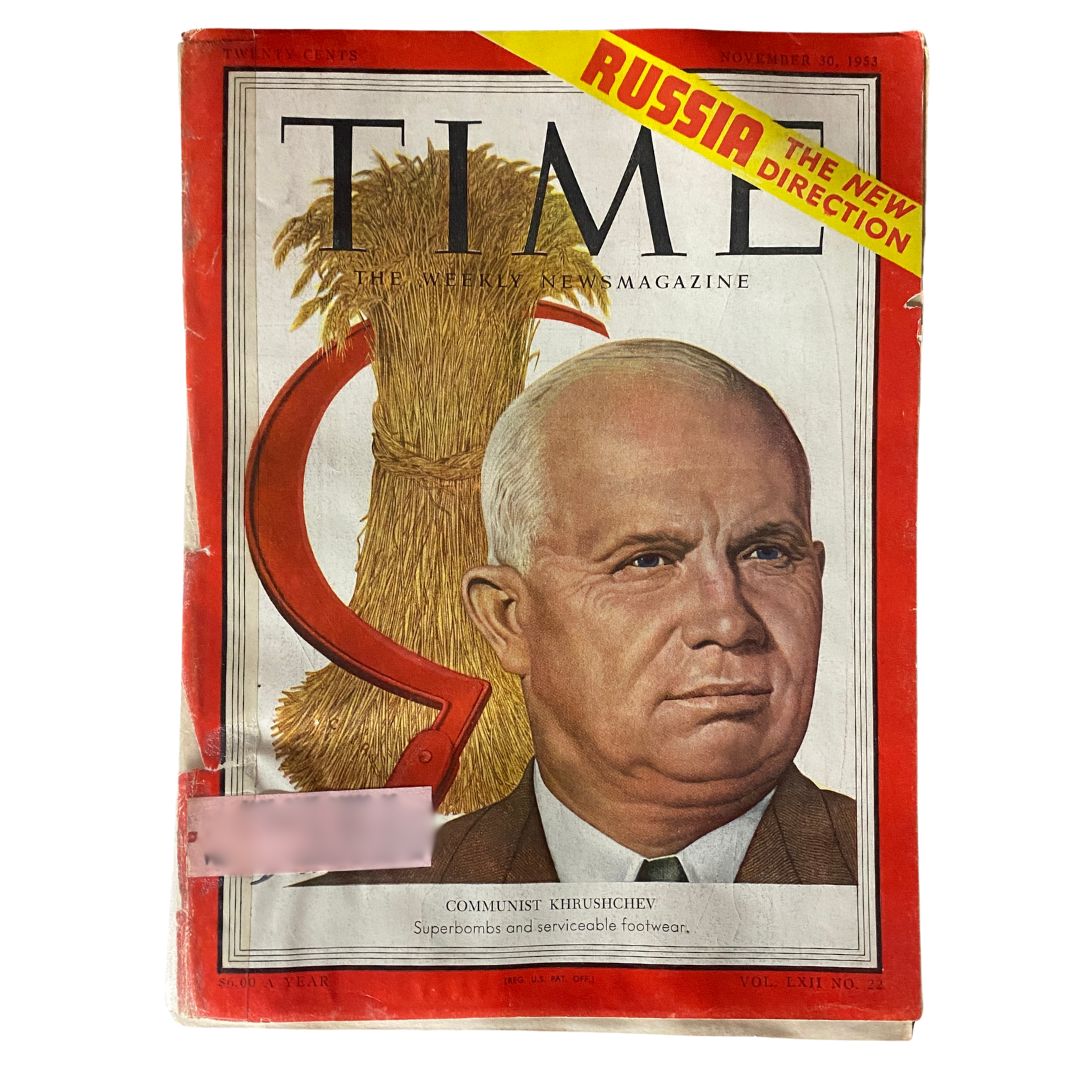
This November 30, 1953 issue of Time Magazine arrives at a genuinely pivotal moment in the earliest phase of the post-Stalin Soviet leadership transition, featuring Nikita Khrushchev on the cover under the title "Russia: The New Direction." Stalin had died in March 1953, just eight months before this issue's publication, triggering an intense internal power struggle within the Soviet leadership that saw Khrushchev emerge as First Secretary of the Communist Party by September of that same year, while Georgy Malenkov held the formal position of Premier as Chairman of the Council of Ministers. This issue's cover feature captures Khrushchev at a genuinely uncertain moment in that unfolding transition, well before he would consolidate the singular authority he eventually held throughout the late 1950s and early 1960s, and years before Western audiences would come to recognize him as the dominant face of Soviet leadership. For American readers encountering this cover in late 1953, Khrushchev represented a still largely unfamiliar figure within an opaque and rapidly shifting Soviet power structure, making Time's decision to feature him a genuinely early piece of Western media attention directed at a leader whose ultimate significance was not yet fully apparent. This issue therefore offers a documented snapshot of how the American press was beginning to process the post-Stalin Soviet Union at a moment when the outcome of that internal transition remained genuinely uncertain.
The cover's framing, emphasizing a "new direction" for Russia, reflects the broader Western anticipation and anxiety surrounding how Soviet policy might shift following Stalin's death, a question of considerable strategic importance to American Cold War planning. That uncertainty was compounded by the dramatic internal purges that had accompanied the succession struggle, including the arrest and eventual December 1953 execution of Lavrentiy Beria, the former secret police chief who had been one of the most powerful and feared figures in the Soviet state. This issue arrived in the narrow window between Beria's arrest earlier that year and his execution the following month, a period when the full outcome of the Kremlin's internal reshuffling was still very much in flux. Time's cover choice reflects the American press's attempt to identify which figures within that reshuffling would ultimately emerge with lasting power, a genuinely difficult analytical task given the Soviet government's characteristic opacity regarding its own internal leadership dynamics. This issue's engagement with that uncertainty offers collectors and historians a documented example of contemporary Western analysis grappling with one of the Cold War's most consequential leadership transitions in real time.
This issue's additional content reflects the broader anxieties defining American foreign policy coverage during this exact period, including reporting connected to escalating nuclear weapons development under the heading "Superbombs," a subject of intense concern following the Soviet Union's own successful test of a thermonuclear device in August 1953, just months before this issue's publication. That Soviet thermonuclear breakthrough had considerably narrowed the technological gap many American strategists believed separated the two Cold War superpowers, making nuclear weapons development a particularly urgent editorial subject for a magazine covering international affairs at this moment. The issue also included coverage of the Harry Dexter White espionage case, a significant and controversial episode involving a former senior U.S. Treasury Department official who had been publicly accused of Soviet espionage, a case that generated substantial political controversy in the United States throughout the early 1950s amid the broader climate of anti-communist investigation associated with the era. That combination, a Soviet leadership transition, escalating nuclear competition, and a domestic espionage controversy, situates this issue firmly within the most consequential and anxious currents of American Cold War coverage during this specific period.
Taken as a whole, this issue offers collectors and researchers a substantively documented artifact from one of the most consequential and uncertain periods of early Cold War history, capturing the American press's attempt to make sense of Soviet leadership transition, nuclear competition, and domestic espionage anxiety within a single publication. For collectors of Khrushchev-related material specifically, this issue arrives at a genuinely early point in his rise to power, predating his later international prominence and offering a documented example of how Western media first began to take note of him. For collectors of broader Cold War history, the issue's combination of Soviet political coverage and nuclear weapons reporting exemplifies the interconnected anxieties defining this exact period of American foreign policy attention. This issue stands as a significant primary source for anyone researching the earliest Western media coverage of the post-Stalin Soviet leadership transition.
About the Publication
Time Magazine was founded in 1923 by Henry Luce and Briton Hadden and grew into one of the most influential news and current affairs publications in American history, known for its weekly coverage of politics, business, culture, and international affairs. The magazine's cover feature became one of its most recognizable editorial conventions, regularly spotlighting major international figures, often accompanied by substantial reported features examining the subject's significance within unfolding global events. Time's audience was broad and national, reaching a readership across the country interested in comprehensive, digestible coverage of current events and emerging international developments, particularly during the anxious early years of the Cold War. The magazine's cover art during this period was frequently produced through original illustration and painting, commissioning artists to create custom artwork of featured subjects, a practice reflected in this issue's Khrushchev cover credited to the artist known as Giro. Advertising within the magazine during this period reflected products aimed at a broad, educated, and professionally engaged national readership. Time's willingness to devote substantial cover attention to emerging and still-uncertain foreign leaders, as this issue's early Khrushchev feature demonstrates, reflected the magazine's broad editorial ambition to track significant international developments as they unfolded, even before their ultimate historical significance had become fully clear. That editorial approach made Time an important documentary source for how American audiences encountered major geopolitical figures and events during the formative years of the Cold War. This issue exemplifies that approach clearly, capturing a Soviet leader years before his eventual international prominence.
Key Highlights Inside
- A cover feature on Nikita Khrushchev titled "Russia: The New Direction," with cover art credited to the artist Giro. The issue arrives during the uncertain early months of the post-Stalin Soviet leadership transition. Khrushchev had become First Secretary of the Communist Party just two months before this issue's publication.
- Coverage connected to escalating nuclear weapons development under the heading "Superbombs." This content reflects heightened American concern following the Soviet Union's August 1953 thermonuclear weapons test. It situates this issue within the broader nuclear anxieties defining early Cold War reporting.
- Coverage of the Harry Dexter White espionage case, involving a former senior U.S. Treasury Department official accused of Soviet espionage. This case generated significant political controversy in the United States during this period. Its inclusion reflects the domestic dimension of anti-communist anxiety accompanying broader Cold War coverage.
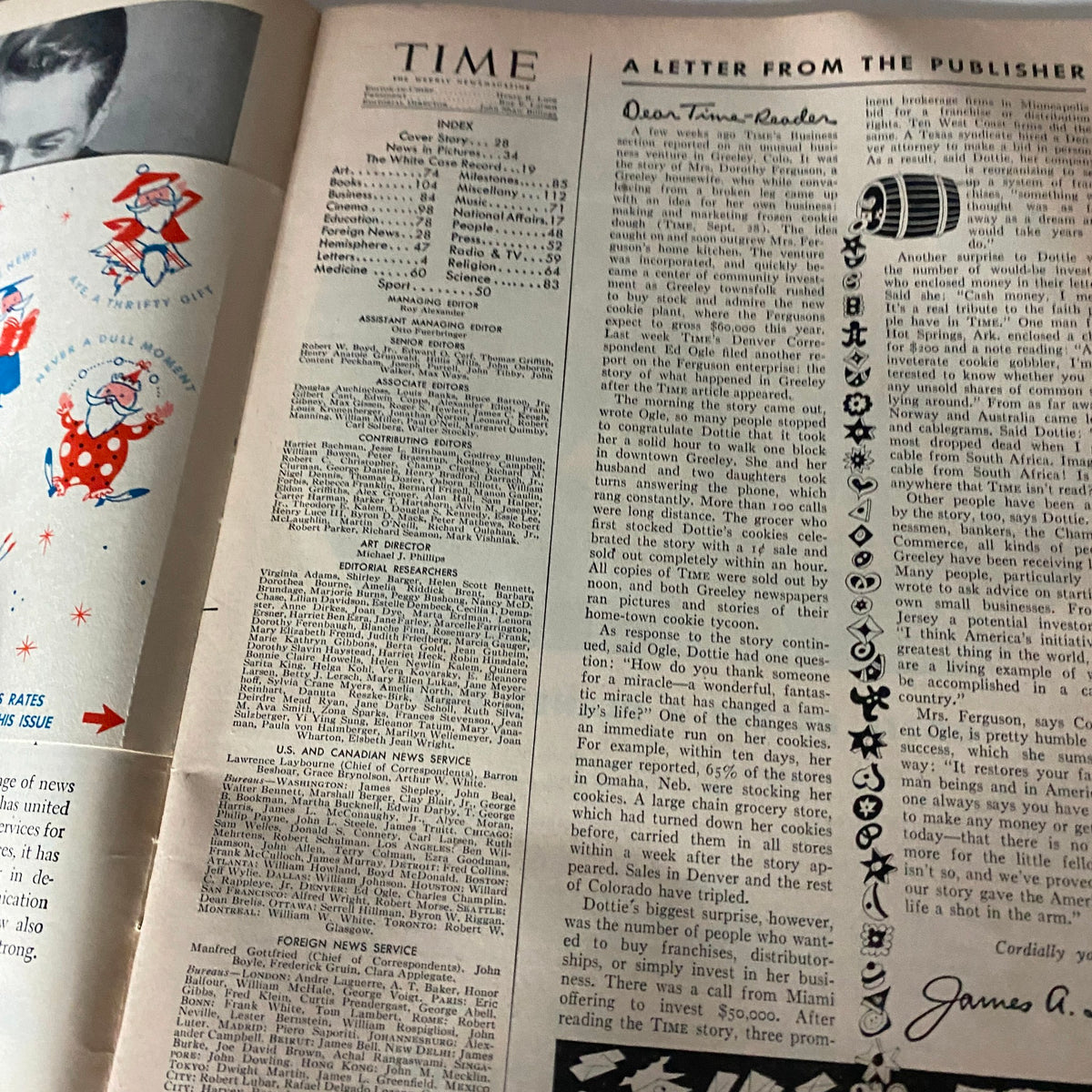
- Additional international and political reporting likely present, consistent with Time's standard weekly issue structure. Issues typically combined multiple substantial features per edition. Specific additional article titles for this issue beyond those noted here are not detailed in available records.
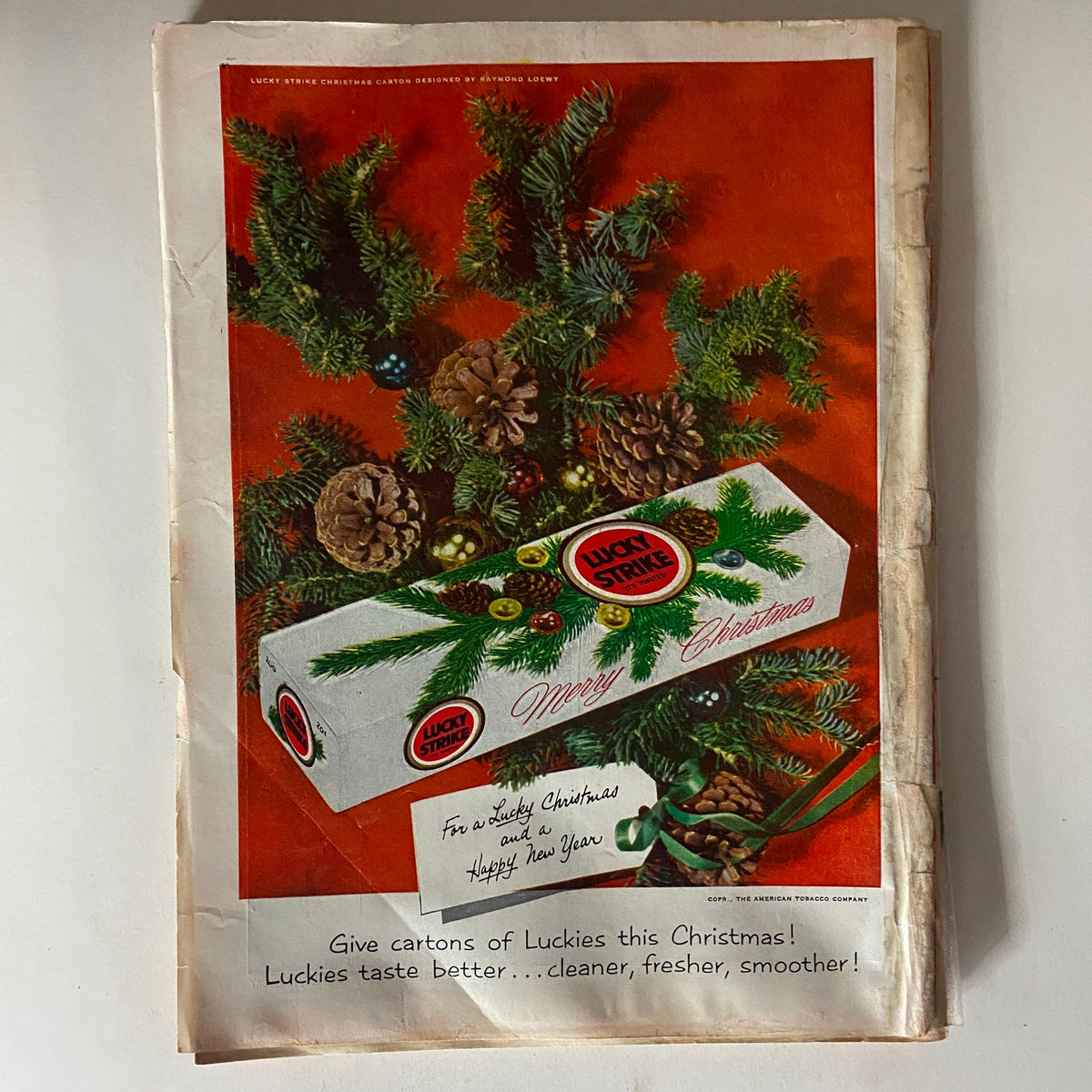
- Advertising content reflecting Time's broad, educated national readership during the early 1950s. These pages offer useful secondary context for researchers studying period consumer culture. Specific advertisers appearing in this issue are not detailed in available records.
Condition & Rarity
This issue shows some marks and features a taped binding, characteristics collectors should generally expect from a periodical that has survived over seven decades since its original publication. At this grade, some structural repair or reinforcement, such as the noted taping, is a common finding among surviving newsweekly issues from this era, reflecting practical efforts by previous owners to extend the usable life of a well-read copy rather than necessarily indicating excessive handling beyond what is typical for the format. Time Magazine issues from this period were produced in large volumes and read broadly across the country, meaning surviving copies in genuinely pristine condition represent a smaller proportion of original print runs than the sheer circulation numbers might suggest. Cover feature issues addressing significant Cold War political subjects, particularly one capturing a major world leader as early in his rise to power as this issue's Khrushchev feature, often draw additional collector interest beyond the magazine's general publishing history. Collectors evaluating any surviving copy of this issue should examine the binding repair and overall page integrity closely, since taped or reinforced bindings can indicate either careful preservation efforts or accumulated structural stress depending on the specific repair's age and execution. A plastic protective covering, when present, functions as a stabilizing measure intended to preserve a copy's current condition rather than a factor that changes its underlying grade. Given the combination of this issue's early and historically significant Khrushchev cover feature and its documented condition, a surviving copy represents a meaningful find for collectors of Cold War history and vintage news journalism, even accounting for the noted marks and binding repair.
Looking for More Issues Like This?
Issues of Time Magazine capturing major Cold War figures at early or transitional points in their political careers, particularly one as historically significant as this early Khrushchev cover feature, are genuinely valuable finds for collectors of Soviet and Cold War history specifically. For those drawn to this particular issue, our Nikita Khrushchev collection is an excellent place to continue browsing, since it gathers other surviving magazine appearances spanning his long and consequential tenure as Soviet leader. Beyond Khrushchev specifically, our Time Magazine collection offers a broader look at the publication's long history of political and international cover journalism across multiple decades. Collectors interested in the wider context of 1953, a genuinely pivotal year in Cold War history, may also want to explore our 1953 magazines collection, which spans titles well beyond political and news journalism alone. Browsing across all three collections can be especially valuable for collectors interested in Khrushchev's career, Cold War journalism generally, or the broader publishing landscape of this specific year. Given how significant early leadership-transition issues like this one tend to be among collectors once discovered, we'd encourage anyone interested in this period to browse these collections at their own pace. There is always more of this history available than a single issue can represent on its own. We hope these collections help round out whatever corner of Cold War and mid-century news journalism history you're most drawn to.