




Description
Collector's Note – Why This Issue Matters
The September 5, 1955 issue of Time magazine — Volume 66, Number 10 — featuring Herman Wouk on its cover documents a fascinating and underappreciated moment in American literary history, and understanding its full significance requires understanding both where Wouk stood in the cultural landscape of the mid-fifties and what his work represented in the broader context of postwar American fiction. By September 1955 Wouk was one of the most widely read and most seriously debated novelists in the United States, a writer whose combination of popular accessibility and moral seriousness had given him a unique position in the literary world — neither a purely commercial entertainer nor a coterie modernist, but something genuinely unusual: a novelist who sold millions of copies while being taken seriously by critics and academics as a writer of substance and conviction. His 1951 novel The Caine Mutiny had won the Pulitzer Prize for Fiction in 1952 and been adapted into a celebrated 1954 film starring Humphrey Bogart, and his 1955 novel Marjorie Morningstar — a sweeping story of a young Jewish woman from the Bronx navigating ambition, romance, and identity — had just been published and was rapidly ascending the bestseller lists toward what would become an extraordinary commercial and cultural phenomenon. A Time cover in September 1955 placed Wouk at the precise moment of his second major literary impact, arriving on newsstands as Marjorie Morningstar was entering the national conversation. For collectors building a serious archive of Time magazine covers devoted to American literary figures, this issue represents one of the most significant literary covers of the entire mid-fifties publishing decade.
Herman Wouk's significance as a Time cover subject in 1955 extends well beyond his individual literary achievements. His work occupied a specific and historically important position in the cultural conversation of postwar America — a conversation about Jewish American identity, about the meaning of the war that had just ended, about traditional values in a rapidly modernizing society, and about the relationship between popular fiction and serious literature that the fifties were actively and sometimes anxiously renegotiating. The Caine Mutiny had engaged directly with questions of military authority, moral responsibility, and the psychology of leadership that resonated deeply with a generation of Americans who had served in or lived through the Second World War. Marjorie Morningstar, published just weeks before this Time cover appeared, took on the equally charged question of Jewish American assimilation, ambition, and the tension between tradition and modernity — themes that spoke directly to the experience of millions of American readers in the mid-fifties and that generated both passionate admiration and equally passionate criticism from different segments of the Jewish American intellectual community. The debates that Wouk's work provoked in 1955 — about what American Jewish fiction should do and say, about the relationship between popular success and literary integrity, about the role of traditional values in contemporary life — were among the most substantive literary-cultural debates of the decade, and a Time cover was the mainstream press's acknowledgment that these debates mattered to a broad American readership.
The broader context of September 1955 in American cultural and literary history adds further layers of significance to this issue for collectors and researchers working across multiple fields. The mid-fifties were a period of genuine ferment in American fiction — the postwar generation of writers was producing work that engaged with the war's aftermath, with suburban conformity, with racial injustice, and with the anxieties of the nuclear age in ways that were reshaping the possibilities of American narrative prose. Wouk occupied a distinctive position in that landscape, and the Time cover devoted to him in September 1955 is therefore a primary document not just of his individual career but of the broader literary and cultural moment in which his work was being read and debated. Those assembling a comprehensive archive of 1955 magazines as primary documents of mid-decade American cultural life will find this issue a particularly substantive and historically layered piece, sitting at the intersection of literary journalism, Jewish American cultural history, and the postwar moment's ongoing negotiation of its own identity and values.
About the Publication
Time magazine, co-founded by Henry Luce and Briton Hadden in 1923, had established itself by the mid-fifties as the definitive American weekly newsmagazine and one of the most widely read and culturally authoritative periodicals in the world, reaching millions of subscribers at the height of its postwar influence. Its editorial format combined concise, opinionated reporting on the week's major domestic and international news with longer analytical features, cultural coverage, and regular departments spanning science, medicine, business, religion, and the arts — a breadth that made it genuinely indispensable to the educated American reader seeking authoritative weekly synthesis of a rapidly changing world. The magazine's cover, selected each week by editors who treated the decision as the most consequential editorial choice of the publishing cycle, functioned as a cultural declaration — to appear on the cover of Time was to be designated, by the most authoritative mainstream journalistic voice in America, as the person or subject that mattered most to the nation that week. The magazine's willingness to devote covers to novelists and literary figures — at a time when fiction was still a genuinely central part of American cultural life in a way that television had not yet fully displaced — reflected both Luce's personal investment in literary culture and the magazine's editorial conviction that serious fiction was as important to the national conversation as politics, business, or foreign affairs. The Herman Wouk cover of September 1955 sits within that tradition, representing Time's judgment that Wouk and the debates his work provoked were among the most significant cultural stories of the week for its enormous and culturally engaged readership.
Key Highlights Inside
- The cover features Herman Wouk at the precise moment of his second major literary impact — published in September 1955 as his novel Marjorie Morningstar was ascending the bestseller lists following its recent publication, placing this issue within a specific and historically significant literary moment when Wouk's work was generating some of the most substantive cultural debates in American fiction of the mid-decade.
- The issue is precisely identified as Volume 66, Number 10, published September 5, 1955 — a date that places it within weeks of the publication of Marjorie Morningstar, making this cover story one of the primary mainstream press documents of the novel's initial reception and the literary and cultural conversation it immediately sparked about Jewish American identity, assimilation, ambition, and the relationship between traditional values and modern life.
- A Time cover devoted to a novelist in September 1955 reflects the mid-fifties cultural landscape in which serious fiction still occupied a central place in mainstream American intellectual life — a context in which a novel's publication could be treated by the most widely read newsmagazine in the country as a story of national significance deserving the same editorial weight as political or international events.
- Wouk's position in 1955 as the author of both the Pulitzer Prize-winning The Caine Mutiny and the newly published Marjorie Morningstar made him one of the most commercially successful and critically discussed American novelists of the decade, and the Time cover captures him at the intersection of literary achievement, popular success, and cultural controversy that defined his particular and historically important position in mid-fifties American literary life.
- As a September 1955 issue, the magazine would have carried Time's comprehensive coverage of the full range of domestic and international stories of that week — including Cold War developments, the ongoing civil rights movement, and the broader sweep of mid-fifties American public life — making it a rich documentary cross-section of a culturally and politically significant moment alongside its central literary profile.
- Note: Specific article titles, interior features, and secondary editorial content beyond the confirmed cover subject have not been independently verified for this issue. The above reflects what is documented from the cover, volume and issue identification, and the well-established historical record surrounding Herman Wouk's literary career and cultural position in September 1955.
Condition & Rarity
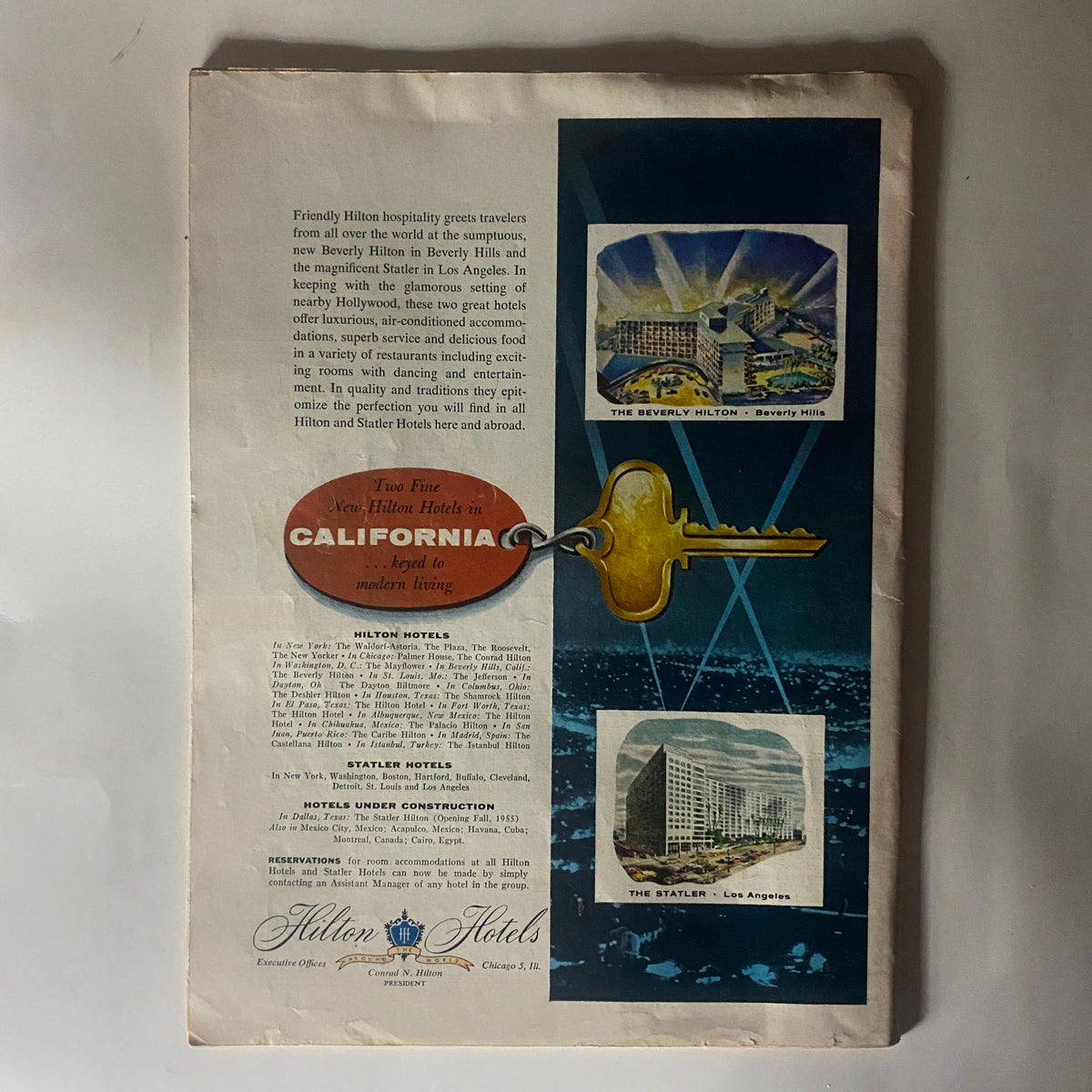
Surviving copies of the September 5, 1955 Time in collectible condition present the characteristic aging profile of a seventy-year-old weekly newsmagazine that has passed through decades of varied storage and ownership. Time of this era was printed on a combination of coated stock for photographic and cover pages and lighter text-weight paper for its news and editorial sections — more resilient than pure newsprint but not engineered for archival longevity, and susceptible over seven decades to the tanning, surface oxidation, spine softening, and paper brittleness that accumulate in periodicals stored outside climate-controlled environments across multiple generations of ownership. The listing for this issue directs collectors to the provided photographs for condition assessment rather than specifying detailed verbal condition notes — an honest and appropriate approach for a vintage periodical whose condition is best evaluated visually — and collectors evaluating any surviving copy of this issue should examine the cover stock condition, the legibility of the Wouk cover portrait, and the integrity of the spine and binding as their primary structural assessment criteria. The listing does not specify the presence or absence of an address label, a detail that matters for display-focused collectors, as label-free copies preserve the complete cover presentation without the adhesive residue or paper damage that subscriber labels of this era routinely left on coated cover stock. Protective plastic sleeve storage, applied at whatever point in a copy's history, is the correct archival approach for coated-stock newsmagazines of this type and period, and significantly slows the continued light-driven and humidity-driven deterioration that would otherwise affect unprotected examples in long-term storage.
Looking for More Issues Like This?
The September 5, 1955 Herman Wouk Time cover is one of the most significant literary magazine covers of the mid-fifties — a mainstream press document of a novelist at the precise moment of his second major cultural impact, embedded in some of the most substantive literary and cultural debates of the postwar decade — and copies in any collectible condition are pursued by literary history researchers, Jewish American studies collectors, and serious Time magazine archivists who recognize the particular historical weight that literary covers from this era carry. The Time magazine collection at OriginalMagazines.com spans a wide and carefully assembled range of issues from across the publication's remarkable run, and is the essential starting point for anyone building a serious archive of mid-century American newsmagazine journalism and its engagement with literary and cultural life. For collectors drawn to the full cultural landscape of the year this cover appeared — a year of extraordinary literary production, Cold War anxiety, early civil rights activism, and the particular mid-decade energy of an America that was prosperous, anxious, and culturally alive in ways that the decade's popular reputation often obscures — the 1955 magazine collection offers a rich and varied cross-section across multiple titles and editorial perspectives that brings that moment fully into focus.