


Description
Collector's Note – Why This Issue Matters
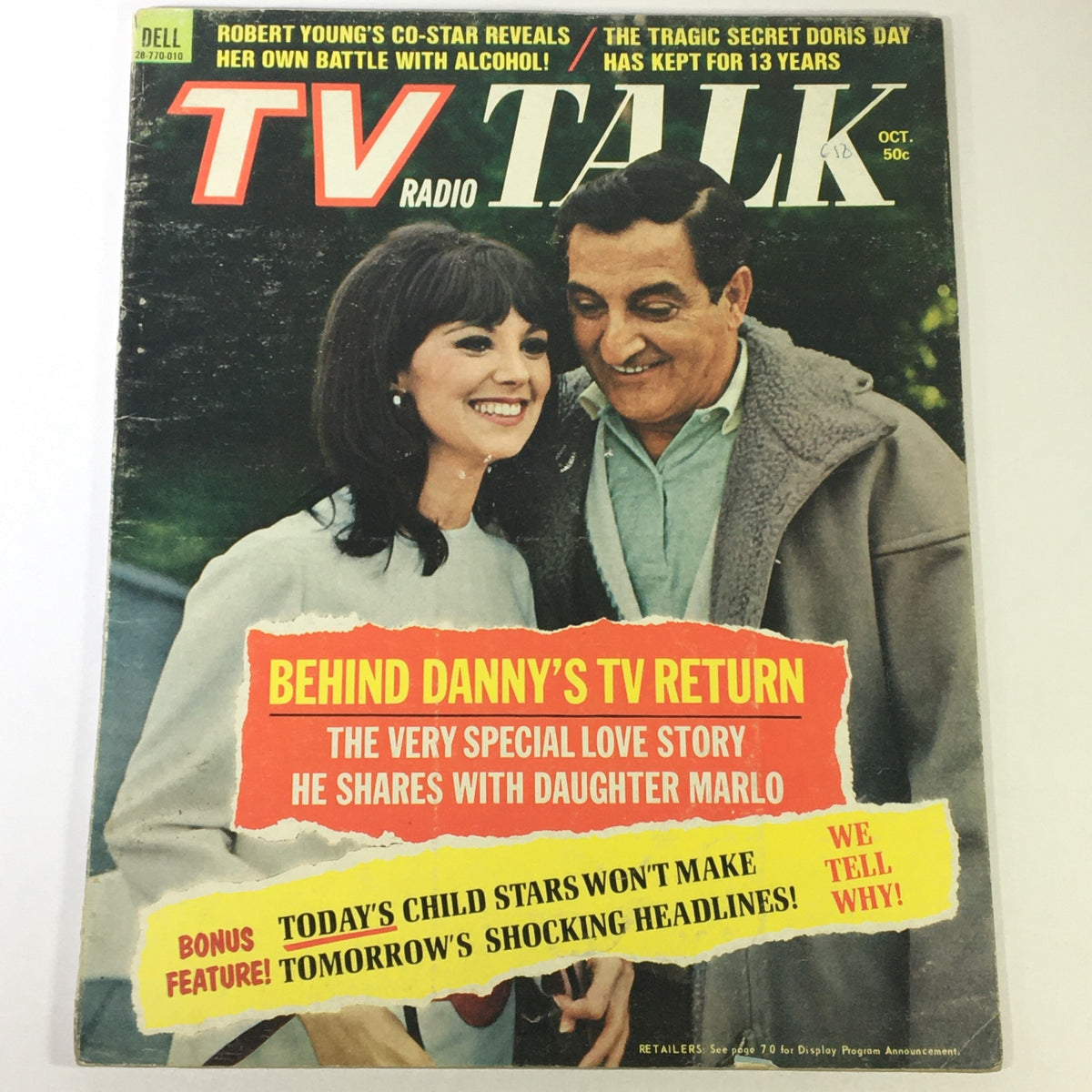
The October 1970 issue of TV Radio Talk featuring Danny Thomas and Doris Day arrives at a genuinely fascinating transitional moment in American television history. By the fall of 1970, the medium was undergoing one of the most significant demographic and creative upheavals in its history — the so-called "rural purge" was just months away, when CBS would cancel a swath of highly rated but demographically older-skewing programs in favor of content aimed at younger, urban audiences. Danny Thomas and Doris Day represented precisely the kind of established, broadly popular entertainment that was about to be challenged and in some cases displaced by this shift. Thomas had been a television institution since Make Room for Daddy launched in 1953, and his influence as a producer and industry figure extended far beyond his own performing career — he was, by 1970, one of the most powerful figures in the business. Doris Day had made her television debut with The Doris Day Show in 1968, bringing her extraordinary film career's warmth and appeal to a weekly format that was finding its audience in these early seasons.
The pairing of these two figures on a fall 1970 entertainment magazine cover captures the last confident breath of a particular kind of American television culture — family-friendly, broadly appealing, rooted in the values and aesthetics of the postwar entertainment tradition that both Thomas and Day had helped define across two decades of films, records, and television work. Doris Day in particular was navigating a complex public moment: her film career had wound down, her personal life had been marked by the recent revelation of financial mismanagement by her late husband Marty Melcher, and her television show was her primary creative outlet and public presence. The early seasons of The Doris Day Show had been somewhat constrained, but the program was evolving, and fall 1970 found it in the middle of a creative transition that would eventually produce some of its best work. For collectors building around surviving magazines from 1970, entertainment publications from this specific fall season document the last chapter of the old television order before the landscape was permanently reorganized.
TV Radio Talk and publications like it occupied a specific and now largely vanished niche in the American media landscape of the late 1960s and early 1970s — the fan-oriented television magazine that served a readership whose primary entertainment came from the weekly broadcast schedule and who wanted deeper engagement with the personalities and stories behind the programs they followed. These publications were the primary media infrastructure connecting television audiences with the stars they watched, and their coverage of figures like Thomas and Day reflects both the enormous cultural centrality of broadcast television in this period and the particular kind of relationship between performer and audience that the medium cultivated. As primary documents of how television culture was consumed and experienced by ordinary Americans at this moment of transition, issues like this one carry a historical value that is easy to underestimate and that only grows as the era they document recedes further into the past.
About the Publication
TV Radio Talk was one of several fan-oriented television and entertainment magazines that served the American broadcast audience in the late 1960s and early 1970s, a period when television had become the dominant form of popular entertainment and a robust ecosystem of publications had developed to serve the audience's appetite for behind-the-scenes access, personality profiles, and coverage of the stars who populated the weekly broadcast schedule. Its format combined interviews, feature stories, and photography focused on the television and radio performers of the moment, aimed at a broadly popular readership that followed the medium with genuine devotion. Publications of this type occupied a market position between the more aspirational Hollywood fan magazines of earlier decades and the television-specific guides and listings publications — they offered editorial depth and personality coverage rather than mere scheduling information, and their documentation of mid-century television culture gives them lasting value as primary sources for researchers and collectors interested in the history of American broadcasting.
Key Highlights Inside
- Feature coverage of Danny Thomas — television institution, producer, and one of the most influential figures in the American entertainment industry — documented at a moment when his career was transitioning from performer to powerful behind-the-scenes force in the television business.
- Coverage of Doris Day and The Doris Day Show, then in its third season and in the middle of a creative evolution that would define its later run — capturing one of America's most beloved entertainers at a complex and interesting moment in her transition from film star to television presence.
- Editorial content reflecting the fall 1970 television season — the last full season before CBS's demographic-driven cancellations would permanently alter the broadcast landscape and bring the era of broadly popular, family-oriented programming to an abrupt end.
- Period advertising throughout the issue, documenting the consumer culture and commercial landscape of early 1970s America as it was presented to the television-watching public — material that collectors of mid-century Americana treat as cultural documentation in its own right.
- Note: Specific additional articles, interviews, and features beyond the Thomas and Day cover stories are unconfirmed for this issue. The listed cover subjects are the documented editorial centerpiece.
Condition & Rarity
Newsstand origin with no address label is the preferred configuration for collectible entertainment fan magazines from 1970, and it is the less common one — subscription copies carrying address labels make up a significant share of the surviving population for publications of this type from the early 1970s. Good condition with minor edge wear and occasional rips or marks is an honest and realistic grade for a fifty-five-year-old monthly entertainment magazine; publications of this category used relatively inexpensive coated and semi-coated paper stocks that are susceptible to tanning, edge brittleness, and surface oxidation over decades of storage, and covers showing minor wear are the expected baseline rather than a significant detractor in the collector market for this type of periodical. A plastic protective sleeve indicates deliberate preservation, which limits further surface deterioration and dust accumulation. When evaluating any surviving copy of this issue, the key attributes to assess are the clarity and color integrity of the Thomas and Day cover image, the completeness of the page count, the flexibility of the interior pages, and the security of the spine staples — fan magazines of this era used lightweight staple binding that is frequently a point of failure in surviving copies after five decades of storage.
Looking for More Issues Like This?
Early 1970s television fan magazines are an underappreciated area of mid-century collecting, and issues that document the last season of the old broadcast order before the rural purge reshaped American television carry a historical specificity that becomes more apparent with every passing year. If this issue has already found a home, the 1970 magazine collection at OriginalMagazines.com covers the year across multiple titles and offers a genuinely rich cross-section of American popular culture at one of its most interesting transition points — well worth exploring for anyone drawn to the entertainment history this issue documents.