


Description
Collector's Note – Why This Issue Matters
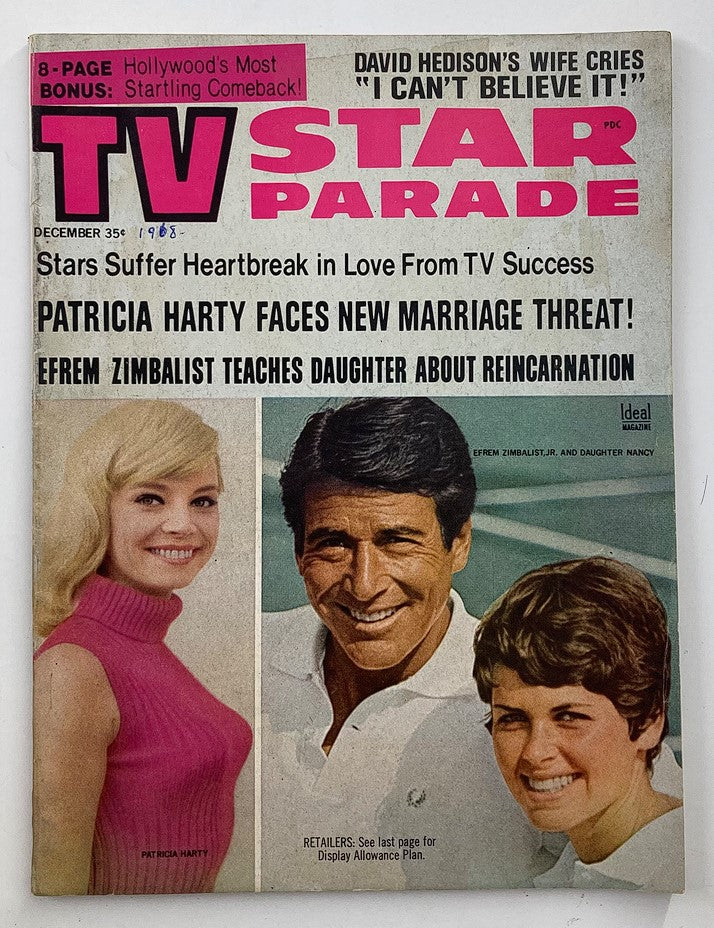
The December 1968 issue of TV Star Parade, featuring Patricia Harty and Efrem Zimbalist Jr., documents two figures from distinctly different ends of the American television spectrum at a specific and historically interesting moment in the medium's development. Efrem Zimbalist Jr. had been one of the most recognizable faces on American television since the late 1950s — his role as Stu Bailey in Warner Bros.' 77 Sunset Strip had made him a genuine small-screen star, and by December 1968 he was in the fifth season of his long run as Inspector Lewis Erskine in The F.B.I., the ABC procedural drama that had premiered in 1965 and would continue until 1974. The F.B.I. was notable for its unusually close relationship with the actual Federal Bureau of Investigation — J. Edgar Hoover himself endorsed the program and gave it unprecedented access and cooperation, making it one of the most institutionally connected television dramas in American broadcasting history. In December 1968, with the FBI's own reputation increasingly contested in the context of its surveillance of civil rights leaders, the antiwar movement, and various political organizations, Zimbalist's association with the Hoover-endorsed program carried a cultural charge that went beyond simple entertainment. Patricia Harty, by contrast, was associated with the lighter end of the 1968 television spectrum — best known for her role in the CBS sitcom Blondie, which aired briefly in that year, placing her within the tradition of domestic comedy that the network had been refining since the 1950s. For collectors building archives around TV Star Parade's documentation of American television culture, this December 1968 issue captures the medium's extraordinary range in a single cover pairing.
December 1968 was one of the most eventful months in American television history, and a TV fan magazine published at that moment is a document of the medium navigating extraordinary circumstances. The year had produced a series of programming decisions and journalistic responses that had permanently altered the relationship between television and American public life — the live broadcast of Robert Kennedy's assassination in June, the televised chaos of the Chicago Democratic National Convention in August, and the ongoing television coverage of the Vietnam War had all contributed to a year in which television's role as the primary vehicle of American political and social consciousness was more intensely discussed and debated than at any previous point in the medium's history. Against that backdrop, the entertainment-focused celebrity coverage that TV Star Parade provided — the personal lives, career updates, and fan-oriented profiles of television's most familiar faces — represented a specific kind of cultural counterweight, the reassurance of celebrity familiarity at a moment of national anxiety. A December 1968 TV Star Parade is therefore both a document of what American television looked like to its most engaged fans and an artifact of the role that entertainment journalism was playing in the broader media ecosystem of an extraordinarily turbulent year. Collectors researching American magazine publishing from 1968 will find this issue a useful document of the entertainment press at its most characteristic and its most culturally situated.
About the Publication
TV Star Parade was an American television fan magazine operating within the broad category of celebrity-focused publications that grew up alongside the television industry itself in the 1950s and flourished through the 1960s and 1970s. Published by Ideal Publishing Corporation, the magazine served a readership of devoted television fans — primarily women — who wanted more personal and intimate coverage of their favorite television stars than the program listings and brief celebrity mentions of TV Guide could provide. Its editorial format combined celebrity profiles, behind-the-scenes features, personal interest stories about television performers' private lives, and the kind of fan-oriented content that sustained the relationship between television audiences and the stars they watched weekly in their living rooms. By December 1968, TV Star Parade was a well-established title with a loyal readership, competing with similar publications like TV Picture Life, Movie Mirror, and Photoplay for the attention of the American television fan community. The magazine's December issue would typically have been produced with holiday-season editorial content in mind, combining its standard celebrity coverage with the seasonal themes that made December issues particularly attractive to the gift-buying and year-end entertainment consumer market.
Key Highlights Inside
- Efrem Zimbalist Jr. is a confirmed featured subject of this issue, documented in December 1968 during his fifth season as Inspector Lewis Erskine in The F.B.I. — the ABC drama notable for its unprecedented endorsement and cooperation from J. Edgar Hoover's FBI, giving any fan magazine coverage of Zimbalist in this period an implicit connection to one of the most consequential and contested law enforcement institutions in American life.
- Patricia Harty is a confirmed featured subject, documented here in December 1968 following her appearance in the CBS sitcom Blondie, placing this issue within the brief window of her most visible network television exposure and making it a primary document of her career at its moment of greatest mainstream recognition.
- As a December 1968 issue, this TV Star Parade captures American television fan culture at the close of one of the most turbulent years in the medium's history — a year in which television's role in American political and social life had been more intensely debated than ever before, giving even the entertainment-focused coverage of a celebrity fan magazine a specific cultural context and historical weight.
- The confirmed absence of a mailing label indicates newsstand rather than subscriber origin, preserving the cover in its original retail presentation — a positive condition attribute for a fan publication whose cover imagery was designed to attract purchase attention at the newsstand.
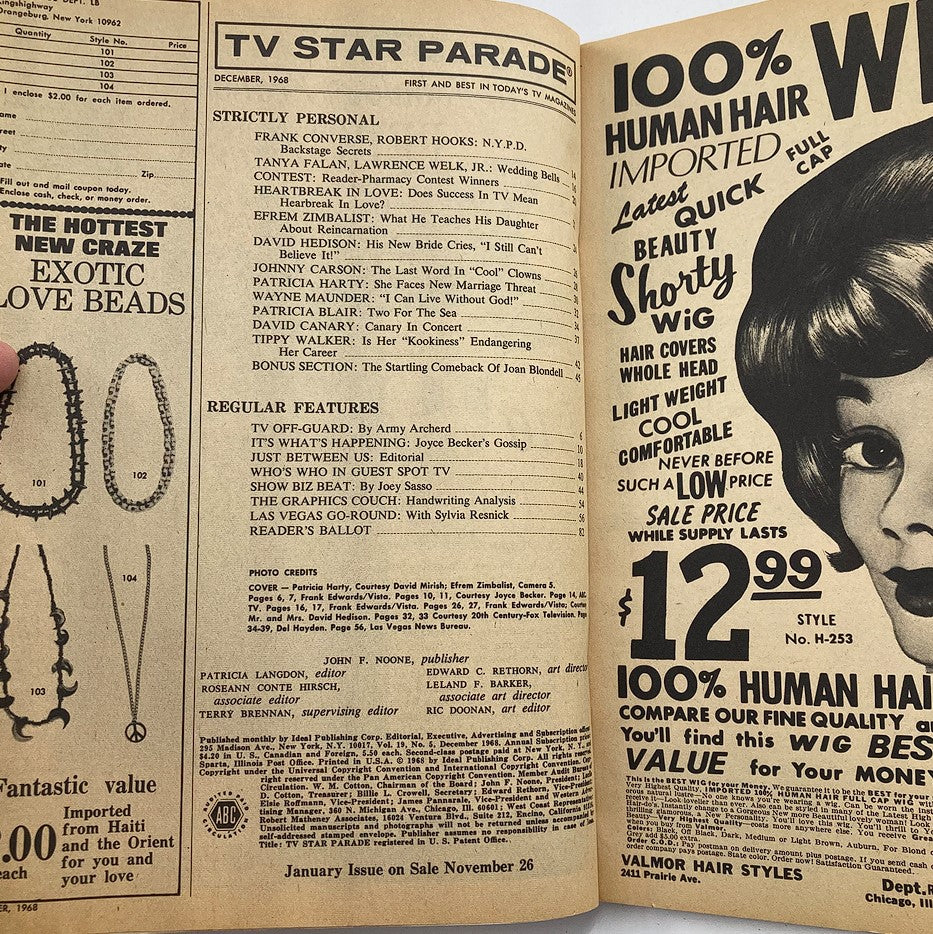
- Note: Specific article titles, additional featured personalities, and detailed interior content beyond the confirmed Harty and Zimbalist cover subjects are unconfirmed for this issue. The highlights above are drawn from listing details, the confirmed cover subjects, and the publication's documented editorial approach during this period.
Condition & Rarity
Condition for this issue should be assessed directly from the provided photographs, which the listing identifies as the definitive reference — the appropriate standard for a fifty-seven-year-old television fan magazine where grade distinctions depend on visual factors including cover gloss retention, spine integrity, and interior page tanning that text descriptions cannot fully substitute for. The confirmed absence of a mailing label indicates newsstand rather than subscriber origin, preserving the cover's original visual presentation without the adhesive surface disruption of subscriber labels — a meaningful positive attribute for a fan publication whose cover photography is the primary collector consideration. The plastic protective covering currently housing this copy provides appropriate stabilization for a publication of this age and paper stock, helping to prevent further cover surface wear and spine deterioration during handling and storage. TV Star Parade issues from December 1968 featuring recognized television stars from both dramatic and comedic programming exist within a niche collector market that draws television history enthusiasts, Efrem Zimbalist Jr. collectors, and researchers in American entertainment culture from a year of extraordinary historical density — making condition-specific copies of this issue more purposeful finds than the general TV fan magazine back-issue market might suggest.
Looking for More Issues Like This?
TV Star Parade issues from the late 1960s featuring major network television stars are an underappreciated category of American entertainment publishing — produced for fan consumption rather than archival preservation, they document the personal and professional lives of television's most recognized faces with a directness and intimacy that more formal journalism rarely achieved. The TV Star Parade collection at OriginalMagazines.com is the most focused place to browse available issues from the publication's run, offering collectors and researchers access to one of the more distinctive archives of American television fan culture from the medium's formative decades. For collectors building a broader picture of American entertainment and publishing in 1968, the 1968 magazines collection offers a wide cross-section of titles that together capture the full range of that extraordinary year's print culture.