




Description
Collector's Note – Why This Issue Matters
The June 8, 1929, issue of Vogue featuring "Sports Frock in June Day Crepe" arrives from one of the most consequential and culturally charged moments in the entire history of American fashion publishing. By June 1929, Vogue was in its fourth decade of publication and had long established itself as the definitive authority on American fashion for the educated, affluent woman. The magazine was operating at the height of the Jazz Age — just four months before the stock market crash of October 1929 would bring the Roaring Twenties to its abrupt end. Issues from this final summer of the decade carry a particular historical poignancy: the world they document, prosperous, confident, and stylistically liberated, was about to be fundamentally transformed. For collectors building a serious archive of vintage Vogue issues, the late 1920s editions represent the magazine at one of its most visually distinctive and historically charged moments — a period when the Art Deco aesthetic was at its full flowering and the modernist spirit was reshaping everything from architecture to hemlines.
The "Sports Frock in June Day Crepe" cover subject is a precise document of one of the defining fashion trends of the late 1920s. The sports frock — a garment that combined athletic functionality with the era's emerging taste for a more relaxed, less structured femininity — was a significant development in the decade-long evolution away from the corseted silhouettes of the Edwardian era toward the freer, more active styles that the 1920s woman had come to embody. June day crepe as the featured fabric speaks to the specific seasonal and material preoccupations of late-1920s fashion: lightweight, fluid fabrics that moved with the body rather than constraining it were central to the decade's aesthetic revolution. A June 1929 Vogue cover centered on this subject is not simply a fashion image — it is a primary document of how the magazine was presenting and validating a particular vision of modern femininity at the last moment of the decade that created it. Among collectors focused on publications from 1929, a June Vogue from this extraordinary year represents the fashion press in full voice during the final summer of the Jazz Age.
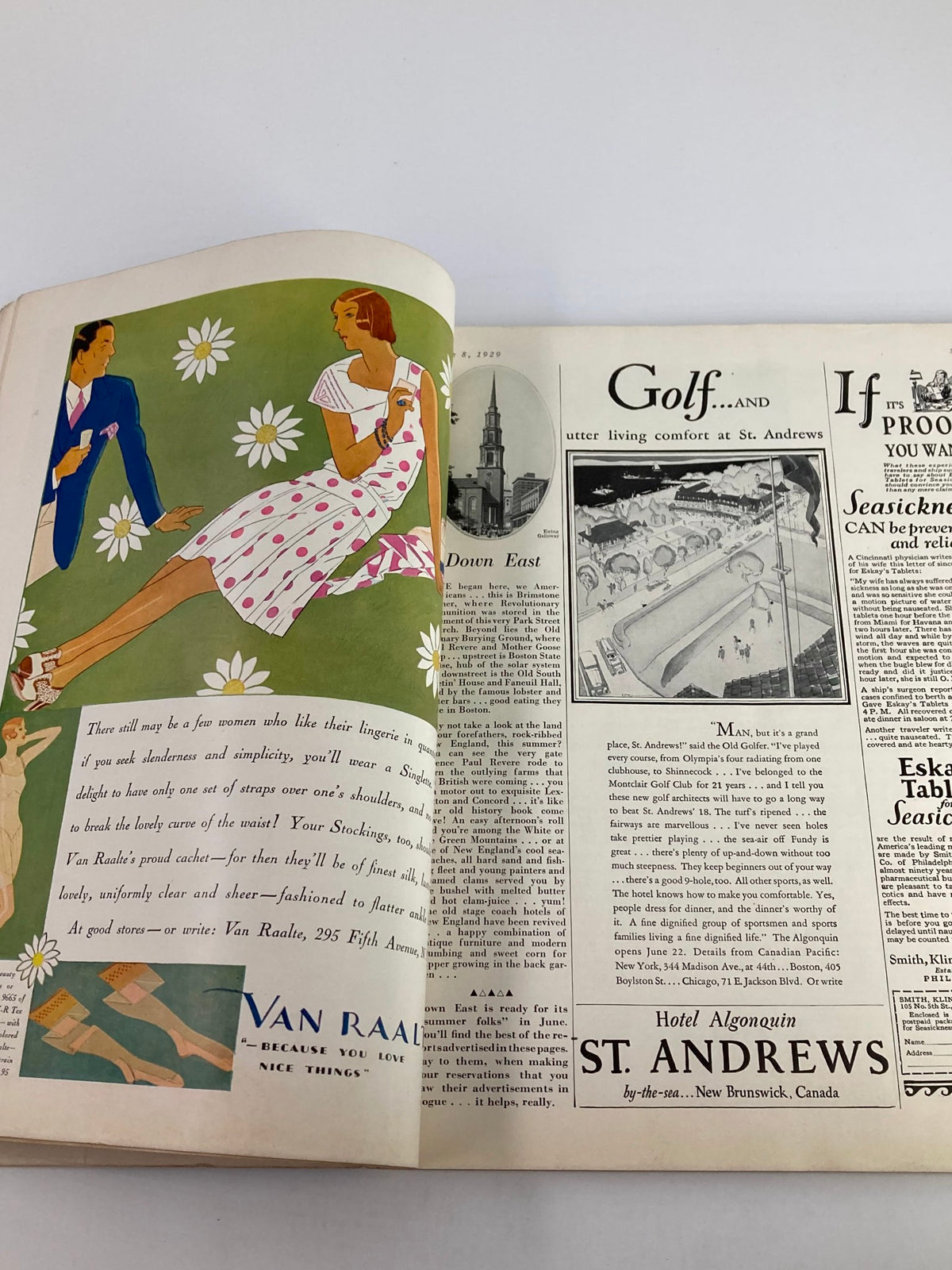
The twice-monthly publication schedule that Vogue maintained through this period means that the June 8 issue is one of two June editions from 1929, making its specific date and content distinct from its companion issue later in the month. The illustrated pages of a 1929 Vogue — drawings rather than photographs for many of the fashion presentations, in the Art Deco style that defined the era's visual language — are among the most aesthetically compelling artifacts in the history of American fashion publishing. The magazine's illustrators of this period, working in the graphic tradition established by artists like Georges Lepape and Eduardo Benito, produced images that have become synonymous with the visual identity of the 1920s.
About the Publication
Vogue was founded in 1892 as a New York society weekly before Condé Nast acquired it in 1909 and transformed it into the international fashion authority it remains today. By 1929, the American edition under Condé Nast's direct oversight and the art direction of Heyworth Campbell was operating at the height of its Jazz Age influence, combining fashion coverage, society reporting, and cultural criticism for an affluent, educated female readership. The magazine's twice-monthly publication schedule in this period meant that each issue was a carefully composed editorial statement rather than a catch-all compilation, and the cover illustrations — commissioned from the era's leading fashion artists — were among the most sophisticated commercial images being produced in America. The late 1920s Vogue is consistently cited by fashion historians and design researchers as a primary source of exceptional visual and editorial quality.
Key Highlights Inside
- Cover feature on the "Sports Frock in June Day Crepe," documenting one of the defining garment categories of late-1920s fashion — the sports frock's combination of athletic practicality and feminine elegance was a specific expression of the decade's broader transformation of women's dress and public life.
- Illustrated fashion pages consistent with Vogue's 1929 format, featuring the Art Deco-influenced illustration style that defined the magazine's visual identity in this period and has made late-1920s Vogue pages among the most aesthetically distinctive in the publication's history.
- Editorial content and advertising pages from June 1929 providing primary source documentation of the consumer culture, lifestyle ideals, and visual aesthetics of the final summer of the Roaring Twenties — independently valuable to fashion historians, design researchers, and social historians studying the period.
- Specific additional articles, fashion features, and society coverage beyond the cover subject are unconfirmed for this issue; interior content details should be verified against the physical copy.
Condition & Rarity
A surviving copy of this issue in good condition with no address label, minor marks throughout, gentle bending and creases on front corners, binding wear, and a plastic protective sleeve represents a legitimate and display-appropriate example of a publication approaching its hundredth year. The absence of a mailing label on the cover is a meaningful positive — label-free copies of late-1920s Vogue are preferable for display and allow the cover illustration to be appreciated without interruption. Corner creases and binding wear are honest condition markers on a 95-year-old twice-monthly fashion magazine that was never designed for archival preservation, and their presence does not diminish the issue's value as a research document or display piece when the cover illustration and interior pages remain intact and readable. The plastic sleeve provides appropriate ongoing protection. Late-1920s Vogue issues were printed on paper stock that has aged with variable results across surviving examples — cover gloss retention, interior page tanning, and binding integrity are the primary variables worth assessing against the accompanying photographs for any specific surviving copy from this period.
Looking for More Issues Like This?
Late-1920s Vogue issues in good condition with label-free covers are among the more rewarding and demanding finds in vintage fashion magazine collecting — they combine genuine aesthetic beauty with extraordinary historical significance, and clean examples from this specific year surface infrequently. The full archive of vintage Vogue issues at OriginalMagazines.com is the most comprehensive resource for exploring what survives across the magazine's long publishing history. For collectors and researchers drawn to the cultural richness of the final year of the Jazz Age, the 1929 magazine collection offers a broader view of American print culture from one of the most historically charged years of the entire twentieth century.