






Description
Collector's Note – Why This Issue Matters
The November 1976 issue of Vogue featuring Rosie Vela on the cover arrives at a genuinely transitional moment in the history of American fashion and the modeling industry alike. The mid-to-late 1970s represented a period of significant aesthetic evolution for Vogue — the severe, architectural minimalism that had defined much of early-1970s fashion was giving way to a warmer, more fluid sensibility, and the magazine's covers were reflecting that shift in real time. Rosie Vela was among the most photographed and recognizable faces in American fashion at this point in her career, a Texas-born model whose striking features and natural elegance made her a consistent presence in the pages of the major fashion publications of the era. Her appearance on the November 1976 Vogue cover places her at the center of one of fashion's most visually rich and culturally distinctive decades — a period when the boundaries between high fashion, popular culture, and emerging disco-era glamour were becoming productively blurred in ways that Vogue was uniquely positioned to document. For collectors who specialize in vintage Vogue issues from the 1970s, a Rosie Vela cover from this period represents exactly the kind of primary visual document that serious fashion archives are built around.
Rosie Vela's career trajectory in the mid-1970s is worth understanding in some depth, because it illuminates what her presence on this cover meant within the modeling industry of the era. She had risen quickly through the New York modeling world in the years preceding this cover, working with the leading photographers of the period and establishing herself as one of the faces most closely associated with a particular kind of American beauty — accessible and warm rather than remote and architectural, but with genuine high-fashion authority. Her Vogue covers from this period are among the most collected of her appearances precisely because they capture her at the height of her modeling career, before she transitioned into a successful music career in the 1980s with the release of her well-received album Zazu. That subsequent chapter of her life makes her 1970s fashion work feel, in retrospect, like the documentation of a remarkably multifaceted talent in its first major public expression. Collectors building archives around the magazines of 1976 will find this issue a visually striking and culturally specific document of a year when American fashion was finding the vocabulary that would define the late-decade aesthetic.
November 1976 carries its own specific cultural weight beyond the fashion context. The United States had just completed its bicentennial year — a moment of national self-examination and celebration that had influenced the cultural mood in ways that rippled into fashion, design, and the visual arts throughout 1976. Jimmy Carter had just been elected president weeks before this issue's cover date, bringing a distinctly different cultural sensibility to national public life than the Nixon and Ford years had produced. And the fashion world itself was in the midst of a genuinely exciting period: American designers were asserting themselves with increasing confidence on the international stage, the influence of Studio 54 and New York nightlife culture on high fashion was beginning to make itself felt, and the magazine covers of late 1976 capture a moment of stylistic possibility and cultural energy that makes them among the most visually compelling of the entire decade. A Vogue cover from this precise moment is not simply a fashion document — it is a cultural artifact of a very particular American mood.
About the Publication
Vogue, founded in 1892 and acquired by Condé Nast in 1909, had by the mid-1970s long established itself as the definitive American fashion authority — the publication whose editorial judgments on style, beauty, and culture carried more weight than any competitor in its field. Under the leadership of editor-in-chief Grace Mirabella, who had taken over from the legendary Diana Vreeland in 1971, the magazine in the mid-1970s was pursuing a somewhat more accessible and pragmatic editorial vision than the Vreeland era's extravagant fantasy approach, reflecting a readership that was increasingly professional, independent, and interested in fashion as a component of a fully realized modern life rather than as pure spectacle. The magazine's audience in 1976 was composed of fashion-engaged women across a wide demographic range — from industry professionals and dedicated collectors to aspirational general readers who looked to Vogue as the most authoritative available guide to what was beautiful, relevant, and worth paying attention to in the world of style and culture. Its covers in this period were among the most carefully composed and widely recognized images in American commercial photography.
Key Highlights Inside
- A cover appearance by Rosie Vela — one of the most prominent American models of the mid-1970s — photographed in the distinctive visual language of late-1970s Vogue covers, which balanced high-fashion authority with a warmth and approachability that reflected the Mirabella era's editorial philosophy.
- Fashion editorial content reflecting the aesthetic moment of autumn/winter 1976 — a season when the fluid, layered silhouettes and earth-toned palette that had characterized mid-decade fashion were beginning to evolve toward the more dramatic, body-conscious shapes that would define the late 1970s and early 1980s.
- Beauty and lifestyle coverage consistent with Vogue's mid-1970s editorial formula under Grace Mirabella — a format that gave significantly more space to practical beauty, health, and lifestyle content than the Vreeland era had, reflecting the magazine's evolving understanding of its readership's priorities and interests.
- Advertising content representing the full breadth of mid-1970s luxury fashion and beauty commerce — the designer advertisements, fragrance campaigns, and cosmetics spreads that appeared in a November Vogue of this era are themselves significant documents of the visual and commercial aesthetics of the period, and are among the most frequently reproduced images from 1970s fashion history.
- Editorial photography produced by the leading fashion photographers working with Vogue in the mid-1970s — a period when the magazine's visual identity was being shaped by photographers whose work defined the aesthetic standards of the decade and whose Vogue assignments remain among the most studied and collected images in the history of fashion photography.
Note: Specific interior article titles, featured designers, photographer credits, and additional editorial details beyond the cover subject are unconfirmed for this issue from available sources. The highlights above reflect verifiable historical context drawn from the cover, publication date, and the well-documented editorial character of Vogue during the Mirabella era.
Condition & Rarity
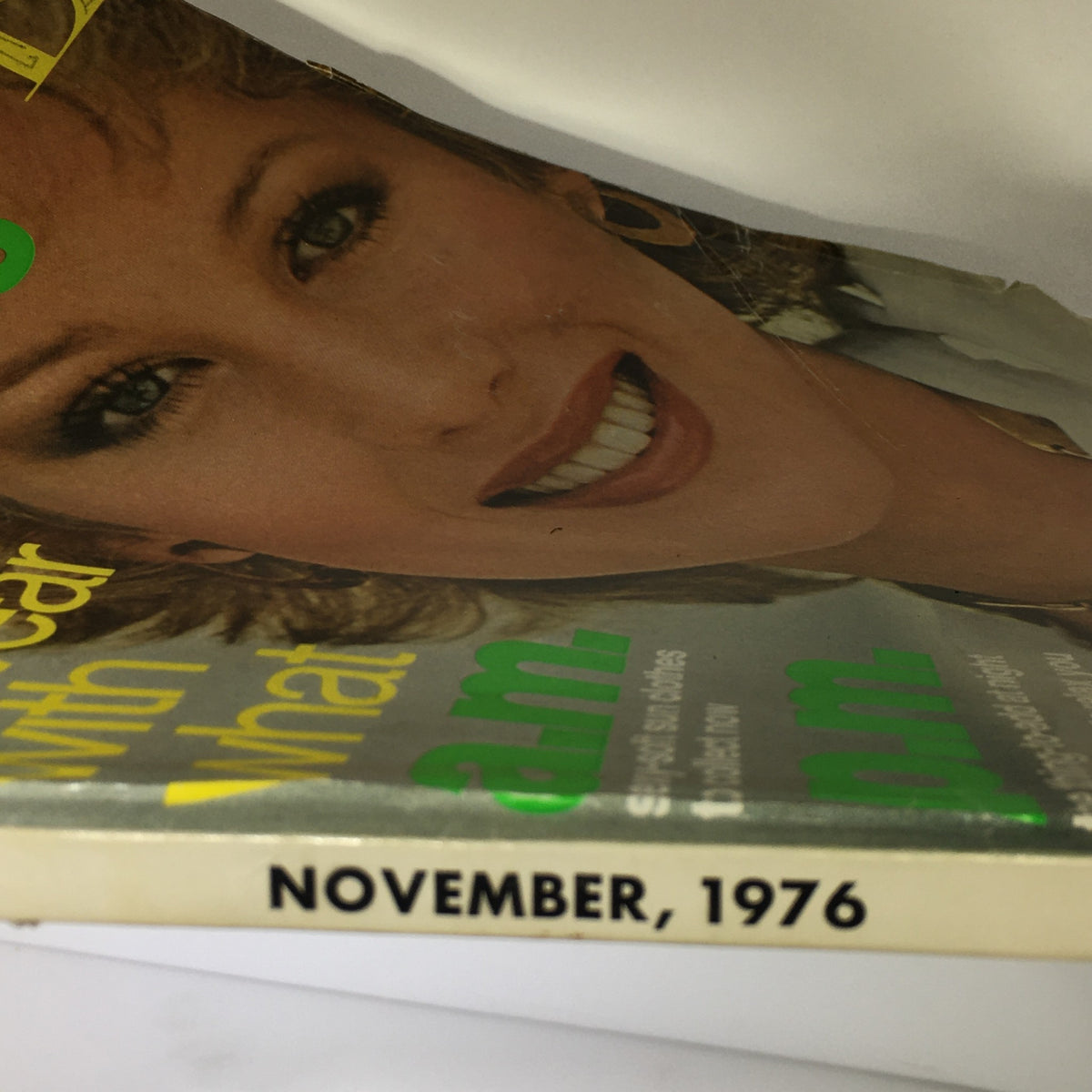
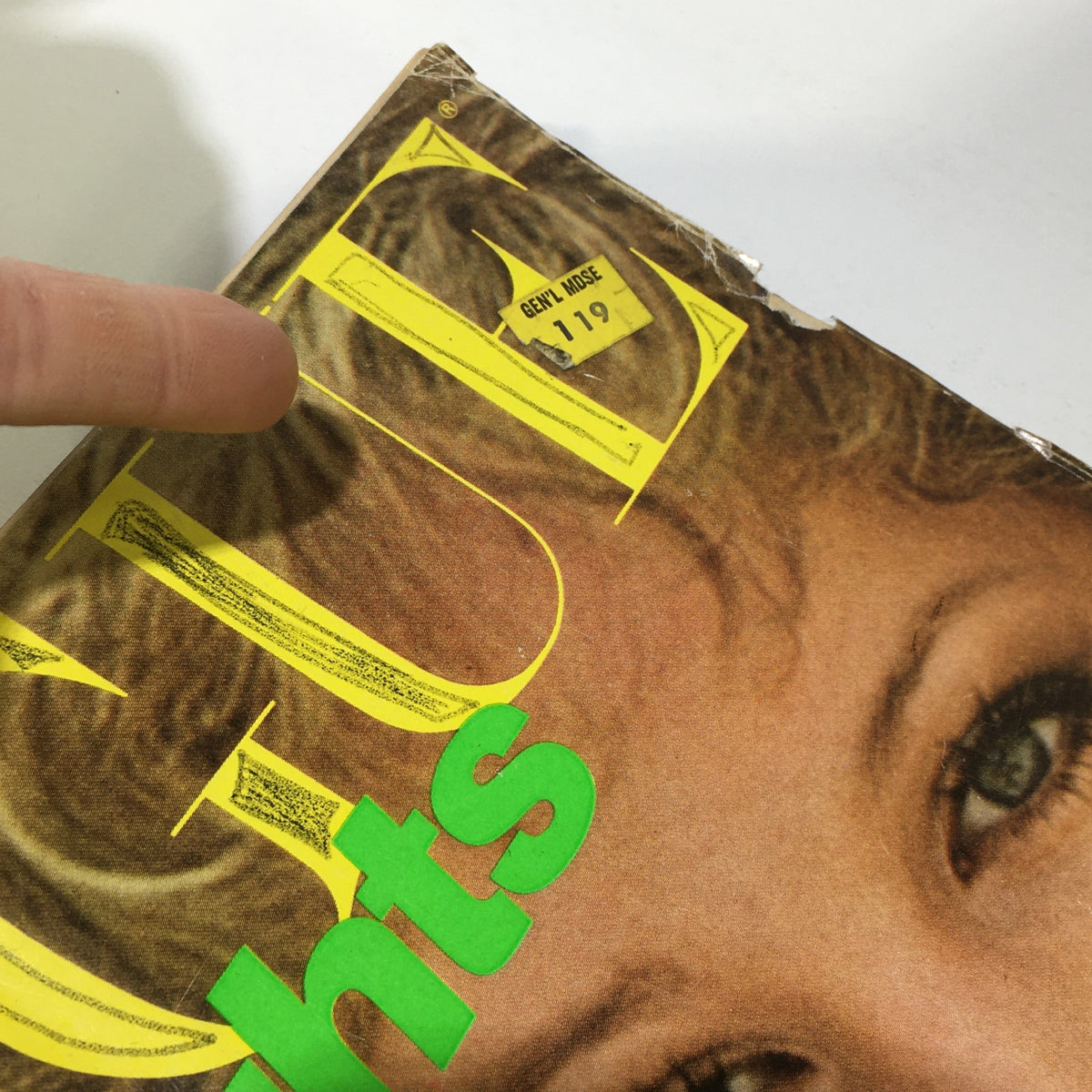
This copy is identified as a no-label newsstand edition — the preferred provenance for serious fashion magazine collectors — meaning it entered circulation through retail distribution rather than the subscription fulfillment system, arriving at the newsstand flat, unprocessed, and without the mailing labels and postal handling that characterize subscription copies. The condition details noted for this issue are worth evaluating carefully and honestly: a slight rip on the front cover, a price sticker, and assorted marks are present alongside the typical edge and binding wear expected of a nearly fifty-year-old magazine. In the collector market for vintage Vogue, front cover condition is the primary grading consideration, since the cover image is both the most visually significant element and the most frequently displayed surface — collectors seeking display-grade examples will want to examine the provided photographs closely to assess whether the rip and sticker placement affect the primary visual area of the cover. The price sticker, depending on its location and adhesive type, may be removable without damage, which is worth investigating carefully. The plastic protective sleeve indicates preservation-conscious storage at some point, which is a positive indicator for interior page condition — mid-1970s Vogue issues were printed on paper stock that ages reasonably well when protected from light and humidity, and sleeved copies typically retain better color fidelity and page integrity than unprotected examples. For collectors prioritizing the interior editorial and advertising content over pristine cover presentation, a reading-grade copy of this issue in a protective sleeve represents a perfectly legitimate and usable acquisition.
Looking for More Issues Like This?
Rosie Vela's mid-1970s Vogue covers are genuinely sought-after within the vintage fashion magazine collecting community, and copies in strong condition surface less frequently than demand would suggest — so if this November 1976 issue has already found a home, it is worth checking back as comparable examples do come to market periodically. The broader vintage Vogue collection at OriginalMagazines.com is an excellent resource for other significant covers and editorial issues from the magazine's rich 1970s run under Grace Mirabella — a period that produced some of the most visually distinctive and culturally resonant fashion photography in the publication's history. Collectors focused specifically on the style, culture, and aesthetic character of the mid-to-late 1970s will also find it well worth browsing the full 1976 magazine archive, which brings together fashion, general interest, and cultural publications from one of the most visually inventive and stylistically transitional years of the decade.