


Description
Collector's Note – Why This Issue Matters
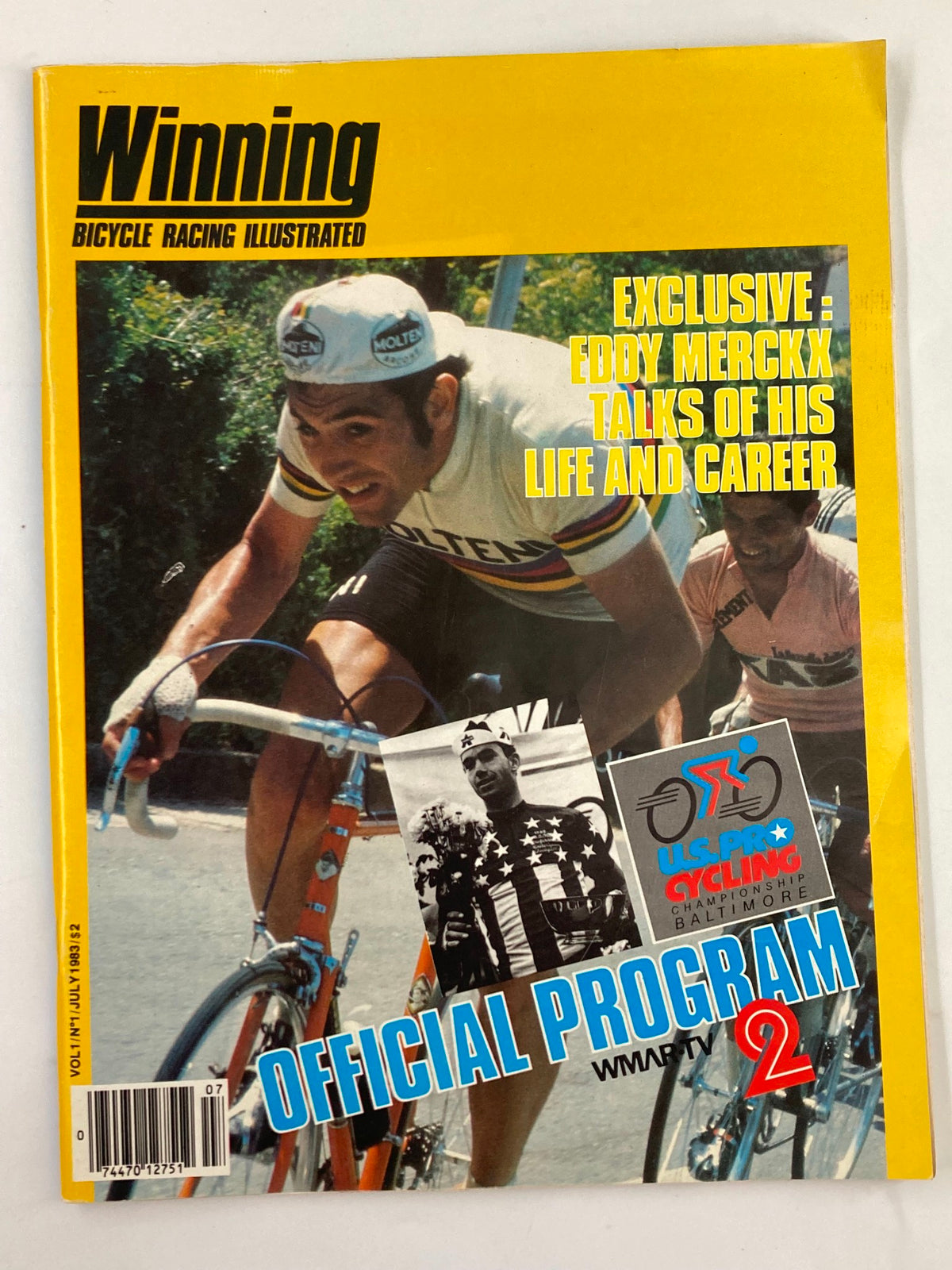
The July 1983 issue of Winning: Bicycle Racing Illustrated featuring Eddy Merckx is a document of a specific and historically interesting tension in cycling culture: the publication's engagement with its sport's greatest legend at the precise moment when the American cycling audience was first developing the knowledge and enthusiasm to understand what that legend meant. By 1983, Merckx had been retired from professional racing for seven years — he had ended his career in 1978 after winning five Tours de France, five Giro d'Italias, three World Championships, and an array of classics that had given him a statistical record that no cyclist before or since has approached. He was, and remains, the most decorated and most comprehensively dominant cyclist in the history of the sport. The timing of a Merckx cover feature in a July 1983 American cycling magazine is significant for what it says about the American cycling audience's developmental stage. The United States was in the early years of what would become a genuine cycling boom, driven by the popularity of recreational cycling, the emergence of American professional road racers including Greg LeMond, and the growing media coverage that was building an audience that could engage seriously with European professional road racing history and its greatest figures. A magazine feature on Merckx in this context was both educational and reverential — introducing or deepening the understanding of a rider whose career had ended before most of the American racing audience had been paying close attention. For collectors building a serious archive of American cycling journalism's formative period, the Winning: Bicycle Racing Illustrated collection at OriginalMagazines.com provides essential depth for a publication that was one of the primary vehicles through which serious cycling culture was being constructed for American audiences throughout the early 1980s.
Eddy Merckx's significance in the history of professional cycling extends well beyond his statistics, extraordinary as those are. He redefined what was possible within the sport through an approach that combined physical gifts of unusual breadth — exceptional climbing ability, devastating sprinting power, outstanding time trial capability, and the tactical intelligence to deploy all of these at will — with a racing philosophy of total aggression that made him simultaneously the most feared and the most admired competitor the peloton had ever contained. He attacked from distances that other riders considered suicidal, built time gaps that were supposed to be insurmountable against the best riders in the world, and won races through a combination of physical domination and psychological intimidation that his competitors spent their entire careers trying to counter without meaningful success. The nickname "The Cannibal" — bestowed on him by a French journalist because of the completeness of his victories — has stuck precisely because it captures something genuinely true about how he raced: he did not merely win, he consumed races entirely, leaving nothing for anyone else. By July 1983, when this issue appeared, that legacy was fully formed and fully recognized within European cycling culture, and American publications like Winning were doing the important cultural work of transmitting it to an American audience that was ready to receive it. The full range of 1983 magazines from this year documents the American cycling scene at a crucial transitional moment, with Greg LeMond emerging as a genuine Tour de France contender and the infrastructure of American professional cycling developing in ways that would produce the LeMond victories of 1986, 1989, and 1990.
The "Number 1" designation in this listing title — if it refers to this being the first issue of Winning: Bicycle Racing Illustrated — would give the July 1983 Merckx cover an additional layer of historical significance as a founding document of one of American cycling journalism's most important publications. A debut issue devoted to a cover feature on Eddy Merckx would have been a deliberate editorial statement about the publication's ambitions and its intended audience — signaling from its first pages that it intended to engage with European professional cycling at the highest level of knowledge and seriousness, rather than limiting itself to the recreational and fitness cycling coverage that dominated most American sports coverage of the period. Whether or not this is a true number-one issue, the combination of Merckx on the cover and the early 1980s American cycling boom as context makes this a historically significant item for any serious collector of cycling memorabilia and sports journalism history.
About the Publication
Winning: Bicycle Racing Illustrated was an American cycling magazine that operated during the early 1980s as one of the primary English-language publications covering professional road racing with the depth and seriousness that European cycling journalism had long provided but that American audiences had lacked access to in their own language. Its editorial format focused on race coverage, rider profiles, tactical analysis, and the historical and cultural context of professional cycling — particularly the European road racing calendar that centered on the Tour de France, the Giro d'Italia, and the spring classics. Its audience was the growing community of American cyclists who had moved beyond recreational riding into serious engagement with professional racing as a spectator sport and who wanted coverage that matched their developing knowledge of the sport's history, personalities, and competitive landscape. By 1983, the magazine was operating at the precise moment when American professional cycling was beginning to produce riders capable of competing at the highest European level, giving its coverage an immediacy and domestic relevance that earlier American cycling publications had lacked.
Key Highlights Inside
- Eddy Merckx cover feature — A cover story on Merckx in an American cycling magazine in July 1983 would have provided readers with a substantive engagement with the career and legacy of the most dominant cyclist in the history of the sport, situating his achievements within the context of European professional road racing history and making the case — which required no great effort — for his unique position among the sport's all-time greats. The specific angle and content of the feature are not confirmed in the listing, but a Merckx cover story in this period would have been either a career retrospective, a profile of his post-racing activities, or a comparative historical analysis placing his record in relation to the current generation of racing.
- Early 1980s American cycling culture documented — Winning issues from July 1983 capture the American cycling audience at a specific developmental moment — engaged enough with European professional racing to appreciate a Merckx cover feature, and increasingly aware that American riders were approaching the threshold of genuine Tour de France competitiveness. The editorial choices visible in any issue from this period of the magazine reflect the specific knowledge level and cultural enthusiasm of the audience it was serving.
- Professional road racing coverage from a pivotal transition year — The 1983 cycling season was a significant one in the sport's history, with Laurent Fignon winning his first Tour de France and the peloton entering a period of post-Merckx competitive recalibration that was still under way. Coverage of the professional racing scene from this specific season captures the sport at a moment of genuine competitive openness, before the LeMond era had begun and before the professional landscape had settled into the patterns of the mid-to-late 1980s.
- Historical cycling journalism from the American sport's formative media period — Winning: Bicycle Racing Illustrated issues from the early 1980s are primary documents of the period when serious American cycling journalism was being invented — when publications like this were creating the vocabulary, the reference points, and the cultural context through which American audiences could engage with European professional cycling. Issues from this founding period have a historical significance for cycling journalism history that later issues, produced for an audience whose basic formation was already complete, do not possess.
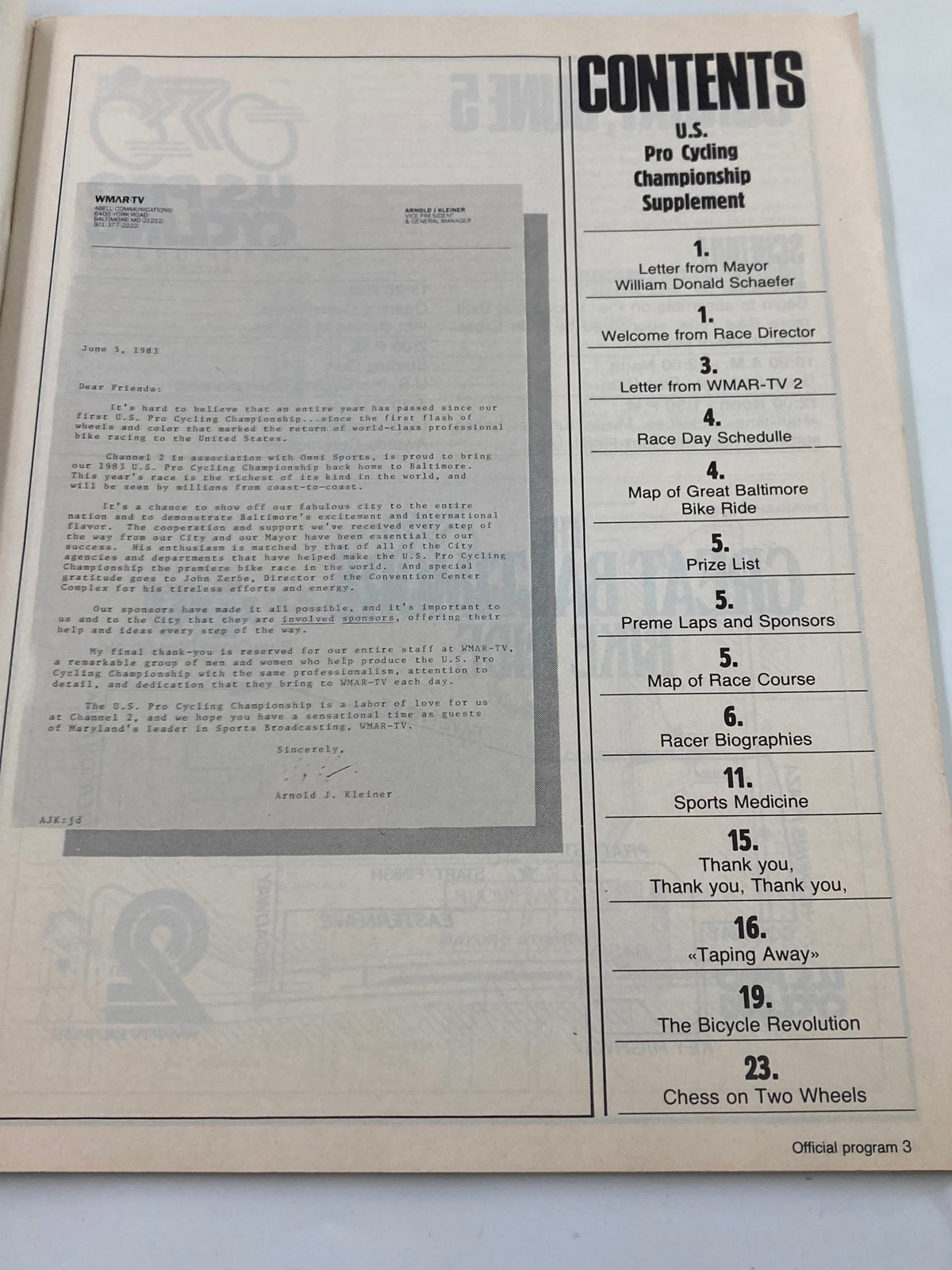
- Note: Specific additional articles, race coverage, technical content, and the full table of contents beyond the confirmed Merckx cover feature have not been independently verified for this issue. The highlights above reflect what is documentable from the listing description, Eddy Merckx's well-documented career and legacy, and the publication's established editorial identity and practices during this period.
Condition & Rarity
This issue is described as being in good condition with minor wear consistent with its age, presented without a mailing label and protected by a plastic covering — a combination of attributes that places it among the better-preserved surviving examples of this publication that are likely to be encountered in the collector market. The absence of a subscription address label is a meaningful positive condition attribute for a cycling magazine from 1983. Publications of this type and circulation size had substantial subscription bases, and labeled copies are common survivors from this era, with labels that have bonded to the cover stock after four decades in ways that make removal without surface disruption essentially impossible. A label-free cover preserves the full visual integrity of the Merckx cover photography and the magazine's design without the disruption that subscription labels create on the majority of surviving examples, indicating either newsstand origin or a subscription copy from which the label was removed close to the original receipt date. The plastic protective covering indicates intentional preservation care, correlating with better overall physical stability — reduced corner blunting, more stable spine condition, and less interior page toning — compared to unprotected copies stored under comparable conditions over the same period. Minor wear on a publication of this age is honest and expected; the relevant collector assessment is whether that wear is evenly distributed as general handling evidence or concentrated in ways that affect the cover photography or interior feature content that represents the issue's primary value. Collectors evaluating surviving copies should examine the spine edges for stress cracking, which is the most common structural failure point in perfect-bound magazines of this format, and the Merckx cover photography for any scuffing or color fading that would affect display quality.
Looking for More Issues Like This?
Early issues of Winning: Bicycle Racing Illustrated featuring Eddy Merckx occupy a specific and genuinely valued niche in cycling memorabilia collecting — sought by Merckx enthusiasts, American cycling history researchers, and sports journalism collectors who recognize these early 1980s publications as founding documents of serious American cycling media culture. If this July 1983 issue is no longer available, the Winning: Bicycle Racing Illustrated collection at OriginalMagazines.com is the most focused resource for exploring what else has surfaced from this important publication's run across its active years of American cycling journalism. For collectors building a broader documentary record of American sports culture and the cycling boom's early years, the 1983 magazines collection brings together a wide range of titles from that pivotal year, documenting the full sweep of American sports at a moment when professional cycling was just beginning its American breakthrough.