



Description
Collector's Note – Why This Issue Matters
The May 1977 issue of Women Sports magazine is significant because it places Billie Jean King and Sue Barker within the wider story of women’s athletics during the 1970s. King was already one of the defining figures in women’s tennis and a central advocate for gender equity in sports, while Barker represented the rising international strength of women’s tennis in the same decade. For collectors researching Billie Jean King magazine appearances, this issue belongs to a period when her influence extended beyond tournament results into the larger cultural conversation about women’s professional sports. It also reflects the importance of tennis as one of the key sports through which women athletes gained sustained mainstream recognition.
The date matters because 1977 falls within a transformative era for women athletes in American and international media. The 1970s saw women’s sports gaining greater visibility, stronger professional structures, and more serious magazine coverage, even as female athletes continued to fight for recognition, pay equity, and institutional support. A May 1977 issue featuring both Billie Jean King and Sue Barker reflects that changing landscape, especially in tennis, where women athletes were among the most visible leaders of the broader movement. It captures a moment when women’s sports were no longer being treated only as a novelty, but as a field with its own stars, narratives, rivalries, and historical importance. That makes the issue useful not only to tennis collectors, but also to researchers tracing the development of women-centered sports journalism.
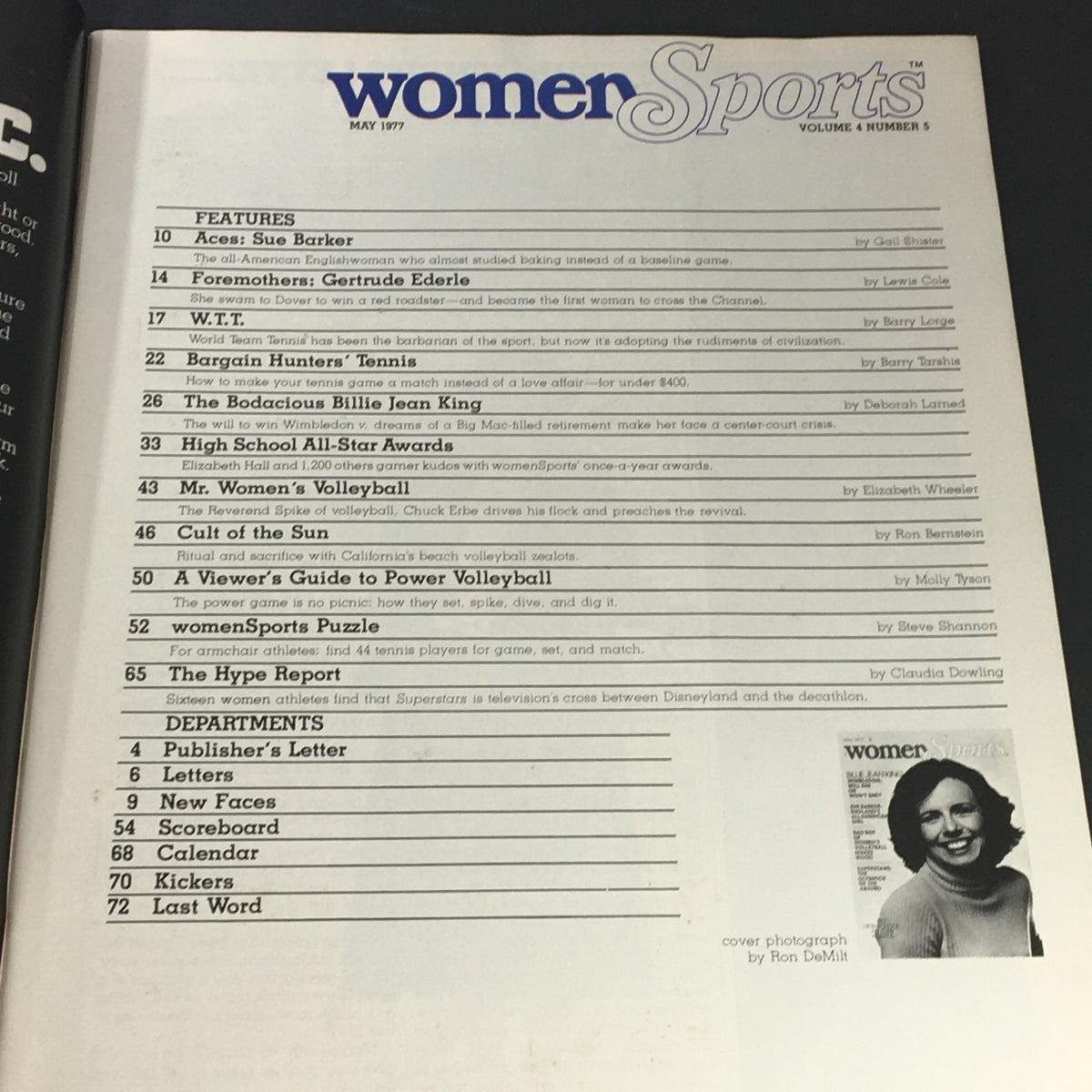
As part of the broader field of magazines from 1977, this issue also documents how print media helped frame the public image of women athletes before digital archives, social media, and modern sports branding. The listing does not provide a confirmed table of contents, so the issue is best understood through its verified identifiers: Women Sports, May 1977, Billie Jean King, Sue Barker, newsstand/no-label format, and good overall preservation. For collectors, that combination makes it a meaningful artifact of women’s tennis, 1970s sports journalism, and the expanding visibility of women’s athletic achievement. It also preserves a period-specific view of how female athletes were presented to readers at a time when dedicated coverage of women’s sports carried particular cultural weight.
About the Publication
Women Sports was a sports magazine focused on women athletes, women’s competition, fitness, and the broader culture of women in athletics during a period when mainstream sports coverage was still heavily centered on men. Its audience would have included sports fans, athletes, coaches, collectors, and readers interested in the emerging public profile of women’s professional and amateur sports. In the 1970s, a magazine dedicated to women’s sports carried real cultural significance because it gave sustained editorial space to athletes and stories that were often underrepresented elsewhere. Issues from this era are useful historical records because they preserve not only athlete coverage, but also the language, photography, advertising, and editorial priorities surrounding women’s sports at the time. The magazine’s focus makes it especially valuable for understanding how women athletes were documented within their own dedicated media context rather than only as occasional subjects in general sports publications.
Key Highlights Inside
- May 1977 issue of Women Sports magazine, placing it within a key decade for women’s athletic visibility.
- Features Billie Jean King and Sue Barker as the named sports figures in the listing.
- Represents 1970s women’s tennis during a period of growing professional visibility and cultural influence.
- Connects to the broader history of women athletes gaining stronger recognition in sports media.
- Reflects the importance of dedicated women’s sports publishing during a period when mainstream sports coverage often gave limited space to female athletes.
- Newsstand edition with no label, an important presentation detail for collectors who prefer unobstructed covers.
- Interior article details are not specified in the listing, so no specific features beyond the named athletes can be confirmed from the provided information.
Condition & Rarity
Surviving examples of the May 1977 Women Sports issue should be evaluated for cover wear, edge handling, spine condition, surface marks, page completeness, and the presence or absence of a mailing label. The listing describes the magazine as being in good overall shape with minimal wear typical for its age. It is also identified as a newsstand edition with no label and as having a plastic protective covering. In collector terms, the no-label newsstand format is meaningful because it preserves the cover presentation without the interruption of subscription-label residue or placement. Protective plastic helps reduce further dust exposure, rubbing, and handling stress, although the underlying grade still depends on the actual condition of the paper, cover, spine, and interior pages. For a 1977 women’s sports periodical, preservation is especially important because magazines of this type were often read, shared, displayed, and saved for their cultural significance rather than stored from the beginning as archival collectibles. Collectors should also pay attention to page attachment and interior completeness, since the research value of an issue like this depends heavily on retaining the full printed context around its named athletes and era.
Looking for More Issues Like This?
The May 1977 Women Sports issue featuring Billie Jean King and Sue Barker is a focused reference piece for collectors interested in women’s tennis, 1970s sports media, and the history of women athletes in print. Related material can be explored through Billie Jean King magazine issues, where other appearances connected to her athletic and cultural influence may appear. Collectors building a wider period archive may also want to compare it with other 1977 magazines to see how women’s sports, tennis, and broader popular culture were being documented during the same year. Looking across related issues can help show how coverage of women athletes developed across the decade and how tennis became one of the central vehicles for that visibility.