
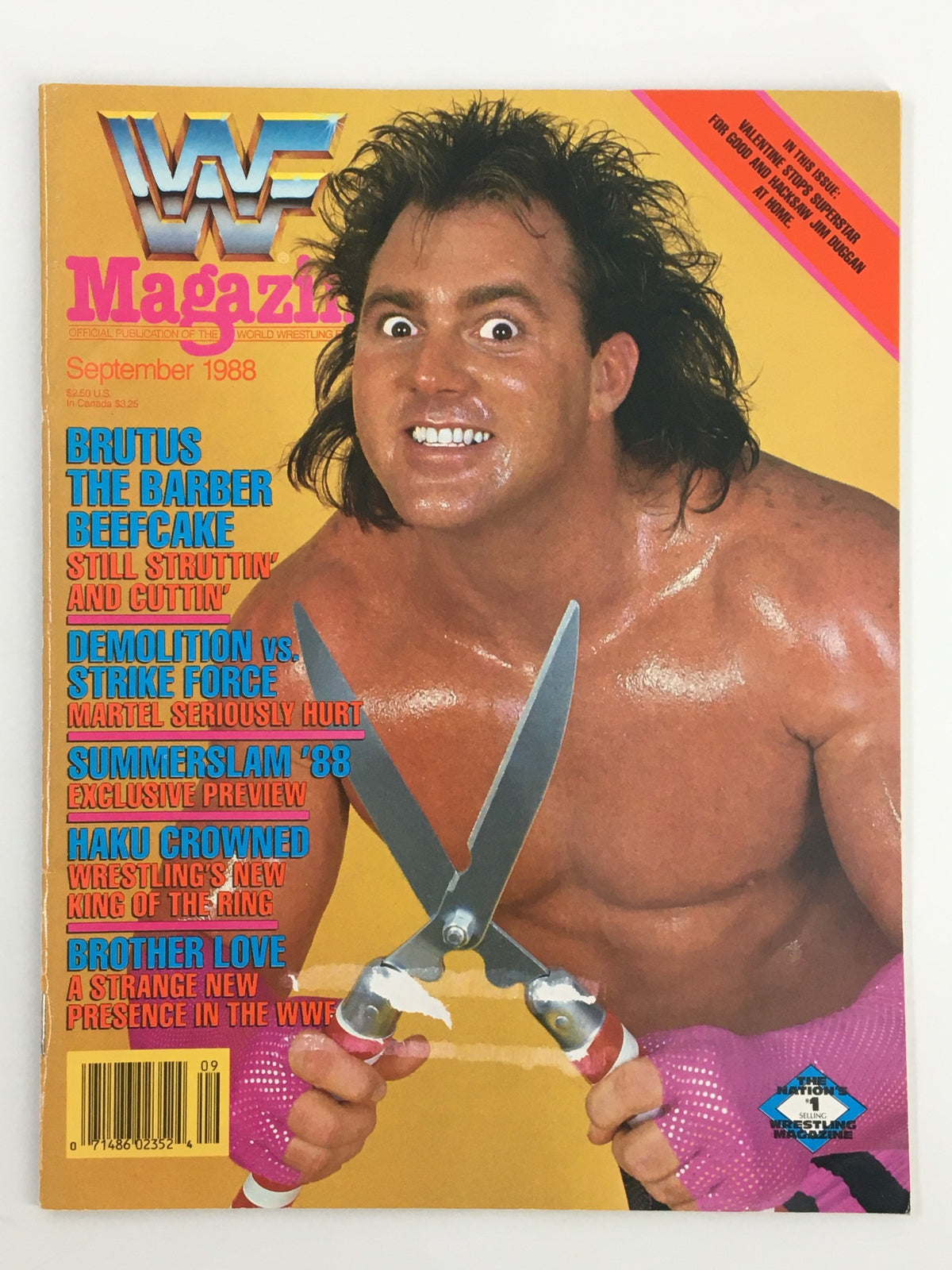


Description
Collector's Note – Why This Issue Matters
The September 1988 issue of WWF Magazine belongs to the height of the late-1980s World Wrestling Federation boom, when wrestling magazines were helping turn televised stars into full-scale pop-culture personalities. By this point, WWF was no longer just a regional promotion with national ambitions. It had become a merchandising and media force, and its magazines played an important role in extending storylines, spotlighting performers, and giving fans a collectible record of the era’s biggest names. WWF’s later corporate reporting describes WWF Magazine as one of the company’s monthly publications used to help shape and complement its programming, which helps explain why issues like this one matter beyond simple nostalgia.
The cover pairing of Brutus “The Barber” Beefcake and Haku gives the issue its specific historical interest. Beefcake was one of the promotion’s most recognizable late-1980s personalities, while Haku represented the kind of dangerous, hard-hitting heel presence that gave the era much of its dramatic texture. Even without a confirmed contents page, a September 1988 issue featuring both names captures WWF at a moment when character branding, visual presentation, and monthly print coverage were all tightly connected. Seen within the broader landscape of 1988 magazines, it reflects how wrestling was being packaged for fans at the end of the decade’s first major national expansion.
For collectors, that matters because official wrestling magazines preserved a version of the WWF experience that television alone did not. They fixed the look of the era on paper: cover photography, taglines, personality framing, and the editorial way the company wanted its stars remembered at the time. This September 1988 issue therefore works not just as memorabilia, but as a period artifact from the years when wrestling fandom was becoming increasingly magazine-driven, image-conscious, and collectible.
About the Publication
WWF Magazine was the company’s official fan magazine, part of the publishing arm that later corporate filings described as consisting primarily of monthly titles designed to complement WWF programming. Its audience was the core wrestling fan: readers who wanted photographs, feature stories, personality-driven coverage, and material that extended the world seen on television. In format and purpose, it belonged to the classic fan-magazine tradition, but with the added force of being tied directly to one of the most commercially aggressive entertainment brands of the late twentieth century.
Key Highlights Inside
- September 1988 issue of WWF Magazine, identified in the source listing by its Brutus “The Barber” Beefcake and Haku cover billing.
- Especially relevant to collectors interested in the late-1980s WWF expansion era, when official magazines were an important part of how the company shaped wrestler identity for fans.
- Its strongest historical value lies in documenting the visual and editorial culture of WWF at a moment when wrestling personalities were becoming major merchandising and media properties.
- The raw listing broadly describes the issue as spotlighting Beefcake and Haku and reflecting the larger wrestling culture of the late 1980s.
- Because no table of contents is provided here, exact article titles and interior departments should be verified from the issue itself or a contents page rather than inferred beyond the named cover subjects.
Condition & Rarity
The source description presents the issue as a good-condition example with minor age-related wear, a front address label, and a plastic protective covering. In collector terms, the protective sleeve is a positive preservation detail, while the address label reduces cover cleanliness compared with a true newsstand copy because it interrupts the original front-cover presentation. Serious evaluation of any surviving copy would still depend on page completeness, spine condition, corner wear, staple security, cover gloss, and whether bends, marks, or small tears materially affect display quality. For a WWF issue from 1988, collector appeal usually rests less on age alone than on the strength of the cover stars, the era represented, and the overall quality of survival.
Looking for More Issues Like This?
Late-1980s wrestling magazines are often most rewarding when viewed across a wider run, because month-to-month covers reveal how WWF was presenting its roster during one of its most important growth periods. Readers interested in this September 1988 issue will usually get the clearest context by exploring the broader WWF Magazine collection and comparing it with other magazines from 1988.
Seen in that larger frame, this issue becomes part of a broader record of how wrestling, branding, and fan culture came together in print. That wider context is often what makes a single WWF magazine issue especially rewarding for serious collectors and researchers.