




Description
Collector's Note – Why This Issue Matters
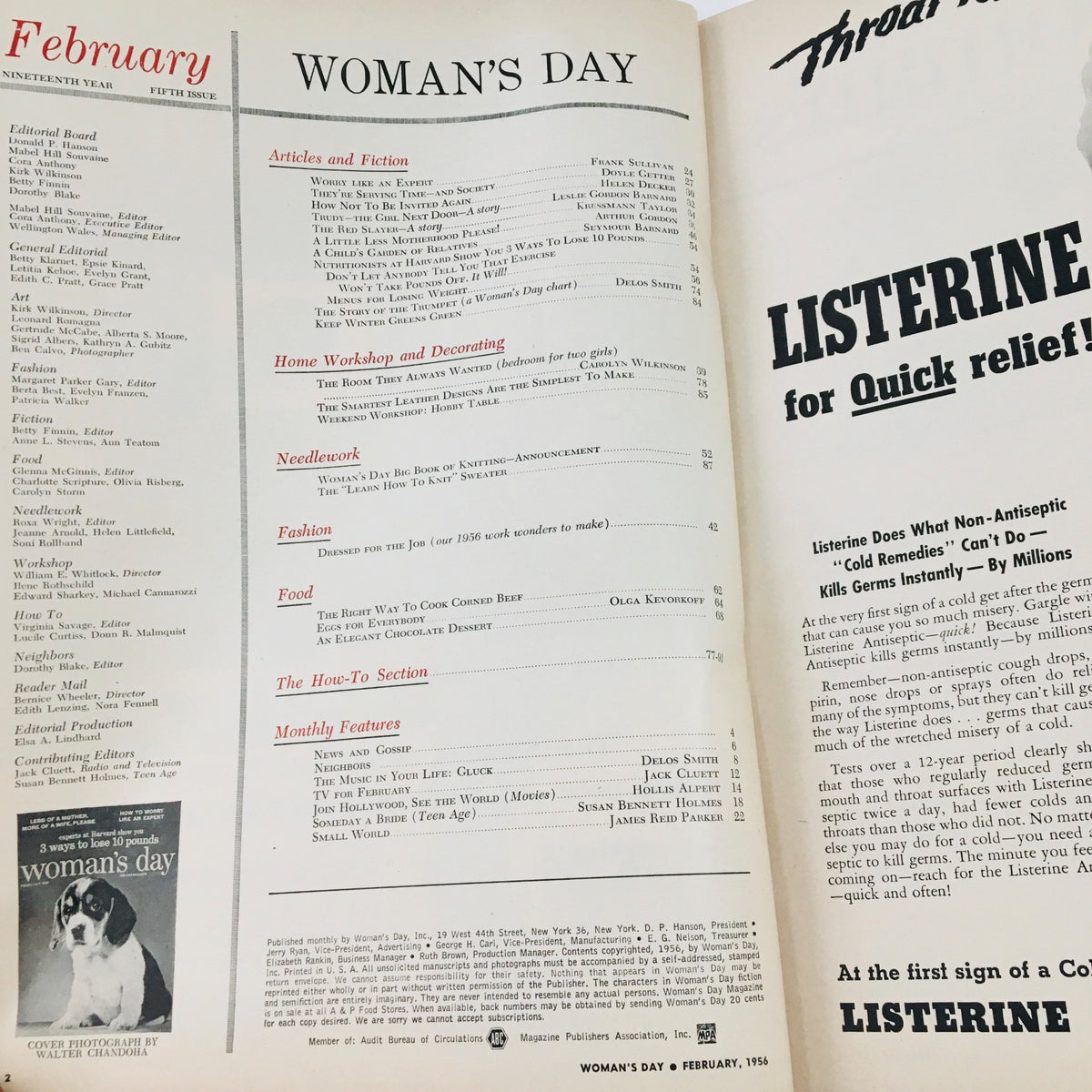
Woman’s Day magazine’s February 1956 issue is centered on the striking article title “Less of a Mother, More of a Wife.” That phrase immediately places the issue inside one of the most revealing domestic conversations of the 1950s. Mid-century women’s magazines often addressed marriage, motherhood, homemaking, beauty, family management, food, health, and emotional life through the lens of the home. A title like this shows how women’s identity was frequently discussed in relation to both children and husbands. It suggests a period concern with balancing maternal duty and marital companionship, though the exact argument of the article is not confirmed from the listing alone. For collectors of vintage Woman’s Day magazine issues, the February 1956 number is especially useful as a document of postwar domestic ideology. It preserves the language of a time when women’s magazines helped define what a “successful” home life was supposed to look like.
The issue matters because 1956 sits squarely within the postwar American household culture often associated with suburban growth, consumer appliances, family-centered advertising, and traditional gender expectations. Women’s magazines did not simply reflect that culture; they helped shape it. They offered advice, reassurance, instruction, and aspiration to readers navigating marriage, children, household work, and personal identity. The listing’s reference to marriage dynamics, homemaking tips, and personal stories fits that broader editorial world. The phrase “Less of a Mother, More of a Wife” is particularly valuable to social-history collectors because it captures a tension rather than a simple ideal. It points toward the emotional and relational expectations placed on women in the period. Without confirmed page text, however, the issue should be described as a window into those themes rather than as evidence of a specific editorial position.
As a February 1956 artifact, this magazine belongs to a period when American women’s lives were being framed through both continuity and change. Public culture often emphasized domestic stability after World War II, but women’s magazines also recorded anxieties, adjustments, and contradictions inside that ideal. Articles about marriage and motherhood can reveal what editors believed readers were worrying about, aspiring to, or being encouraged to improve. Advertisements from the same issue would likely deepen that picture by showing the household products, beauty standards, foods, and consumer habits marketed to women at the time, though no specific ads are confirmed in the listing. Collectors researching original magazines from 1956 often look for issues that show everyday values as clearly as major headlines. This Woman’s Day issue does that through domestic advice and gender expectations. It is a period document of how mid-century magazine culture spoke to women about family, marriage, and the self.
About the Publication
Woman’s Day was a major American women’s magazine known for practical household content, recipes, crafts, family advice, consumer guidance, health material, and lifestyle features. Its audience consisted largely of women managing homes, families, budgets, meals, and everyday domestic responsibilities. By the 1950s, the magazine belonged to a broad publishing category that treated the household as both a personal space and a cultural institution. Its editorial format typically combined advice, service journalism, personal features, advertisements, seasonal ideas, and practical instruction. Unlike celebrity-centered entertainment magazines, Woman’s Day spoke directly to the routines and expectations of domestic life. That made it an influential source for understanding how women were addressed as wives, mothers, shoppers, cooks, caretakers, and household decision-makers. A February 1956 issue with an article titled “Less of a Mother, More of a Wife” fits squarely within that editorial environment. It reflects the magazine’s role in presenting family relationships as subjects for guidance and improvement. For collectors, vintage Woman’s Day issues are valuable because they preserve the ordinary language of mid-century domestic culture. They show how gender roles, consumer habits, and family ideals were packaged for a mass readership.
Key Highlights Inside
- The issue is dated February 1956. That places it firmly within the postwar decade most associated with suburban family life, household consumer culture, and traditional domestic expectations. For collectors, the date helps anchor the magazine within a specific moment in American women’s publishing.
- The listing identifies the article title “Less of a Mother, More of a Wife.” That is the strongest confirmed content detail associated with the issue. It suggests a feature concerned with marriage, motherhood, and the balance of women’s domestic roles, without confirming the exact article argument.
- The issue is relevant to the study of women’s roles in the 1950s. Women’s magazines often served as guides to family life, emotional expectations, household management, and social respectability. This issue’s confirmed theme makes it especially useful for collectors interested in gender history and domestic advice literature.
- The listing mentions marriage dynamics. That broad subject fits the article title and the magazine’s editorial category. No specific advice, author, case study, or quoted passage is confirmed from the provided listing.
- The listing also references homemaking tips. Homemaking material was central to women’s magazines of the period and often included guidance on food, cleaning, decorating, sewing, budgeting, or household planning. Specific tips, recipes, projects, or departments are not confirmed in the listing.
- The issue is described as including personal stories. Personal-story material in women’s magazines often helped make advice feel relatable and emotionally grounded. The listing does not identify any specific story titles, subjects, or contributors, so those details should remain unclaimed.
- The listing notes that the magazine includes articles and advertisements providing a snapshot of women’s roles in the 1950s. Advertisements in women’s magazines are often historically valuable because they show how products, beauty ideals, family expectations, and household labor were marketed. No specific advertisers or products are confirmed from the provided description.
- The issue is described as having no label. A no-label example can be appealing because the cover surface remains visually uninterrupted. That matters for collectors who value clean presentation and original cover design.
- The listing confirms that a few pages are missing from the back. This is a major condition and completeness detail. It means the magazine should not be treated as a fully intact issue unless those missing pages are separately accounted for.
Condition & Rarity
Condition for a February 1956 Woman’s Day issue should be evaluated with close attention to both general wear and completeness. The listing describes the magazine as being in good condition with minor wear typical for its age. That kind of wear is expected for a mid-century household magazine that was originally produced for practical reading and repeated handling. Women’s magazines were often used around the home for recipes, advice, projects, advertisements, and reference, so surviving examples may show more handling than purely display-oriented publications. The no-label detail is favorable for cover presentation because the original cover design is not interrupted by an address label. The plastic protective covering mentioned in the listing is useful for storage and handling after preservation. However, the most important condition disclosure is that a few pages are missing from the back. Missing pages materially affect collector evaluation because they change the issue from a complete magazine to an incomplete surviving example. Even if the main article remains present, back-page loss can affect advertising content, departments, or other historically useful material. Collectors should inspect any surviving example for page completeness, cover attachment, spine condition, paper toning, brittleness, tears, interior markings, and whether the “Less of a Mother, More of a Wife” article is intact.
Looking for More Issues Like This?
The February 1956 Woman’s Day issue featuring “Less of a Mother, More of a Wife” is the kind of magazine that appeals to collectors of women’s history, domestic culture, advertising, and mid-century social life. Its subject makes it useful not only as a lifestyle publication, but as a record of how marriage and motherhood were discussed in popular print. When the exact issue is difficult to locate, related issues from the same title can help build a broader picture of the magazine’s editorial voice. Collectors may want to browse more Woman’s Day back issues to compare advice columns, household features, recipes, advertisements, and changing messages about women’s roles. That broader run is especially valuable because domestic magazines documented everyday expectations with unusual consistency. For a wider historical frame, magazines published in 1956 can also help place this issue within its original cultural setting. Looking across the year shows how family life, consumer products, fashion, food, entertainment, and social values appeared together in print. A single women’s-magazine issue becomes more meaningful when viewed beside other publications from the same moment. For collectors interested in the social history of the 1950s, this issue is a focused reference point. It shows how popular magazines translated marriage, motherhood, and domestic identity into everyday advice for readers.