


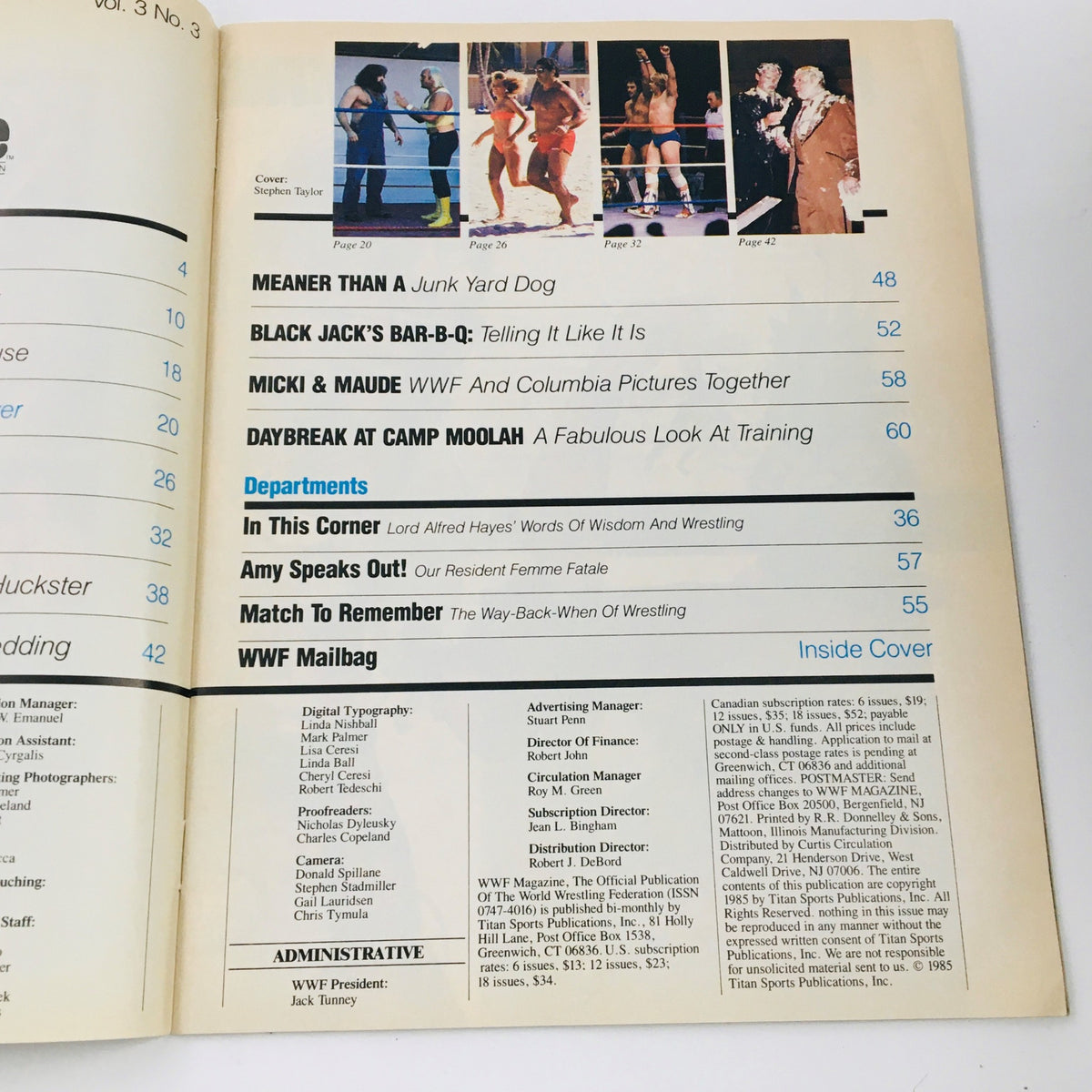
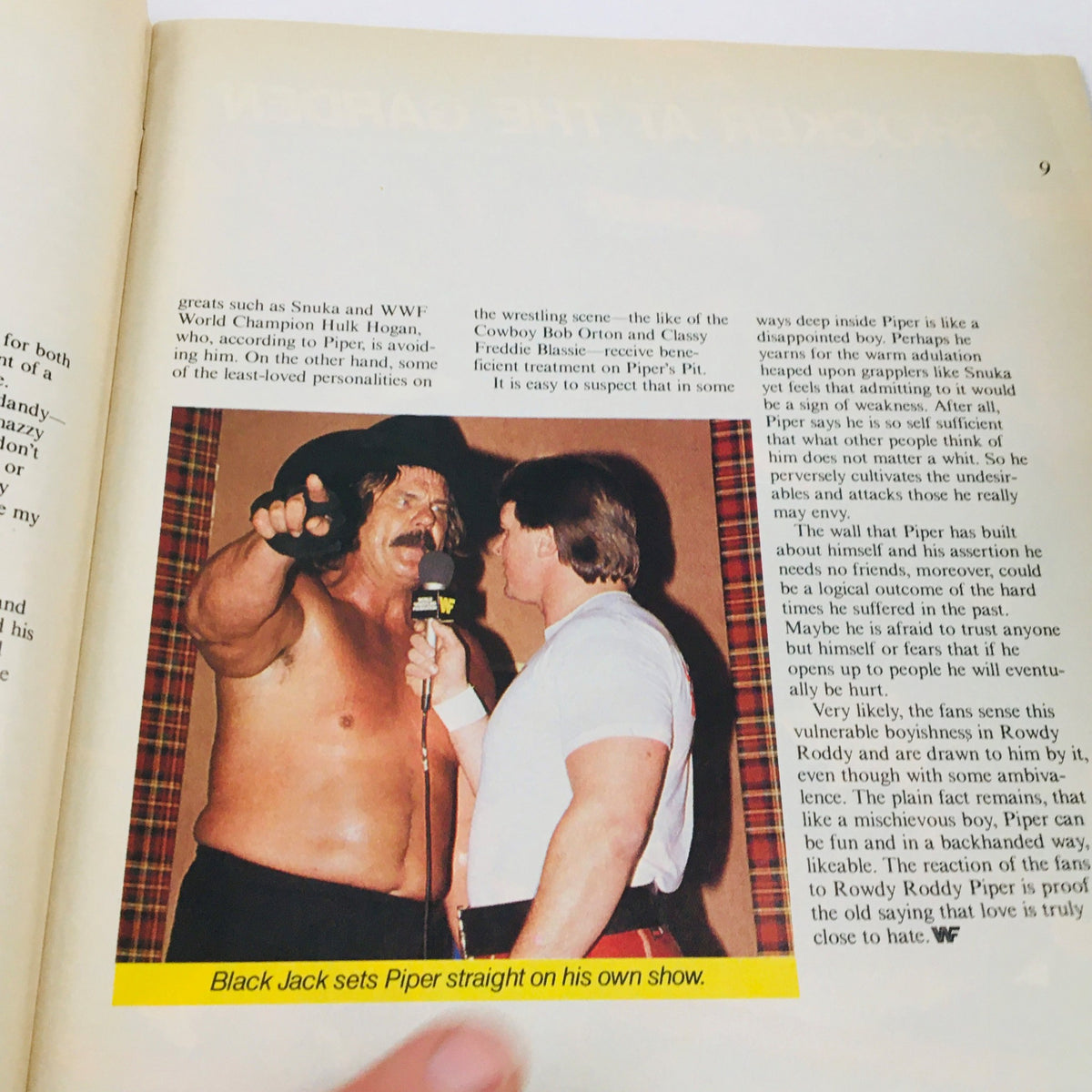

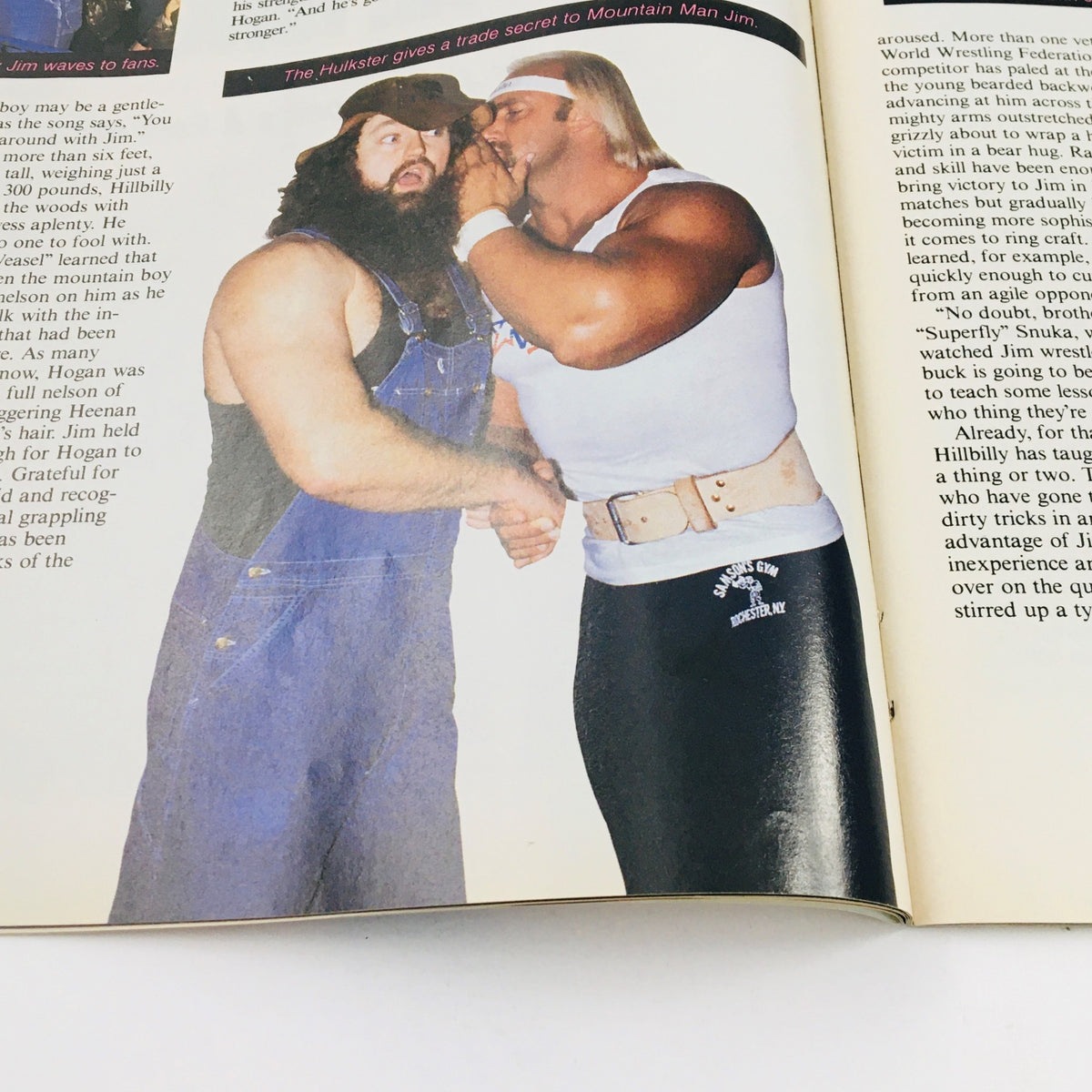


Description
Collector's Note – Why This Issue Matters
April 1985 sits almost precisely at the epicenter of professional wrestling's most transformative period. Just weeks before this issue would have reached subscribers, WrestleMania I had taken place on March 31, 1985 — the inaugural event that would redefine what professional wrestling could be as a mainstream entertainment product. The WWF under Vince McMahon Jr. was in the middle of a calculated and aggressive national expansion, breaking from the regional territory system that had governed the industry for decades and positioning itself as the singular, dominant force in American professional wrestling. The cultural machinery driving that expansion was built on larger-than-life personalities, and this issue features three of the most important ones the WWF had deployed in that effort. For collectors assembling a serious archive of magazines from 1985, this issue lands in one of the most historically significant months the WWF ever produced.
Hulk Hogan had been WWF Champion since January 1984, and by April 1985 he was operating at the center of a cultural phenomenon that extended well beyond wrestling's traditional audience. His participation in WrestleMania I alongside Mr. T had brought mainstream celebrity attention to the WWF in a way that no previous wrestling event had achieved. Roddy Piper, meanwhile, was arguably the most important heel in the company at this moment — his heat was genuine, his charisma undeniable, and his role as Hogan's primary antagonist in the WrestleMania build had made him one of the most recognizable villains in American popular entertainment. Hillbilly Jim, debuting as a character in early 1985 with Hogan's direct on-screen mentorship as part of his storyline introduction, represented the WWF's strategy of creating vivid, broadly accessible characters designed to reach new audiences. All three men appearing in the same April 1985 issue of WWF Magazine makes this a document of the roster at its most culturally potent.
What makes this issue particularly valuable as a historical artifact is the specific window it opens onto the WWF's storytelling apparatus in the immediate aftermath of WrestleMania I. The magazine was not simply a publication — it was an extension of the WWF's narrative world, a place where feuds were deepened, characters were elaborated, and fans were given access to a version of their favorite wrestlers that television alone couldn't provide. In April 1985, with the company riding the momentum of the most successful event in its history to that point, the editorial content of the magazine would have reflected an organization that knew it had achieved something genuinely new. That combination of historical timing and roster depth makes this one of the more significant issues in the magazine's run.
About the Publication
WWF Magazine launched in 1983 as the official publication of the World Wrestling Federation and served as the primary print media arm of the promotion throughout its most significant period of growth and mainstream cultural impact. Published monthly, it was aimed squarely at the WWF's fanbase — ranging from dedicated adult followers of the sport to the large and growing audience of younger fans that the promotion was actively cultivating throughout the mid-eighties. Its editorial format combined kayfabe-consistent character features and storyline coverage with photographs, interviews presented in the voice of the promotion, and event previews and recaps. It functioned simultaneously as a fan magazine, a promotional vehicle, and an extension of the WWF's narrative universe — a combination that made it unlike any other sports publication of its era. For the millions of fans who grew up watching the WWF during the Rock 'n' Wrestling era, the magazine was a direct line to the world they watched on television, and its issues from the mid-eighties represent some of the most document-rich artifacts of that cultural moment.
Key Highlights Inside
- Hulk Hogan featured coverage — With WrestleMania I just days old at the time of this issue's release, any Hogan content would have carried the weight of the company's most significant milestone to that point. Hogan was at the absolute peak of his first championship reign and his mainstream cultural visibility, making his presence in this issue a document of one of the most important figures in the history of the industry at his commercial and creative apex.
- Roddy Piper featured coverage — Piper's role as the WWF's premier heel in early 1985 made him one of the most compelling figures in the promotion's roster. His appearance in this issue places it within the specific chapter of his career that many historians consider his most impactful — the period when his antagonism was at its sharpest and his cultural visibility was at its broadest.
- Hillbilly Jim featured coverage — Hillbilly Jim was introduced to WWF audiences in early 1985 as a direct Hogan protégé, making his appearance here consistent with his debut-era storyline positioning. His inclusion alongside Hogan and Piper in the same issue reflects the WWF's mid-eighties strategy of building a roster of vivid, character-driven personalities around its central stars.
- Post-WrestleMania I context — This issue was published in the immediate wake of WrestleMania I, the event that permanently altered the trajectory of professional wrestling as an entertainment industry. Any coverage of the WWF roster and its storylines in April 1985 carries the implicit historical weight of that moment — a promotion that had just proved its most ambitious concept and was moving forward with enormous momentum.
- Note: Specific article titles, interview details, and additional interior features beyond those described in the listing have not been confirmed from available sources. The highlights above reflect documented and verifiable content based on the named subjects, publication date, and the WWF's well-documented activities during this period.
Condition & Rarity
Surviving copies of this issue in good condition with an address label on the back cover represent a standard subscriber copy presentation for WWF Magazine from this era — and importantly, a back-cover label is a meaningfully better condition scenario than a front-cover label for display purposes, leaving the primary cover imagery fully intact. Light wear consistent with forty years of age is expected and does not materially affect the legibility or visual integrity of the cover. The plastic protective covering noted in preserved copies is a significant positive indicator, suggesting intentional collector stewardship at some point in the magazine's history and substantially reducing the risk of the moisture damage, spine splitting, and surface abrasion that account for most condition losses in periodicals of this age and paper stock. WWF Magazine from the mid-eighties was printed on relatively standard newsstand paper that is susceptible to tanning and brittleness if stored in suboptimal conditions, so interior page quality is an important secondary condition point for collectors evaluating any surviving copy. A copy presenting with a clean front cover, intact spine, and well-preserved interior pages represents a genuinely solid example of one of the more historically significant issues in the magazine's run.
Looking for More Issues Like This?
The April 1985 issue is one of the most historically grounded entries in WWF Magazine's entire catalog, and copies in collectible condition are increasingly difficult to locate given how widely read and actively handled these magazines were during their original circulation. The WWF Magazine collection at OriginalMagazines.com is the best place to explore what's currently available across the publication's run — particularly for collectors focused on the mid-eighties golden era. For those building by year rather than title, the 1985 magazines collection brings together sports, entertainment, and culture titles from across that landmark year in American popular culture.