




Description
Collector's Note – Why This Issue Matters
The WWF Magazine December 1985–January 1986 issue featuring Roddy Piper and Corporal Kirchner is a primary document of the World Wrestling Federation at the single most commercially and culturally transformative moment in the history of professional wrestling — the specific months immediately following WrestleMania I on March 31, 1985, when the WWF's national expansion was in full operation and the Rock 'n' Wrestling Connection had made professional wrestling a mainstream American entertainment phenomenon for the first time. By December 1985, Hulk Hogan was the WWF Champion and one of the most recognized figures in American popular culture; Roddy Piper, confirmed as a featured subject of this issue, was the promotion's most compelling villain — a legitimately charismatic, unpredictable, and physically credible heel whose feud with Hogan had been the central narrative of WrestleMania I and whose "Piper's Pit" interview segment was among the most watched and talked-about elements of the WWF's television programming. Piper's specific identity in December 1985 — as the man who had smashed a coconut over Jimmy Snuka's head on Piper's Pit, who had faced Hogan at the Garden, who was simultaneously beloved and despised by the rapidly expanding WWF audience — gave any publication featuring him in this specific month a documentary significance that goes well beyond routine celebrity magazine coverage. For collectors building archives of WWF World Wrestling Federation magazines, the December 1985–January 1986 issue represents the publication at the precise peak of the promotion's first wave of national mainstream dominance.
Corporal Kirchner's confirmed presence as a featured subject alongside Piper adds a specific dimension of historical interest for serious WWF historians. Kirchner had debuted in the WWF in late 1985, presented as a military-themed babyface whose character — the patriotic soldier — was designed to appeal to the same mainstream American audience that Hulk Hogan's American hero persona had demonstrated was receptive to uncomplicated patriotic wrestling narratives in the post-WrestleMania I commercial expansion. A December 1985 feature on Kirchner documents him at the very opening of his WWF run, before the specific career arc that would follow — primary evidence of the promotion's active character development and roster expansion during the months when the WWF's national television programming was reaching new markets weekly and when the promotion's creative team was developing the roster of characters that would sustain its expansion through 1986 and the run-up to WrestleMania II. The December 1985–January 1986 date also situates this issue in the specific context of the first holiday season following WrestleMania I — the Christmas shopping season in which WWF merchandise, action figures, and publications were reaching their first peak of mainstream consumer market presence, a historically documented commercial milestone that gives this specific issue a secondary collecting significance beyond its editorial content. Collectors focused on 1985 magazines as documents of American popular entertainment at the height of the mid-decade WWF explosion will find this issue providing primary evidence from the specific publication that most directly documented the promotion's character roster and storyline development during its most commercially active expansion phase.
The Rock 'n' Wrestling Connection context that surrounds this December 1985–January 1986 issue cannot be overstated for its historical significance. The WWF's MTV partnership, the Cyndi Lauper association, the Saturday Night's Main Event television specials, and the extraordinary success of WrestleMania I had together produced a cultural moment in which professional wrestling was being discussed and consumed by Americans who had never previously watched the sport, and the WWF Magazine was the primary print vehicle through which that expanded audience was receiving its editorial engagement with the promotion's characters and storylines. A December 1985 issue featuring two of the promotion's most active characters is therefore not simply a fan magazine but primary documentation of the editorial strategy through which the WWF was cultivating and sustaining its newly expanded mainstream audience during the most consequential months of the promotion's modern history.
About the Publication
WWF Magazine was the official publication of the World Wrestling Federation, produced during the period of the WWF's transformation from regional promotion to national entertainment brand under Vince McMahon's ownership and creative direction. Its editorial format combined wrestler profiles, kayfabe-consistent storyline coverage, championship histories, match previews and recaps, and the specific character-building journalism that sustained audience engagement between television appearances and live events. Its audience in December 1985 was the rapidly expanding WWF fan base that the Rock 'n' Wrestling Connection had extended beyond the promotion's traditional regional base into a genuinely national, demographically diverse audience whose appetite for WWF character and storyline documentation made the magazine one of the most commercially significant publications in the wrestling press category.
Key Highlights Inside
- Roddy Piper — confirmed featured coverage — Documentation of the WWF's most compelling villain in December 1985, at the specific peak of his first championship-era feud cycle and his identity as the promotion's preeminent heel following WrestleMania I. Piper's confirmed presence in this issue gives it a specific documentary significance within the WWF's December 1985 character roster, as he was simultaneously the most polarizing and most talked-about performer in the promotion at this exact moment.
- Corporal Kirchner — confirmed featured coverage — Documentation of the military-themed babyface character at the very opening of his WWF run in late 1985, providing primary evidence of the promotion's active character development and roster expansion during the months of maximum national commercial growth. Early-career WWF documentation of roster additions from this expansion period is specifically sought by collectors building comprehensive character archives of the Golden Age promotion.
- December 1985–January 1986 — first post-WrestleMania I holiday season — Published during the first Christmas shopping season following WrestleMania I's March 1985 debut, when WWF merchandise was reaching its first peak of mainstream consumer market presence and when the publication's documentation of the character roster carried maximum commercial and cultural weight for the newly expanded national audience.
- No subscription label — confirmed newsstand status — Full unobstructed cover design preserved without address label obstruction, the most significant positive visual condition attribute for a publication whose Piper and Kirchner cover photography is the primary visual document of this issue's historical significance.
Note: Specific interior article titles, additional wrestler features, and confirmed content details beyond the cover subjects have not been provided in the available listing. The highlights above reflect only what is verifiable from the listing and well-documented public record surrounding the WWF's December 1985 character roster and promotional context.
Condition & Rarity
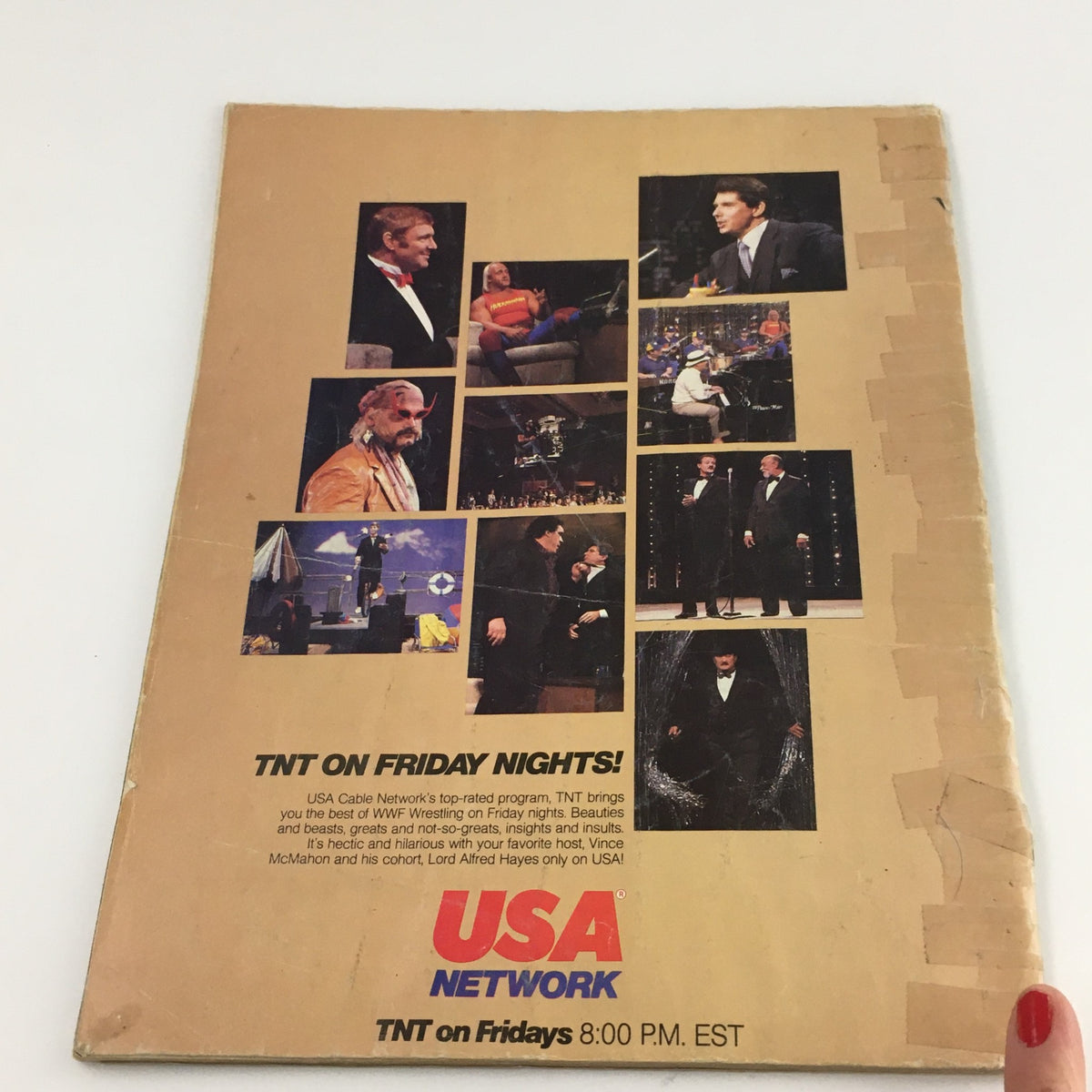
Acceptable condition with confirmed taped binding, water damage, no subscription label, and plastic protective covering represents an honest lower-mid-grade assessment for a 40-year-old monthly wrestling magazine — with the water damage and taped binding being the most significant structural condition factors requiring careful assessment from available photographs. Water damage in a publication of this age and paper stock can affect page integrity, cover color retention, and structural stability in ways that vary significantly depending on its extent and location; the specific areas affected should be assessed from available photographs before collection decisions are made. The taped binding indicates a repair to structural wear that typically results from the spine's separation at staple points — a common aging characteristic of saddle-stitched publications of this era, repaired to maintain the page block's integrity. The confirmed no-label newsstand status is the primary positive visual attribute, preserving the full cover imagery without obstruction. The plastic protective covering indicates deliberate preservation after the structural issues were noted. Acceptable condition with these specific damage characteristics means the issue has survived with its primary content accessible despite meaningful structural compromise — a threshold that collectors whose primary interest is the historical documentation rather than display condition will find functional for research and archive purposes.
Looking for More Issues Like This?
WWF Magazine issues from the December 1985–January 1986 period — the first post-WrestleMania I holiday season, with the promotion at the peak of its national expansion and Roddy Piper at the height of his Golden Age heel identity — are among the most historically situated issues in the publication's archive, and newsstand copies from this specific phase of the Rock 'n' Wrestling Connection era surface with the infrequency that 40 years of attrition and the relatively recent development of serious Golden Age wrestling collecting produce. The complete WWF World Wrestling Federation magazine collection at OriginalMagazines.com is the most direct resource for collectors building comprehensive runs of the publication from the promotion's most historically significant expansion phase. For collectors building a broader picture of American popular entertainment culture in 1985, the full 1985 magazine collection covers the range of publications from the specific year WrestleMania I transformed professional wrestling into a mainstream national entertainment phenomenon.